


What’s New at Wildlands
Something Super is Happening in Plymouth
By Land Protection Director Scott MacFaden
We live in an age of superlatives, many of them empty, embellished or completely unwarranted. However, on occasion, we at Wildlands Trust feel it’s appropriate to indulge in a superlative or two. One such occasion occurred on June 29, when we acquired 975 acres of Community Preservation Act (CPA) Conservation Restrictions (CR) from one of our most important conservation partners, the town of Plymouth.
The completion of the restrictions is the culmination of years of proactive efforts by the town to use the resources provided by the CPA to invest in open space protection. Across multiple years and numerous town meeting cycles, the town successfully advanced dozens of open space acquisitions to completion, encompassing a wide variety of landscapes, viewsheds and wildlife habitats, including globally rare habitats such as pine barrens. Equally important, almost every acquired property helps to protect Plymouth’s sole source aquifer, one of its most priceless natural resources.
Once a property has been acquired, the CPA’s stipulations require towns to place permanent restrictions on them. Nonprofit conservation organizations like Wildlands Trust are qualified to hold such restrictions and one of the most important services we provide to communities in our coverage area is working with them to hold CPA CR’s. We value all of our municipal partners, but we especially value our relationship with Plymouth, our hometown and the largest town by area in the Commonwealth.
In keeping with typical practice, we initially set out to draft CR’s for each individual property the town had acquired; however, with so many properties in play, it was advisable to seek a more efficient approach to advancing and completing the needed CR’s. With that in mind, we reached out to John Gioia, the principal CR reviewer for the Commonwealth’s Division of Conservation Services, and he provided a sample of a CR completed elsewhere in the state that had bundled numerous properties into a single document. As an organizing principle, this approach offers many advantages and efficiencies, including allowing for the preparation and advancement of several CR documents instead of over a dozen individual CR’s.
While enamored of the template John provided to us, we elected to take it a step further and create three distinct “Super CR’s” , with each Super CR including properties possessing similar geographic scale and landscape features.
These “Super” CR’s include:

The view from Hio Hill, one of Plymouth’s highest-elevation landforms.
Forest/Large Landscape Block CR | 786.6 acres: This CR includes multiple properties of larger scale, including a 375-acre assemblage located off of Old Sandwich Road in southeast Plymouth, a 46 acre contiguous block near Great South Pond and South Triangle Pond, and an 88-acre expanse on Old Sandwich Road that includes Hio Hill, one of Plymouth’s highest-elevation landforms.
Bog Habitats CR | 94.9 acres: This CR encompasses three properties ranging in size from 64 acres to 11 acres, with each property including cranberry bogs now permanently retired from active production. As part of an ambitious effort to improve water quality in many of Plymouth’s 365 ponds, the Department of Marine and Environmental Affairs (DMEA) prioritized acquiring certain cranberry bog properties that were adversely affecting nearby ponds, including Savery Pond and Billington Sea.
Riparian Corridor CR | 7.4 acres: This CR includes three properties that either have frontage on or are proximate to a brook or river, including Town Brook, Carters River and Bartlett Brook. While possessed of less acreage than its Super CR brethren, the properties assembled into this CR are nonetheless of considerable significance, including the site of the former Plymco building and dam (pictured below). This property was the focus of a comprehensive restoration project initiated and led by the Department of Marine and Environmental Affairs that removed an unsightly and long-standing obstacle to fish passage and the free flow of Town Brook.

Retired Cranberry Bogs Near Savery Pond.

Town Brook Flows Freely Again!
Also completed were two individual CR’s for properties acquired after the Super CR’s were finalized and an amendment to an existing CR:
Herring Pond Watershed CR | 53.5 acres: The town purchased this property last fall with a combination of CPA funds and a LAND grant from the Commonwealth’s Executive Office of Environmental Affairs. It has extensive frontage on Roxy Cahoon Road, is almost entirely upland, includes a portion of the ancient way known as Valley Road and directly abuts a 138-acre expanse that was formerly part of Camp Massasoit and is now town-owned open space.
Huntley Family Preserve CR | 4.6 acres: The town acquired this strategically situated property in July 2019. It has extensive frontage on Jenney Pond and connects with adjacent town land to create an expanded assemblage of open space along the lower Town Brook corridor and on the periphery of downtown Plymouth.
Ship Pond Road CR Amendment | 20 acres: This strategically situated property directly abuts and serves to expand the 83-acre Ship Pond Road CR the town granted to Wildlands in 2005. It is also an integral component of a large corridor of protected open space situated north of Ship Pond Road and west of Old Sandwich Road.
Every single acre protected by these restrictions is a credit to the foresight and skill of the Plymouth Community Preservation Committee (CPC). Few towns in the Commonwealth have been more successful in implementing the Act in all its dimensions, particularly in open space. Whether pursuing multi-million dollar acquisitions or more modest opportunities, the committee has done an exemplary job of building support for each open space project, securing the approval of Town Meeting, and helping to create a supportive constituency for open space preservation in Plymouth.
The committed volunteers of the CPC work closely with the skilled professionals who serve in the town’s Department of Marine and Environmental Affairs. From leading ambitious riparian restoration efforts like the Plymco project to working diligently to protect the Plymouth sole source aquifer, the DMEA never relents in its mission to secure the future of the town’s green infrastructure.
For our part, Wildlands has never come close to absorbing so much acreage into our portfolio on a single day. While counting acres is an inescapable component of land trust work — and we are always pleased to expand our holdings — we take more satisfaction from the realization that the CR’s we now hold will help permanently protect almost 1,000 acres of Plymouth’s most ecologically significant landscapes, as well as help to safeguard the considerable investment the residents of Plymouth have made in their irreplaceable open spaces. Now that’s worthy of a superlative or two!
Indian Head River Trail Enhancements Continue Thanks to the Efforts of Many
Following centuries of changes along the Indian Head River, the towns of Pembroke, Hanson and Hanover work together with Wildlands Trust to improve the surrounding trail system with a MassTrails Program grant.
By Community Stewardship Program Manager Conor Michaud
Rivers are the multi-tool of the natural world, harnessed by people, they support burgeoning populations and have played a key role in shaping our civilization. Before industrialized society, rivers were free-flowing. Unobstructed by dams and development, these waters naturally deposited nutrients and sediments along the river corridor, housed essential native breeding grounds for migratory fish and provided for a biodiverse ecosystem. Today, free-flowing rivers are globally threatened, with only several remaining in Massachusetts and the North River being the only one in Wildlands’ service region.
What remains of the Waterman Tack Factory dam rest along the shores of the IHR.
The Indian Head River (IHR), a tributary of the North River, was transformed from its free-flowing state centuries ago. Throughout the 17th century and up until the early 20th century, the IHR fueled the local economy and proved an invaluable resource. As industry left the river, mills eventually ceased production, dams collapsed and the forges cooled. The train which once ran along the shoreline is long gone, its former path converted into a nature trail some years ago. For nearly four miles, the river now flows peacefully through Pembroke, Hanover and Hanson, and in many places, large swathes of the riparian corridor and forests have been conserved to help protect this treasured habitat.
In 1993, Wildlands was gifted Tucker Preserve in Pembroke, one of Wildlands’ most popular conservation areas. The northern side of Tucker sits against the IHR, affording hikers stunning views and fishing access, while the southern upland forest showcases shady hemlock stands and old rock walls, vestiges of former agricultural land. The three towns through which the IHR flows — Pembroke, Hanover and Hanson — have each conserved land along its banks and in 2018, Pembroke received funding from the Department of Conservation and Recreation’s MassTrails Program to improve the trail system on the surrounding conservation lands and increase public stewardship along the river. Over the last two years, Wildlands has managed the IHR Trail Project for the town, working with representatives from Pembroke’s conservation commission, Hanover and Hanson’s open space committees, Hanover’s Department of Public Works, and the North and South Rivers Watershed Alliance to enhance the 4-mile trail loop encircling the IHR.
The Indian Head River flowing east from State Street.
Adequately protecting the IHR, its riparian areas and nearby upland forests requires more than trail stewardship though, it requires volunteer contributions and the devotion of local residents who will continue to assist in conservation efforts long after the MassTrails grant is complete. Throughout the IHR Project, Wildlands has focused on public outreach through guided hikes, volunteer trail work events and recruitment of volunteers to our Adopt-A-Preserve program. From these efforts, a tremendous amount of volunteer support has been shown, with over $7,000 of volunteer match time collected. Most recently, local photographer Andrew Lederman generously donated his time and skills to document the preserve’s natural beauty, as well as the remnants of the IHR’s former industrial life (featured in this article). Earlier this spring, Hanover’s Department of Public Works assisted Wildlands in creating a formal parking area along Water Street, a welcome addition as trail usage continues to grow, and this summer, Wildlands will work with a boy scout from Hanover to install new trailhead kiosks and educational signs along the trail system.
Massachusetts has a long industrial history, from the massive farming culture during the 18th and 19th centuries, to mills and factories that dammed our rivers, altered the landscape and ultimately shaped our communities. The IHR Conservation Area and the IHR Trail Project are opportunities for us to study our industrial past and the impacts of having manipulated the formerly free-flowing river. The IHR Conservation Area provides a space to track the native fish species which struggle to navigate the Luddam’s Ford fish ladder, shedding light on the impacts of dams and the benefits of protecting natural free-flowing rivers. Most importantly, the IHR Trail Project demonstrates a collaborative success and the importance of spanning town boundaries to protect what little conservation land remains in our rapidly developing towns.
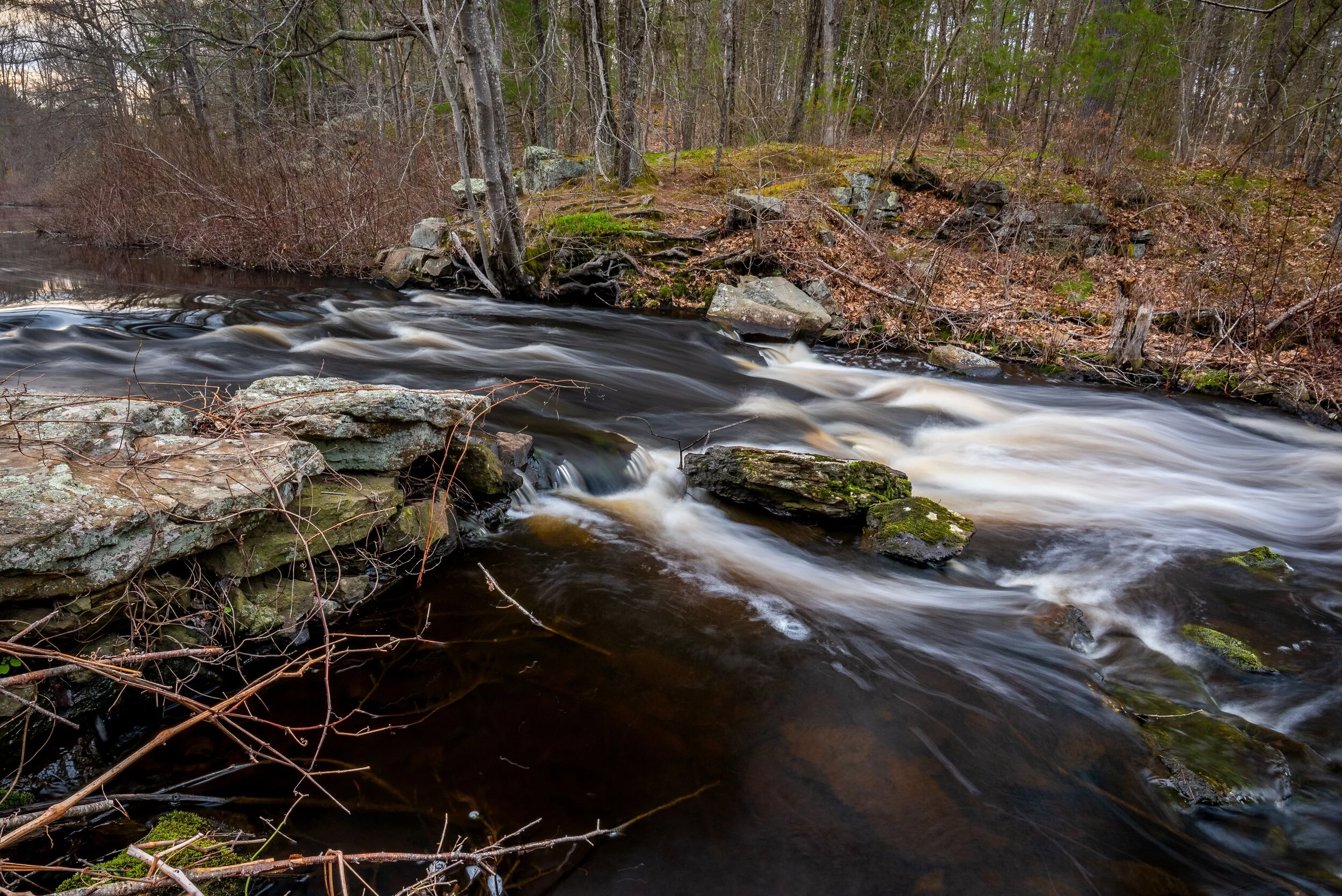

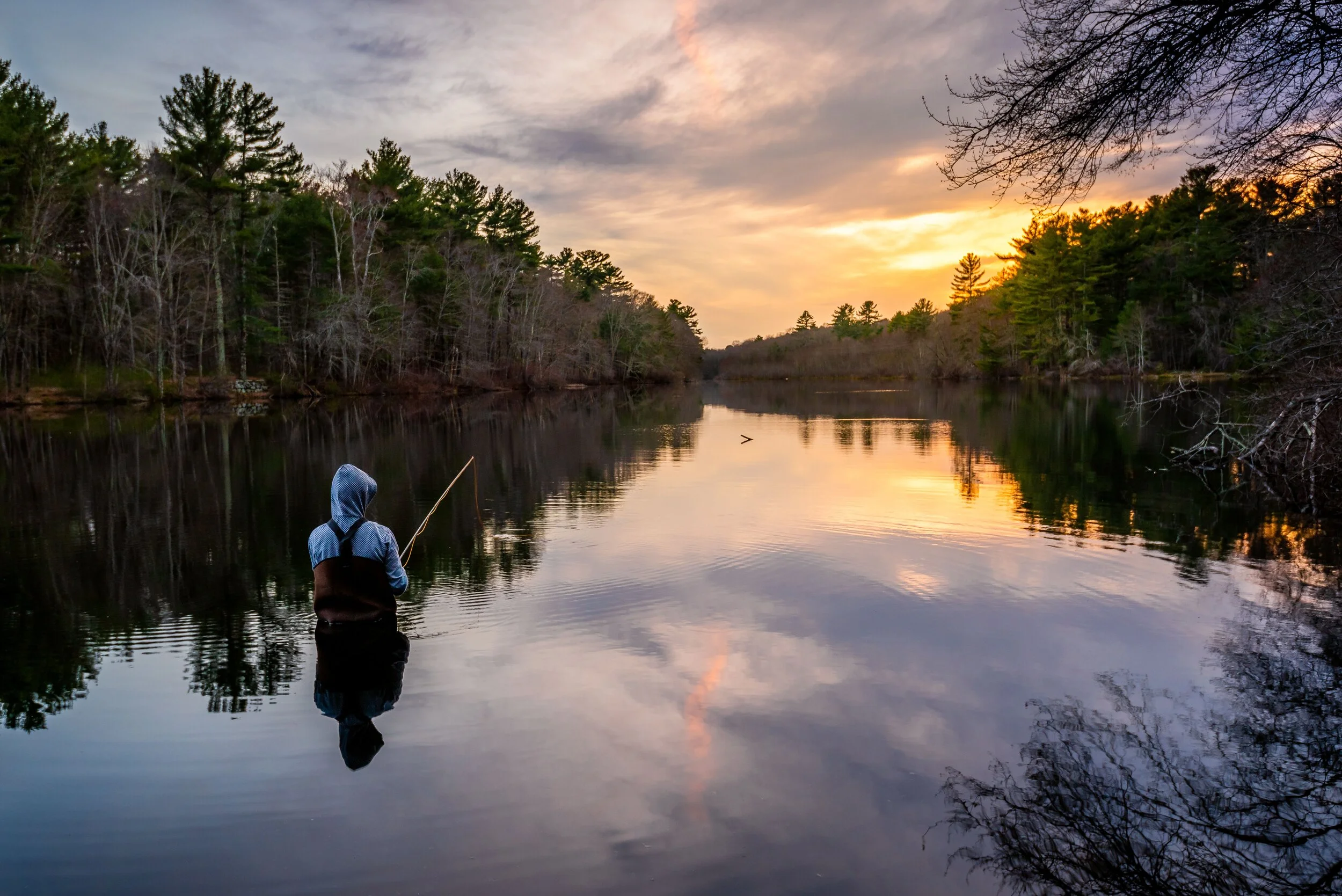
The Indian Head River is an incredible resource and outdoor enthusiasts, anglers and families seek its utilities all year long. Offering miles of trails, fishing, picnicking and water craft recreation, the IHR stands out as a top nature destination in the South Shore. With the recent COVID-19 pandemic, Wildlands has seen a surge in trail users. On weekends, the parking lots are often filled and the shores are lined with hopeful fishermen and women. Wildlands reminds you to please stay on marked trails, pickup and carry out your dog’s waste, and respect fellow hikers by following social distance guidelines. Our work at Tucker Preserve and the IHR is successful because of our dedicated volunteer base and the people who respect these natural spaces. If you are interested in learning how you can help protect your conservation land please send us an email (info@wildlandstrust.org) or give us a call (774-343-5121).
Attention Dog Owners!
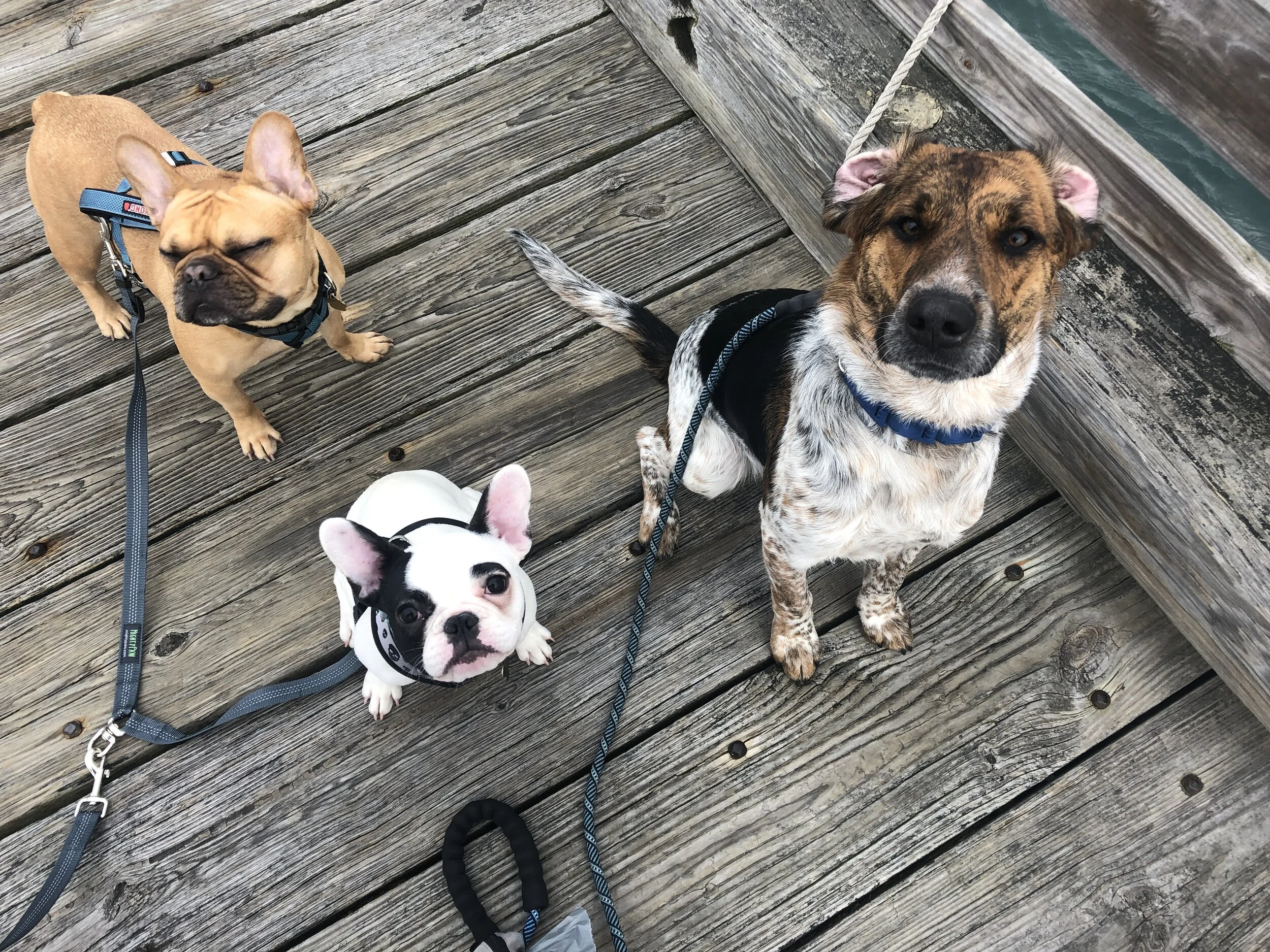
New signs will go up at Wildlands’ preserves this month, reminding visitors to practice good etiquette on the trails.
Daily, we are getting emails and phone calls about dog owners violating rules on our preserves. These rules are in place to protect the land and wildlife, and to ensure public safety. We have dedicated significant resource to developing policies and signage around canine companionship on Wildlands properties, but it appears people are not paying attention. Left with no other choice, we are going to be direct.
There are a lot of people using our trails these days and our goal is to keep our properties open for your enjoyment. However, dog owners who cannot follow the rules are wreaking havoc with our intentions. I’m sorry to say that not everyone loves dogs. As a matter of fact, many people are afraid of dogs and others are allergic. People out for a relaxing walk in nature do not want to be jumped on or barked at by a strange dog. They don’t want their own dog or child attacked by an aggressive animal, and they especially do not want to look at, or worse yet, step in dog’s feces.
We work hard to buy these lands and to take care of them for all to enjoy. Now, please do your part. It’s easy. Keep your dog on a leash and pick up poop. DO NOT LEAVE POOP BAGS HANGING ON TREES!
Thank you.
Pollinator-Friendly Spring Cleanup for your Garden
By Education and Outreach Manager Rachel Calderara
With warmer, longer days here at last, many people are getting ready to do their spring-cleaning — both indoors and out! At Wildlands Trust, it is almost time to clean up our native perennial gardens as new growth emerges from the soil. However, if we hold off on the cleanup for long enough, it gives hibernating insects time to emerge. Outreach and Education Manager Rachel Calderara spoke with Wildlands Trust’s gardener, Kim Goggin, to learn more about the native perennial gardens at Wildlands Trust headquarters, Davis-Douglas Farm, and the pollinator-friendly practices she uses.
Rachel: First, what kinds of native plants for wildlife do we have at Davis-Douglas Farm?
Kim: For bees, we have black-eyed Susan, yarrow and Coreopsis. For monarch butterflies, we have the host plants Asclepias tuberosa (orange butterfly weed) and Asclepias incarnatoa (swamp milkweed). Then we have Chelone glabra for Baltimore checkerspot butterflies and aster for pearl crescent butterflies. For birds, we have winterberry and cranberry viburnum, as well as Monarda (bee balm) for hummingbirds.
R: What insects benefit from these plants over the winter and into early spring, and why are they important?
A view of the front garden at Wildlands’ headquarters at Davis-Douglas Farm.
K: Over the winter, many insects in various forms of life burrow beneath leaves, in the soil, in decaying branches and in spent stalks of native perennials. Among them are solitary bees, syrphid flies, parasitic wasps, morning cloak butterflies and moths such as the wooly bear caterpillar. Luna moths form a chrysalis, which looks much like a curled, dried leaf, and spend the winter there.
Some of our native plants are host plants for specific butterflies to lay their eggs, while others provide nectar for pollinators throughout the season, giving them the energy they need to either migrate or overwinter. Butterflies we frequently see at Davis-Douglas Farm include monarchs, American lady and painted lady butterflies.
R: How can we help protect these insects during our spring garden cleanup?
K: Foregoing fall clean-up all together and postponing spring clean-up until temperatures have stayed consistently above 50 degrees for several days insures that insects will have enough time to emerge from their winter state of diapause. This means leaving spent stalks for the winter, delaying raking leaves and watchfully pruning, as some moths such as the Luna moth may form chrysalises on branches for the winter.
R: After cleanup, is there anything else we can do to help protect native pollinators?
A monarch chrysalis hangs from milkweed at Davis-Douglas Farm.
K: Most importantly, do not use pesticides. You can provide brush piles where insects can feed, bare patches of earth for ground nesting bees (out of the way of any foot traffic) and shallow dishes of water mixed with a bit of soil to provide minerals for butterflies. Plant a variety of heights, colors and flower shapes in your garden. Plant in groupings so pollinators can move easily from one flower to another. Provide flowering plants from early spring into late fall.
R: What plants would you recommend adding to perennial gardens this year to help native wildlife?
K: Zizia is one perennial I would like to add this year, as it is the host for the black swallowtail butterfly. In addition, Heliopsis (false sunflower) proves nectar for native bees and goldfinch love the seeds in the fall.
We want to thank Kim Goggin for all she does to keep our gardens beautiful and pollinator-friendly at Wildlands Trust! Everyone can help pollinators in their own gardens by following her simple advice. Happy spring-cleaning!
Willow Brook Updates Begin
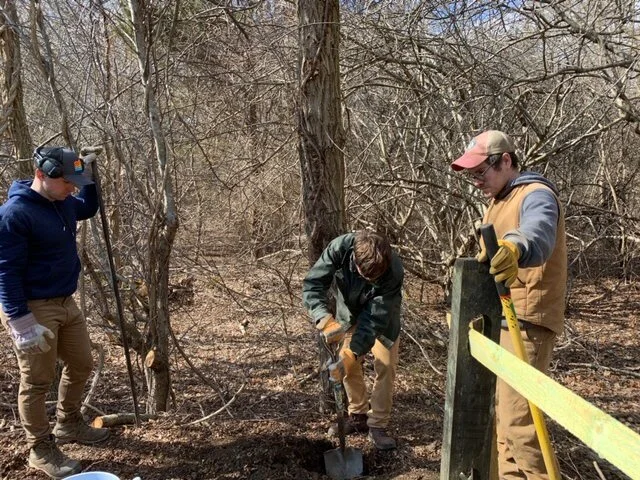
Wildlands stewardship staff, with the help of volunteers, begin improvements at Willow Brook Preserve in Pembroke last month. New split-rail fencing was installed in the parking lot, creating a clear outline of the lot and protecting the surrounding vegetation from vehicles and foot traffic. Funded by a grant through the Recreational Trails Program, the scheduled work will both improve the visitor experience at the preserve and the various habitats throughout the property.
Volunteers also spent time at Wildlands’ headquarters building 10 blue-bird boxes, which will be installed in the coming months in the fields at the 167 acre former dairy farm. Benches and bog boards will also be built and installed along the trail system. The bog boards will lift visitors up off of the more well-used portions of trail, allowing for the restoration of eroded sections and protecting the surrounding habitat.
Also keep an eye out for new educational signage along the trails which will provide information on different plants and animals found on the property. Visitors and groups will be able to lead self-guided nature lessons and have the chance to see the plants and animals while they read about them.
Together with the adjacent Herring Run Historical Park and Misty Meadows Conservation Area, these three contiguous properties comprise nearly 400 acres of public conservation land and provide habitat for a number of plants and animals. The beauty of this preserve makes it a popular spot to visit on the South Shore. We greatly appreciate the dedicated volunteers who have been helping us complete these projects and we are excited for visitors of the preserve to benefit from these improvements in the coming months.