


What’s New at Wildlands
Hiker Preparedness, More Important Now than Ever
By Rachel Calderara, Outreach and Education Manager

With schools, businesses and entertainment venues closed across the region, nature preserves have seen an uptick in visitation. Wildlands Trust trailhead parking lots have been packed as people are seeking refuge in nature in Southeastern Massachusetts. At Wildlands, we are proud to continue to provide access to nature for our communities across the region. However, being prepared for your hike and practicing social distancing on the trails is imperative during this time of national emergency.
Social Distancing on the Trails:
Our preserves are available for fresh air, nature study and as an escape from the indoors. According to the CDC, the COVID-19 virus is primarily spread between people who are in close contact with each other (within 6 feet), and avoiding exposure to the virus is the best way to protect yourself from illness. We’re counting on you to adhere to social distancing practices when using Wildlands Trust preserves to protect yourself, your family, and our communities at large. Simply follow these guidelines:
Visit our preserves alone, with your dog or with those who you live with. Avoid using our preserves to meet up with friends and family outside your home.
Keep a 6-foot distance between yourself (or your party) and other visitors.
Communicate with each other! If you see another visitor on the trails, communicate from a safe distance and have one party pull off the trail, allowing 6 feet of distance between parties.
If you are a dog owner, keep your dog leashed at all times to avoid contact with others.
Avoid touching any manmade objects such a kiosks, signs, railings, etc.
Practice patience and kindness towards other visitors. We’re all in this together.
Being Prepared:
We always encourage visitors to be prepared with appropriate gear during their visits to our preserves. Now more than ever, it is important to be independent while on the trails, and that means being prepared with more than you might regularly bring. We recommend that all visitors carry the following items, at a minimum:
Water: Hydration is important all year long. While we recommend carrying extra water during warmer months, humans need water when it is cold too. Dehydration is one of the most common ailments on trails nationwide.
Food: We get hungry when we exercise. Even if you don’t plan on needing it, bring a granola bar, trail mix, fruit, etc. so you can enjoy a snack in the beauty of nature if you need to recharge. (Remember to carry out what you carry in!)
Layers: Staying at a comfortable temperature is key during a hike. This means wearing warm layers that you can remove in the winter and wearing lightweight layers in the summer. ALWAYS bring a rain layer, even if rain is not in the forecast. Hypothermia is another common trail ailment that can be avoided by staying dry.
Map: Wildlands Trust maps are available for free to download or print on our website and are posted on the trailhead kiosks. If you don’t have a map with you when you arrive, we recommend taking a picture of the map on the kiosk with your smartphone. Whenever you come to an intersection, take a look at the map so you can follow along and always know where you are. Things to look out for at Wildlands Trust trails are color-coded trails on the map marked by colored trail blazes on the trees along the trail.
Flashlight: Say you get a little turned around on the trail during your hike. Once you’re back on track, you may end up being out a lot longer than you had planned for. A flashlight when you need it can be a real help in this situation, and it weighs almost nothing in your pack.
First aid kit: Our healthcare facilities are very busy right now, so the more you can take care of yourself, the better for everyone. Make or buy a good first aid kit and familiarize yourself with its contents. If you take an unexpected fall, you can clean out and dress a minor wound yourself without needing to call for backup.
Fully charged phone: If you do need to call for help, the last thing you want to find in your pocket is a dead cellphone. Make sure you’re charged up before hitting the trail, and try not to use apps that drain your battery while you’re hiking.
Finally, remember to do a thorough tick check after your visit to protect yourself from tick-borne illnesses. Your extra time outdoors this season may put you at a higher risk of picking up a tick, so be vigilant this spring, summer and fall. For more information on ticks in Massachusetts, visit https://www.mass.gov/service-details/tick-borne-disease-information-for-the-public.
Being prepared and practicing social distancing will help keep us all safe as we continue to enjoy the great outdoors. Visit wildlandstrust.org/trails to find a preserve near you!
Wildlands Buys the Farm (And Then Sells It)
Middleborough’s Ja-Mar Farm is forever preserved thanks to the efforts of many.
By Land Protection Director Scott MacFaden
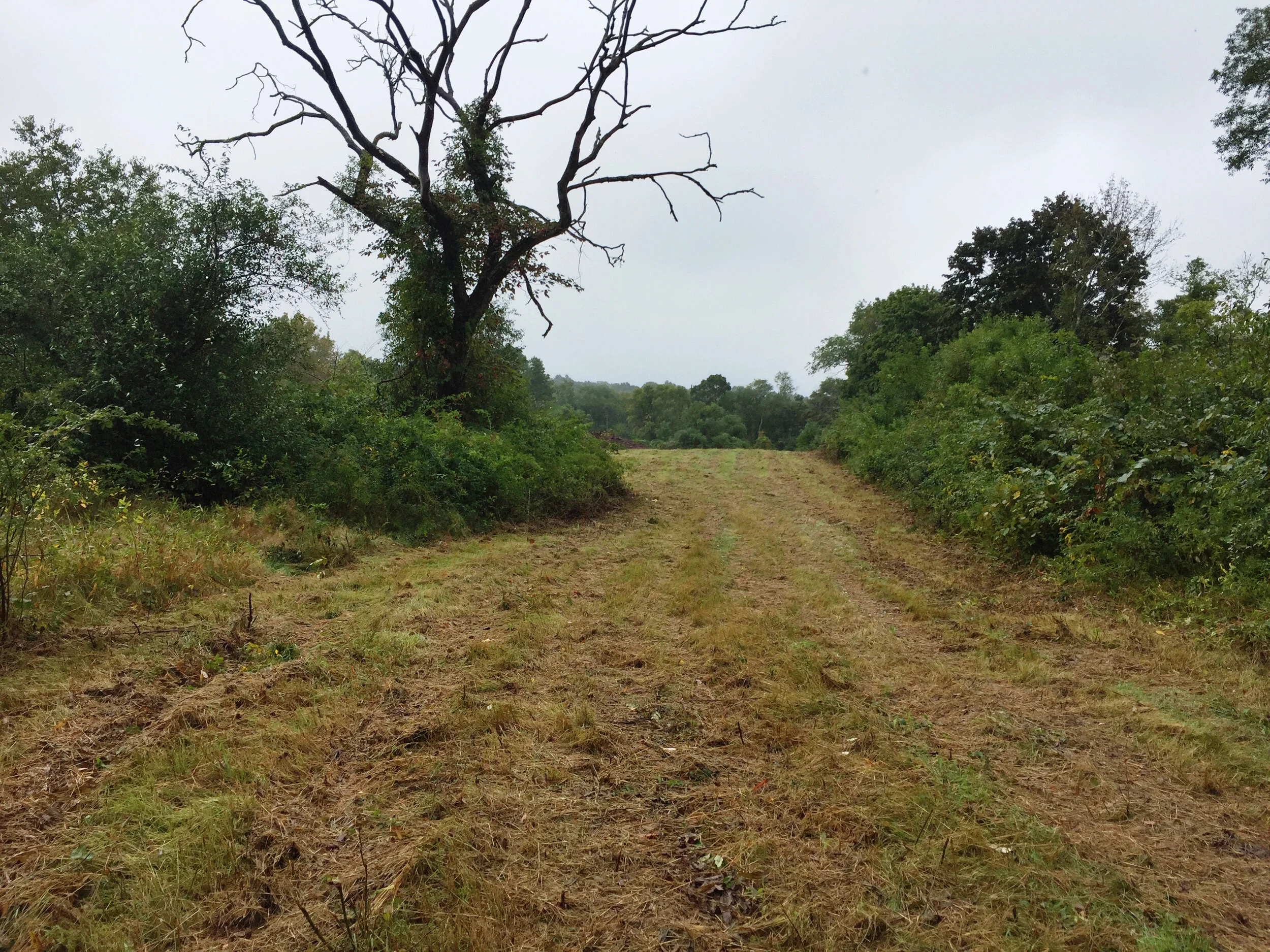
Land trusts like Wildlands Trust are specifically established to acquire and protect lands possessed of important conservation values such as scenic views, rare species habitat and aquifer protection. From time to time, however, land trusts can and do serve as interim holders of property, typically on behalf of other conservation entities. Wildlands has successfully completed a number of such pre-acquisitions in the past, usually in partnership with public agencies, such as municipalities and the Massachusetts Department of Fish and Game. In general, nonprofit organizations like Wildlands can mobilize more quickly and act more decisively than our public-agency colleagues when important properties are at risk of being lost to development.
In early January 2020, we completed our most recent pre-acquisition: Ja-Mar Farm in Middleborough. Encompassing 20 acres of scenic open fields along the Nemasket River, Ja-Mar Farm was a long-standing preservation priority for the town due to its commanding river views, prominent location along the lower Nemasket River corridor, high-quality agricultural soils and important habitat for multiple rare species, as identified by the state’s Natural Heritage and Endangered Species Program (NHESP).
A working turkey farm for many years, the Ja-Mar property was slated for a very different future following its acquisition by developer Elliott Schneider in 2003, who proposed a nine-lot residential subdivision to be built on the property. However, at least in part due to the recession of the late 2000’s, work toward permitting the subdivision was deferred for several years. When permitting efforts resumed in 2010, NHESP required Mr. Schneider to grant a Conservation Restriction (CR) to the town on approximately half of the property, essentially the acreage along the river and adjacent to the proposed subdivision. NHESP, which administers the state’s Endangered Species Act, had identified much of Ja-Mar Farm as rare species habitat for the eastern box turtle and several other species. At the time, it appeared the NHESP-mandated CR was the best possible conservation outcome; however, due to several factors, including the slowly recovering economy and sluggish real estate market, Mr. Schneider eventually entered into discussions with the town about possibly selling the entire property for permanent preservation. After several years and a series of appraisals, these discussions culminated in a Purchase and Sales Agreement with a closing date in August 2018.
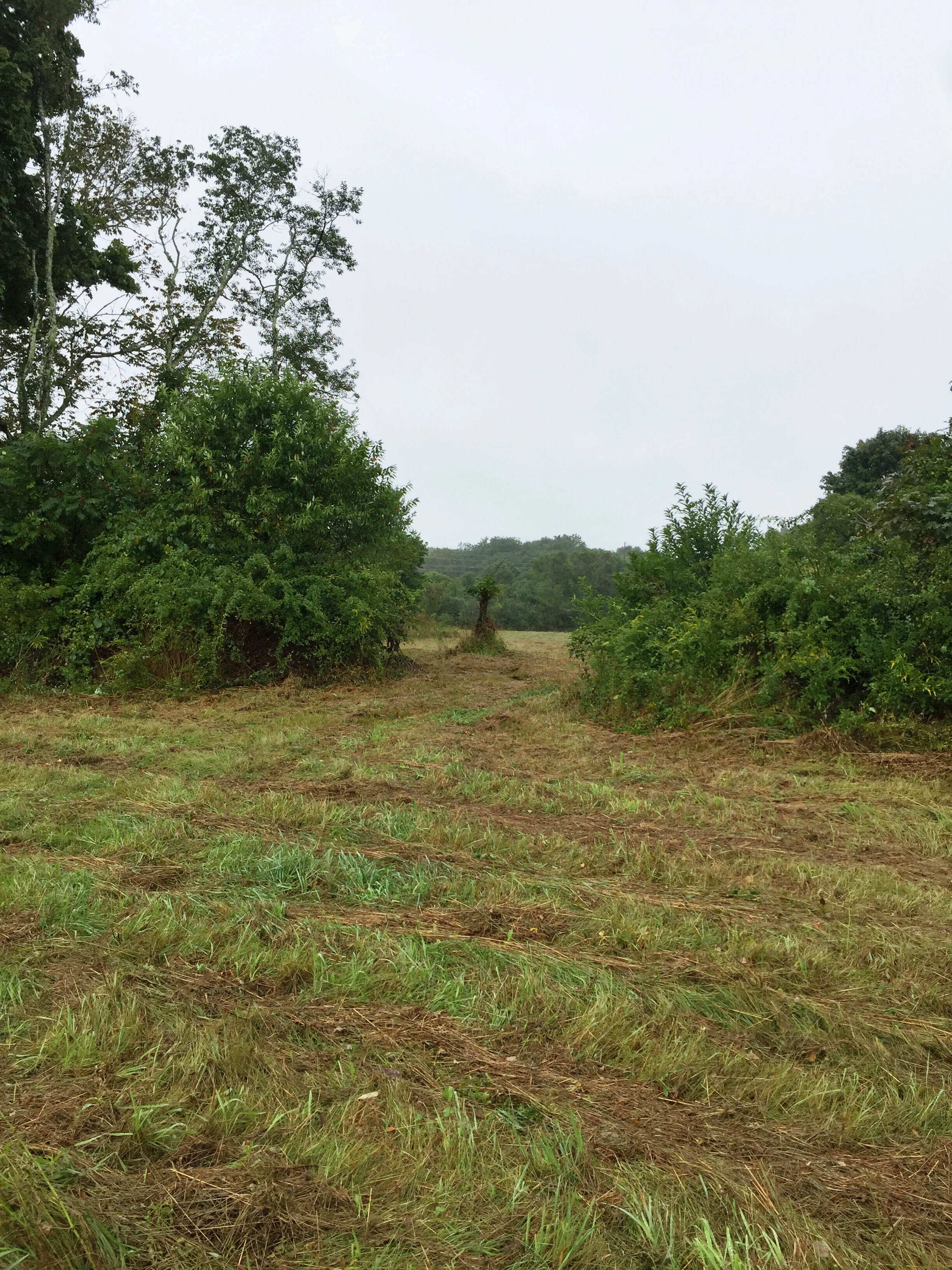
Middleborough’s conservation agent, Tricia Cassady, spent many hours carefully crafting the project; negotiating a deal with Mr. Schneider, raising $450,000 to purchase the land (including the receipt of a sizable grant from the Land and Water Conservation Fund), and recruiting two nonprofit partners: the Cape Cod-based Native Lands Conservancy (NLC) and The Archaeological Conservancy (TAC). Both of these organizations agreed to provide substantial financial contributions to the project and to further enhance the farm’s protection by accepting an assignment of the CR from the town.
Everything seemed to be aligning favorably, but alas, there was a complication. The town already held a CR on approximately half of Ja-Mar Farm and before acquiring the property outright, the town would need to first assign the CR to another entity, or in this case, entities—NLC and TAC. However, because of Article 97, an amendment to the Massachusetts State Constitution, the town needed to obtain the approval of the Massachusetts Legislature before it could assign the CR.
Just what is the purpose of Article 97? Enacted in 1972 through a vote of the citizens of the Commonwealth, the article is essentially a procedural check on cities and towns converting designated open space land to other uses without first working through a review process. The idea is that municipally held open space is of great value and benefit to the people and ecology of the Commonwealth, and should not be divested or converted to other uses without the following actions:
“Lands and easements taken or acquired for such purposes shall not be used for other purposes or otherwise disposed of except by laws enacted by a two thirds vote, taken by yeas and nays, of each branch of the general court”
The “such purposes” are identified in the amendment as: “The people shall have the right to clean air and water, freedom from excessive and unnecessary noise, and the natural, scenic, historic, and esthetic qualities of their environment; and the protection of the people in their right to the conservation, development and utilization of the agricultural, mineral, forest, water, air and other natural resources is hereby declared to be a public purpose.”
While the town’s acquisition of the Ja-Mar property would, as a practical matter, only serve to strengthen its preservation, Article 97’s provisions still applied. The town had no choice but to work through the Article 97 process, including obtaining the approval of the Massachusetts Legislature, before it could assign the CR and subsequently purchase the property. That is where Wildlands came in. With an expired Purchase and Sales Agreement and Mr. Schneider intent on selling the property, there was a particular urgency in play. The town requested that Wildlands step in, pre-acquire Ja-Mar Farm from Mr. Schneider, and hold the property until the town had satisfied all the requirements of the Article 97 process. In order to pre-acquire the property, Wildlands and NLC each borrowed $108,500 from the Compact of Cape Cod Conservation Trusts, Inc.’s Thomsen Land Fund, with the remaining $233,000 contributed by NLC and TAC.
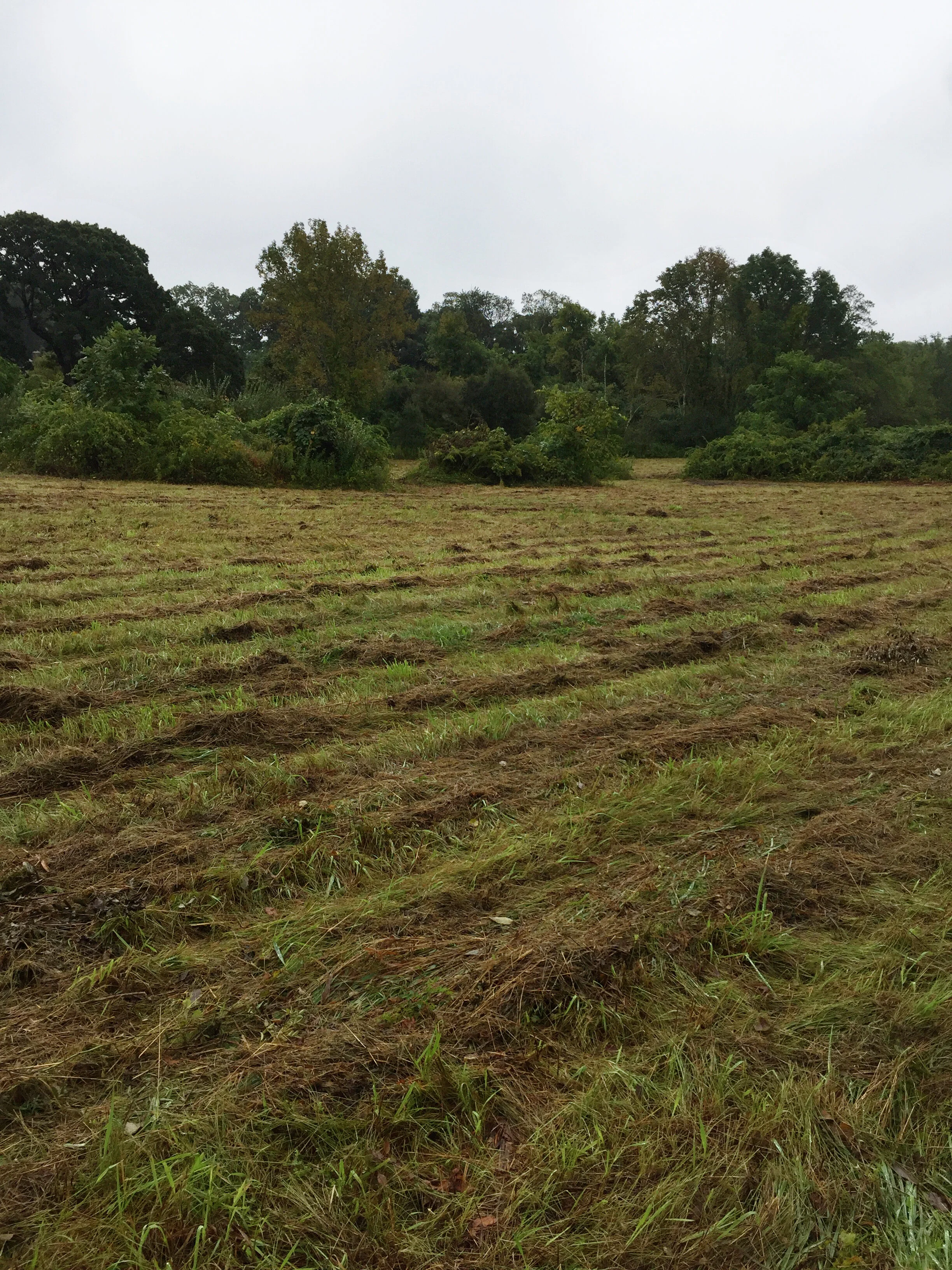
With the needed funding in hand, Wildlands purchased Ja-Mar Farm on October 25, 2018, and held it in safe-keeping until we sold the land to the town on January 8, 2020. The town of Middleborough is now firmly in place as the landowner, with the property subject to a CR jointly held by the NLC and TAC. This approach to land preservation is commonly known as the “belt and suspenders” method, with the property owned by one entity for conservation purposes and subject to a CR held by other conservation entities. That is about as protected as a property can be!
Be assured that Ja-Mar Farm is very much worthy of all the extra effort required to secure its permanent preservation. Today, and for many generations to come, its scenic open fields, riparian corridor along the Nemasket, and numerous rare species shall remain more or less as they are today, subject only to the inevitable cycles of natural ecological succession. Kudos to all of the project partners for the critical roles they played in ensuring the preservation of Ja-Mar Farm. Our colleague, Tricia Cassady, takes understandable pride in noting that the $450,000 needed to purchase the farm came entirely from sources outside the town — a good deal indeed. For our part, Wildlands is pleased to have had the opportunity to play a late but important role in the project. We afford a high priority to our municipal partnerships, and these public-private collaborations continue to realize significant conservation outcomes across the region.
Volunteer Spotlight: Rob MacDonald
When and how did you first learn about Wildlands Trust?
I believe I first learned about Wildlands Trust through the Willow Brook Preserve in Pembroke. It’s pretty close to my house and one day, while driving down Route 14, I spotted the entrance. Eventually I stopped by and explored it with a walk through the property.
How did you discover the Adopt-A-Preserve (AAP) program?
We [Rob and his wife] had been members of Wildlands Trust before the AAP program existed and had been involved with volunteer work at Wildlands through some of your workdays. Eventually I heard about the AAP program from someone I knew who was working at [Wildlands]. They informed me that Erik [Boyer] was looking for volunteer help with the AAP program.
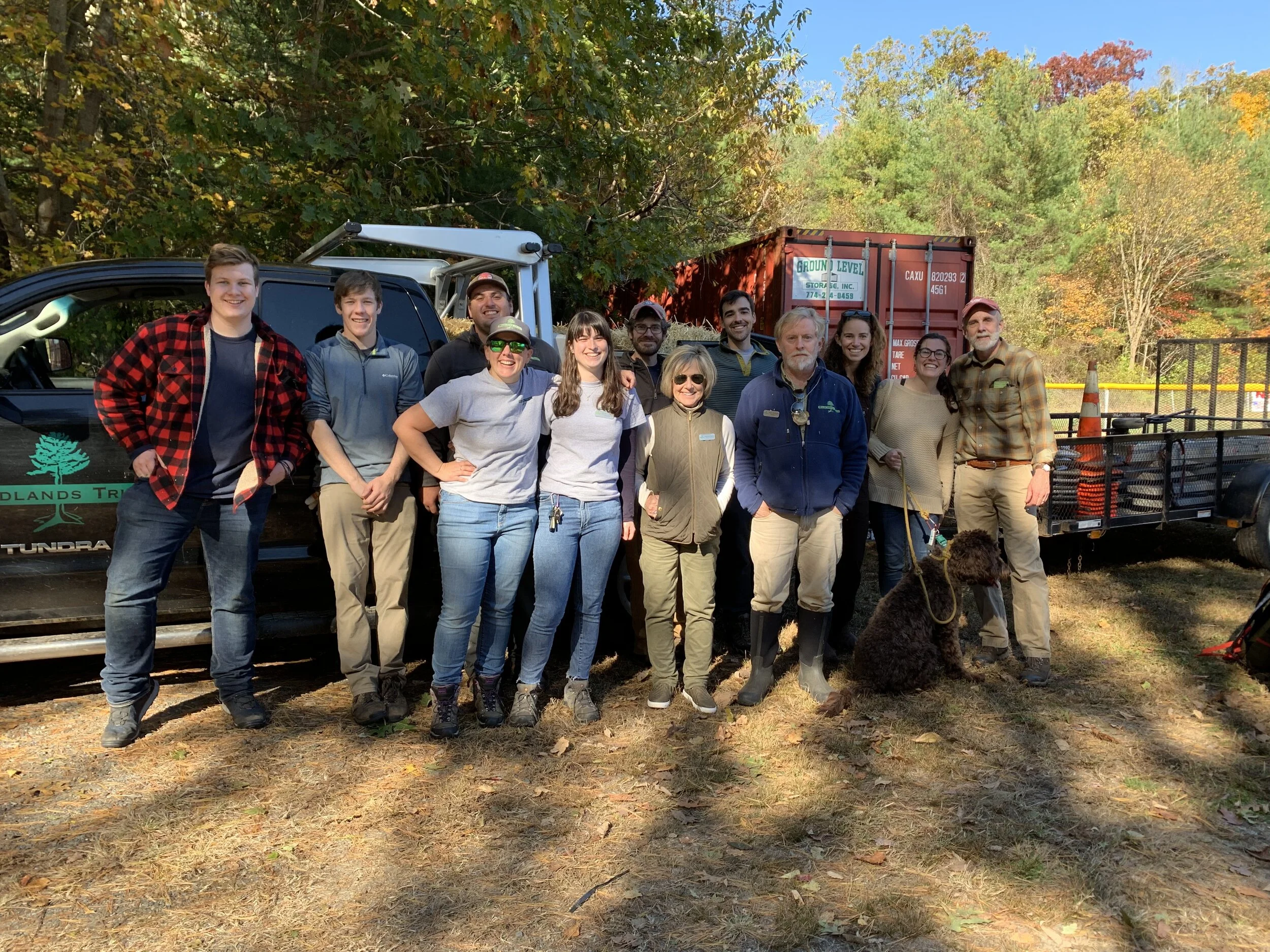
Rob MacDonald (far right) poses with other volunteers at Brockton Nature Festival.
How many years have you been a part of AAP?
Well, I was first involved with Wildlands Trust in about 1999 when I participated in a corporate workday at Willow Brook Preserve. This was an organized community service event with Bank Boston employees where we burned brush and removed invasive species to clear out the meadow habitat near the beginning of the trail system. Once AAP was created in 2014 and I heard about it, I joined shortly thereafter.
What Wildlands properties have you “adopted”?
Striar Conservancy in Halifax and Tucker Preserve/the Indian Head River loop, which goes through Pembroke, Hanson, Hanover, Plymouth County land, and private property.
What is your favorite thing to do while out on monitoring visits?
Photography. I am always looking for shots of birds while on my monitoring visits. And then, during the spring when vernal pools are active, I like to look for amphibians to photograph. Typically, I bring out a long-lens camera for pictures of birds and a macro-lens for taking close-up pictures of fungi and amphibians.
What are some highlights for you along the Indian Head River Trail (IHRT) loop?
The bluff in Tucker preserve where the trail cuts through a hemlock grove opposite of the tack factory along the river is a nice section of trail. I also really like the babbling stream you encounter towards the back side of Tucker. It’s one of several spots that remind me of New Hampshire. I also really like the section of trail that cuts through Rocky Run, which is beautiful town of Hanson conservation land.
What have been your favorite wildlife sightings at Striar and Tucker?
River otter, which I’ve encountered at both Tucker and Striar. I recently saw one at Tucker, along the Indian Head River, soon upon entering Tucker from Pembroke Conservation land. The otter was resting on the ice on the river, eating a fish that it had caught.
When I saw an otter at Striar, I was looking out at a bend in the Winnetuxet River. I heard a bark and the otter slipped into the river behind me. I suspect it was voicing a warning signal to another otter somewhere in front of me. In terms of exciting bird sightings, I‘ve seen a wide variety of birds including barred owls, yellow cuckoos, ovenbirds, wood ducks and a palm warbler at Striar.
What is the most memorable experience you have had while at a Wildlands property?
At Striar, I have done vernal pool walks where participants come out at night to explore what they can find in the pools. Kids and adults alike get extremely excited about the chance to dip their hands into the pools to see what they find. Many people would not normally go on hikes at night on their own so the opportunity is unique and exciting for that reason too.
What is your favorite thing about AAP?
The monitoring visits present you with an opportunity to pay greater attention to the place you are in. I definitely focus more on the details of the surroundings than I would on a hike. My responsibilities as an AAP member makes me much more attentive while out on a preserve. }
What is it like being a part of the volunteer hike leader program?
On several occasions, people have come to one of these Wildlands Trust hikes and mention that they were sometimes hesitant to go out and hike in the woods alone. These organized group hikes gave them the opportunity to get out in a group atmosphere and enjoy exploring the varied Wildlands Trust preserves. So being part of a program that affords these folks, who might no otherwise get out into the woods, is pretty nice.
Are there any nature preserves in the region that you like to visit outside of the ones you adopt?
Burrage Pond Wildlife Management Area, a 1,638 acre MassWildlife-managed preserve that stretches through Hanson and Halifax is my favorite. The preserve is a habitat for beavers, otters, and many different species of birds. Burrage Pond’s landscape includes dormant cranberry bogs. Some of these ex-cranberry bog areas have remained open to develop into grassland habitats and others have been flooded to allow for habitat for aquatic birds. The management area also includes an interesting floodplain habitat along Stump Brook River that supports Atlantic white cedar and eastern hemlock trees.
I know you have visited for these trails for many years. Have you seen the area change over the years?
I’ve been walking the trails along the Indian Head River for at least 25 years. As for changes, the Hanover section of trail has become more formalized is now a well-marked trail. Also, on the western section of the trail loop, where you cross the bridge on State Street in Hanson, the trail used to be difficult to find because it was completely unmarked. That entrance has now been opened up and is much easier to find. Overall, the trail system has become more formalized and clearer while maintaining the same peaceful and wild feeling I got hiking these trails 25 years ago.
As a resident of Hanson, how do you think the community can benefit from a natural resource like the Indian Head River Trail?
The Indian Head River trail system presents Hanson community members with a beautiful hike along the Indian Head River through Rocky Run Conservation Area, a showcase example of protected, natural, town of Hanson conservation land.
Enhancing the Region Through Conservation
As a regional land trust, Wildlands Trust’s work throughout the South Shore benefits the fabric of our communities in many different ways.
By Membership and Communications Manager Roxey Lay
It’s a new year and with it comes a new year of projects, land acquisitions, public programming and more, all in the name of conservation. Since 1973, Wildlands Trust has committed to conserving and permanently protecting native habitats, farmland and lands of high ecological and scenic value that serve to keep our communities healthy and our residents connected to the natural world. And every year, you and many other supporters like you, make this work possible by renewing your commitment to Wildlands. But why do we do this work? Why are land trusts important?
The state of Massachusetts lists on its website five reasons why land conservation is “critical in preserving and enhancing the quality of life in Massachusetts.” [1] Read on to see how Wildlands’ work directly benefits our region and the residents who call it home.
Protection of water resources
Clean water is essential to any community. Nearly every property within Wildlands’ portfolio contains some type of water resource and a key factor in conserving these ecologically significant properties is that doing so protects against contamination. When water flows over the ground, it can potentially pick up a number of pollutants, “which may have sinister effects on the ecology of the watershed and, ultimately, on the reservoir, bay, or ocean where it ends up.” [2] Those pollutants can also soak into the ground and contaminate groundwater, “where it will eventually seep into the nearest stream…or into underground reservoirs.” [2] By conserving properties that contain and/or abut hydrological resources, Wildlands is able to limit the potential for pollution of those resources and habitat.
Wetlands at Striar Conservancy, Halifax.
Striar Conservancy in Halifax runs along the Winnetuxet River (identified by the National Park Service as one of the top four priorities for conservation along the Upper Taunton River) and combined with the town of Halifax property on the other side of the river, preserves 250 acres along the Winnetuxet. Striar is also host to vast wetland habitat, which, in addition to providing habitat to a number of local species, filters water running along the ground before it enters the river. “Wetlands are filters for water coming off the land, reducing sediment and chemicals in run off before it gets into open water. These chemicals and sediment could kill fish and amphibian eggs, smother bottom feeding wildlife and plants, and clog waterways.” [3]
If water resource protection is something you feel strongly about, you aren’t alone; clean water is a concern for the majority of Americans. In the 2019 Gallup Environment poll, 53% of respondents worry “a great deal” about the pollution of rivers, lakes, and reservoirs and 56% worry “a great deal” about pollution of drinking water. By supporting Wildlands Trust, you are helping keep critical water resources clean.
Providing open spaces and parks for our urban communities
Wildlands’ service region covers 45 towns throughout Southeastern Massachusetts. In Brockton, Wildlands staff have taken on a number of projects since first acquiring Brockton Audubon Preserve in 2012, ranging from land stewardship, tree planting, and youth education. In 2019, Wildlands worked with the city to restore and manage Stone Farm Conservation Area. Together, these two properties provide residents with 230 acres of open space for outdoor recreation, as well as health and environmental benefits that come with having access to public open space:

Hikers head out on a guided hike at Stone Farm Conservation Area during its grand opening at Brockton Nature Festival. (October 2019)
A sanctuary for escaping high summer temperatures and finding shade under a protective canopy.
Access to an open, living laboratory that provides opportunities for environmental education.
Maintaining habitat species biodiversity in Brockton.
Trees trap and store carbon from the atmosphere, as well as keep the city cooler.
In addition to our growing presence in the city, Wildlands’ community outreach manager, Conor Michaud, has recently been asked to serve on the city’s open space planning committee. Wildlands looks forward to continuing outreach efforts within the city and connecting residents to the land.
Creating and enhancing outdoor recreation opportunities statewide
Wildlands Trust’s monthly programming and events provide residents and visitors throughout Southeastern Massachusetts opportunities to experience the open space we protect. Offering a variety of options, participants can go on a general or themed hike, take a yoga or guided meditation class, get creative with arts and crafts projects, attend an educational presentation, and more.

Attendees watch intently during “Eyes On Owls”, a live owl presentation at Davis-Douglas Farm.
Wildlands’ public preserves are also host to trail systems that are inclusive to visitors of varying abilities. Trails can range from gentle field walks like at Cushman Preserve in Duxbury, to more challenging and hilly terrain like at Halfway Pond Conservation Area. In Bridgewater, the 125 acres comprising Great River Preserve (a vital link in a 1,400-acre stretch of river corridor) contains a handicap-accessible entrance and a wheelchair-accessible path leading from the property’s fields to the Taunton River.
With programs tailored to appeal to a number of interests and preserves with a wide-range of trail systems, Wildlands works to connect everyone to the natural world.
Interested in joining in on the fun? Find upcoming Wildlands programs and events at wildlandstrust.org/events or check out a trail map at wildlandstrust.org/trails
Preserving working farms
Wildlands’ portfolio contains a number of properties with Agricultural Preservation Restrictions (APR). This restriction protects the property from non-agricultural development and ensures it remains in a state of active agriculture. School House Field at Eel River Preserve is an example of how Wildlands partners with local farmers to help them find land while also maintaining the active agricultural status of a property. The most recent partnership on this land is with local brewery owner Paul Nixon, who has been growing hops on the property since 2018.

Cows graze in the fields at Anderson Farm, West Bridgewater.
Wildlands also works with state and town governments on APR projects. In 2004/2005, Wildlands brokered the deal to preserve the 145-acre Historic O’neil Farm in Duxbury. The restriction placed on this property, which has “been in continuous agricultural use since the early 1700’s” [4] and remains as the last working dairy farm in Duxbury, ensures it will continue to operate as a farm in perpetuity. In 2010, Wildlands also helped save the 116-acre Anderson Dairy Farm in West Bridgwater by working with the Massachusetts Department of Agriculture, town of Bridgewater, and the Anderson family to place an APR on the property. The farm’s importance lies not only in its significance to the town’s farming heritage, but also in its location. The property sits along the Town River (a tributary to the Taunton River) and Hokomock Swam (the largest freshwater wetland in Massachusetts), which provides habitat for various wildlife. Most recently, Wildlands is again working with the town of Duxbury, this time to save the 17-acre Herrington Farm.
The connection between Wildlands and local farms extends into its youth programming as well. During the summer, Wildlands’ Green Team members visit local farms like Bay End Farm in Bourne to learn about organic vegetable farming. Team members take part in the entire farming process, helping out with planting, weeding, harvesting and processing various crops. At Soule Homestead Education Center in Middleborough, team members assist in invasive species removal in pastures and learn about animal husbandry.
Protecting wildlife habitat
Prior to Wildlands acquiring a property, there are a number of criteria it must meet, such as outstanding or noteworthy ecological significance. Lands that fit this criterion contain rare or unusual habitat types, provide habitat for rare or endangered species, contribute to local and regional habitat diversity, and/or possess a BioMap Core Habitat or Supporting Natural Landscape designation.
Rich with diverse river habitat, including marshes and seepage swamps, along the Winnetuxet River, Striar Conservancy supports a variety of local species like the uncommon river otter, wood duck, woodcock, and ruffled grouse. The 168 acres of undeveloped land comprising the preserve also provides habitat for deer, fox, over 90 species of birds like the upland sandpiper and barred owl, as well as state-listed rare species, like the bridle shiner, Coopers hawk, and Mystic Valley amphipod.

Halfway Pond peaks through pine trees at Halfway Pond Conservation Area, Plymouth.
Halfway Pond, at Halfway Pond Conservation Area, provides habitat for the federally endangered northern redbelly cooter (formerly known as the Plymouth redbelly turtle), and also supports six mussel species, including two state-listed rare species. Southeastern Massachusetts is also host to the Massachusetts Coastal Pine Barrens, a unique ecoregion which can be found on Wildlands’ Plymouth properties. This specific habitat is critical to the survival of a number of species. In fact, “the Massachusetts Department of Fish and Wildlife has state-listed 182 species of plants and animals in the Pine Barrens ecoregion as endangered, threatened or a species of concern.” [5]
Climate Change
With nearly 10,000 acres of land in Wildlands’ portfolio, it has become increasingly important for Wildlands to consider the resiliency of these lands and the region overall. In 2019, Wildlands added a criterion into the organization’s mission statement which focuses on climate mitigation and the adaptation potential of a property acquisition. The intention of this benchmark is to help the organization identify lands that contain habitats which are expected to be affected by climate change more so than others (cold-water streams, tidal marshes, and vernal pools).
Wildlands has also incorporated this outlook into its current holdings. While creating this new criterion, Wildlands analyzed the properties currently in its portfolio, created a vulnerability assessment for each one, and a hybrid management strategy. Through the direct protection of critical climate-resilient habitats, adjacent land parcels, and modifying current management practices, Wildlands hopes to increase the region’s overall resiliency to climate change.
Supporting land trusts like Wildlands Trust is not just about protecting land, it’s about enhancing the quality of life within your community. The benefits that come from land protection and the organizations that serve that purpose, extend out into multiple aspects of our region and set an example for other parts of the state, country and world. We thank you for your dedicated support and look forward to continuing to enhance the beauty and health of Southeastern Massachusetts for years to come.
How can you help enhance the quality of life in Southeastern Massachusetts with Wildlands Trust?
Wildlands Trust Receives Grant For Youth Programs
Wildlands Trust is pleased to announce it has been selected to receive a $30,000 grant toward the upcoming Flagg Pond and Our Changing Forests studies in Brockton.

Students from Brockton High School participate in a Flagg Pond cleanup day.
Flagg Pond Study
Beginning this spring, Wildlands staff will work with Brockton High School students and faculty on analyzing the current state of Flagg Pond in Brockton. This multi-year, Citizen Science student-based project will look at the wetland buffer zone, vegetation, and assess the overall water quality of the pond. The project will kick off with Brockton’s Envirothon team and continue into the summer with Wildlands’ Green Team, with both groups performing water quality testing. Wildlands staff will also work with Brockton High School (BHS) faculty to establish the study as part of a curriculum within various classes in the future at BHS.

Envirothon team members collect data at Stone Farm Conservation Area.
Our Changing Forests Study
In partnership with the Harvard Forest Schoolyard program, Wildlands Trust is taking part in the state-wide Our Changing Forests Study. This past fall, Wildlands Trust staff set up forest study sites at Brockton Audubon Preserve and Stone Farm Conservation Area, where Brockton High School students visited and recorded data at both locations. Moving forward, students from local schools, with Wildlands staff, will continue to identify and measure trees, analyze the landscape, and submit gathered data from these two sites to Harvard Forest as a part of this multi-year, student-driven study.
Keep an eye out in the coming months for more updates and information regarding these two programs. If you have any questions about either study, please contact:
Flagg Pond Study: Conor Michaud cmichaud@wildlandstrust.org
Our Changing Forests Study: Rachel Calderara rcalderara@wildlandstrust.org