


What’s New at Wildlands

Reflections from a Teacher: A Springtime Externship
This spring, Wildlands Trust hosted Julia Whalen, a science teacher at Carver Middle High School, for an externship. We asked Julia to reflect on her experience, and here’s what she had to say.
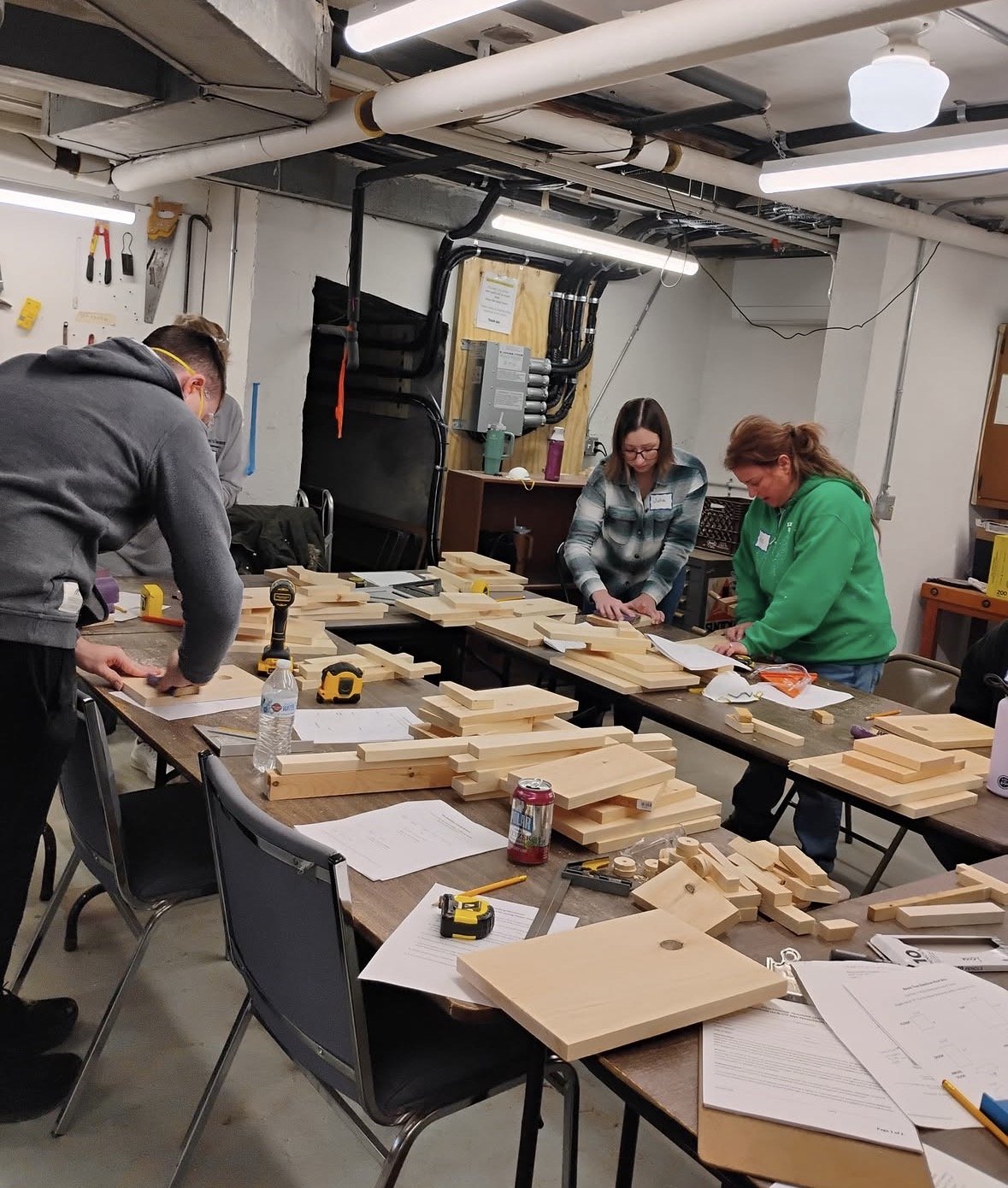
Julia participated in a birdhouse building workshop at the Stewardship Training Center in March.
Despite being someone who has lived on the South Shore all of my life and visited several Wildlands Trust properties, I had no idea how much Wildlands Trust does to preserve local ecosystems, engage with the community, and provide people with free access to explore nature. Through a recent teacher “externship” (similar to an internship, but more observational and for a shorter amount of time), I was able to learn more about Wildlands Trust and bring back meaningful experiences to my classroom.
I recently finished my 6th year as a science teacher in Carver. Despite being a smaller district compared to neighboring towns, Carver Middle High School does a lot to provide opportunities for its students. One of the ways we achieve that is through the Carver Pathways Program. I am one of the teachers involved with the Environmental & Agricultural Sciences Pathway, which is designated as an Innovation Career Pathway by the Massachusetts Department of Elementary and Secondary Education. The focus of these programs is to provide students with relevant skills and coursework pertaining to a high-demand industry, which will hopefully lead to them pursuing a career or college degree in that field.
This year, our school received a grant for Innovation Career Pathway teachers to complete on-site externships with local business partners to bridge the gap between education and industry and to establish future internship opportunities for seniors in our Pathway.
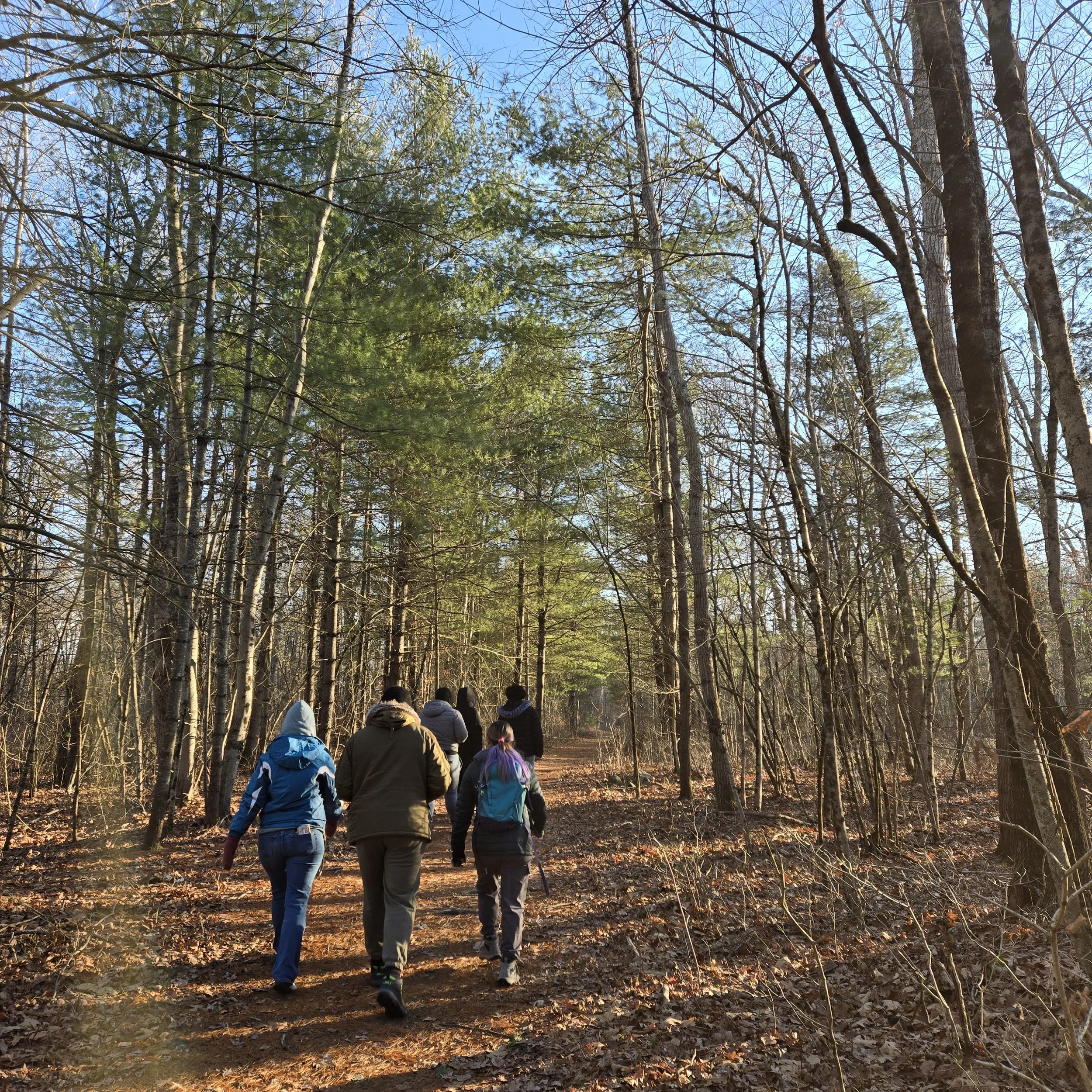
Starting in March, I attended my first externship activity: a birdhouse building workshop with Brockton teachers, hosted by Wildlands Trust and Manomet Conservation Sciences. That same week, I attended a Winter Trees Identification Hike held at Tucker Preserve in Pembroke. Both of these experiences were a great way for me to get a glimpse of some of the programs that Wildlands Trust has to offer.
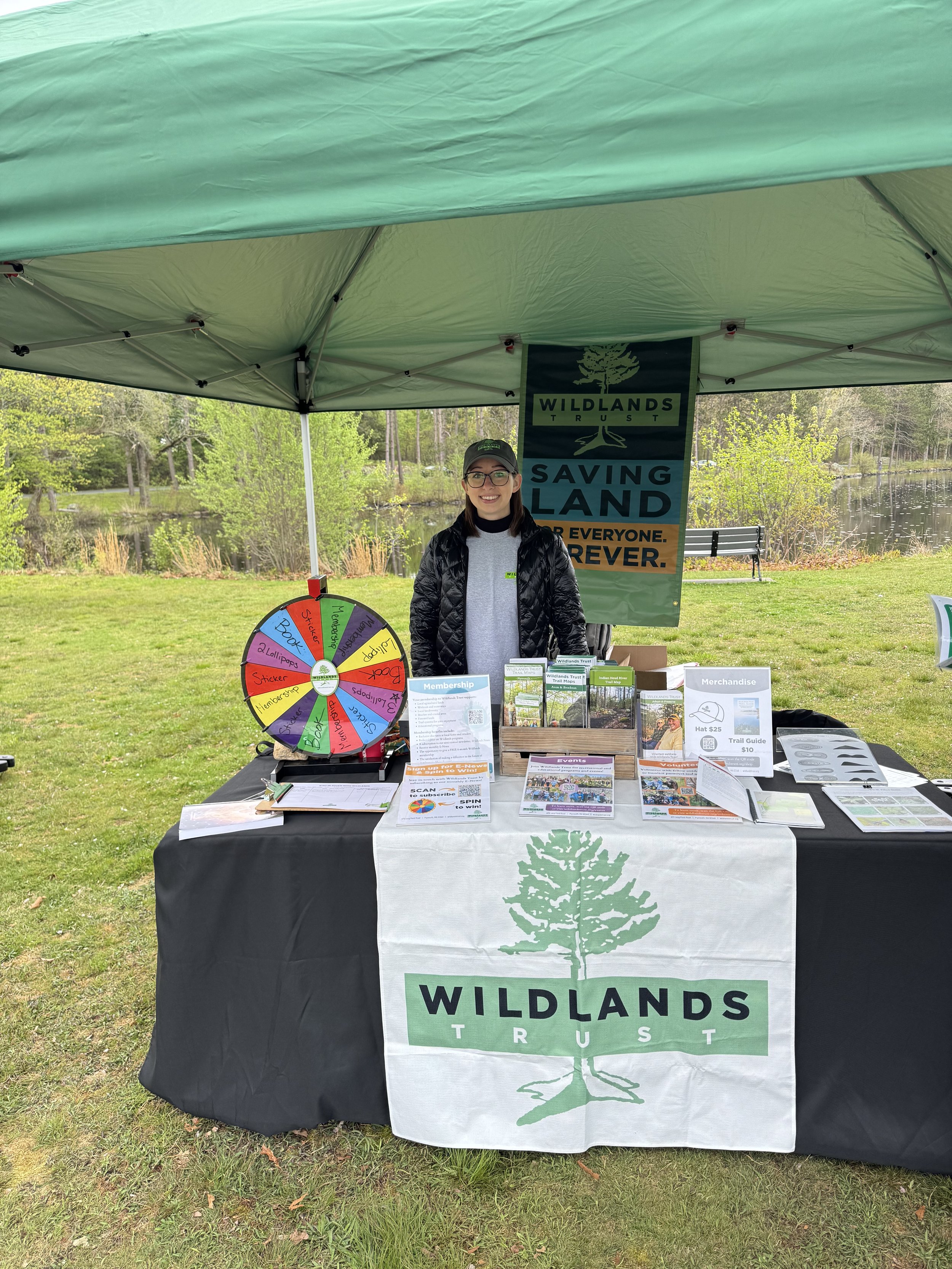
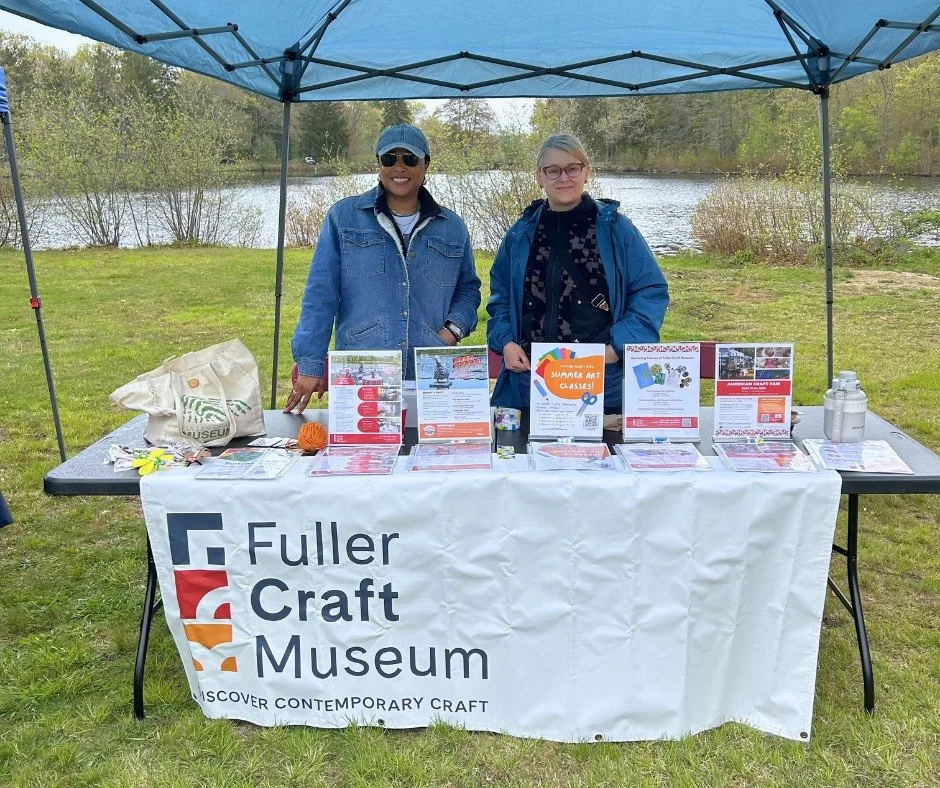
Julia represented Wildlands Trust at Give a Hoot About the Park at D.W. Field Park in May.
In early April, I completed both the Hike Leader and Ambassador trainings so that I could begin engaging with the community. Throughout the spring, I helped run the Wildlands Trust outreach table as an ambassador at the Plymouth Herring Run Festival, Give a Hoot About the Park at D.W. Field Park in Brockton, and the West Bridgewater River Walk. As an educator, these experiences were especially exciting to me because I was teaching people of all ages about the mission of Wildlands Trust, as well as the ways that folks can get outside or get involved. These events allowed me to network within Wildlands Trust, but also with other organizations like Mass Audubon.
In late May, I completed my Hike Leader Certification by leading my own hike at the Tucker Preserve in Pembroke. It was a beautiful day to hike the approximately 4-mile trail along the Indian Head River. Our school has a system of trails in the woods nearby, so I’ve found my hike leader training with Wildlands Trust to be valuable when it comes to taking my students outdoors. I feel better equipped to lead my students on hikes to collect data out in the forest.
The final aspect of my externship involved staff interviews that I conducted over the course of my time at Wildlands Trust. I was able to meet with the following departments: Land Protection, Stewardship, Development & Communications, GIS, and Senior Leadership. In each of these interviews, I gained insights on what these staff members do, how they got to where they are today, what skills they find valuable in potential student interns, and what advice they have for high school students looking to go into the environmental field. I will be using everything I’ve learned to help guide instruction in my Principles of Ecology class this fall. Through my externship, I’ve even come up with some projects I’d like to do in that class: certifying both of the vernal pools we have on our school grounds, marking the trails we have behind the school, and creating a map of the trail system.
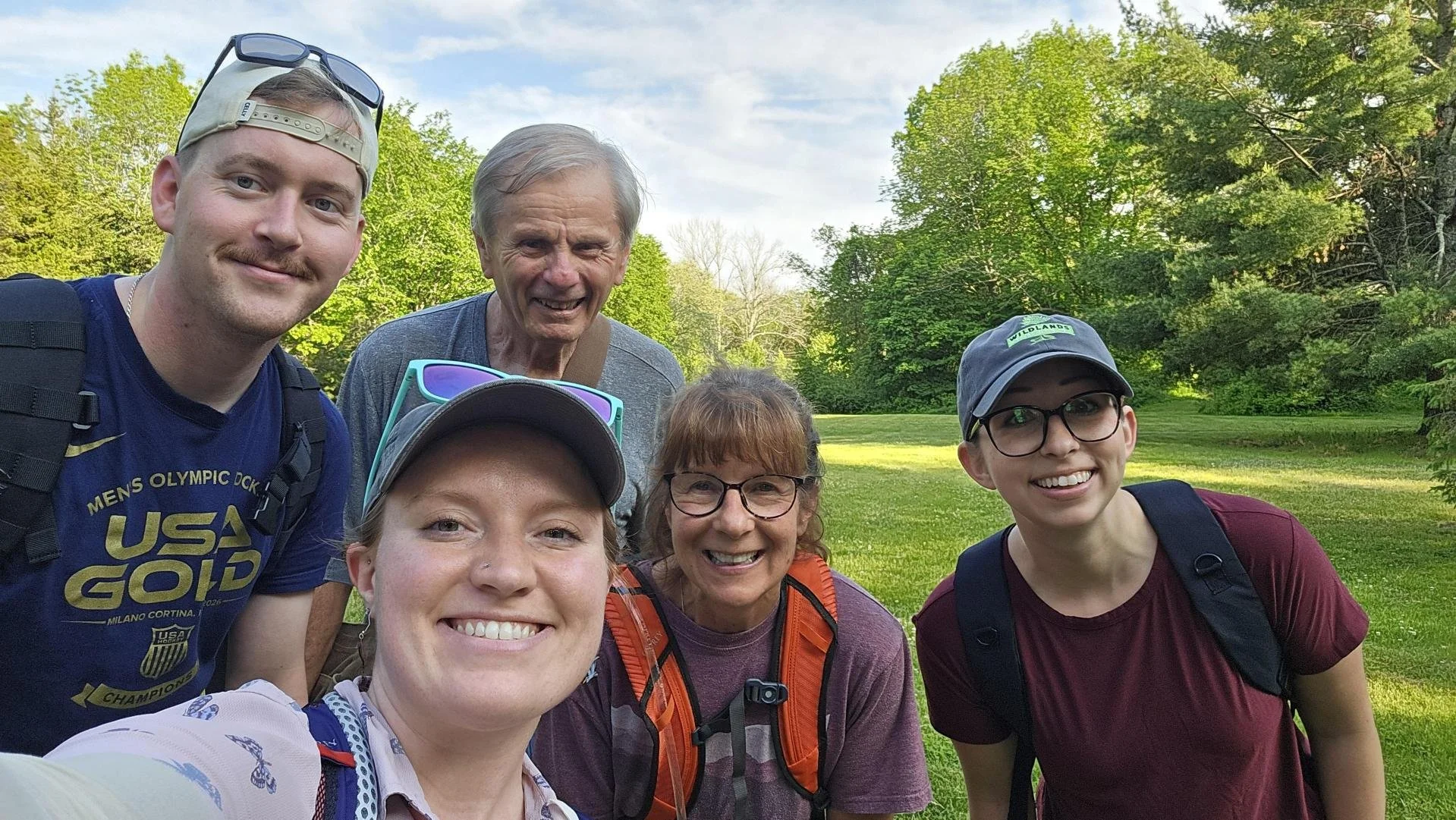
Julia completed her Hike Leader Certification at Tucker Preserve in Pembroke in May.
Though my time at Wildlands Trust only spanned about 3 months, I had such a great experience, met so many wonderful people, and gained valuable knowledge that I will bring with me back to my classroom. I look forward to continuing a partnership between Carver Middle High School and Wildlands Trust, and hope that we’ll see one of our seniors start an internship there in the next few years. Having completed this experience, I’ve had the chance to see all of the different skills and knowledge that our students could gain from interning at Wildlands Trust. It’s a fantastic local organization filled with people who truly care about making the world a better place through stewardship, community engagement, and education.
Brockton High Students Compete at MA Envirothon Competition
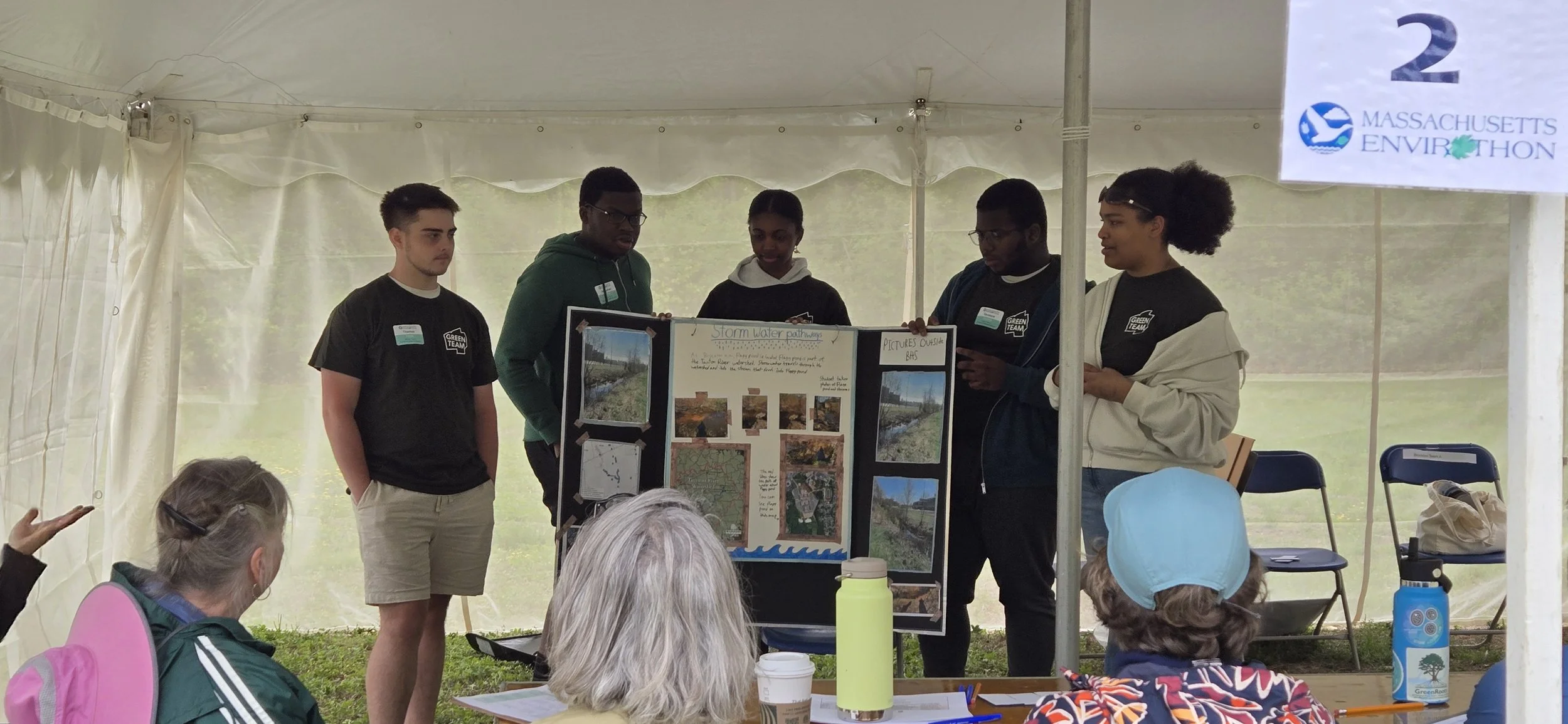
Brockton High Envirothon Team presenting their Current Issue research at the Competition in Hopkinton.
On Thursday, May 21, five Brockton High School students put their natural resources knowledge to the (hands-on, collaborative) test at the 2026 Massachusetts Envirothon. Congratulations to all the students for making their Brockton and Wildlands Trust communities proud!
Thirty teams representing 23 high schools across the state converged at Hopkinton State Park in Hopkinton for this year’s competition. Each team was tested in five environmental areas: Forest, Wildlife, Water, Soil, and Current Issue. This year’s current issue, Living Sponge Communities, called on each team to present actionable ideas to transform Massachusetts into a model for sustainable stormwater management. Our team mapped the City of Brockton’s impervious surfaces, identified areas of point and nonpoint source pollution, and proposed infrastructure and community-based solutions.
Wildlands Trust has coached and sponsored the Brockton High School Envirothon team since 2015. Amy Burt, Wildlands’ Programming Coordinator, coaches the team alongside Brockton High School biology teacher Melissa Kelly and Manomet Conservation Sciences’ Science Educator Lily Green.
Congratulations again to the Brockton High School students on an impressive showing, including a fourth-place tie in Wildlife! Additional kudos to the seniors, who joined the team this year and were able to compete before graduation!
To learn more about Wildlands Trust’s Brockton High School Envirothon initiative, visit wildlandstrust.org/envirothon.
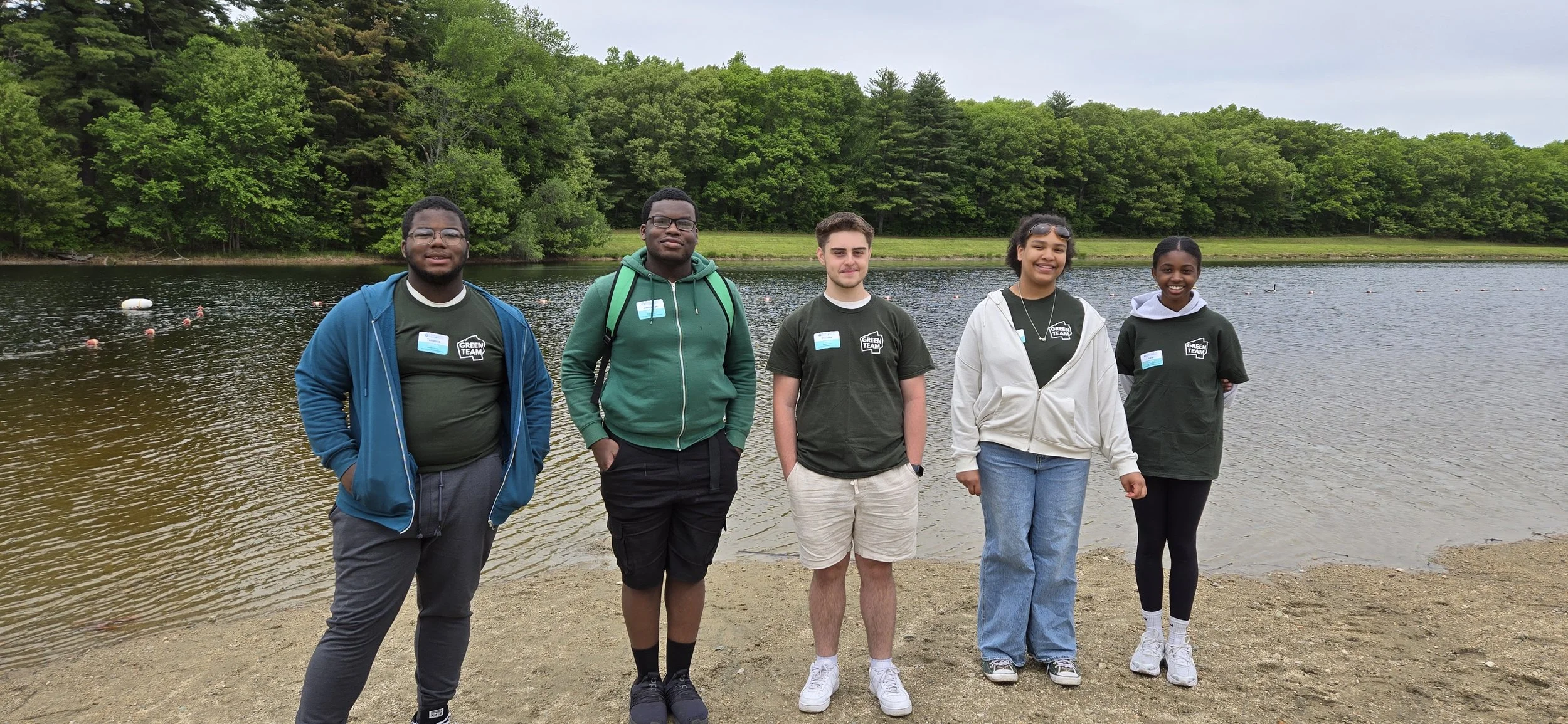
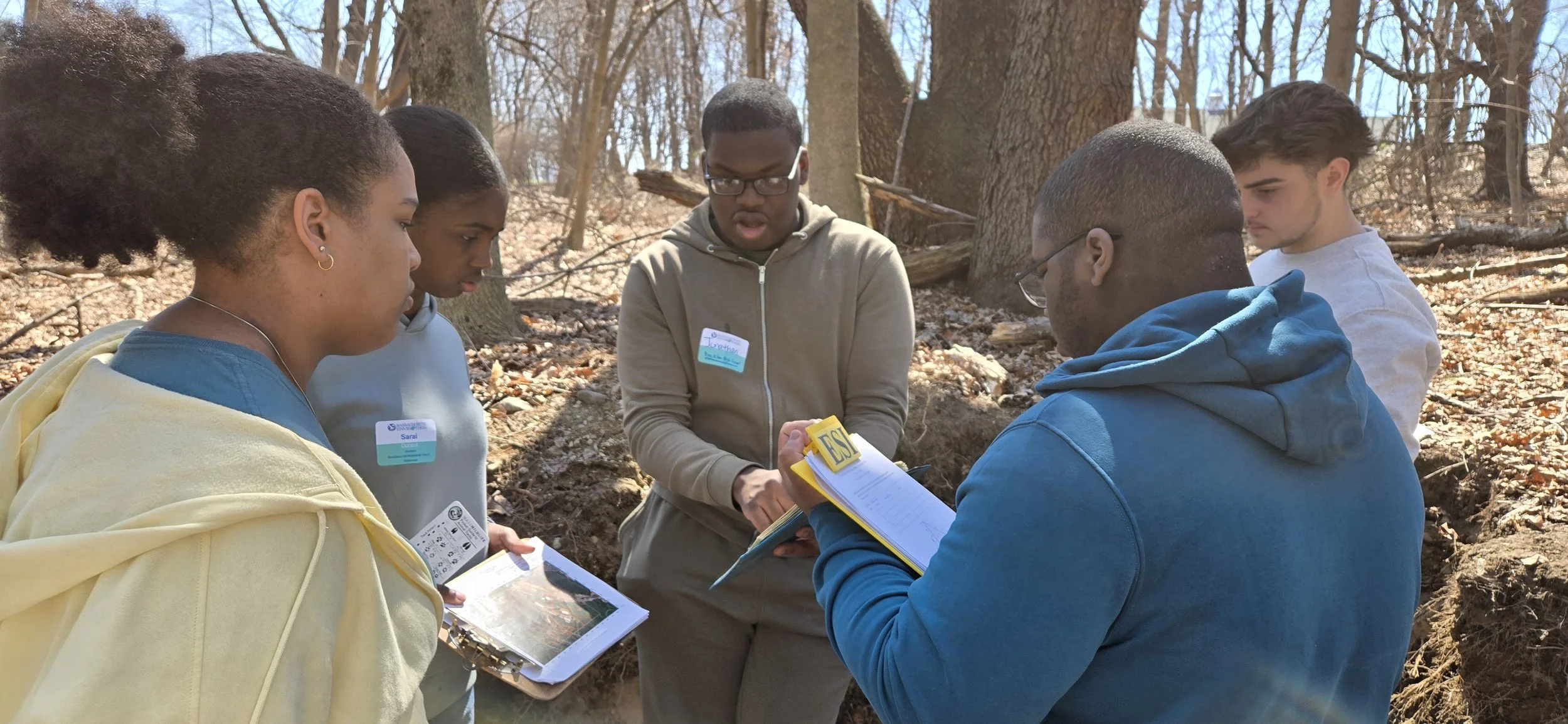
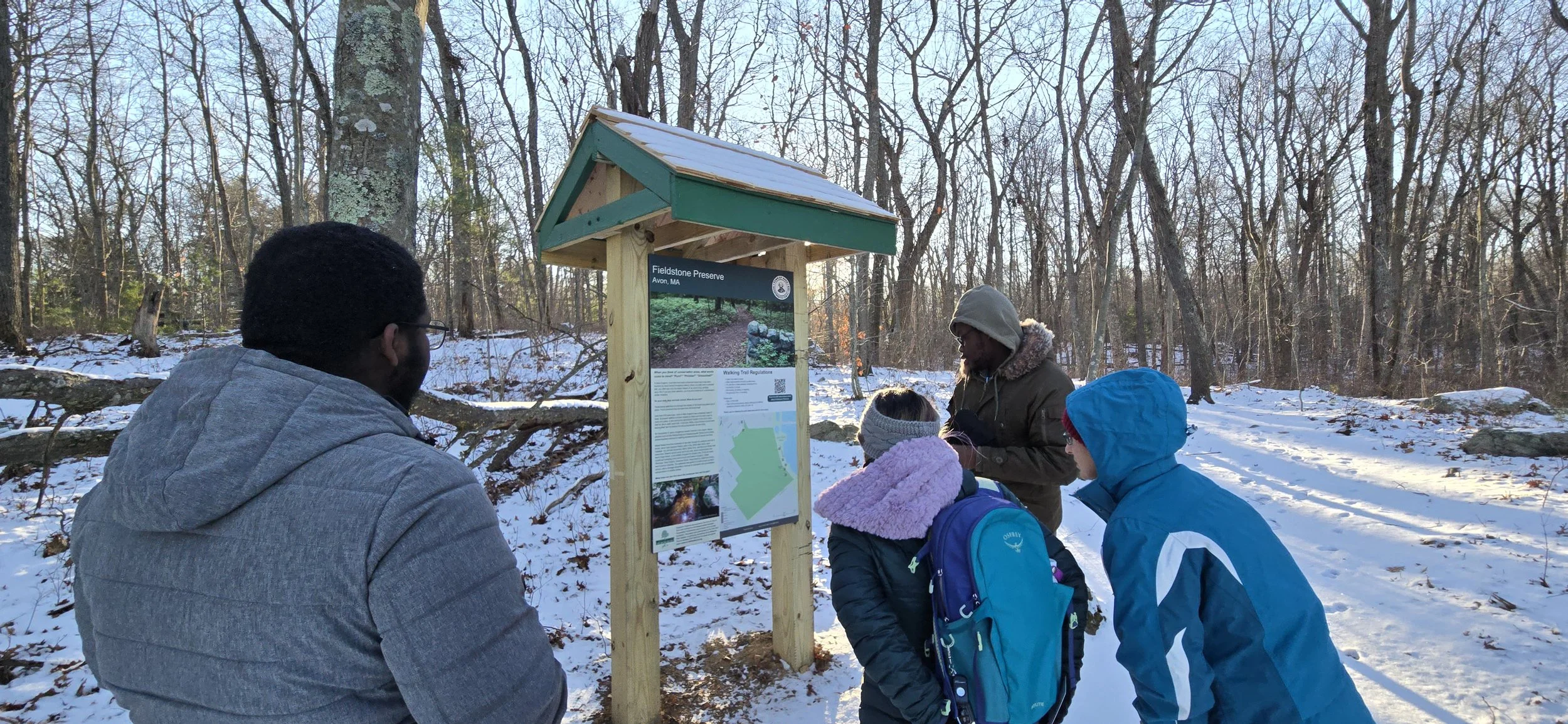
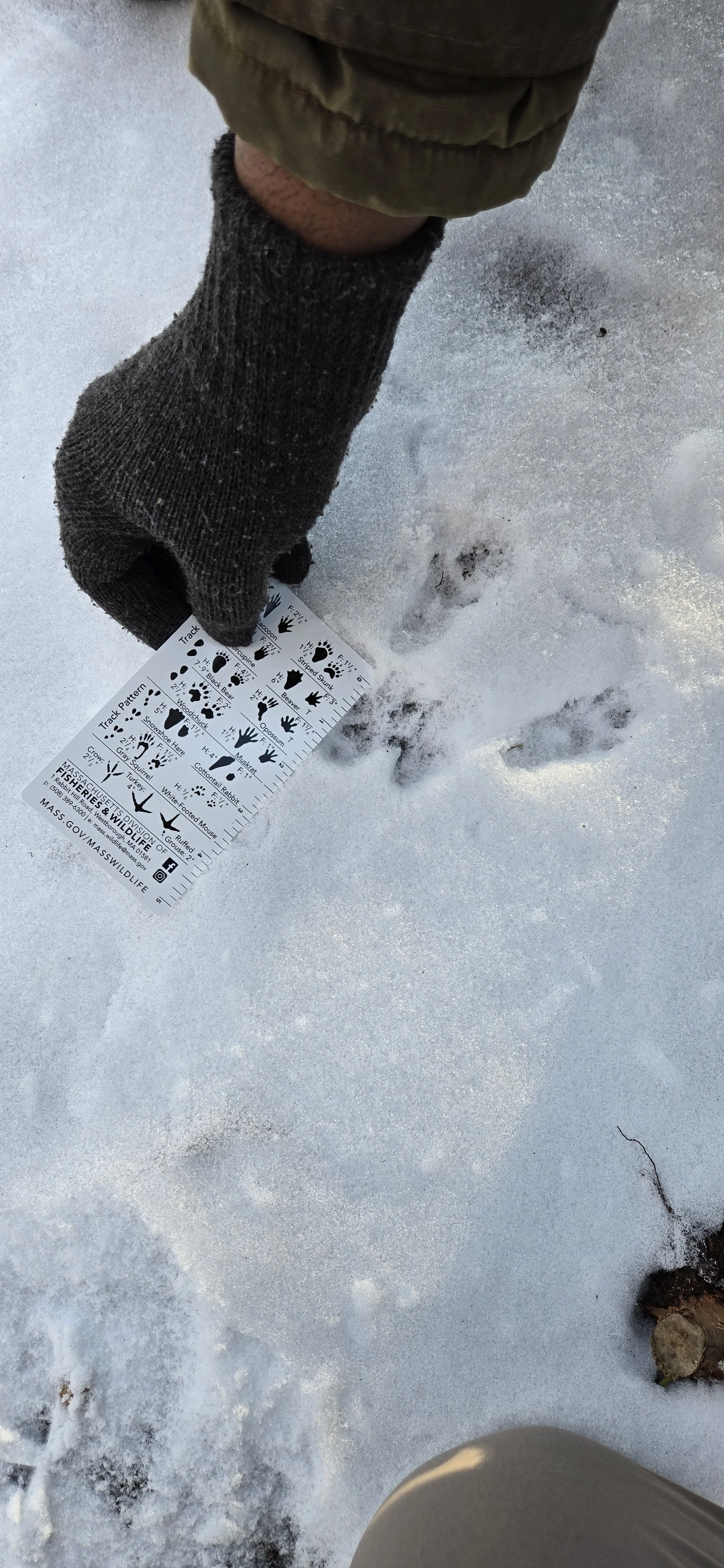
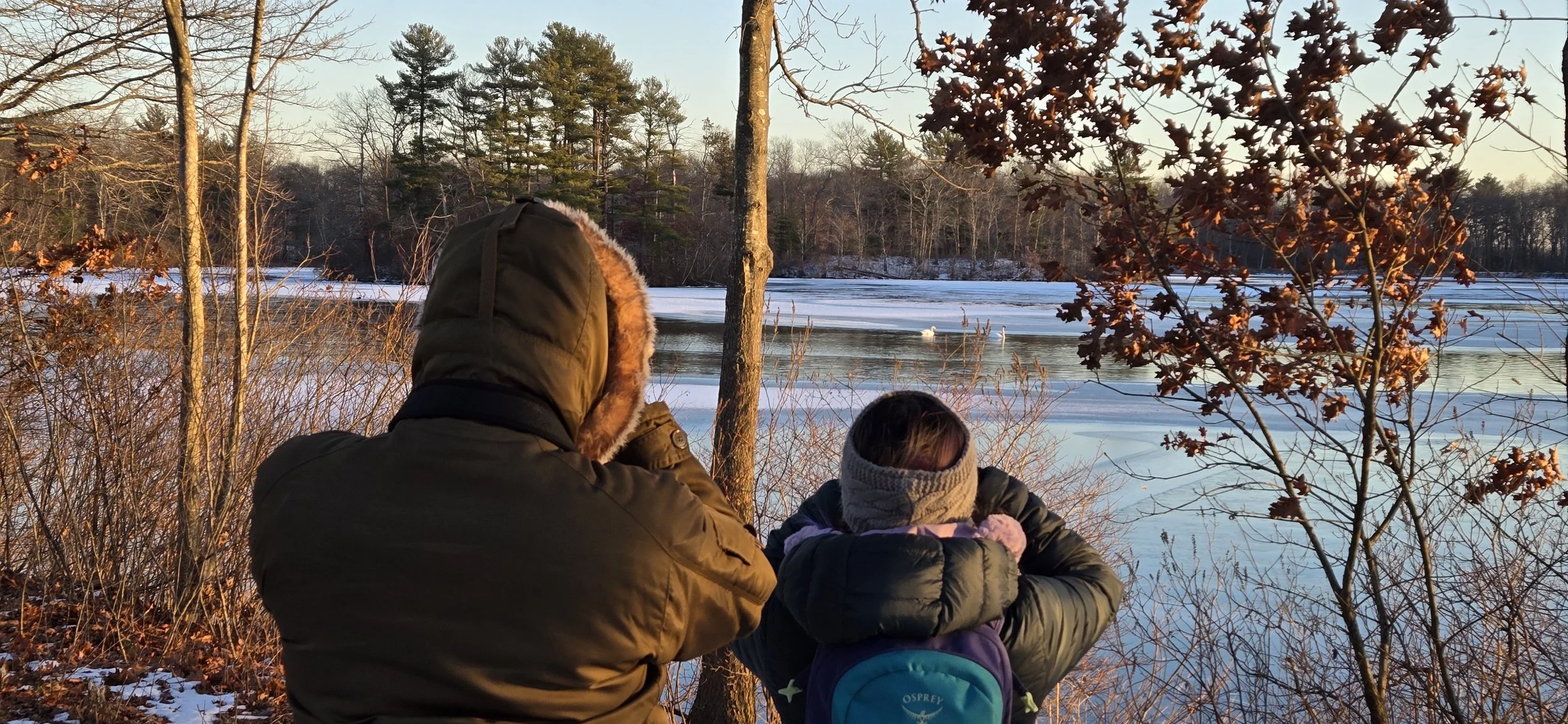
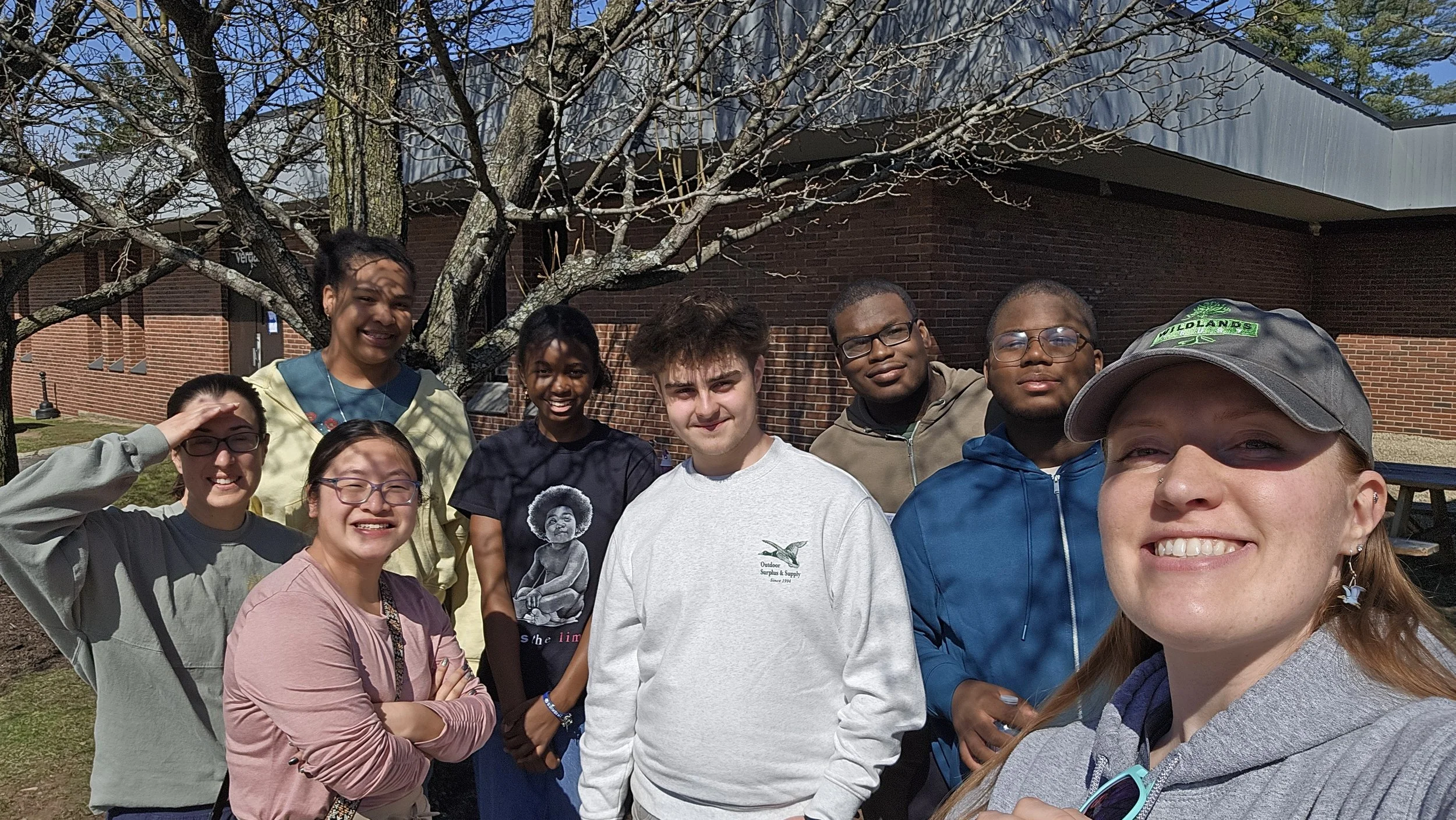
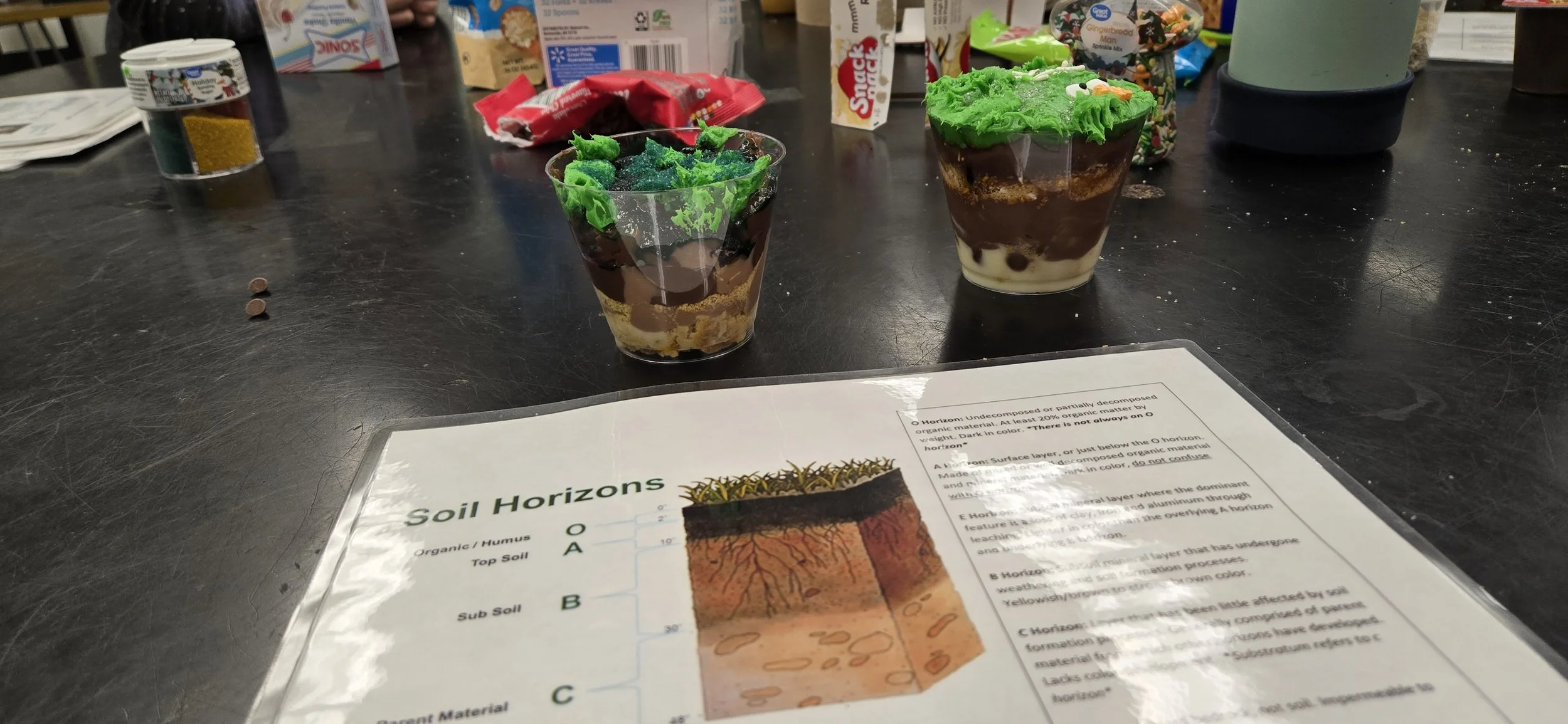
Click through the slideshow below to see more photos from the 2026 competition, and our year together as the Brockton Outdoor Club.

Meet Wildlands’ 2026 Seasonal Staff!
Every summer, the Wildlands stewardship crew gets a bit bigger. Seasonal Land Stewards join our team to support our work during the busiest part of the year. Read on to learn more about these new faces at Wildlands.

From left to right: Niall Blackadar, Max Hong, and Ethan Wilkinson
Niall Blackadar graduated from Wheaton College in 2023 with a BA in sociology. Since finishing his degree, he has worked for nonprofits, small businesses, and restaurants. But nothing has ignited his passion in the same way that hands-on conservation work has. He was introduced to conservation work through the GFCC (Growing Futures Career Catalyst), working at the Arcadia Management Area in Rhode Island, and has "been hooked ever since." Spending his summers on Halfway Pond gave Niall a great affinity for the landscape and history of Southeastern Massachusetts. His family’s connection to Halfway Pond dates back over 100 years, and they have been connected to Wildlands Trust since its inception. Niall says, "Joining as a Seasonal Land Steward this summer and having the opportunity to help conserve the land that I cherish deeply is a dream come true."
Max Hong is returning for his second summer as a Seasonal Land Steward at Wildlands Trust. During his senior year of high school, he worked part-time through the winter at Wildlands to help the stewardship team monitor properties. Max graduated from the Thayer Academy this spring and plans to study Environmental Sciences at the University of Vermont in the fall. Max grew up in Duxbury and has always spent his free time outdoors doing the things he loves, whether it has been on the water in Cape Cod or in the mountains of New Hampshire. He really enjoys rock climbing and flyfishing. "Working at Wildlands is always something to look forward to because I get to spend time outside, taking care of the environment with a fun group of like-minded folks!"
Ethan Wilkinson is a Seasonal Land Steward joining us this summer. He grew up in Western Massachusetts and spent a lot of time outdoors. From a young age, he has loved being outside and helping people, so finding a way to do both has been a constant pursuit. Ethan recently graduated with a degree in biology from the University of Rhode Island and plans on a career in environmental restoration and conservation. "Wildlands Trust is a great opportunity to get my hands dirty, and this summer is promising to be a lot of fun."
Thank you all for the work you have already done and will continue to do this summer! We are ecstatic to have you aboard!

Thank You for Coming to Give a Hoot About the Park
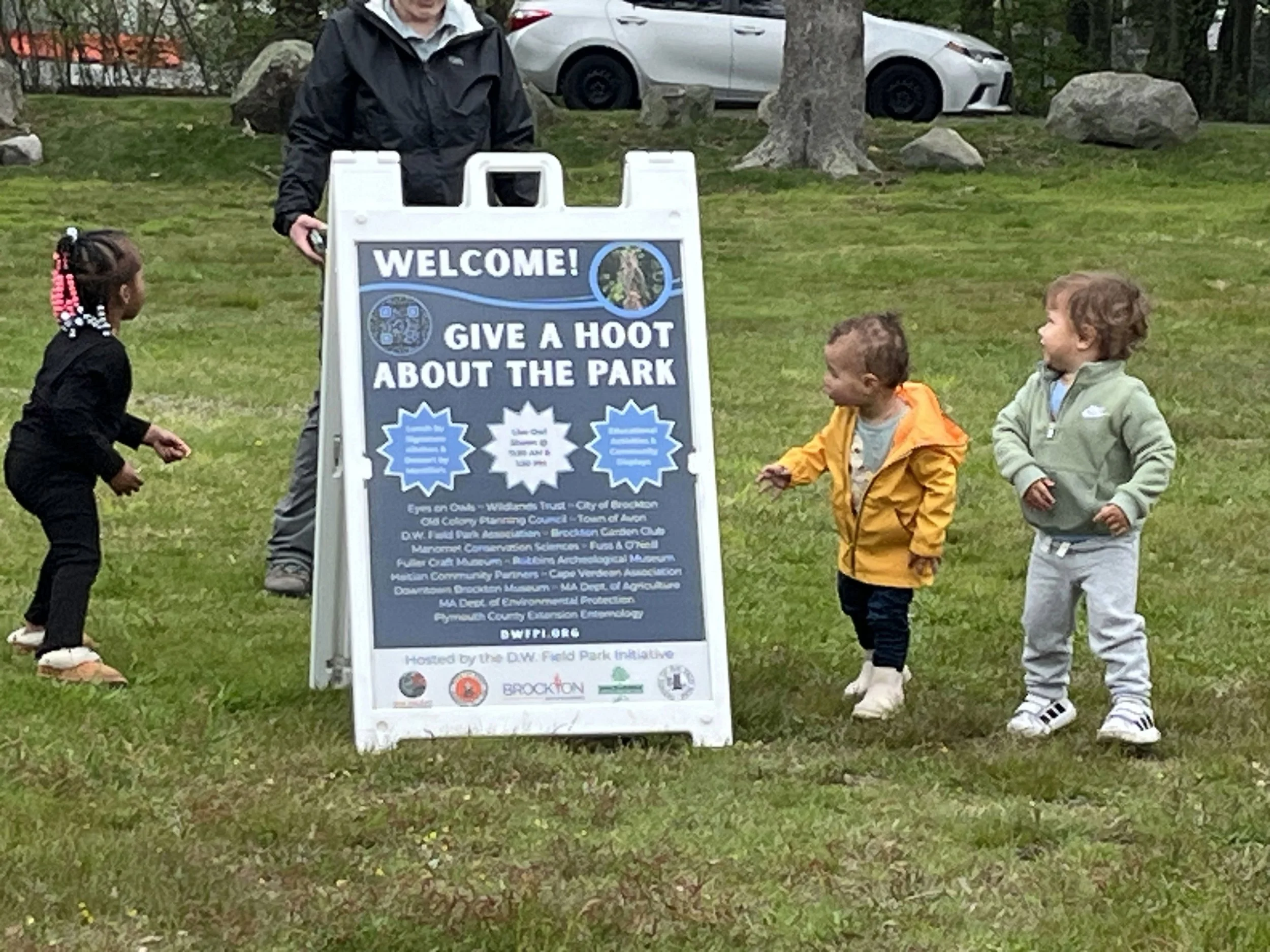
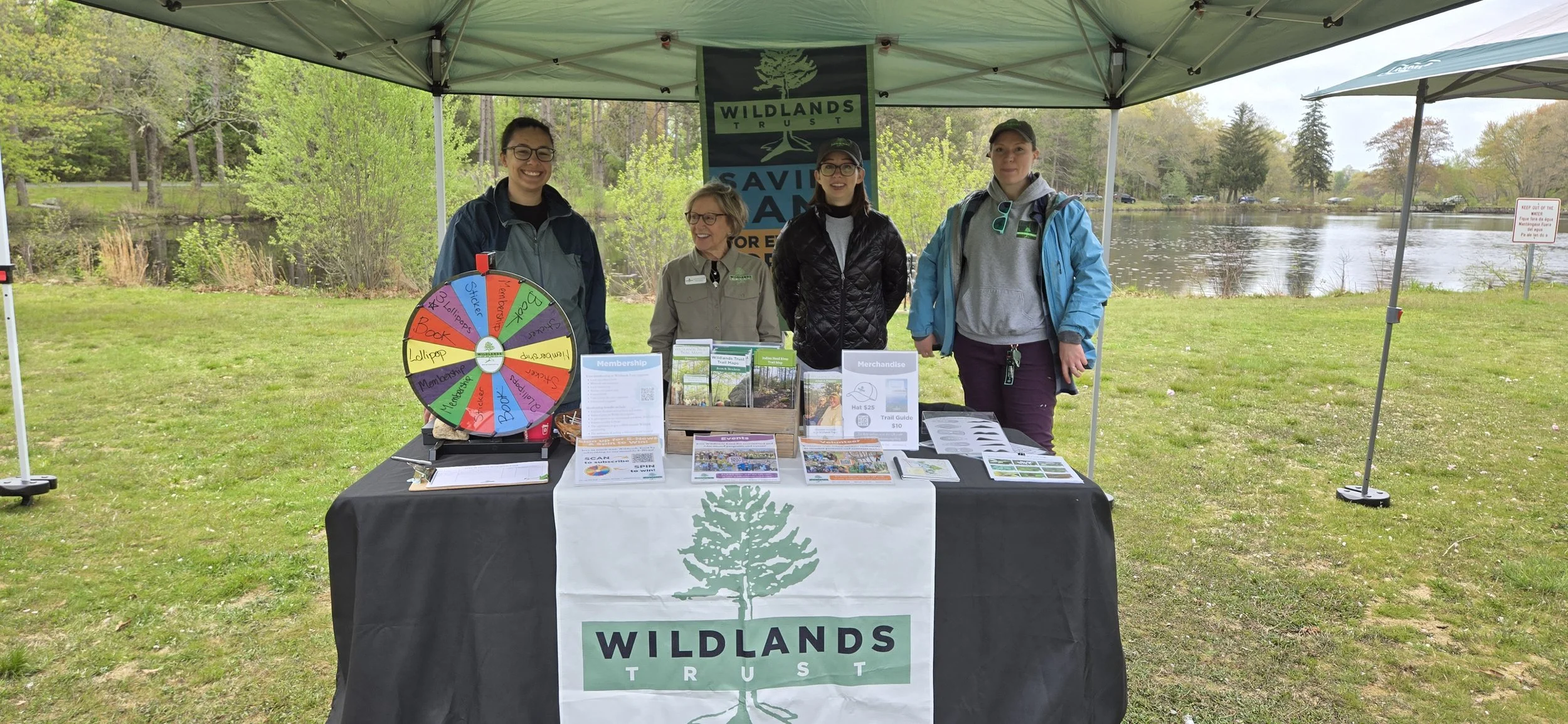
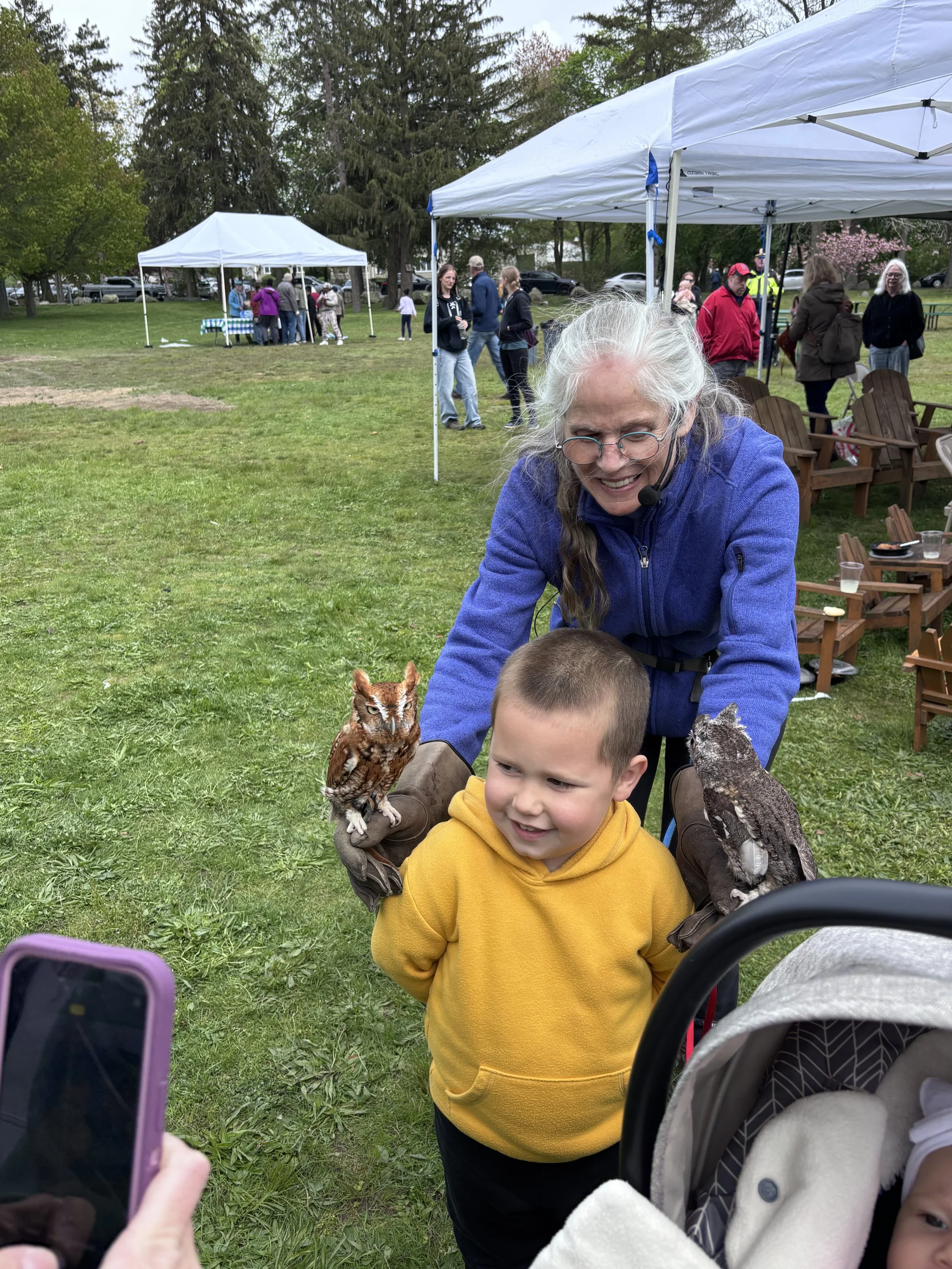
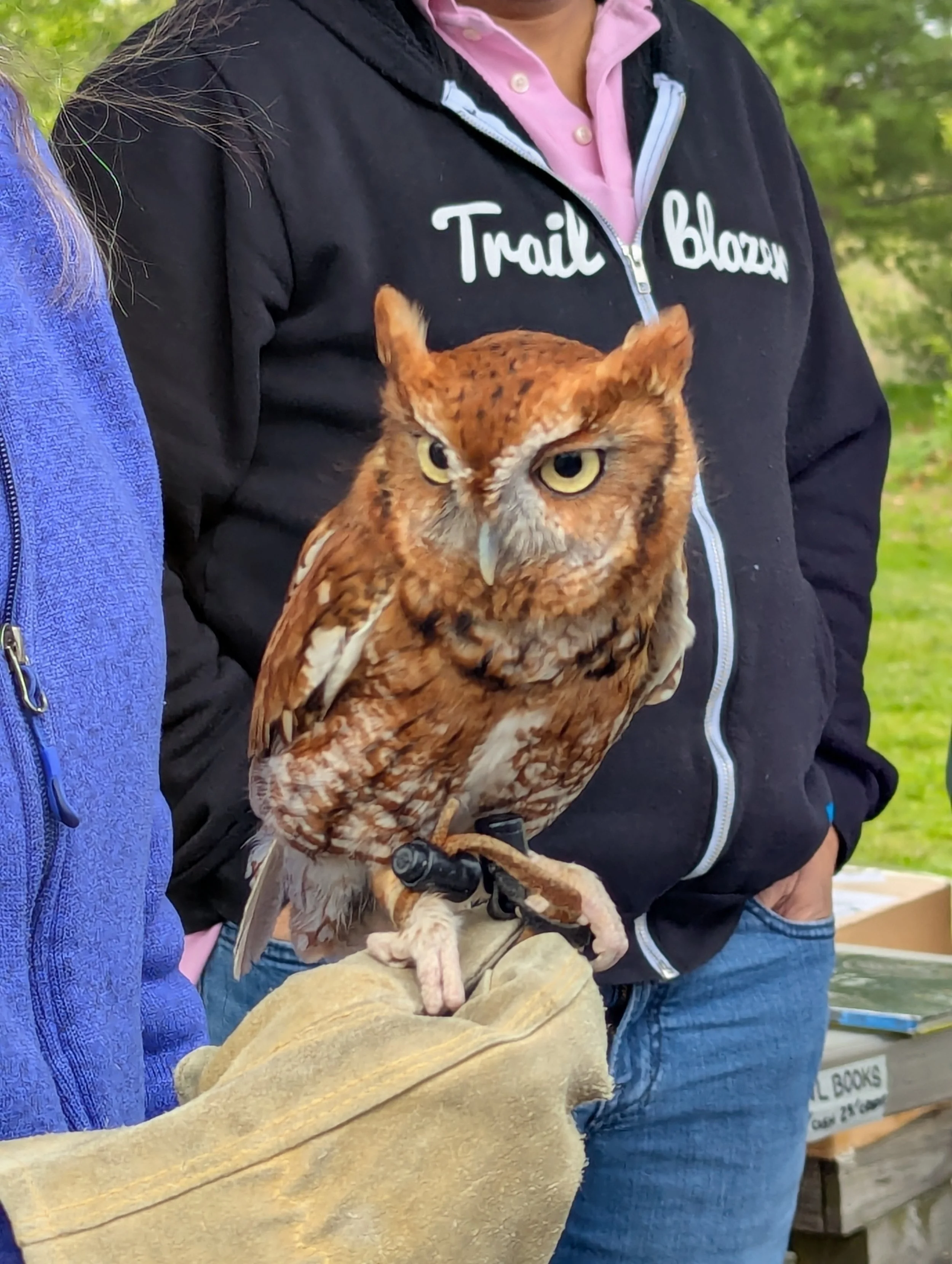
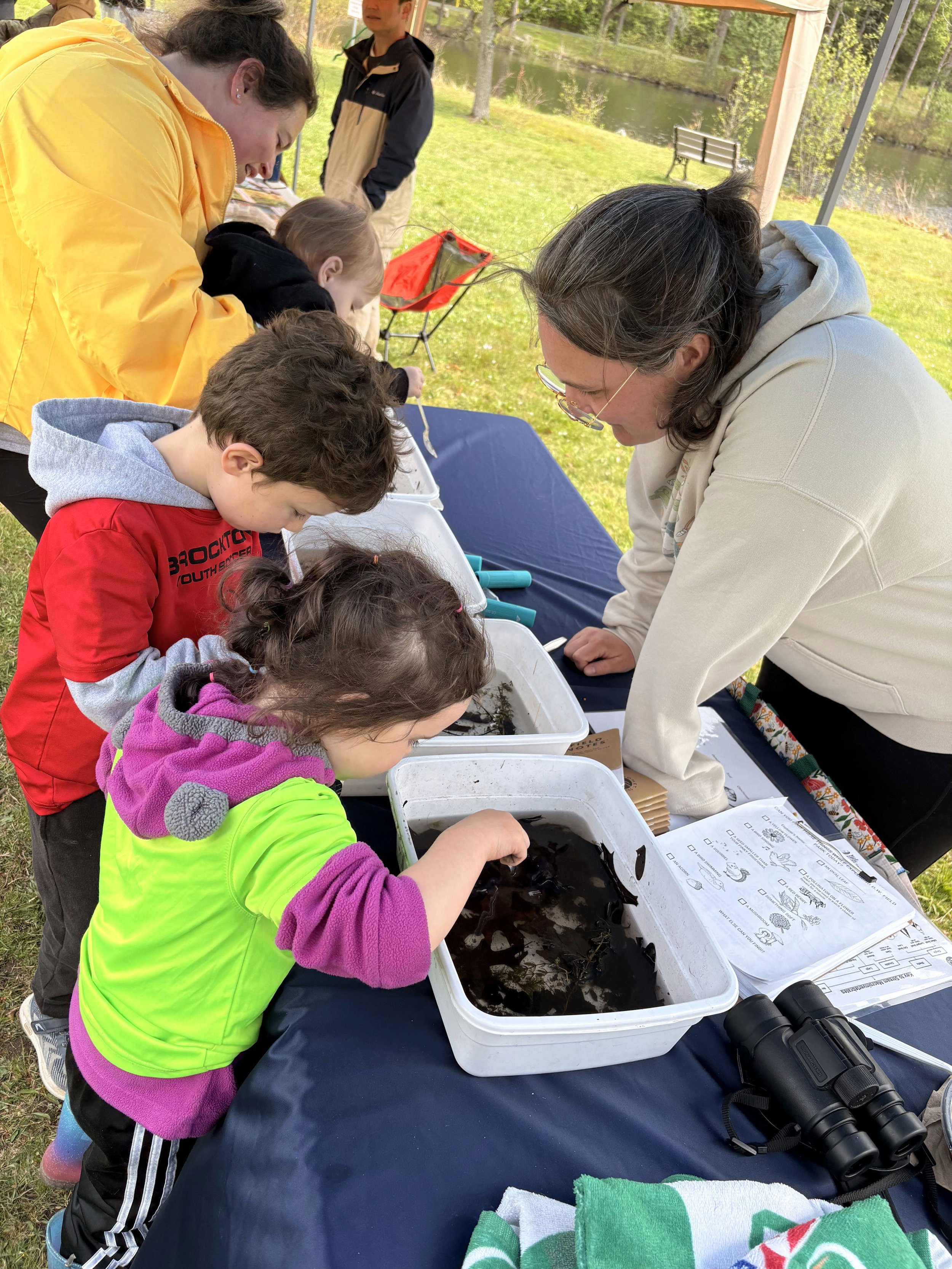
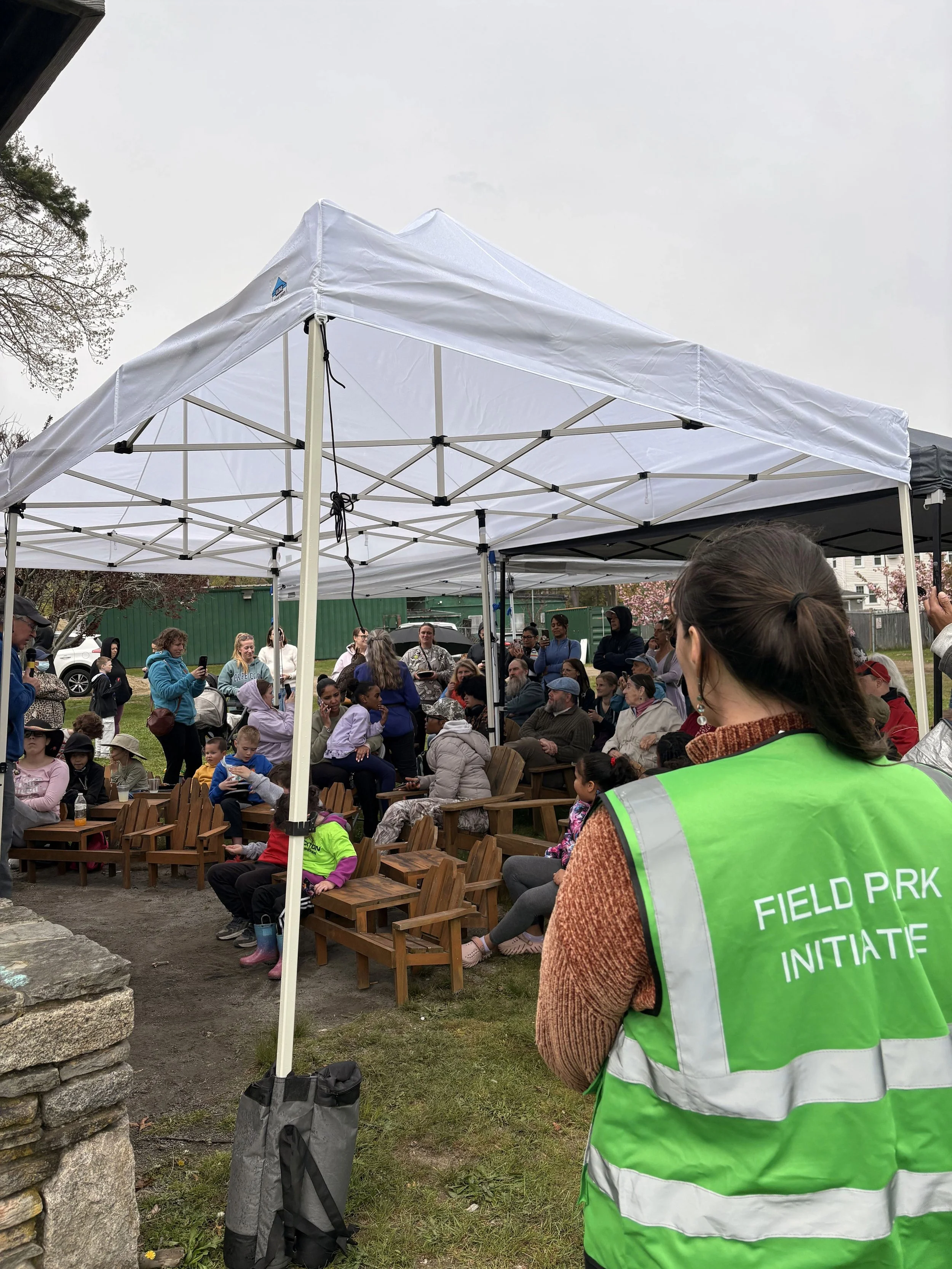
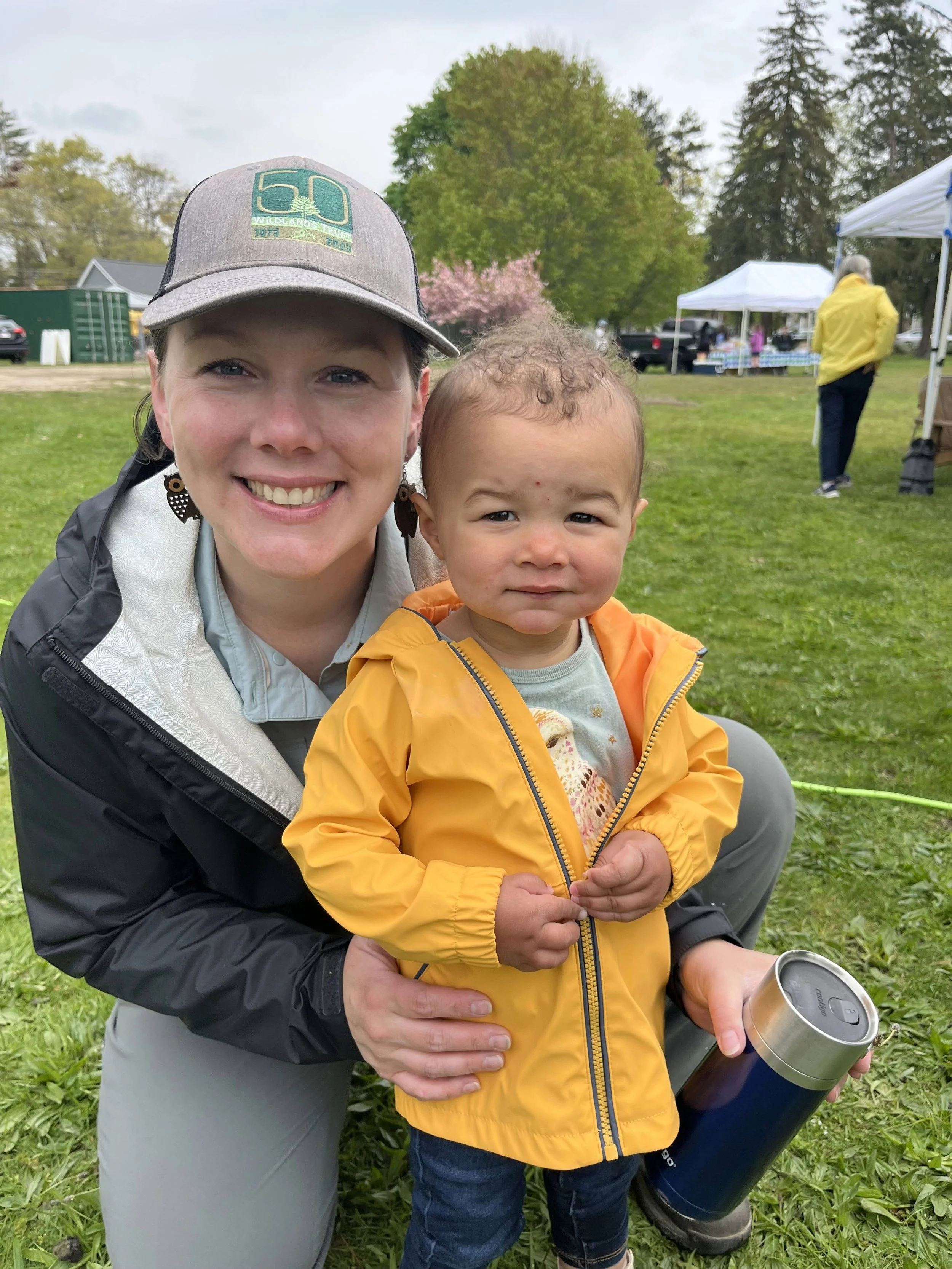
300 Community Members Attended Give a Hoot About the Park on Saturday, May 9 at D.W. Field Park.
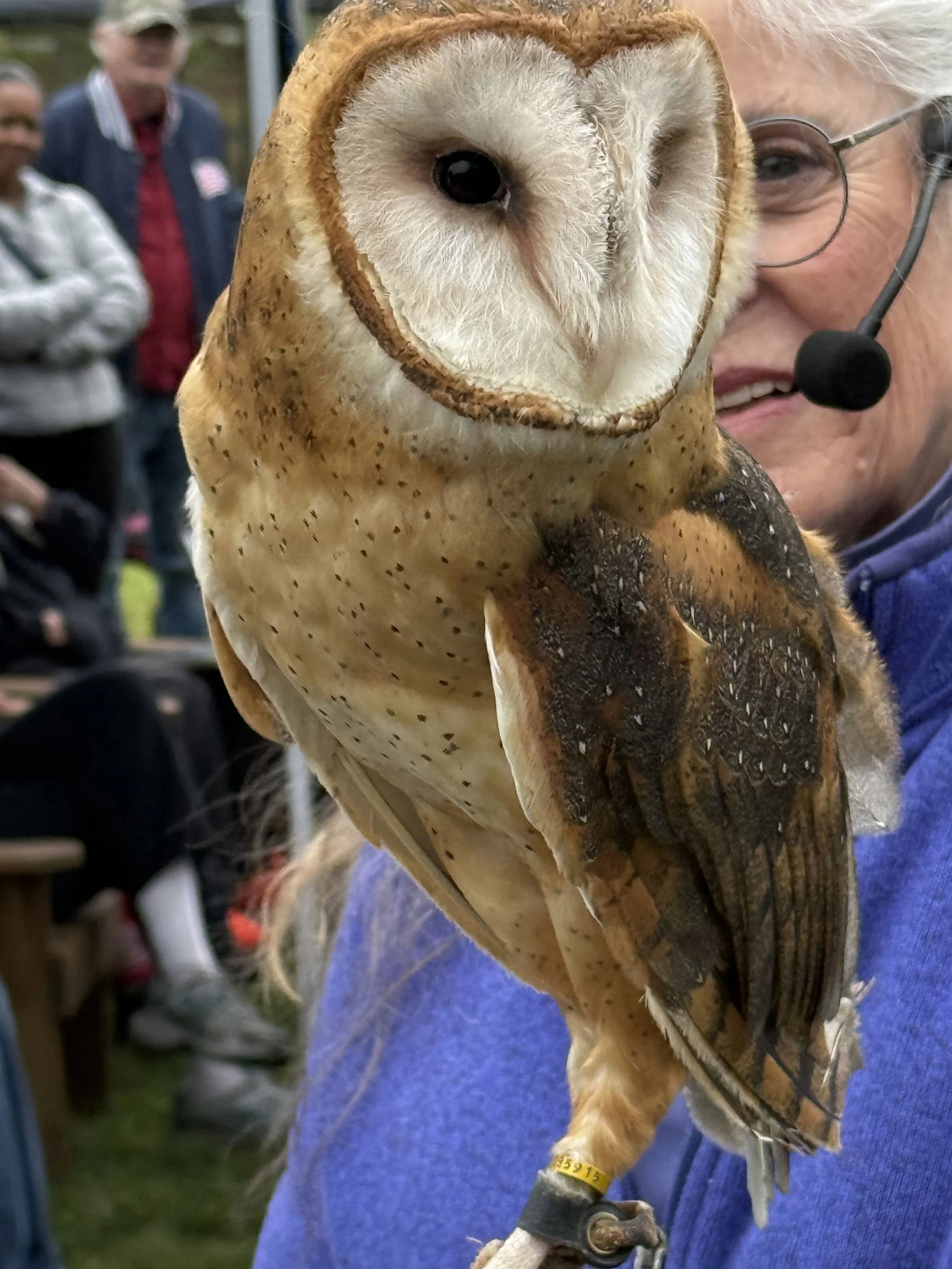
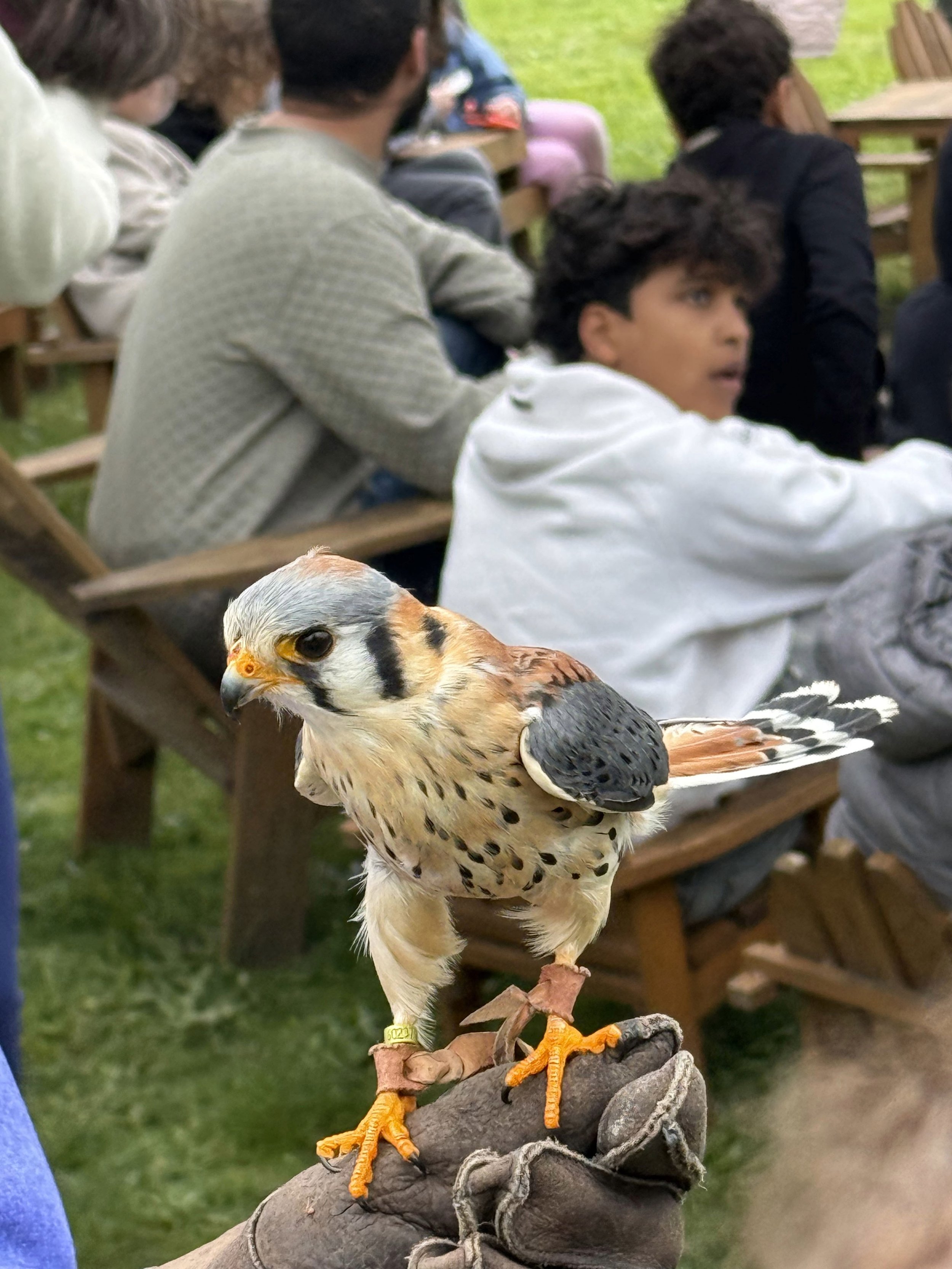
The D.W. Field Park Initiative thanks everyone who came out to celebrate the park last Saturday! Marcia and Mark Wilson of Eyes on Owls stunned the crowd with their beautiful birds of prey, teaching us the importance of protecting habitats and the wildlife that call them home. Signature Kitchen made mouths water with Haitian chicken, rice, beans, plantains, and fresh fruit juices. Community groups offered engaging activities and resources for attendees to engage with throughout the year. Fuss & O'Neill presented draft designs for the new D.W. Field Parkway. And the rain mostly held off!
We thank you for a wonderful day and look forward to hosting again in 2027.
Thank you to our event partners:
Plymouth County Extension Entomology

Scandalous Sassafras
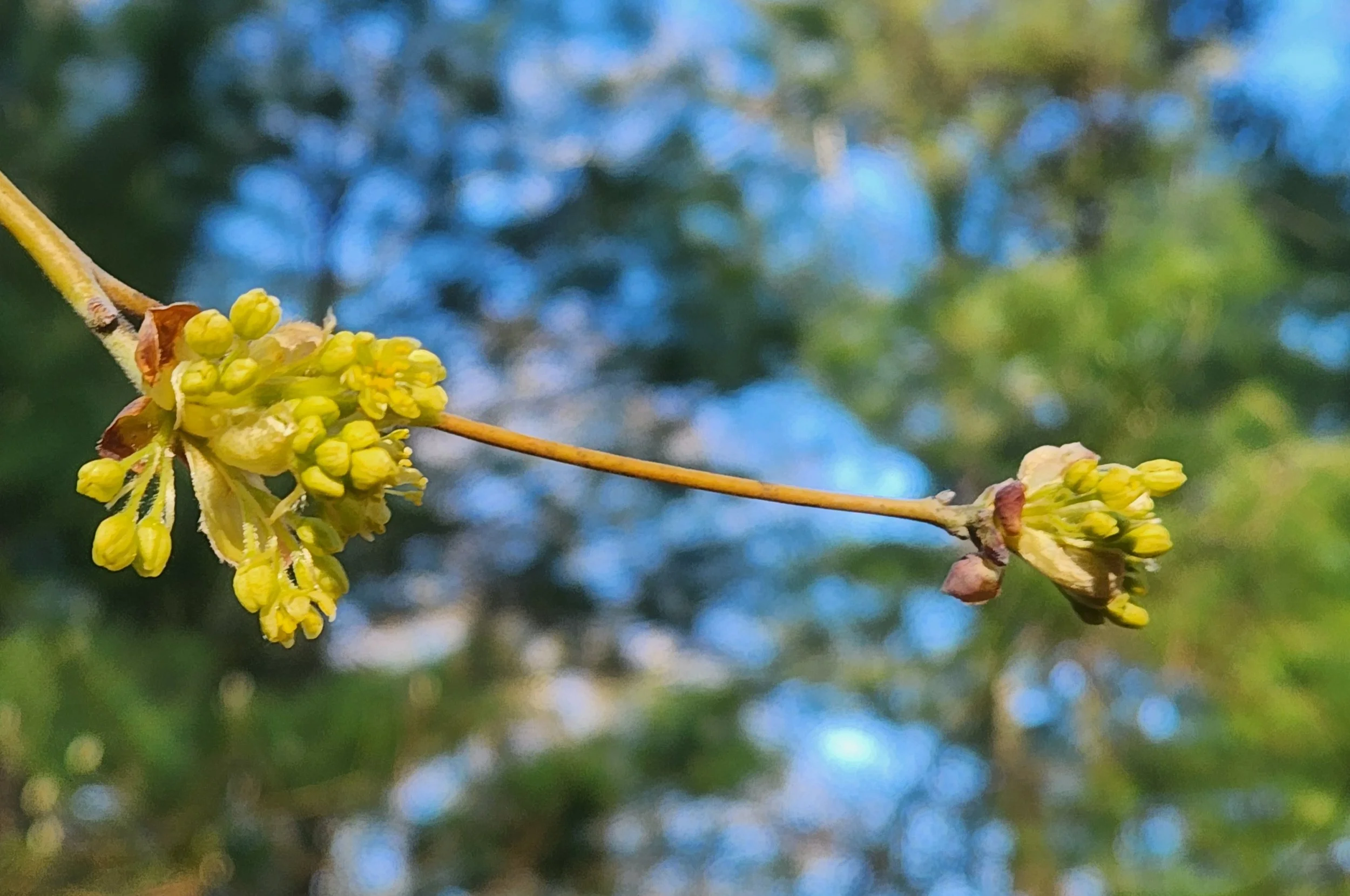
Sassafras flowers in late spring. Photo by Justin Cifello.
By Justin Cifello
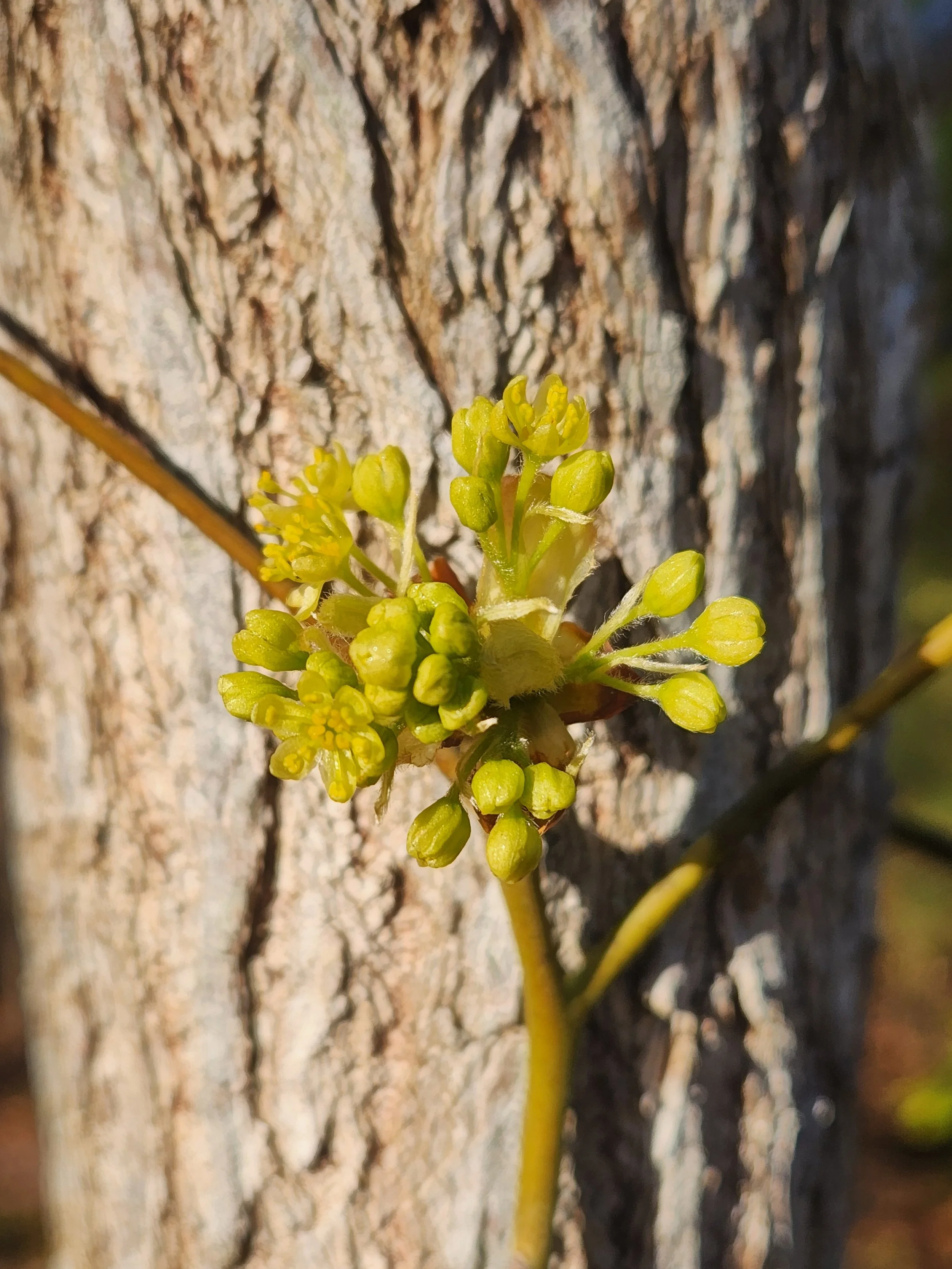
Delicate sassafras flowers can be found in late spring, when shadbush blooms. Photo by Justin Cifello.
Southeastern Massachusetts is home to a number of aromatic plants. Wintergreen, with its dark green glossy leaves and red berries, has been used as a flavoring for toothpaste and breath-mints. Bayberry’s waxy fruits lend their scent to candles. Sweetfern, though not a true fern, spices the air in hot, dry pine barrens and open meadows. But perhaps the most historically significant one is the sassafras tree.
Sassafras is fairly easy to identify from its distinctly shaped leaves, which come in several different forms. They can have three lobes, looking like a dinosaur footprint or cartoon ghost-in-a-sheet; two-lobes, like mittens; or a simple oval comprised of a single lobe. Though confusing at first, this variety is helpful for identification and can be differentiated from other trees with more consistent leaves. Rubbing a leaf or scratching young green bark will reveal its most unique quality: a bright citrus fragrance, occasionally likened to Fruit Loops cereal. [1]
In our modern era with easy access to an arsenal of flavors and sweeteners, it is hard to conceptualize just how prized aromatic plants were throughout history. Plants were used for medicine as well as flavor. Medicinal plants have always been important, but in the crowded, plague-ridden cities of Europe, people were desperate for new potential cures. These plants were so valuable that wars were fought and nations toppled to ensure access to them. Our modern globalized economy has its roots in the spice trade, and though this may conjure images of tropical islands, this demand also played a large role in the colonization of temperate North America. [2]
Sassafras grows only in the Americas and East Asia and was first recorded by Europeans by the Spanish botanist Nicholas Monardes in the 1500s. He learned of it through captive French sailors, who told of its use as medicine by Indigenous peoples. The origins of the name sassafras are unclear, thought to be a reference to saxifrage, an unrelated group of plants which bear no physical resemblance to sassafras. Saxifrage means “rock breaker” in Latin, as they grow in crevices on rock faces. The name may have been applied to sassafras as a medical metaphor: it was thought to help dissolve kidney stones. Alternatively, it could be from an unknown Indigenous word. It’s possible that both are true, as etymologies can be drawn from many sources. [3]
In addition to kidney stones, sassafras was said to be a general panacea, especially to cure syphilis (it doesn’t). The association may come from a mistranslated account of white cedar curing scurvy (it does!). Though Europe had long known plague, smallpox, tuberculosis, and other maladies, syphilis was a new threat in the 1500s - one of the few diseases to move from the Americas to Europe during the Columbian Exchange. Medicine at the time was informed by the “Doctrine of Signatures,” a belief that the origin or shape of a plant indicated what it could treat, so it seemed likely to them that this foreign plant could cure a foreign illness. [4]
Early demand for sassafras was astronomical. Some colonial charters required quotas of sassafras for export. It became the second most lucrative commodity after tobacco. In his 1602 expedition, Bartholomew Gosnold sailed to New England, where he gave English names to Cape Cod, Martha’s Vineyard, and the Elizabeth Islands. He established a fort on Cuttyhunk Island and brought so much sassafras back to England that the price dropped precipitously. [5]
Over time, people learned that sassafras didn’t meet medicinal expectations, but it was still prized as a sweet flavoring agent. Patent medicines gradually turned from cure-alls to general tonics, then to sodas, as the growing temperance movement sought alcohol-free beverages. Sassafras, along with birch and sarsaparilla, was one of the roots that flavored root beer. In 1960, the USDA banned certain use of sassafras root in commercial products. This was due to the compound safrole, which is carcinogenic in high amounts, though these studies are somewhat disputed. Safrole itself is a controlled substance, as it can be used in the illicit manufacture of the drug MDMA. Sassafras leaves, however, are low in safrole, with similar levels as other herbs, like basil, and are considered safe. Crushed and dried, these constitute filé powder, a thickening agent used in gumbo in lieu of okra. [6]
Though its history of human use is fraught, sassafras is a valuable wildlife food. Its fruits and seeds feed mammals and birds, and its leaves host spicebush swallowtail butterflies. Look for sassafras in open woods and field edges. Capable of reproducing through its root sprouts, it often forms stands of small trees, only occasionally becoming large specimens. Though not a panacea, its unique leaves, vibrant fall foliage, interesting bark, and storied past make this an interesting tree in all seasons.
[1] Identification: https://gobotany.nativeplanttrust.org/species/sassafras/albidum/
[2] Spice Trade: https://www.worldhistory.org/article/1777/the-spice-trade--the-age-of-exploration/
[3][4][5] Sassafras History: https://www.gillmirrlees.com/sassafras/
[6] Toxicity: https://www.mcgill.ca/oss/article/did-you-know/root-root-beer-sassafras