
Scandalous Sassafras
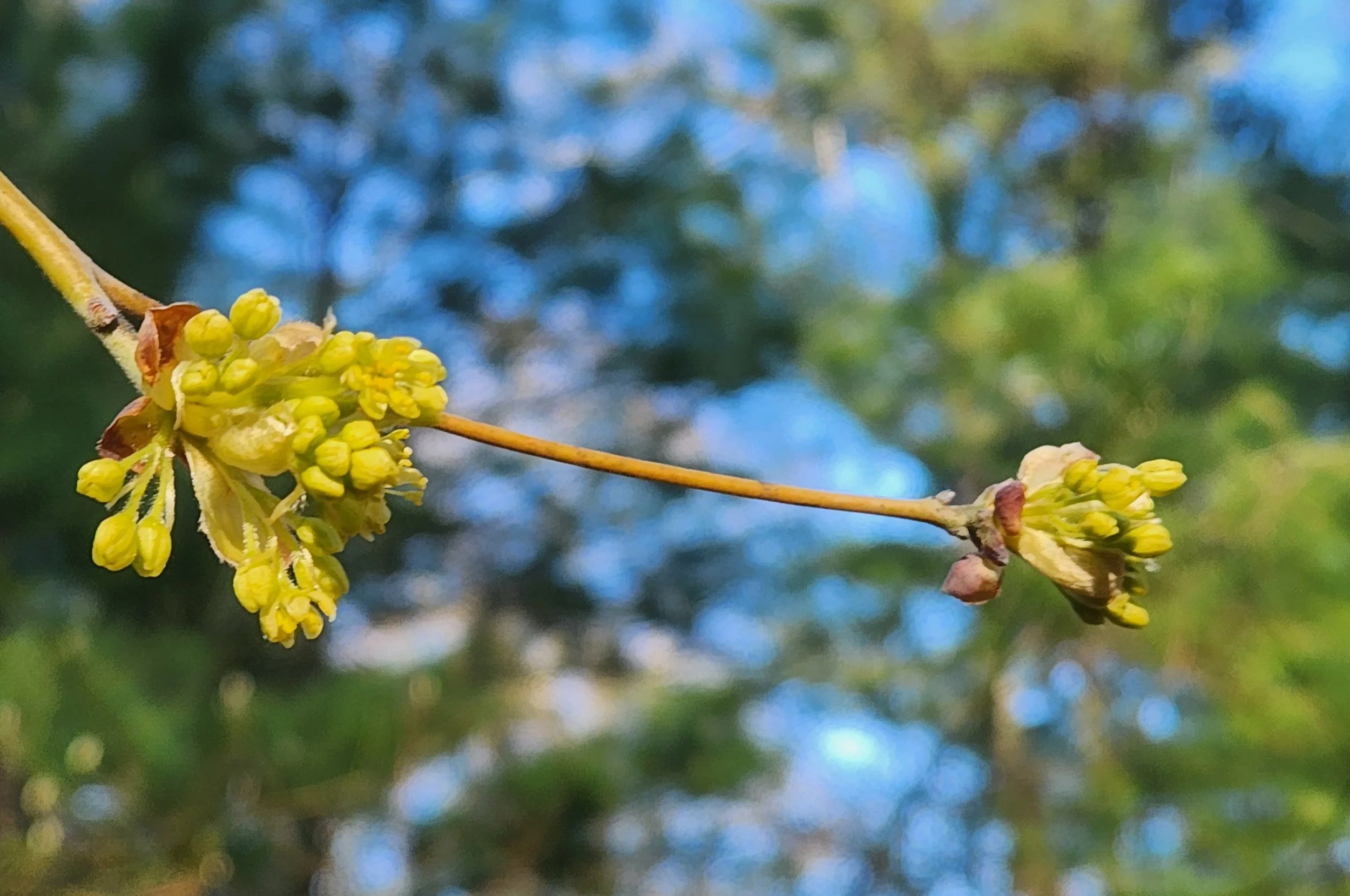
Sassafras flowers in late spring. Photo by Justin Cifello.
By Justin Cifello
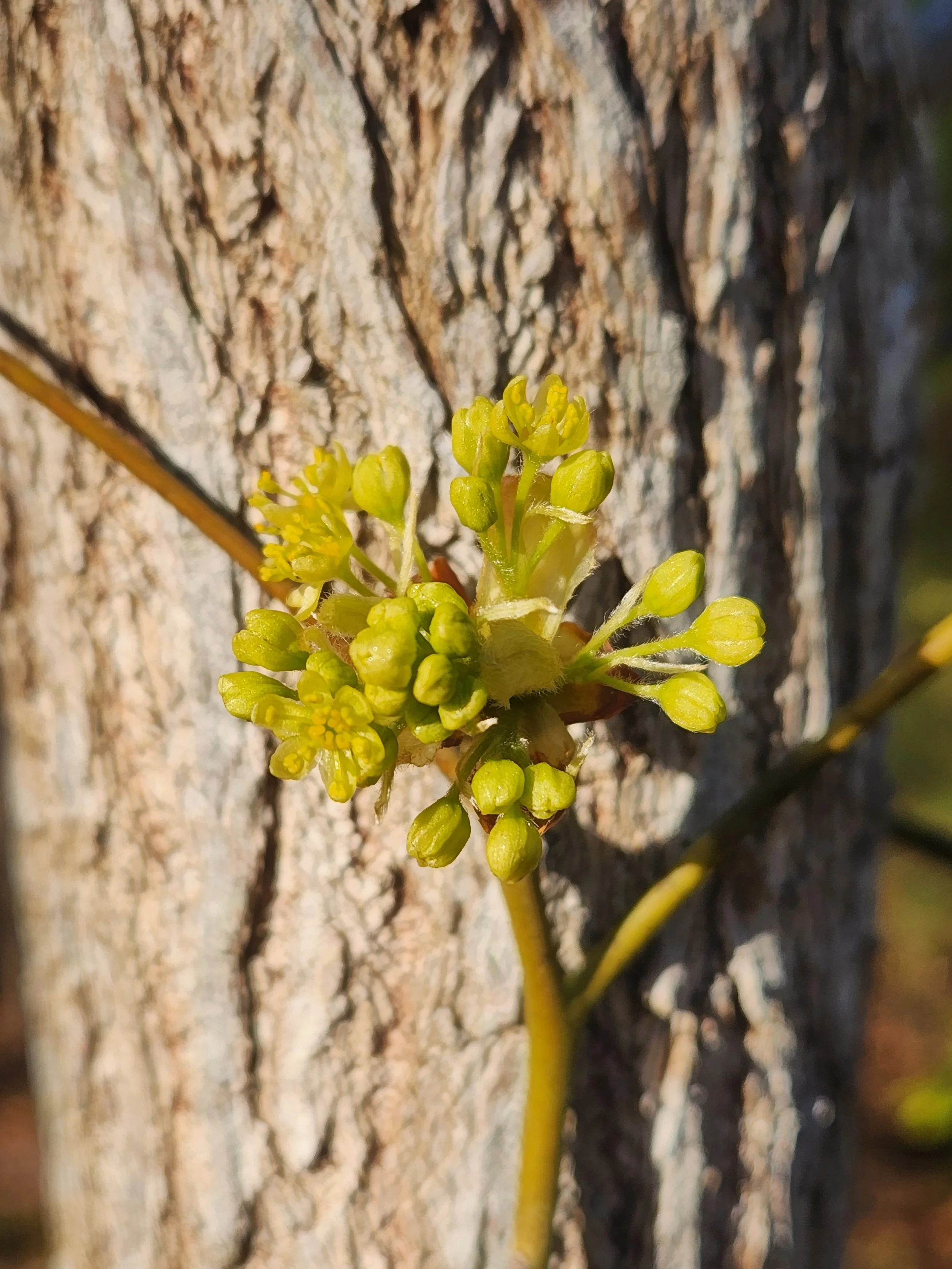
Delicate sassafras flowers can be found in late spring, when shadbush blooms. Photo by Justin Cifello.
Southeastern Massachusetts is home to a number of aromatic plants. Wintergreen, with its dark green glossy leaves and red berries, has been used as a flavoring for toothpaste and breath-mints. Bayberry’s waxy fruits lend their scent to candles. Sweetfern, though not a true fern, spices the air in hot, dry pine barrens and open meadows. But perhaps the most historically significant one is the sassafras tree.
Sassafras is fairly easy to identify from its distinctly shaped leaves, which come in several different forms. They can have three lobes, looking like a dinosaur footprint or cartoon ghost-in-a-sheet; two-lobes, like mittens; or a simple oval comprised of a single lobe. Though confusing at first, this variety is helpful for identification and can be differentiated from other trees with more consistent leaves. Rubbing a leaf or scratching young green bark will reveal its most unique quality: a bright citrus fragrance, occasionally likened to Fruit Loops cereal. [1]
In our modern era with easy access to an arsenal of flavors and sweeteners, it is hard to conceptualize just how prized aromatic plants were throughout history. Plants were used for medicine as well as flavor. Medicinal plants have always been important, but in the crowded, plague-ridden cities of Europe, people were desperate for new potential cures. These plants were so valuable that wars were fought and nations toppled to ensure access to them. Our modern globalized economy has its roots in the spice trade, and though this may conjure images of tropical islands, this demand also played a large role in the colonization of temperate North America. [2]
Sassafras grows only in the Americas and East Asia and was first recorded by Europeans by the Spanish botanist Nicholas Monardes in the 1500s. He learned of it through captive French sailors, who told of its use as medicine by Indigenous peoples. The origins of the name sassafras are unclear, thought to be a reference to saxifrage, an unrelated group of plants which bear no physical resemblance to sassafras. Saxifrage means “rock breaker” in Latin, as they grow in crevices on rock faces. The name may have been applied to sassafras as a medical metaphor: it was thought to help dissolve kidney stones. Alternatively, it could be from an unknown Indigenous word. It’s possible that both are true, as etymologies can be drawn from many sources. [3]
In addition to kidney stones, sassafras was said to be a general panacea, especially to cure syphilis (it doesn’t). The association may come from a mistranslated account of white cedar curing scurvy (it does!). Though Europe had long known plague, smallpox, tuberculosis, and other maladies, syphilis was a new threat in the 1500s - one of the few diseases to move from the Americas to Europe during the Columbian Exchange. Medicine at the time was informed by the “Doctrine of Signatures,” a belief that the origin or shape of a plant indicated what it could treat, so it seemed likely to them that this foreign plant could cure a foreign illness. [4]
Early demand for sassafras was astronomical. Some colonial charters required quotas of sassafras for export. It became the second most lucrative commodity after tobacco. In his 1602 expedition, Bartholomew Gosnold sailed to New England, where he gave English names to Cape Cod, Martha’s Vineyard, and the Elizabeth Islands. He established a fort on Cuttyhunk Island and brought so much sassafras back to England that the price dropped precipitously. [5]
Over time, people learned that sassafras didn’t meet medicinal expectations, but it was still prized as a sweet flavoring agent. Patent medicines gradually turned from cure-alls to general tonics, then to sodas, as the growing temperance movement sought alcohol-free beverages. Sassafras, along with birch and sarsaparilla, was one of the roots that flavored root beer. In 1960, the USDA banned certain use of sassafras root in commercial products. This was due to the compound safrole, which is carcinogenic in high amounts, though these studies are somewhat disputed. Safrole itself is a controlled substance, as it can be used in the illicit manufacture of the drug MDMA. Sassafras leaves, however, are low in safrole, with similar levels as other herbs, like basil, and are considered safe. Crushed and dried, these constitute filé powder, a thickening agent used in gumbo in lieu of okra. [6]
Though its history of human use is fraught, sassafras is a valuable wildlife food. Its fruits and seeds feed mammals and birds, and its leaves host spicebush swallowtail butterflies. Look for sassafras in open woods and field edges. Capable of reproducing through its root sprouts, it often forms stands of small trees, only occasionally becoming large specimens. Though not a panacea, its unique leaves, vibrant fall foliage, interesting bark, and storied past make this an interesting tree in all seasons.
[1] Identification: https://gobotany.nativeplanttrust.org/species/sassafras/albidum/
[2] Spice Trade: https://www.worldhistory.org/article/1777/the-spice-trade--the-age-of-exploration/
[3][4][5] Sassafras History: https://www.gillmirrlees.com/sassafras/
[6] Toxicity: https://www.mcgill.ca/oss/article/did-you-know/root-root-beer-sassafras