


What’s New at Wildlands
How Do Plants Beat the Heat?
By Justin Cifello
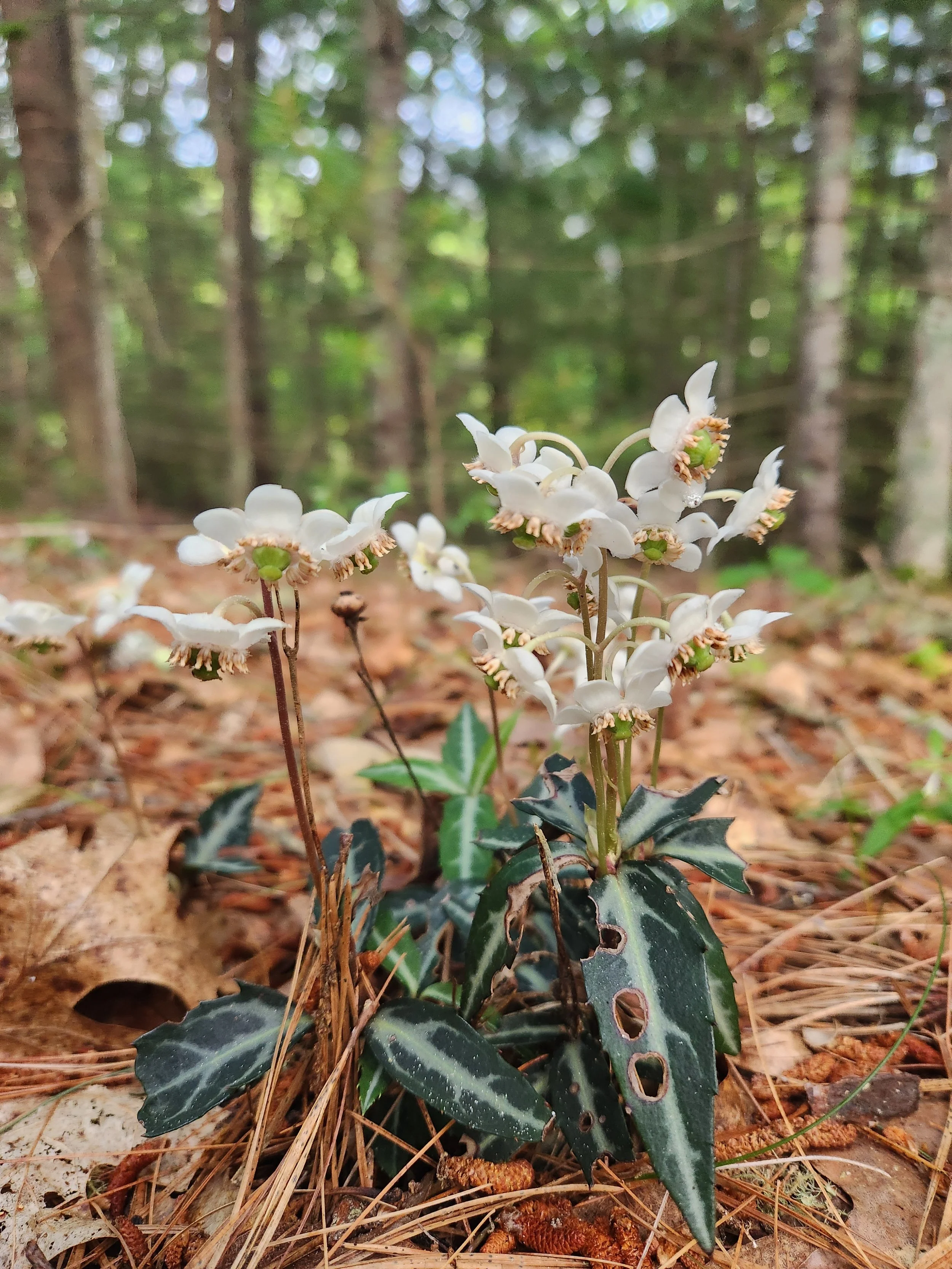
Spotted wintergreen prefers sandy shade, avoiding excessive light with its waxy, patterned leaves. Photo by Justin Cifello.
In times of intense heat, we flock to water and shade, put electrolytes into our water bottles, and, if fortunate, turn on the air conditioning. Plants, however, are sessile, incapable of movement; they have to deal with temperature extremes wherever they happen to have taken root. As passive as they may appear, they have a suite of sophisticated structural and chemical adaptations that enable them to withstand harsh conditions.
The ideal temperature for photosynthesis is between 68°F and 86°F. At higher temperatures, plants begin to suffer physical damage as they struggle to keep their extremities hydrated. The movement of water is key to plant survival, accomplished through a process called transpiration. Water enters the roots, drawn up in part by water tension, the same way water climbs up a straw. Leaves are perforated by tiny holes called stomata, through which excess water evaporates, creating a siphon that pulls water up the plant. Plants use about 95% of their water just to power this elevator, which is lost to the air. Wind blowing over these ports forces the process into overdrive and can account for more drying than sunlight alone.
The broad leaves of poison ivy wilt to avoid the full force of the sun. Photo by Justin Cifello.
The structure of a leaf, down to its cell walls, is primarily carbon. Though strong, it needs to be inflated with adequate water, or turgor pressure. Without water, it deflates, which we see as wilting. Some degree of wilting is protective; by drooping or curling, the leaf exposes less of itself to the evaporating effects of sunlight and wind. Too much wilting, though, leads to collapse, and the plant may be unable to recover. Extreme conditions can outpace a plant’s rate of transpiration, causing it to wilt even with sufficient groundwater. [1]
Since plants lack nervous systems, internal chemical distribution is ruled by properties of water. Chief among these is osmosis, the process by which a substance disperses evenly to areas of lower concentration. Plants utilize compounds called osmoprotectants that change the osmotic potential of the water, letting plants bend the rules a bit to keep water where they need it. Antioxidants, such as salicylic acids, found in willow, birch, and wintergreen, protect cells from the hazardous byproducts of stressful conditions. [2]
Pitch pine, with its waxy leaves and sparse canopy, is more drought tolerant than its cousin, the white pine. Photo by Justin Cifello.
The most visible adaptations against heat and drought are structural. Small leaves, like on bearberry, or narrow leaves, like pine needles, require less water to maintain turgidity. Both of those plants also have waxy cuticles to keep water in and reflect some sunlight. These features are seen in many of our pine barrens plants, like bayberry, wintergreen, and inkberry; their sandy environment doesn’t retain much water, so they need to hold every drop they can. Succulent plants store water in their thick stems. Though they are most associated with deserts, New England is home to a native cactus, the eastern prickly pear, which lives on dunes and dry ledges. Pale, silvery foliage helps deflect sunlight, as can be seen on water-hungry willows and jewelweed. Hairs on the leaves of sunflowers and goldenrods, trap moisture and slow down evaporating wind. [3]
Deep roots, like those of milkweed and false indigo, are obvious ways to access water. Many plants also form intimate partnerships with mycorrhizal fungi, which can forage farther than roots alone. In addition to providing soil structure, some of these fungi produce compounds that increase water retention. The organisms communicate through hormones, exchanging nutrients and compounds as needed. [4]
Some plants beat the heat with behavioral adaptations. Spring ephemerals leaf out and flower early, before temperatures climb. Drought-stressed perennials can abandon flowers to conserve resources. Annual plants will bolt at the first sign of heat, insuring they can seed the next generation. Jewelweed, an annual, has developed an ingenious adaptation. When stressed, it stops producing its showy orange flowers, forgoing insect pollination. Instead, it produces modified cleistogamous flowers, fully enclosed and devoid of nectar. These can fertilize themselves, not ideal in the long-run, but insures that at least some seeds will be produced. [5]
An eastern prickly-pear cactus grows alongside bearberry. Coastal plants must adapt to the drying effects of salt in addition to wind and sun. Photo by Justin Cifello.
In deep forest, where canopy cover provides shade and fallen leaves trap humidity, plants can afford more profligate growth, sporting broad and tender leaves. Heat and drought adaptations are easily seen in sunny, exposed places like open fields and coastlines. Ironically, they are also found in wetlands; these plants have high water needs and must be ready for seasonal fluctuations. We can employ these same strategies in our own gardens, applying mulch and letting fallen leaves remain to protect and cool the soil. This is another reason to plant native species, as they have spent millennia learning how to live here.
[1] Transpiration: https://durhammastergardeners.com/2016/08/25/why-plants-wilt/
[2] Heat Stress: https://cid-inc.com/blog/plant-responses-to-heat-stress/
[3] Heat Tolerance: https://www.piedmontmastergardeners.org/article/characteristics-of-drought-tolerant-perennials/
[4] Mycorrhizal Relationships and Drought: https://pmc.ncbi.nlm.nih.gov/articles/PMC9298553/
[5] Jewelweed Cleistogamy: https://riwps.org/rwips-blog/jewel-weed-lessons/
[6] Native Plants: https://apcc.org/our-work/education/native-plant-initiative/
Scandalous Sassafras
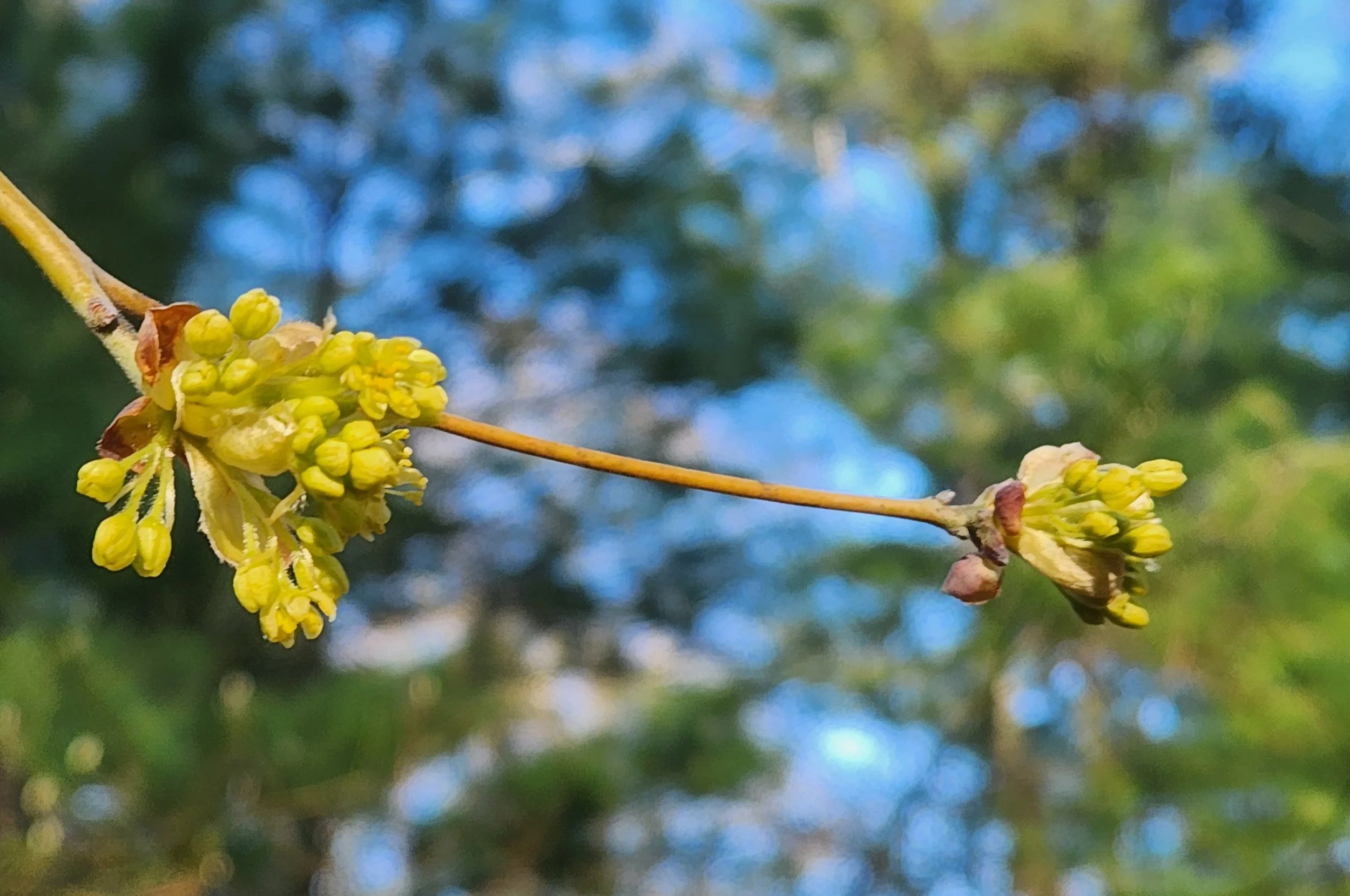
Sassafras flowers in late spring. Photo by Justin Cifello.
By Justin Cifello
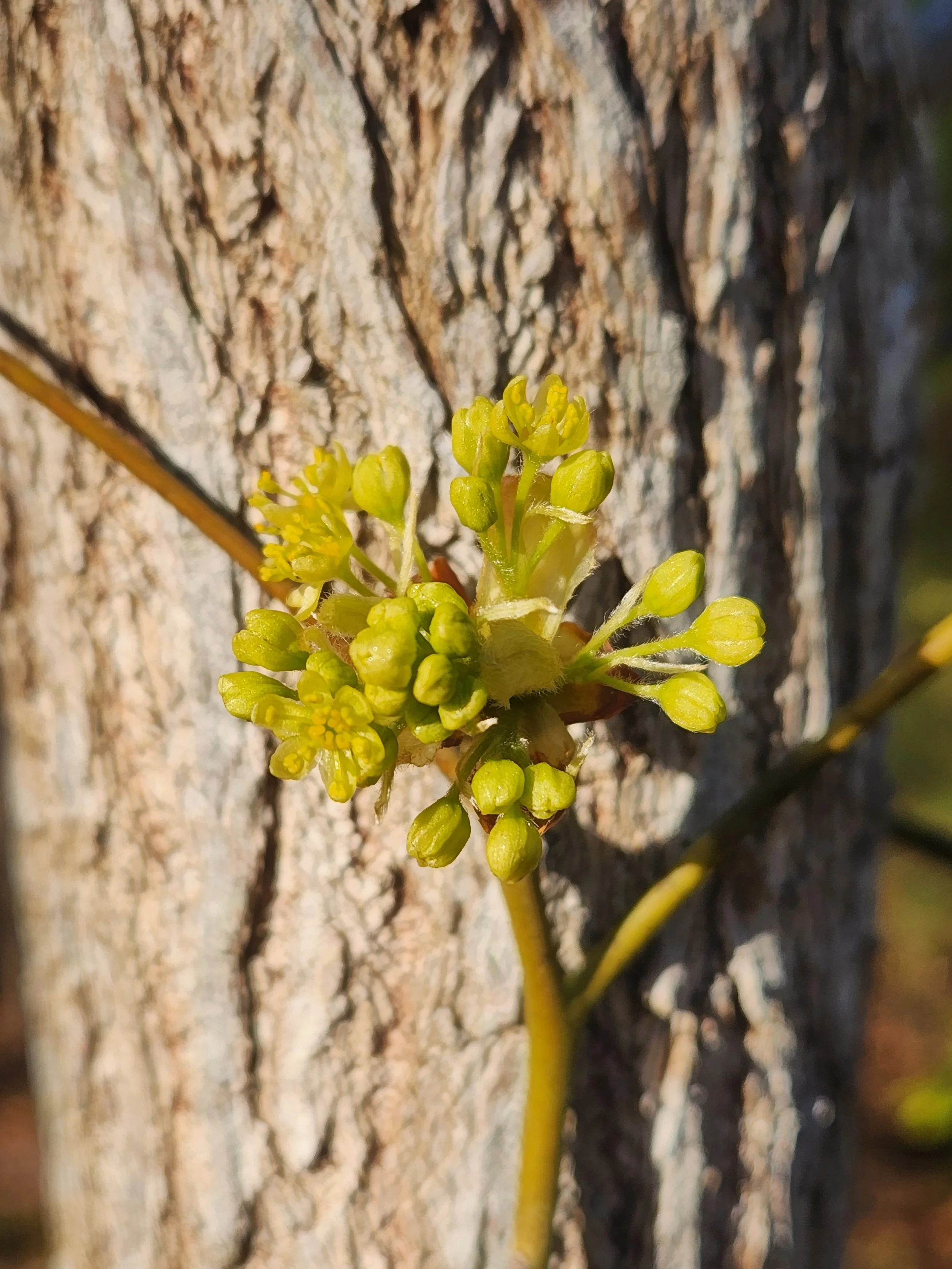
Delicate sassafras flowers can be found in late spring, when shadbush blooms. Photo by Justin Cifello.
Southeastern Massachusetts is home to a number of aromatic plants. Wintergreen, with its dark green glossy leaves and red berries, has been used as a flavoring for toothpaste and breath-mints. Bayberry’s waxy fruits lend their scent to candles. Sweetfern, though not a true fern, spices the air in hot, dry pine barrens and open meadows. But perhaps the most historically significant one is the sassafras tree.
Sassafras is fairly easy to identify from its distinctly shaped leaves, which come in several different forms. They can have three lobes, looking like a dinosaur footprint or cartoon ghost-in-a-sheet; two-lobes, like mittens; or a simple oval comprised of a single lobe. Though confusing at first, this variety is helpful for identification and can be differentiated from other trees with more consistent leaves. Rubbing a leaf or scratching young green bark will reveal its most unique quality: a bright citrus fragrance, occasionally likened to Fruit Loops cereal. [1]
In our modern era with easy access to an arsenal of flavors and sweeteners, it is hard to conceptualize just how prized aromatic plants were throughout history. Plants were used for medicine as well as flavor. Medicinal plants have always been important, but in the crowded, plague-ridden cities of Europe, people were desperate for new potential cures. These plants were so valuable that wars were fought and nations toppled to ensure access to them. Our modern globalized economy has its roots in the spice trade, and though this may conjure images of tropical islands, this demand also played a large role in the colonization of temperate North America. [2]
Sassafras grows only in the Americas and East Asia and was first recorded by Europeans by the Spanish botanist Nicholas Monardes in the 1500s. He learned of it through captive French sailors, who told of its use as medicine by Indigenous peoples. The origins of the name sassafras are unclear, thought to be a reference to saxifrage, an unrelated group of plants which bear no physical resemblance to sassafras. Saxifrage means “rock breaker” in Latin, as they grow in crevices on rock faces. The name may have been applied to sassafras as a medical metaphor: it was thought to help dissolve kidney stones. Alternatively, it could be from an unknown Indigenous word. It’s possible that both are true, as etymologies can be drawn from many sources. [3]
In addition to kidney stones, sassafras was said to be a general panacea, especially to cure syphilis (it doesn’t). The association may come from a mistranslated account of white cedar curing scurvy (it does!). Though Europe had long known plague, smallpox, tuberculosis, and other maladies, syphilis was a new threat in the 1500s - one of the few diseases to move from the Americas to Europe during the Columbian Exchange. Medicine at the time was informed by the “Doctrine of Signatures,” a belief that the origin or shape of a plant indicated what it could treat, so it seemed likely to them that this foreign plant could cure a foreign illness. [4]
Early demand for sassafras was astronomical. Some colonial charters required quotas of sassafras for export. It became the second most lucrative commodity after tobacco. In his 1602 expedition, Bartholomew Gosnold sailed to New England, where he gave English names to Cape Cod, Martha’s Vineyard, and the Elizabeth Islands. He established a fort on Cuttyhunk Island and brought so much sassafras back to England that the price dropped precipitously. [5]
Over time, people learned that sassafras didn’t meet medicinal expectations, but it was still prized as a sweet flavoring agent. Patent medicines gradually turned from cure-alls to general tonics, then to sodas, as the growing temperance movement sought alcohol-free beverages. Sassafras, along with birch and sarsaparilla, was one of the roots that flavored root beer. In 1960, the USDA banned certain use of sassafras root in commercial products. This was due to the compound safrole, which is carcinogenic in high amounts, though these studies are somewhat disputed. Safrole itself is a controlled substance, as it can be used in the illicit manufacture of the drug MDMA. Sassafras leaves, however, are low in safrole, with similar levels as other herbs, like basil, and are considered safe. Crushed and dried, these constitute filé powder, a thickening agent used in gumbo in lieu of okra. [6]
Though its history of human use is fraught, sassafras is a valuable wildlife food. Its fruits and seeds feed mammals and birds, and its leaves host spicebush swallowtail butterflies. Look for sassafras in open woods and field edges. Capable of reproducing through its root sprouts, it often forms stands of small trees, only occasionally becoming large specimens. Though not a panacea, its unique leaves, vibrant fall foliage, interesting bark, and storied past make this an interesting tree in all seasons.
[1] Identification: https://gobotany.nativeplanttrust.org/species/sassafras/albidum/
[2] Spice Trade: https://www.worldhistory.org/article/1777/the-spice-trade--the-age-of-exploration/
[3][4][5] Sassafras History: https://www.gillmirrlees.com/sassafras/
[6] Toxicity: https://www.mcgill.ca/oss/article/did-you-know/root-root-beer-sassafras
Lichen: The Forest in the Trees
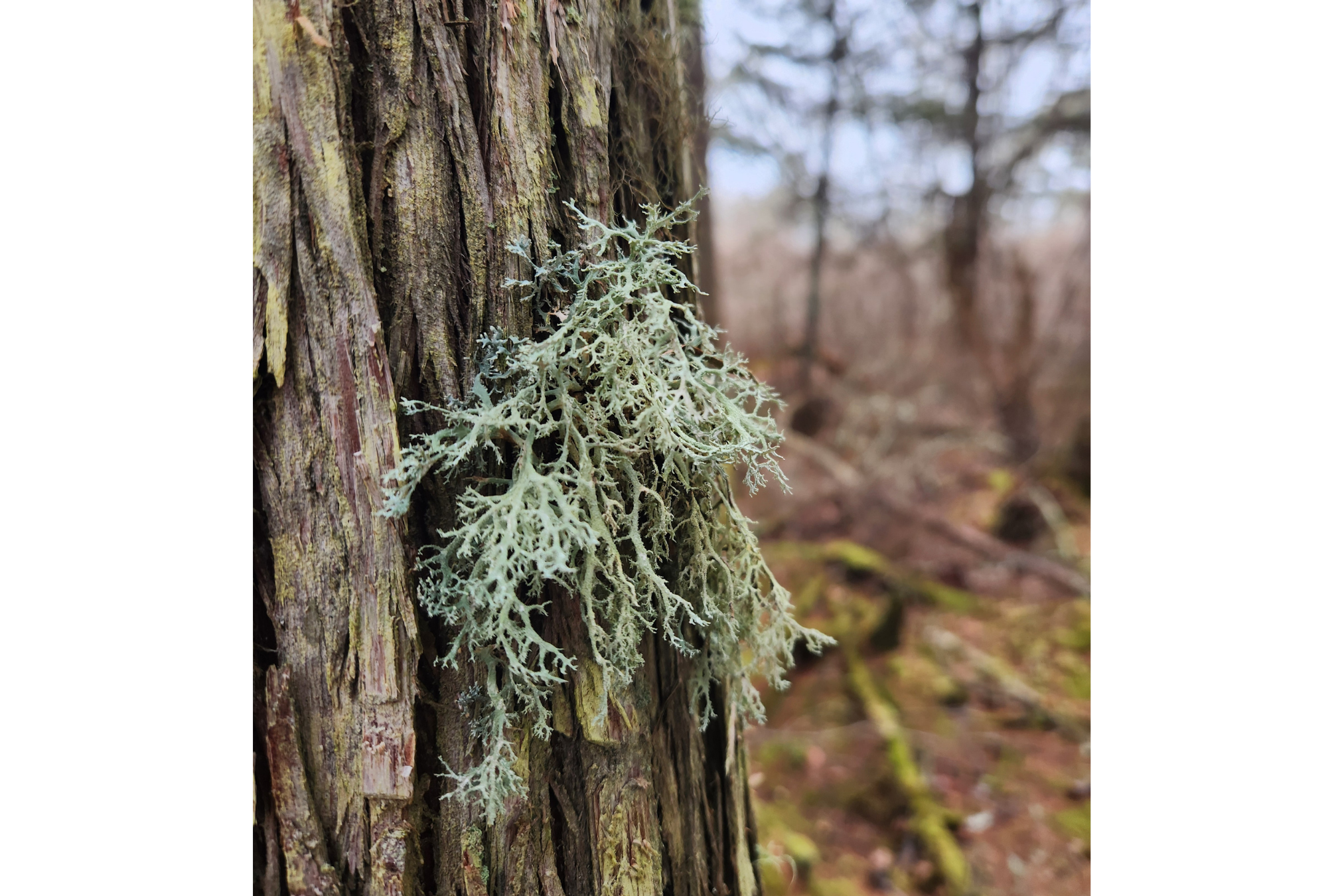
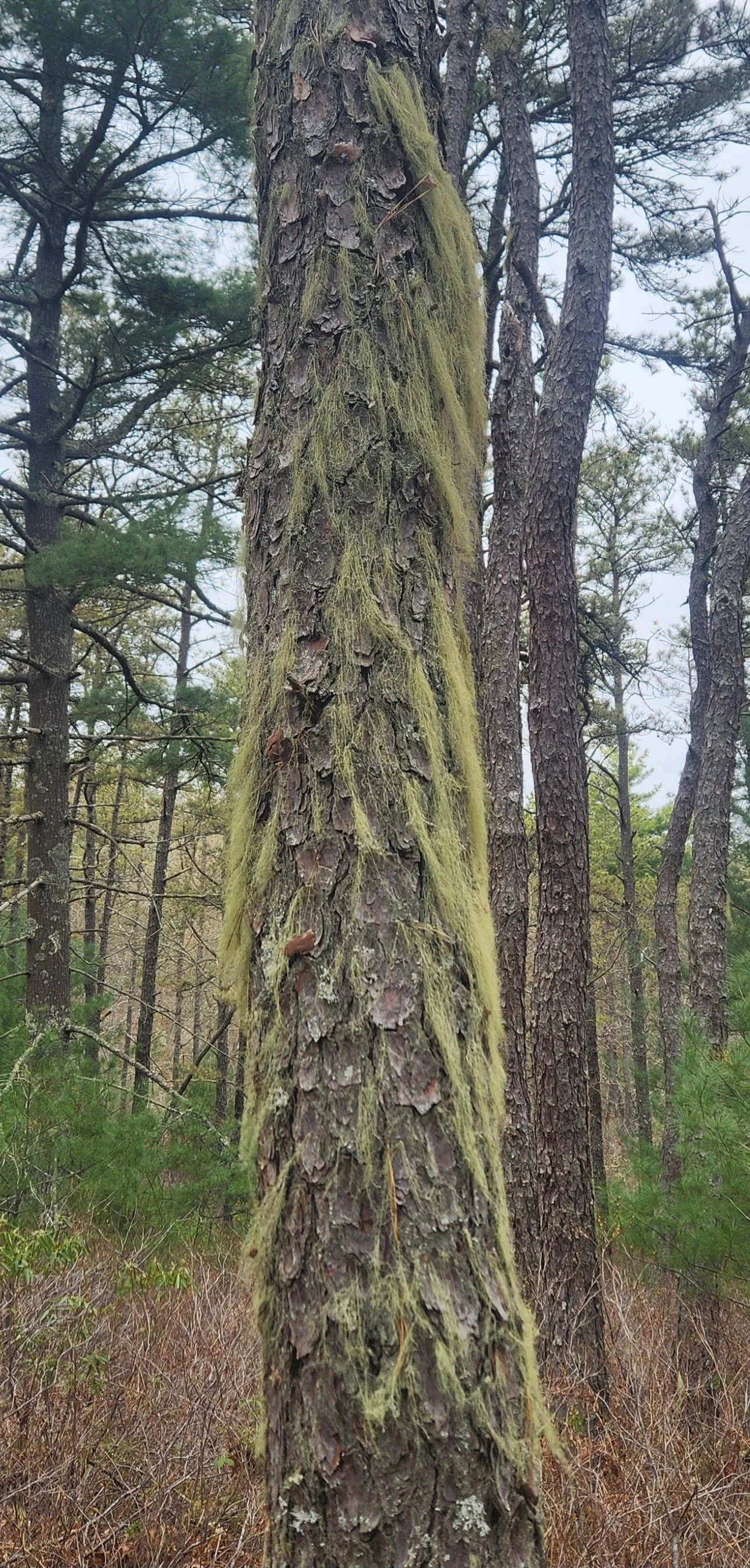
This lichen is growing on an Atlantic white cedar. Photo by Justin Cifello.
By Justin Cifello
The treetops usually loom high out of our reach and sight. However, this winter’s heavy snowfall pulled portions of the forest canopy to the ground, affording us the rare opportunity to see it up close. The much-awaited thaw has revealed a second snowfall—a spongy carpet of fallen lichen that now blankets the forest floor. As we await the unfurling of leaves over the next month, we can ponder the rich miniature worlds of these enigmatic organisms.
Small as they are, lichens are ecosystems; each one contains a variety of organisms. Unlike other taxonomic groups, like mammals or flowering plants, lichens do not have a single common ancestor. Lichen can instead be thought of as a strategy, one that has evolved independently multiple times. Though often confused with moss, lichens are not actually plants. They are composite organisms comprising fungi and other microbes, living intertwined in symbiosis. The common denominator is fungus, which provides the structure that hosts the other residents. Since lichen-forming fungi cannot exist on their own, lichen species names describe the fungal host.
Lichen fungi cannot forage for food the way other fungi do. They have no roots or mycorrhizae to extract nutrients from the surfaces they live upon. Instead, they trap photosynthetic algae and/or cyanobacteria and incorporate them permanently into their body, called a thallus. The fungus then lives off the sugars produced by its microbial partners and acquires the rest of its nutrition from the rain and atmosphere. Though they are trapped within the lichen, the algae benefit, too. In the wild, most algae are short-lived, vulnerable to predation and weather fluctuations. The fungus offers stability and security. By changing its pigmentation, lichen protects its algal partners from lethal UV radiation. [1]
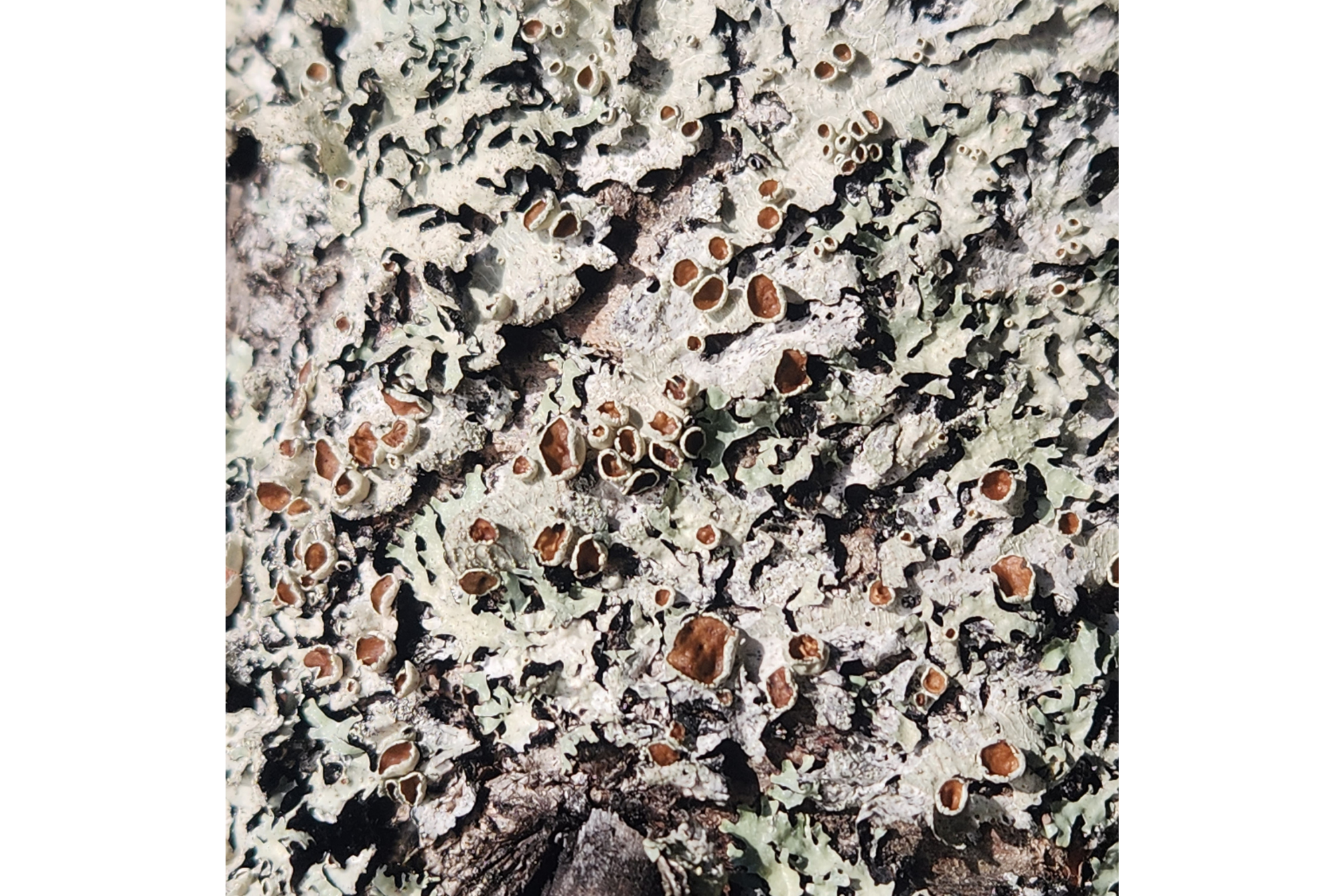
A ruffle lichen, Parmotrema, with spore-producing cups. Photo by Justin Cifello.
Scientists have only recently been able to appreciate these complexities and lichen’s role in the environment. Though small, lichen are numerous. By greatly increasing the surface area of whatever substrate they grow on, they create micro-habitats that support the tiny creatures that feed the larger ecosystem. As nitrogen fixers, lichen supply the forest with this vital element. Reliant as they are on the atmosphere, they are uniquely vulnerable to pollution. Lichens are indicators of good air quality and have even helped locate emission sources. [2]
A combination of aging forests and successful anti-smog legislation have helped lichens reclaim their space in the canopy. In humid areas, some trees can be festooned with them. This resurgence has led some to fear that lichens are a new forest pest, since they were not always so abundant. They are often seen on dead and dying trees, but the relation isn’t causal; the lichens are responding to increased light as their host dies from other causes. The lichens themselves are harmless. [3]

A variety of lichens colonizing the rusty surface of an old dump truck. Photo by Justin Cifello.
Recent analysis suggests that lichens began to appear at least 400 million years ago, after the earliest terrestrial plants. Lichens and mosses are credited with forming the first soils on earth by eroding rock while trapping minerals and water. Lichens continue to thrive in harsh places today, from the intertidal zone and the arctic to desert sands and car doors. Lichen even survived a year and a half outside of the International Space Station. [4][5]
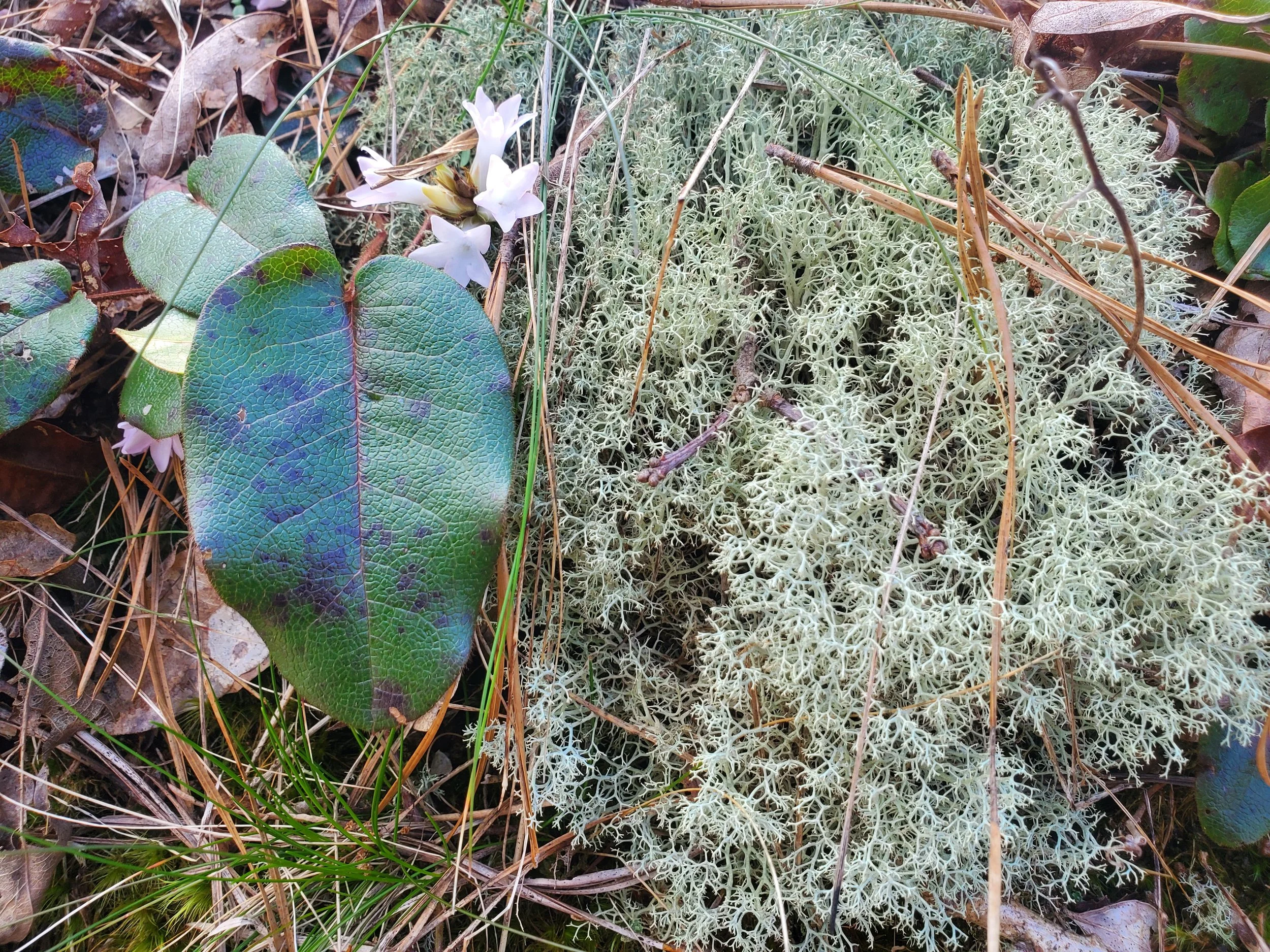
Found in every environment, in every season, lichens are a constant companion on our outings. Hundreds of species live in New England, in a dazzling array of forms and colors, from thin films and dust to dangling chains, several feet long. We can see their complicated relationships by observing how some only grow on certain species or materials. With a magnifying class, you can better appreciate their fractal intricacy. They remind us that nothing in nature is simple; we are surrounded by resilient beauty and complexity, if only we look closely. [6]
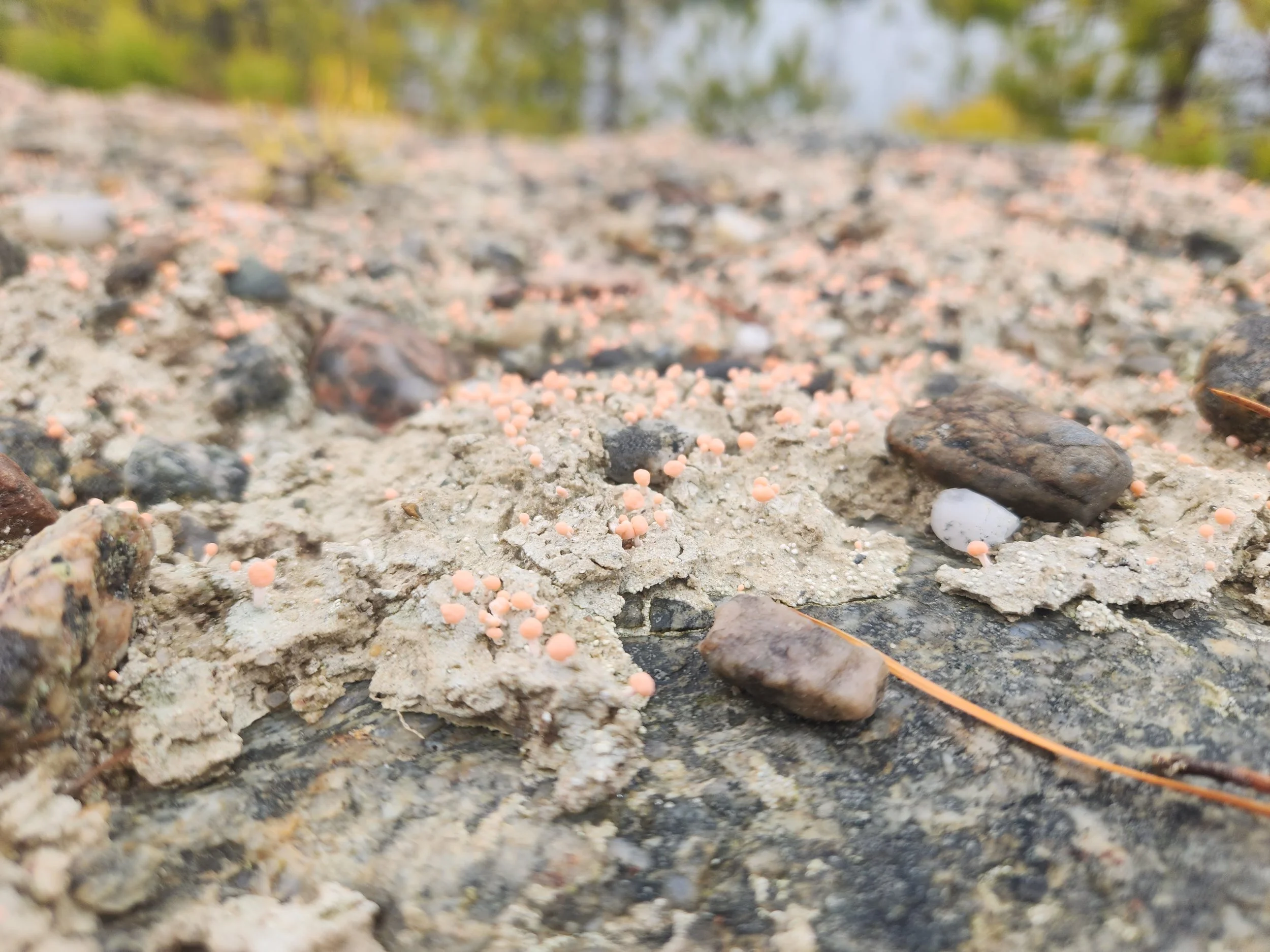
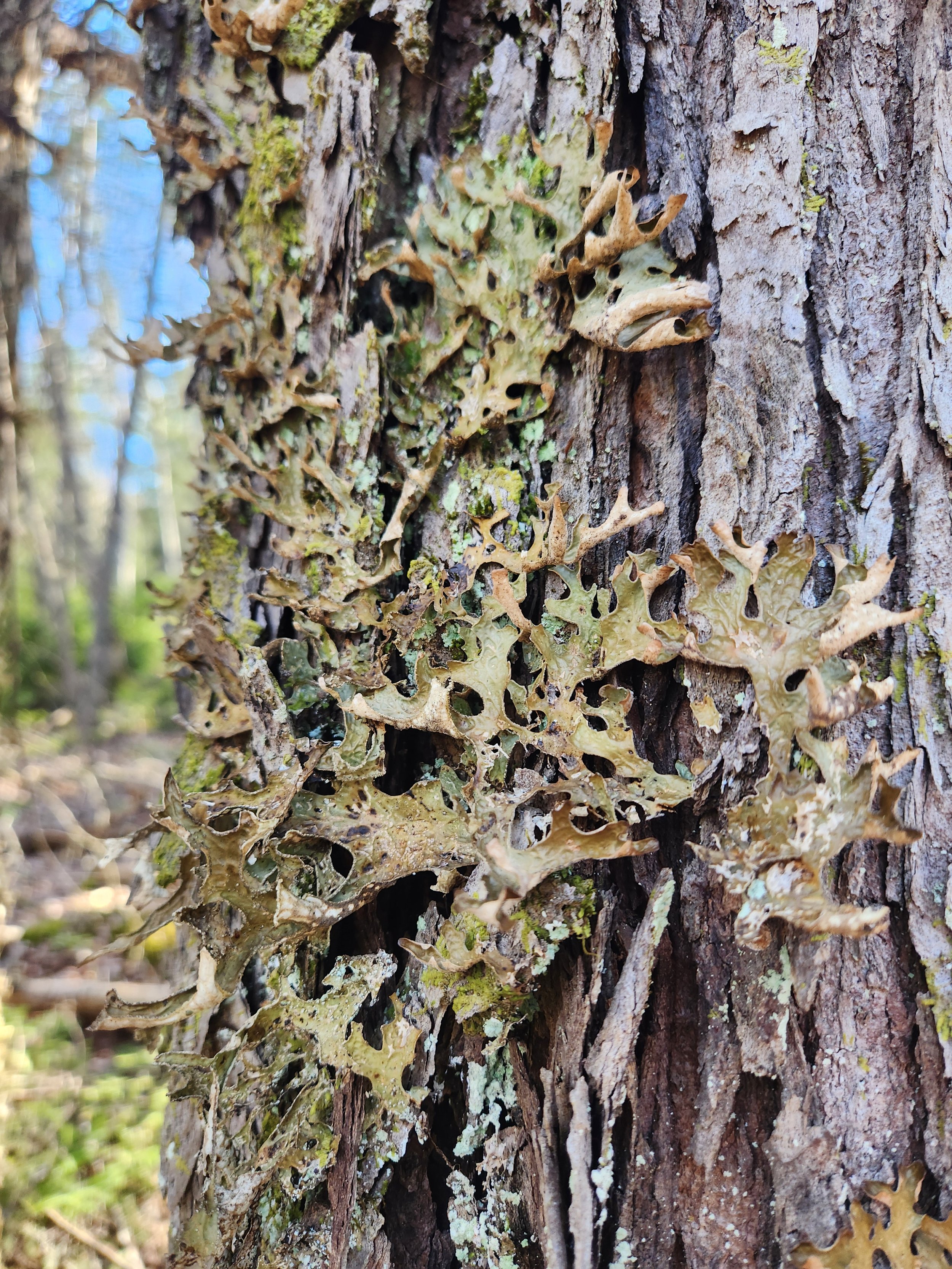
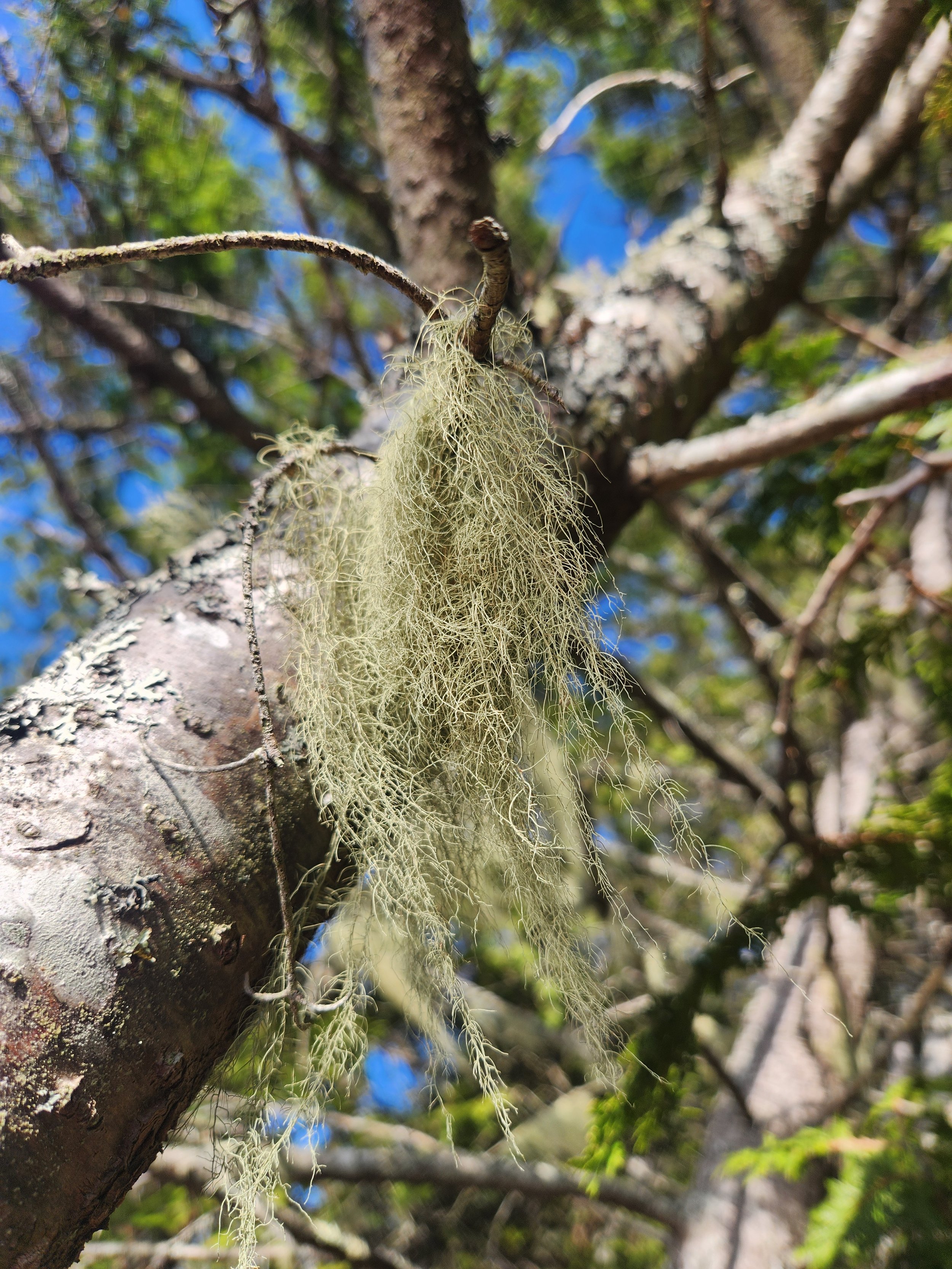
Click on the photos below to learn more about these diverse lichens. All photos by Justin Cifello.

[1] Symbiosis: https://www.purdue.edu/newsroom/archive/releases/2016/Q3/yeast-emerges-as-hidden-third-partner-in-lichen-symbiosis.html
[2] Emissions Monitoring: https://gis.nacse.org/lichenair/index.php
[3] Tree Health: https://extension.unh.edu/blog/2019/04/should-i-be-worried-about-lichens-growing-bark-my-apple-trees
[4] Lichen Origins: https://www.science.org/doi/10.1126/sciadv.adw7879
[5] Lichens in Space: https://futurism.com/fungi-lichens-just-survived-18-months-outside-iss-means-might-able-survive-mars
[6] Lichens of New England: https://massnature.com/lichens
Winter Resilience: Nature’s Diverse Adaptations to a Snowy Landscape
By Justin Cifello
One of the first epiphanies I recall having about the natural world was the revelation that trees don’t die in the fall. It’s an easy convenience of language to refer to the dead trees of winter, but they are, of course, very much alive. It was quite the paradigm shift to no longer think of winter as a time of death, but instead as a time of survival. The cold, seemingly inert wood bides its time, rations its water, and nurtures next year’s buds. The flowers and leaves that will raise our spirits this spring already exist, wrapped tightly in protective scales. As winter wanes, the careful eye can see their gradual transformation. A heartening sight well before the first daffodils emerge.
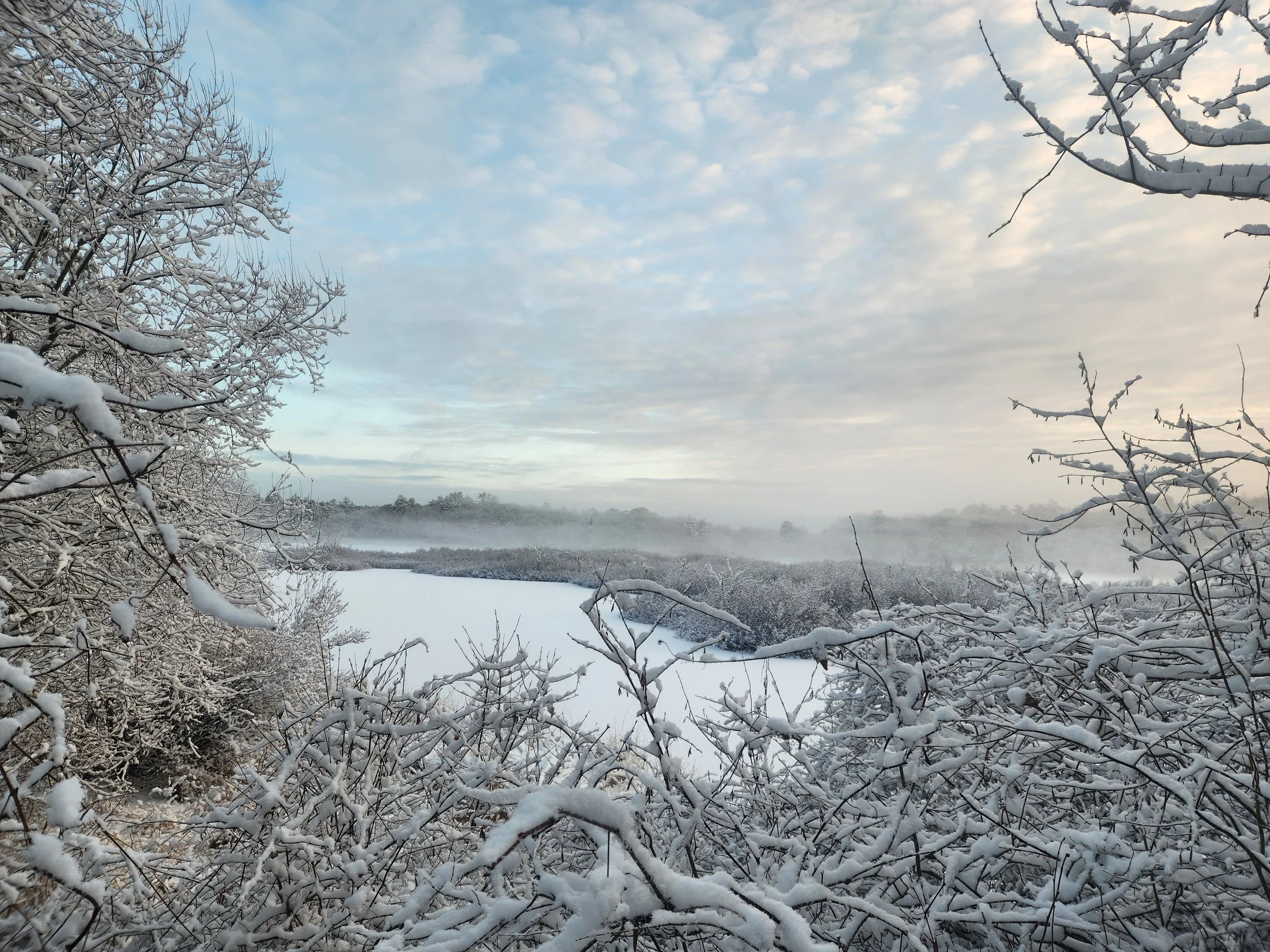
Goat Pasture Pond at Old Field Pond Preserve in Bourne. Photo by Justin Cifello.
By Justin Cifello
Justin is a farmer and naturalist at Bay End Farm in Bourne and a volunteer for Wildlands Trust. Get to know Justin (and all our Volunteer Hike Leaders) here.
One of the first epiphanies I recall having about the natural world was the revelation that trees don’t die in the fall. It’s an easy convenience of language to refer to the dead trees of winter, but they are, of course, very much alive. It was quite the paradigm shift to no longer think of winter as a time of death, but instead as a time of survival. The cold, seemingly inert wood bides its time, rations its water, and nurtures next year’s buds. The flowers and leaves that will raise our spirits this spring already exist, wrapped tightly in protective scales. As winter wanes, the careful eye can see their gradual transformation. A heartening sight well before the first daffodils emerge.
Despite all the difficulties that snow and ice present, nature is pretty good at finding utility in an obstacle. Under the snow, in the subnivean zone, small animals can forage, safely hidden from visual predators. Snow insulates the earth, keeping it around 32 degrees—still cold, but much warmer than exposed ground. Look for the tunnels made by mice, voles, and other creatures as the snow melts. [1]

River otter tracks. Photo by Justin Cifello.
Similarly, sheets of ice help ponds retain their heat and protect fish from eagles and herons. It is even possible to see turtles swimming below the ice. Reptiles and amphibians have a more flexible form of hibernation called brumation, allowing them to wake, drink water, and bask occasionally in the winter. Unable to reach the surface for air, they extract oxygen from the water via cloacal breathing—that is, through their butts. This only works when water is rich in oxygen, far from guaranteed when ice seals off the water below from the atmosphere above. To circumvent this issue, some turtles forgo the need for fresh oxygen entirely by using the calcium from their shells to safely tap stored energy in their muscles. [2]
Under a foot of snow, the landscape becomes a whole new arena for predators and prey. Who survives depends on who adapts. Creatures of habit find themselves vulnerable to more flexible, opportunistic hunters. Foxes walking on top of the snow can reach bushes once out of reach. When branches are weighed down by snow, windows open in the canopy, giving small hawks better access in dense brush. Deer sink in deep snow and instead prefer to hunker down in sheltered places, making them vulnerable to the lighter coyotes who, with their wide paws, can walk on top of the snow. [3]
Snow facilitates movement for a typically sedentary group: plants. Some trees, like birches and pines, release their seeds in winter. Birch seeds look a bit like birds; look for these “flocks” scattered on the snow. The smooth surface grants windblown seeds easy travel, skimming across now buried obstacles. Protected from a watery grave by the ice, seeds that land on ponds are safely blown to the shore, a phenomenon observed by Thoreau in his “Faith in a Seed.” [4][5]

A “flock” of birch seeds on the snow. Photo by Justin Cifello.
Most substances condense when they freeze, but water expands. Just as this means trouble for the pipes in your home, it also puts trees at risk of damage during dramatic temperature swings in winter. Trees have various strategies to account for this expansion and contraction of water in their limbs. Dark-colored trees heat up faster, so they tend to have craggy bark that can safely shrink and swell without splitting. Lighter-colored trees, meanwhile, can afford thinner bark, as seen on beeches and maples. The high sugar content in sap lowers its freezing point, acting as a natural antifreeze. [6]
Winter is a time of paradoxes. Undoubtedly still a hardship for us and for wildlife, it is not without its benefits. With no mosquitoes and fewer ticks, we can access places out of reach in the summer, even if slowed by snow. Without foliage, we can see farther and better observe the glacial topography. As much as the snow conceals, it reveals the busyness of animals, their stealth betrayed by their roving tracks. Life quietly reveals its dazzling resilience, offering inspiration as we await the melting of ice.
Works Cited
1. The Subnivean Zone: dnr.illinois.gov/education/atoz/winterinillinois/subniveanzone.html
2. Turtles: www.oriannesociety.org/faces-of-the-forest/winterwoodturtles/?v=f69b47f43ce4
3. Deer and Coyotes: www.forestsociety.org/blog-post/something-wild-fragile-balance-deer-and-coyotes-late-winter
4. Thoreau, “Faith in a Seed”: archive.org/stream/FaithInASeed-English-Thoreau/thoreau_djvu.txt
5. Thoreau, “The Succession of Forest Trees”: monadnock.net/thoreau/trees.html
6. Trees: extension.psu.edu/silent-survivors-the-winter-life-of-tree
White Pine: A Common Tree's Uncommon History
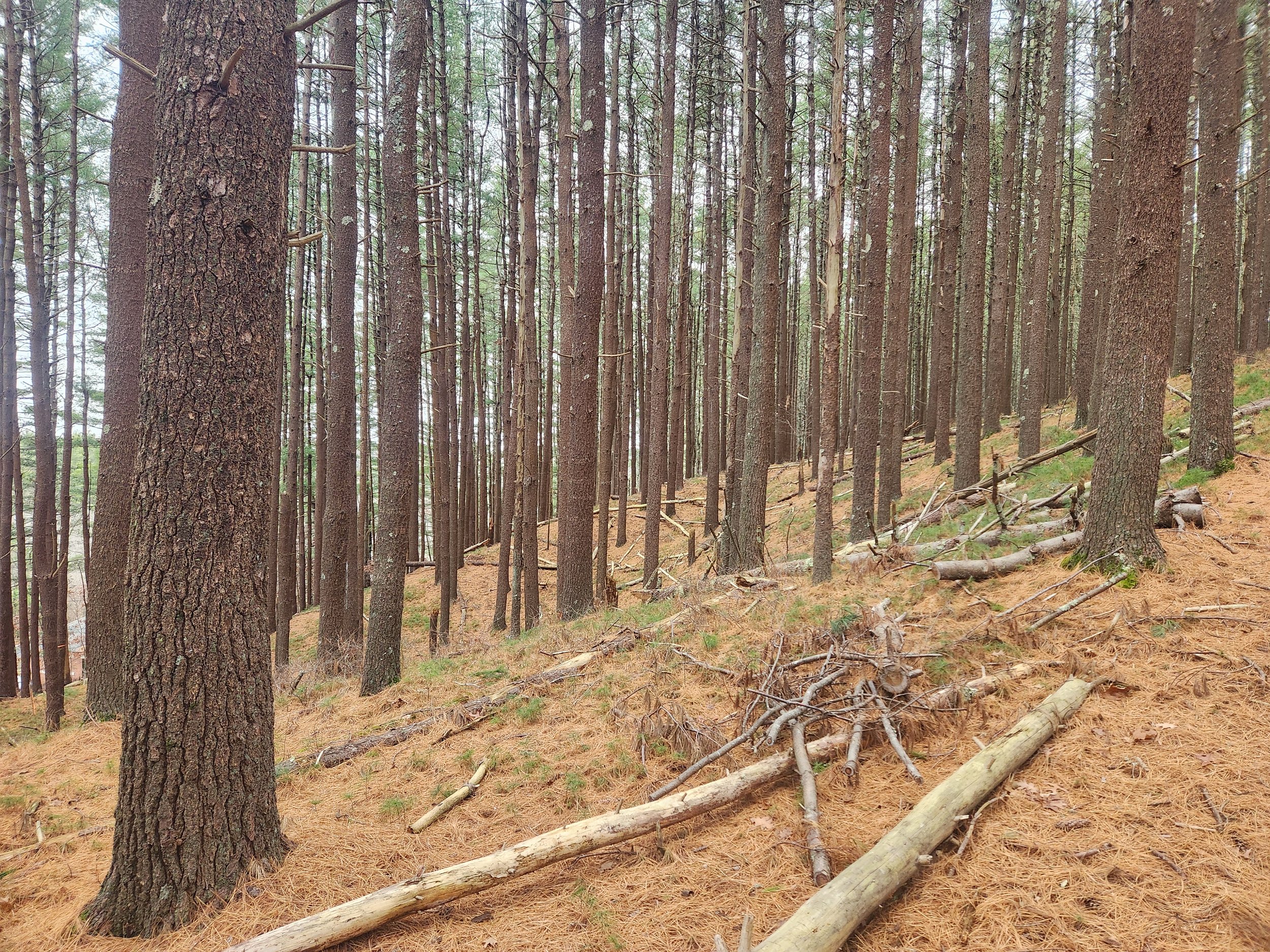
White pine monoculture at Myles Standish State Forest. Photo by Justin Cifello.
By Justin Cifello
Justin is a farmer and naturalist at Bay End Farm in Bourne and a volunteer for Wildlands Trust. Learn more about Justin (and all our Volunteer Hike Leaders) here.
Familiarity can breed contempt, or at least boredom. Being one of our most ubiquitous trees, the white pine could be overlooked as an object of study. With their uniform growth habit, lack of flowers, and sheer numbers, they may fade into the background in favor of showier plants. However, nothing in nature or history exists in isolation. Even the most seemingly mundane organism has its own story to tell.
Identification and Physiology
White pines are easily identified by their straight trunks and long needles. Their scientific name, Pinus strobus, is a reference to their spirally arranged pinecones, but it offers a useful mnemonic based on another trait: their radially symmetrical branches resemble strobe-light beams, unlike the chaotic branching pattern of pitch pines. Other local conifers, such as yews, spruces, and hemlocks, have much shorter needles, growing directly off of the branches. Cedars, including junipers, have more complex, forking needles, comprised of tiny scales. Only the pines have long needles, which tend to grow at branch tips in bundles called fascicles. Luckily, most of our pine species have a different number of needles per cluster: Jack pines and red pines have two needles in each bundle, pitch pines have three, and white pines have five.
While many of the white pines we see are little willowy saplings, this is the tallest tree species in the Northeast. On the East Coast, it is only rivaled by tulip trees. The largest known in Massachusetts, at about 176 feet tall, is the Jake Swamp Tree, named for the Mohawk chief and founder of the Tree of Peace Society. Its exact location is kept secret to protect it from vandals, but other giants can be seen in the northwest corner of the state, particularly at the Peace Grove in Mohawk Trail State Forest. [1]
Symbolism and History

Haundenosaunee flag. Source: Wikimedia Commons.
An Onandaga story tells of a time of war between five neighboring peoples. A figure known as the Peacemaker came and instructed a man named Hiawatha in diplomacy. In front of the warring leaders, Hiawatha broke a single arrow. He then bundled five arrows together, which no one could bend. Convinced by the demonstrated strength of unity, the leaders formed the powerful alliance known as the Haudenosaunee Confederacy (commonly known as the Iroquois, now an antiquated term). They buried their weapons under a white pine, which, with its five-needled fascicles, became a symbol of peace for the five founding nations. [2]

Flag of New England. Source: Wikimedia Commons.
The flag of New England highlights the pine tree’s significance to colonial identity, as well. By the time of colonization, Western Europe had largely depleted its forests, but their enormous ships required enormous trees. Ramrod-straight pines, light and strong, were perfect for ships’ masts. Trees with a 24” diameter were reserved for the royal navy, protected by a policy known as the King’s Broad Arrow. Qualified trees would have an arrow carved into them with an ax. Of course, colonists wanted the timber, too, and the crown was far away. At the historic Harlow House in Plymouth, one can see very wide floorboards—on the second floor only, to keep them from the prying eyes of royal tax assessors. The prohibition was eventually expanded to trees with only a 12” diameter, leading to a violent skirmish in 1772 dubbed the Pine Tree Riot. This early act of defiance is said to have inspired the Boston Tea Party. [3]
Fire and Shade
White pines were abundant and massive trees in the mature forests of pre-colonial Massachusetts, but they were probably not nearly as numerous as they are now. Their population boom owes largely to the decline of their primary limiting factor—fire. As saplings, white pines' thin bark exposes them to fire damage, especially when compared to pitch pines. Unlike beeches, hollies, and other trees with thin bark, white pines do not readily grow new branches or trunks from their stumps, leaving them less likely to recover when burned. Thus, regular, natural fires once gave other tree species a chance to outcompete white pines for sunlight and space on the forest floor.
Since colonial times, however, fire has been stamped out from much of the regional landscape, allowing white pines to proliferate unchecked. In the 1800s, economic changes drove the decline of local agriculture, leaving behind large, sunny tracts of pastures and bogs—perfect settings for white pine domination. Long protected from fire, these woods have matured into single-aged pine monocultures rather than mosaics of unique species. Recognizing the importance of forest diversity to wildlife habitat, water quality, climate resilience, and more, forest managers are now intentionally setting fires—called prescribed burns—to restore the conditions that once brought balance to our woodlands. [4]
Wolf Trees and Tuning Forks

.svg&oldid=1103808567)
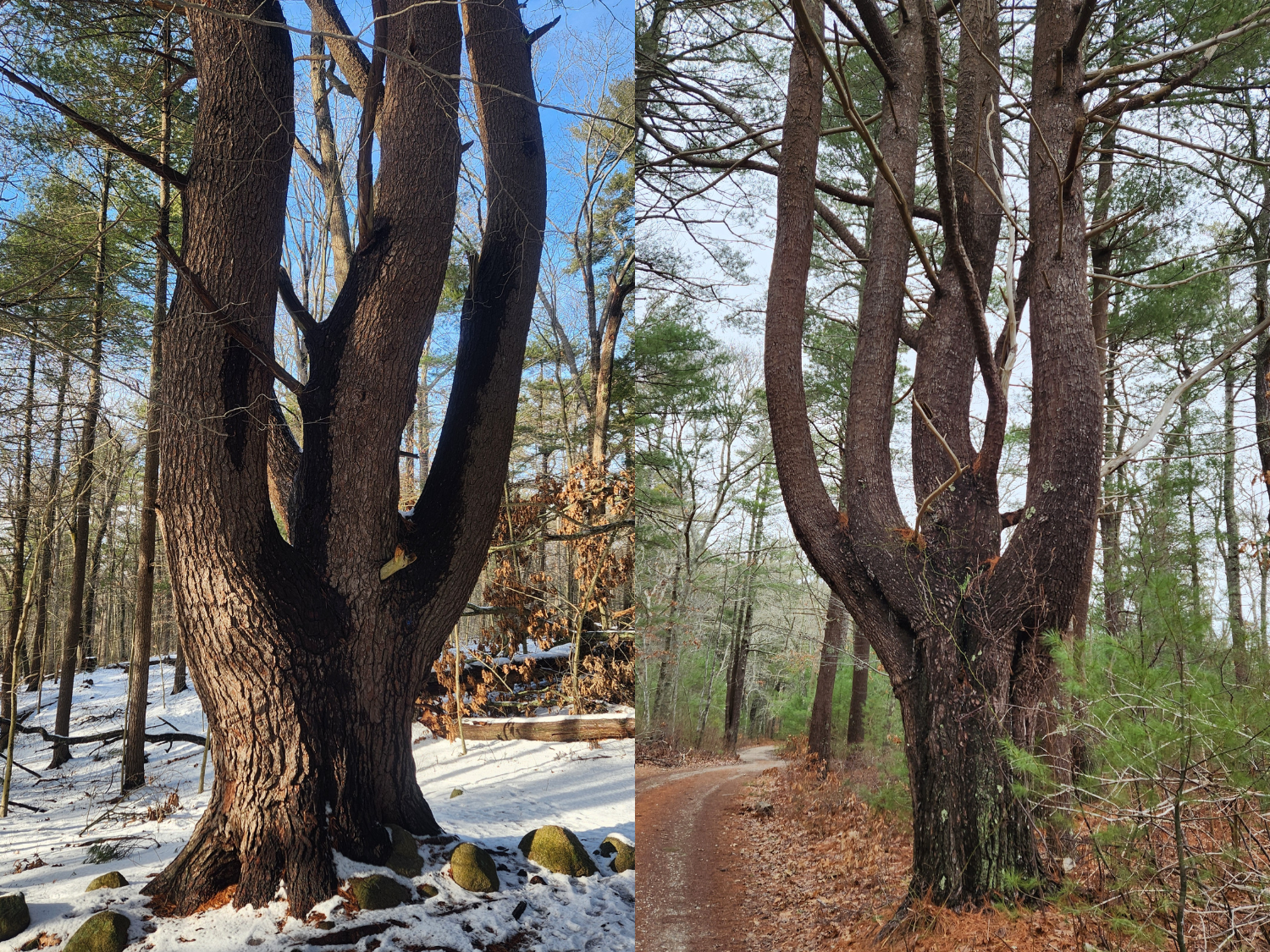
“Tuning fork” white pines. Left: Jacobs Pond Preserve, Norwell. Right: Old Field Pond Preserve/Bay End Farm, Bourne. Photos by Justin Cifello.
Most pine stands have now been cut several times since they colonized old fields. Since loggers prefer the straightest trees, abnormal trees were often left unharvested. Without competition, survivors could expand in all directions. Sometimes called wolf trees, these misshapen behemoths are evidence of disturbance in the forest’s history. Some are victims of the pine weevil, which kills the growing tip of young pines. The surviving branches each become their own leader and bend upwards, giving the tree a tuning fork or candelabra appearance. Stunning to behold, these complex shapes also offer different habitat than more orderly pines. [5]
Though they are now overabundant in much of our region, this species is still a crucial member of our forests. It has served as a symbol for peace and freedom, powered the age of sail, and drove economies. Their towering groves are an inspiring reminder of the tenacity of nature, still achieving remarkable heights despite centuries of deforestation and change.
Works Cited
1. Jake Swamp Tree: uvm.edu/femc/attachments/project/1379/The_Exceptional_White_Pines_of_Mohawk_Trail_State_Forest_copy.pdf
2. Hiawatha and the Tree of Peace: meherrinnation.org/culture/the-great-peacemaker-and-hiawatha/
3. King’s Broad Arrow and Pine Tree Riot: newenglandhistoricalsociety.com/new-hampshire-pine-tree-riot-1772/
4. Prescribed Burns: nationalforests.org/blog/what-is-prescribed-fire-and-why-is-it-important-for-forest-health
5. Wolf Trees: americanforests.org/article/wolf-trees-elders-of-the-eastern-forest/