


What’s New at Wildlands
White Pine: A Common Tree's Uncommon History
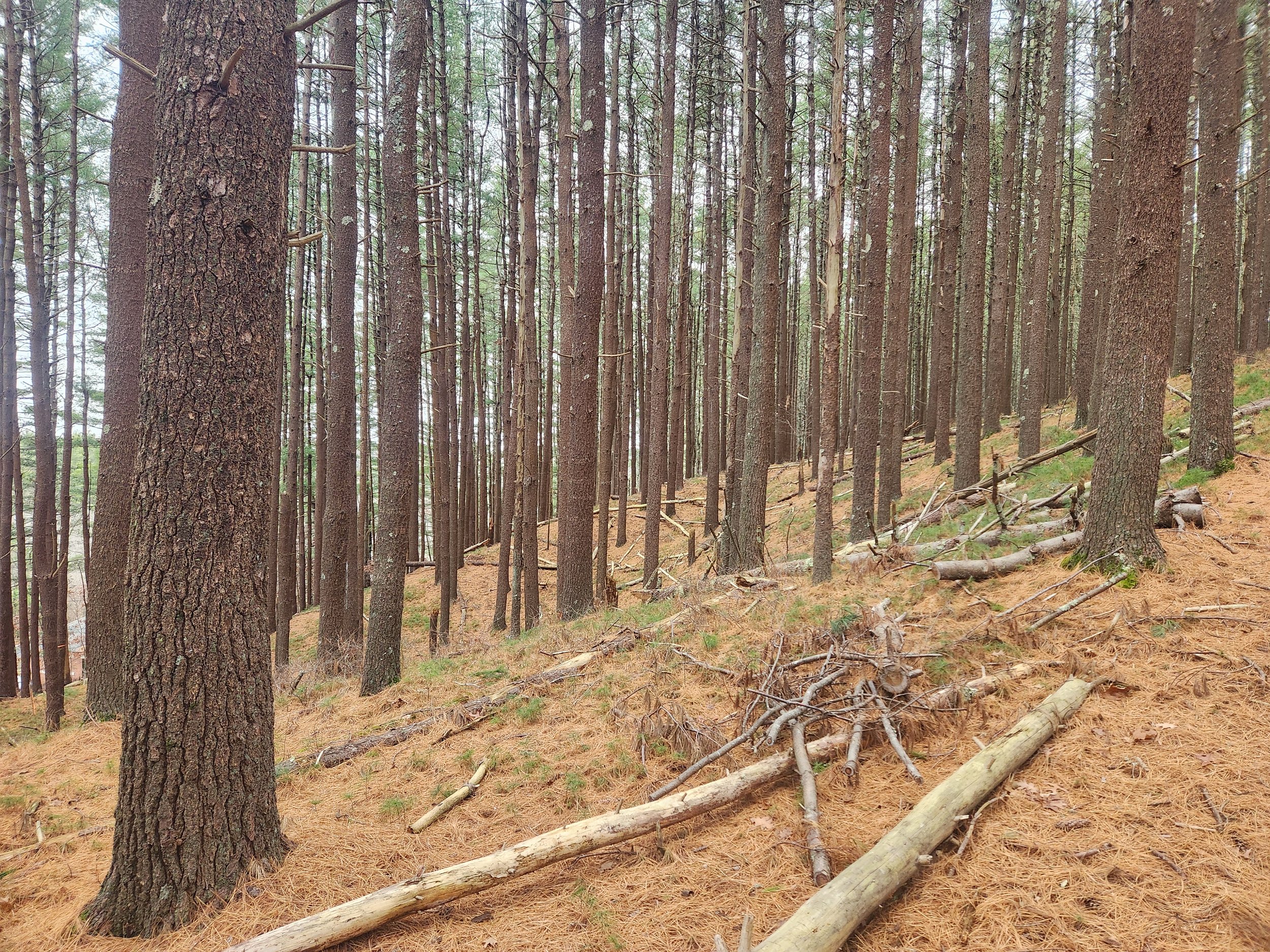
White pine monoculture at Myles Standish State Forest. Photo by Justin Cifello.
By Justin Cifello
Justin is a farmer and naturalist at Bay End Farm in Bourne and a volunteer for Wildlands Trust. Learn more about Justin (and all our Volunteer Hike Leaders) here.
Familiarity can breed contempt, or at least boredom. Being one of our most ubiquitous trees, the white pine could be overlooked as an object of study. With their uniform growth habit, lack of flowers, and sheer numbers, they may fade into the background in favor of showier plants. However, nothing in nature or history exists in isolation. Even the most seemingly mundane organism has its own story to tell.
Identification and Physiology
White pines are easily identified by their straight trunks and long needles. Their scientific name, Pinus strobus, is a reference to their spirally arranged pinecones, but it offers a useful mnemonic based on another trait: their radially symmetrical branches resemble strobe-light beams, unlike the chaotic branching pattern of pitch pines. Other local conifers, such as yews, spruces, and hemlocks, have much shorter needles, growing directly off of the branches. Cedars, including junipers, have more complex, forking needles, comprised of tiny scales. Only the pines have long needles, which tend to grow at branch tips in bundles called fascicles. Luckily, most of our pine species have a different number of needles per cluster: Jack pines and red pines have two needles in each bundle, pitch pines have three, and white pines have five.
While many of the white pines we see are little willowy saplings, this is the tallest tree species in the Northeast. On the East Coast, it is only rivaled by tulip trees. The largest known in Massachusetts, at about 176 feet tall, is the Jake Swamp Tree, named for the Mohawk chief and founder of the Tree of Peace Society. Its exact location is kept secret to protect it from vandals, but other giants can be seen in the northwest corner of the state, particularly at the Peace Grove in Mohawk Trail State Forest. [1]
Symbolism and History

Haundenosaunee flag. Source: Wikimedia Commons.
An Onandaga story tells of a time of war between five neighboring peoples. A figure known as the Peacemaker came and instructed a man named Hiawatha in diplomacy. In front of the warring leaders, Hiawatha broke a single arrow. He then bundled five arrows together, which no one could bend. Convinced by the demonstrated strength of unity, the leaders formed the powerful alliance known as the Haudenosaunee Confederacy (commonly known as the Iroquois, now an antiquated term). They buried their weapons under a white pine, which, with its five-needled fascicles, became a symbol of peace for the five founding nations. [2]

Flag of New England. Source: Wikimedia Commons.
The flag of New England highlights the pine tree’s significance to colonial identity, as well. By the time of colonization, Western Europe had largely depleted its forests, but their enormous ships required enormous trees. Ramrod-straight pines, light and strong, were perfect for ships’ masts. Trees with a 24” diameter were reserved for the royal navy, protected by a policy known as the King’s Broad Arrow. Qualified trees would have an arrow carved into them with an ax. Of course, colonists wanted the timber, too, and the crown was far away. At the historic Harlow House in Plymouth, one can see very wide floorboards—on the second floor only, to keep them from the prying eyes of royal tax assessors. The prohibition was eventually expanded to trees with only a 12” diameter, leading to a violent skirmish in 1772 dubbed the Pine Tree Riot. This early act of defiance is said to have inspired the Boston Tea Party. [3]
Fire and Shade
White pines were abundant and massive trees in the mature forests of pre-colonial Massachusetts, but they were probably not nearly as numerous as they are now. Their population boom owes largely to the decline of their primary limiting factor—fire. As saplings, white pines' thin bark exposes them to fire damage, especially when compared to pitch pines. Unlike beeches, hollies, and other trees with thin bark, white pines do not readily grow new branches or trunks from their stumps, leaving them less likely to recover when burned. Thus, regular, natural fires once gave other tree species a chance to outcompete white pines for sunlight and space on the forest floor.
Since colonial times, however, fire has been stamped out from much of the regional landscape, allowing white pines to proliferate unchecked. In the 1800s, economic changes drove the decline of local agriculture, leaving behind large, sunny tracts of pastures and bogs—perfect settings for white pine domination. Long protected from fire, these woods have matured into single-aged pine monocultures rather than mosaics of unique species. Recognizing the importance of forest diversity to wildlife habitat, water quality, climate resilience, and more, forest managers are now intentionally setting fires—called prescribed burns—to restore the conditions that once brought balance to our woodlands. [4]
Wolf Trees and Tuning Forks
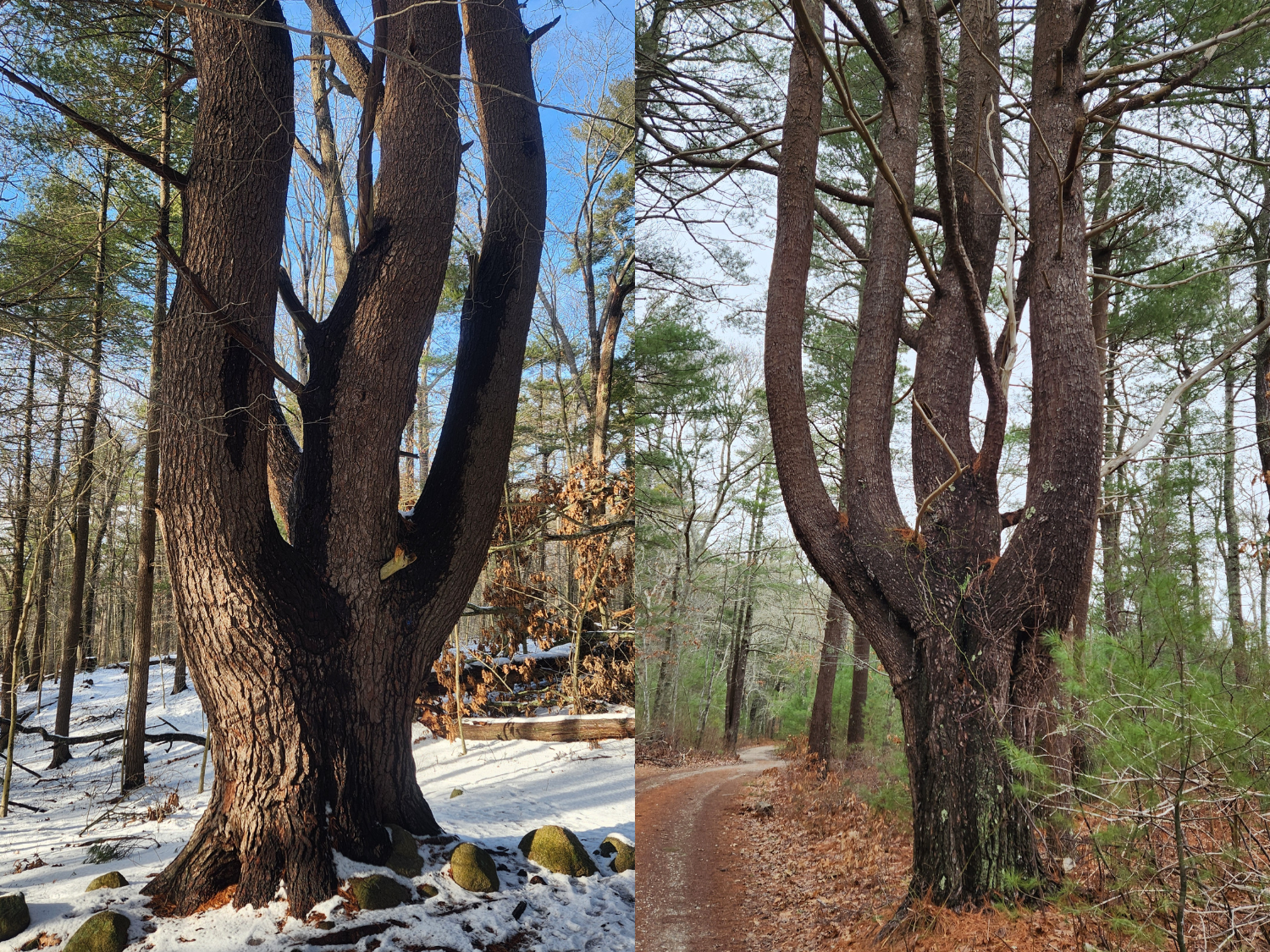
“Tuning fork” white pines. Left: Jacobs Pond Preserve, Norwell. Right: Old Field Pond Preserve/Bay End Farm, Bourne. Photos by Justin Cifello.
Most pine stands have now been cut several times since they colonized old fields. Since loggers prefer the straightest trees, abnormal trees were often left unharvested. Without competition, survivors could expand in all directions. Sometimes called wolf trees, these misshapen behemoths are evidence of disturbance in the forest’s history. Some are victims of the pine weevil, which kills the growing tip of young pines. The surviving branches each become their own leader and bend upwards, giving the tree a tuning fork or candelabra appearance. Stunning to behold, these complex shapes also offer different habitat than more orderly pines. [5]
Though they are now overabundant in much of our region, this species is still a crucial member of our forests. It has served as a symbol for peace and freedom, powered the age of sail, and drove economies. Their towering groves are an inspiring reminder of the tenacity of nature, still achieving remarkable heights despite centuries of deforestation and change.
Works Cited
1. Jake Swamp Tree: uvm.edu/femc/attachments/project/1379/The_Exceptional_White_Pines_of_Mohawk_Trail_State_Forest_copy.pdf
2. Hiawatha and the Tree of Peace: meherrinnation.org/culture/the-great-peacemaker-and-hiawatha/
3. King’s Broad Arrow and Pine Tree Riot: newenglandhistoricalsociety.com/new-hampshire-pine-tree-riot-1772/
4. Prescribed Burns: nationalforests.org/blog/what-is-prescribed-fire-and-why-is-it-important-for-forest-health
5. Wolf Trees: americanforests.org/article/wolf-trees-elders-of-the-eastern-forest/
Fieldstone Preserve Gives Avon & Brockton Residents New Place to Enjoy Nature
Grand Opening Gathers Public Officials, Nonprofit Leaders, Residents to Celebrate New & Future Projects at D.W. Field Park

Town of Avon Select Board Member Shannon Coffey cuts the ceremonial ribbon to open Fieldstone Preserve.
For Immediate Release
Contact: Rachel Bruce, 774-343-5121 x101, rbruce@wildlandstrust.org
Avon — A new conservation area is expanding public access to nature in one of Massachusetts’ densest urban landscapes. On November 20, the Fieldstone Preserve grand opening brought together government officials, nonprofit leaders, and nature enthusiasts from Avon, Brockton, and beyond to celebrate a new woodland trail adjacent to D.W. Field Park—and the innovative partnership that made the project possible.
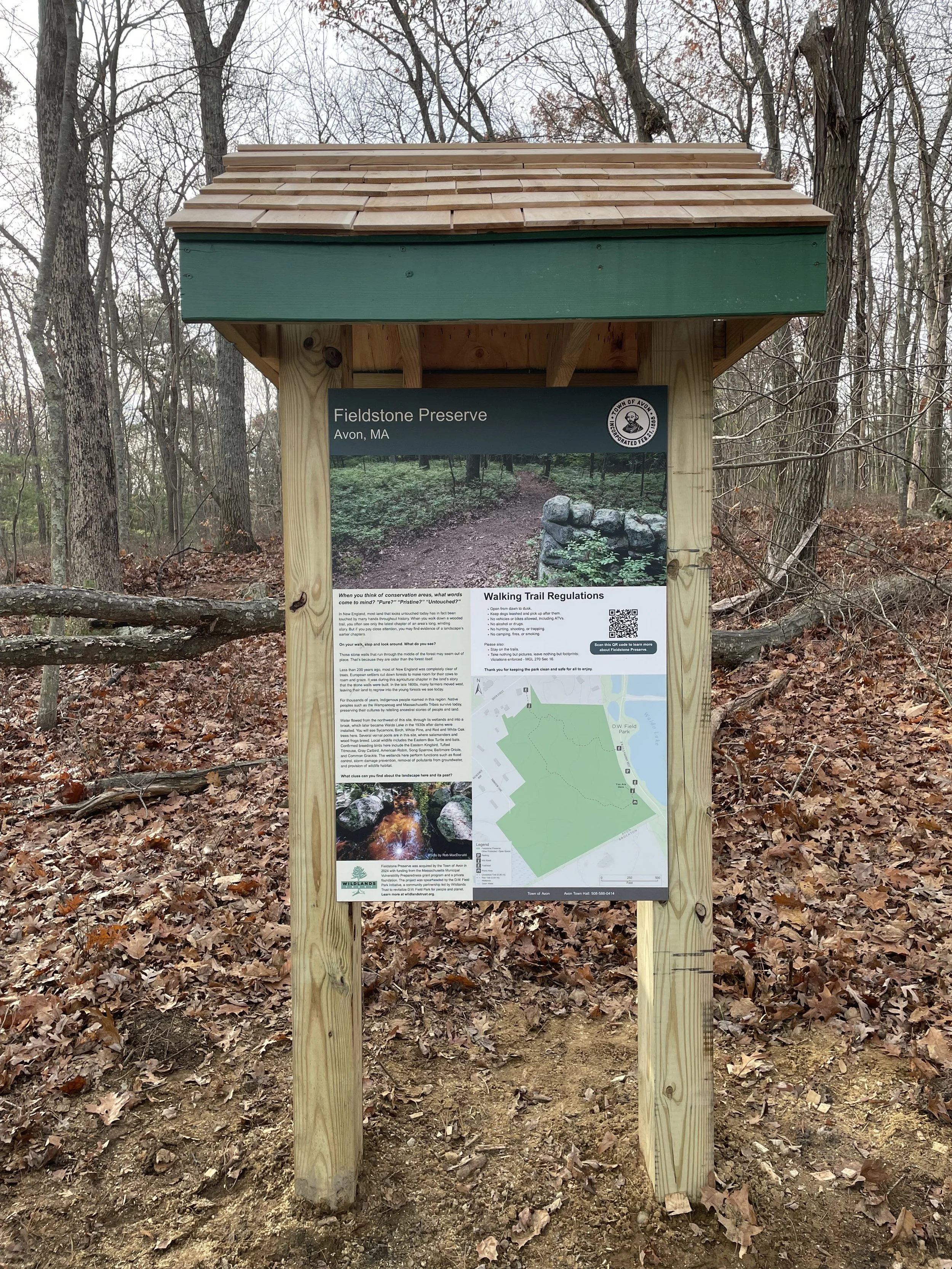
Fieldstone Preserve permanently protects 30 acres of undeveloped land beside D.W. Field Park, a 700-acre natural oasis serving Brockton and Avon’s 115,000 residents. The preserve’s 0.7-mile trail system includes three entrances, two on D.W. Field Parkway and one off South Street in Avon. Parking is available within D.W. Field Park at the lot west of Waldo Lake. A kiosk at the southernmost park-side trailhead features a trail map, safety guidelines, and information about the area’s natural and cultural history.
The Town of Avon purchased the forested parcel in March 2024. Funding came from the Massachusetts Municipal Vulnerability Preparedness (MVP) program and a private foundation via Wildlands Trust. Over 200 donations from residents across Southeastern Massachusetts unlocked the foundation’s contributions in December 2023.
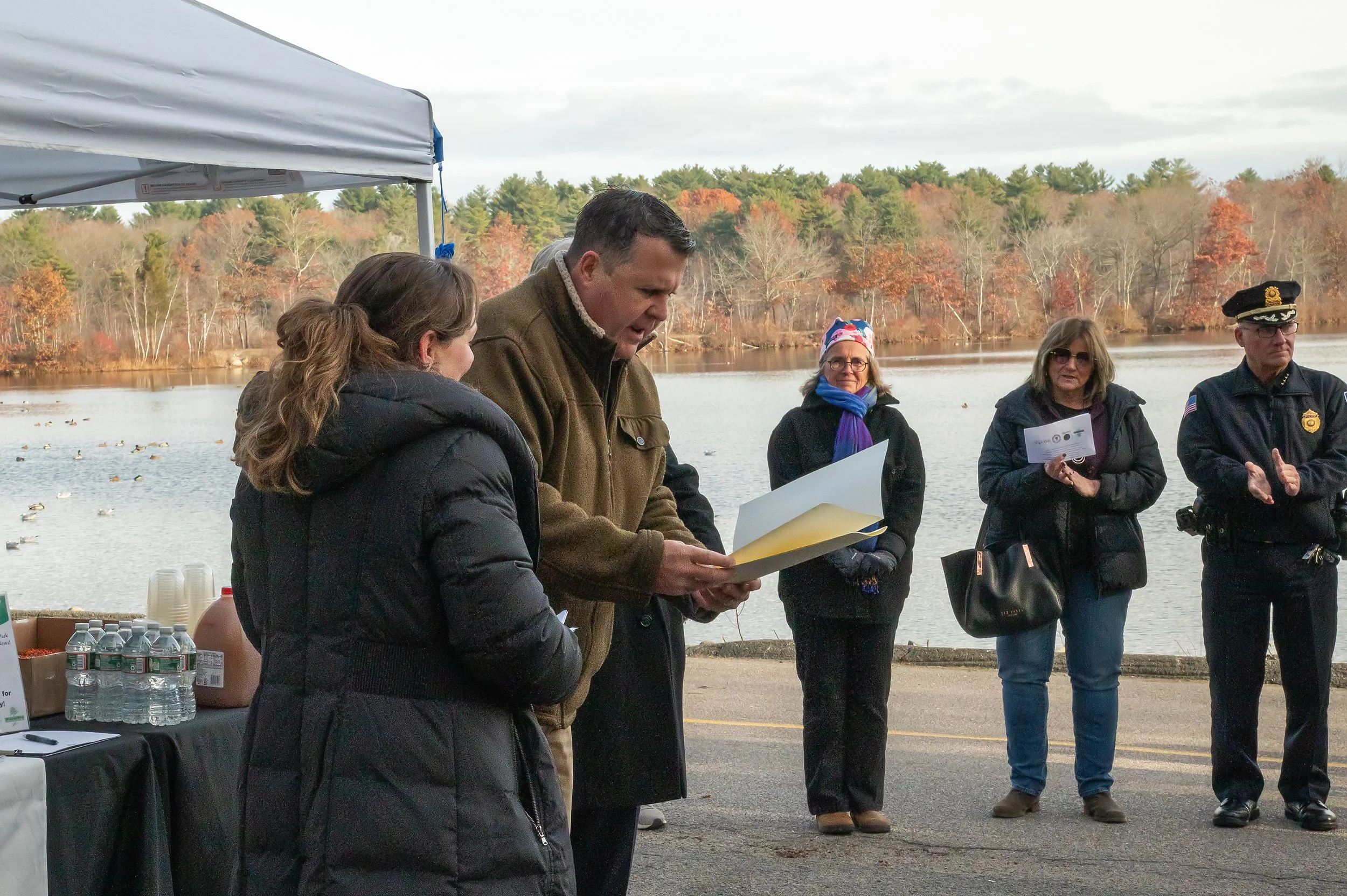
Brockton Mayor Robert Sullivan presents Wildlands Trust with a mayoral citation for its leadership in creating Fieldstone Preserve.
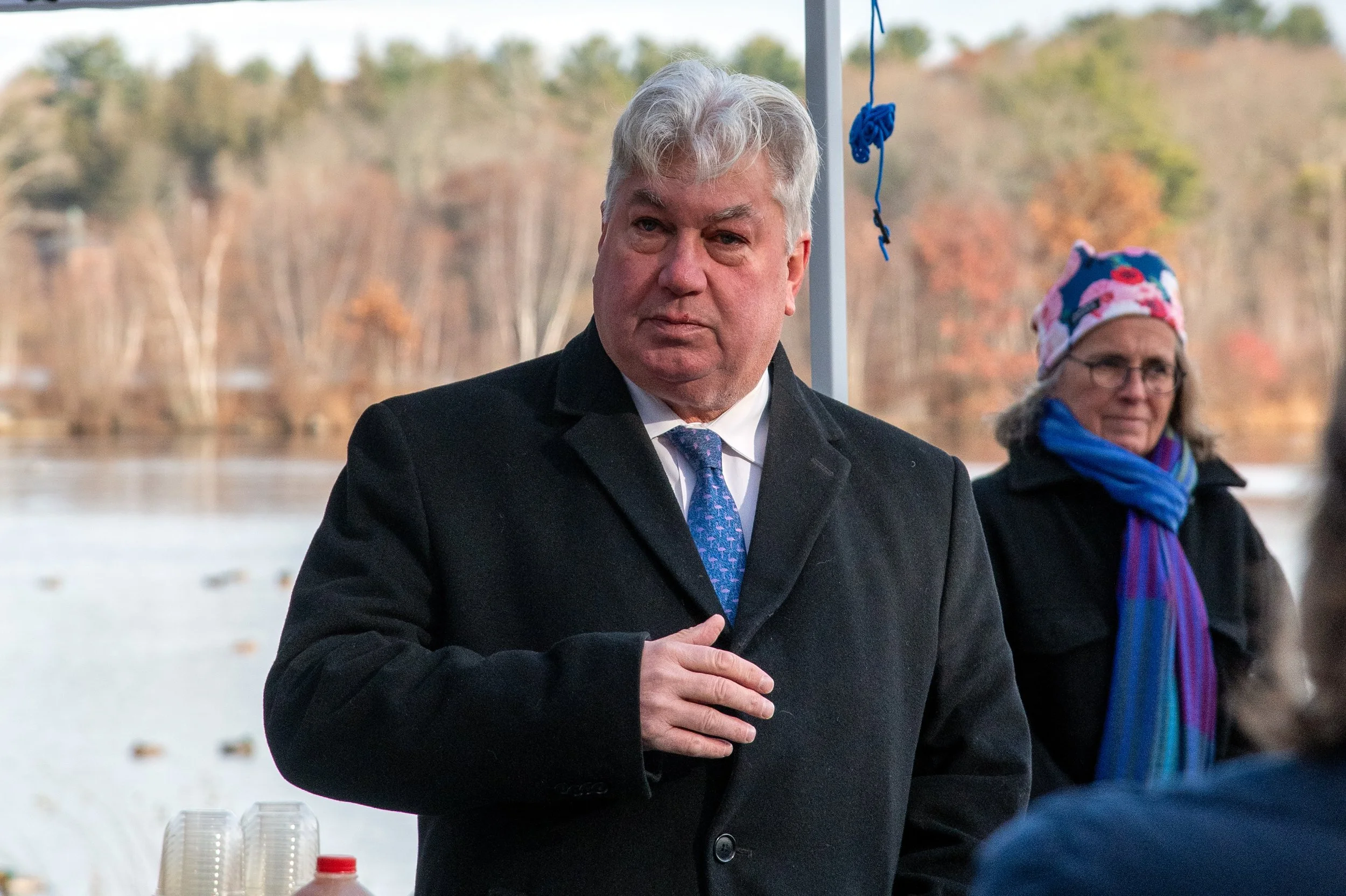
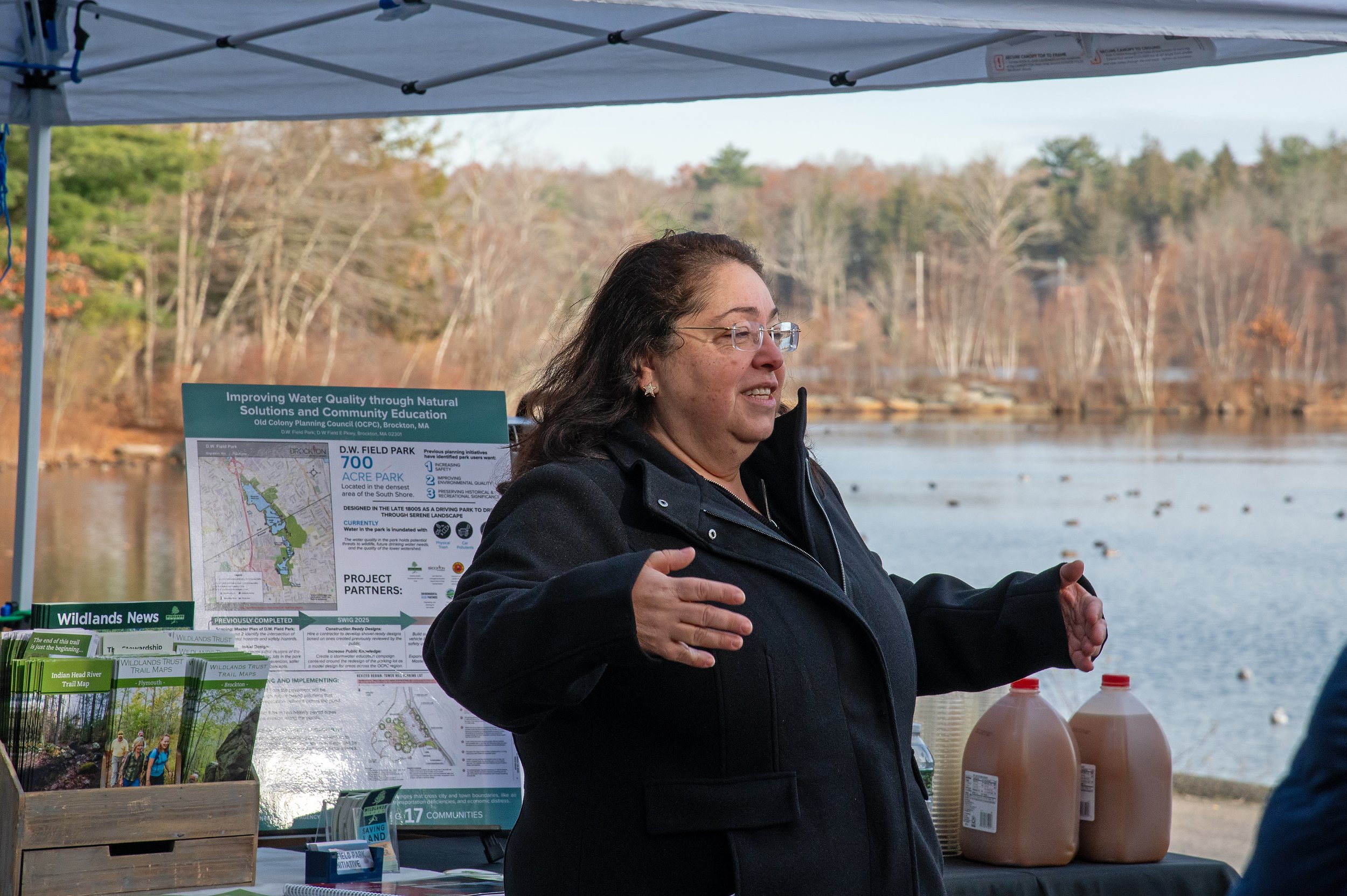
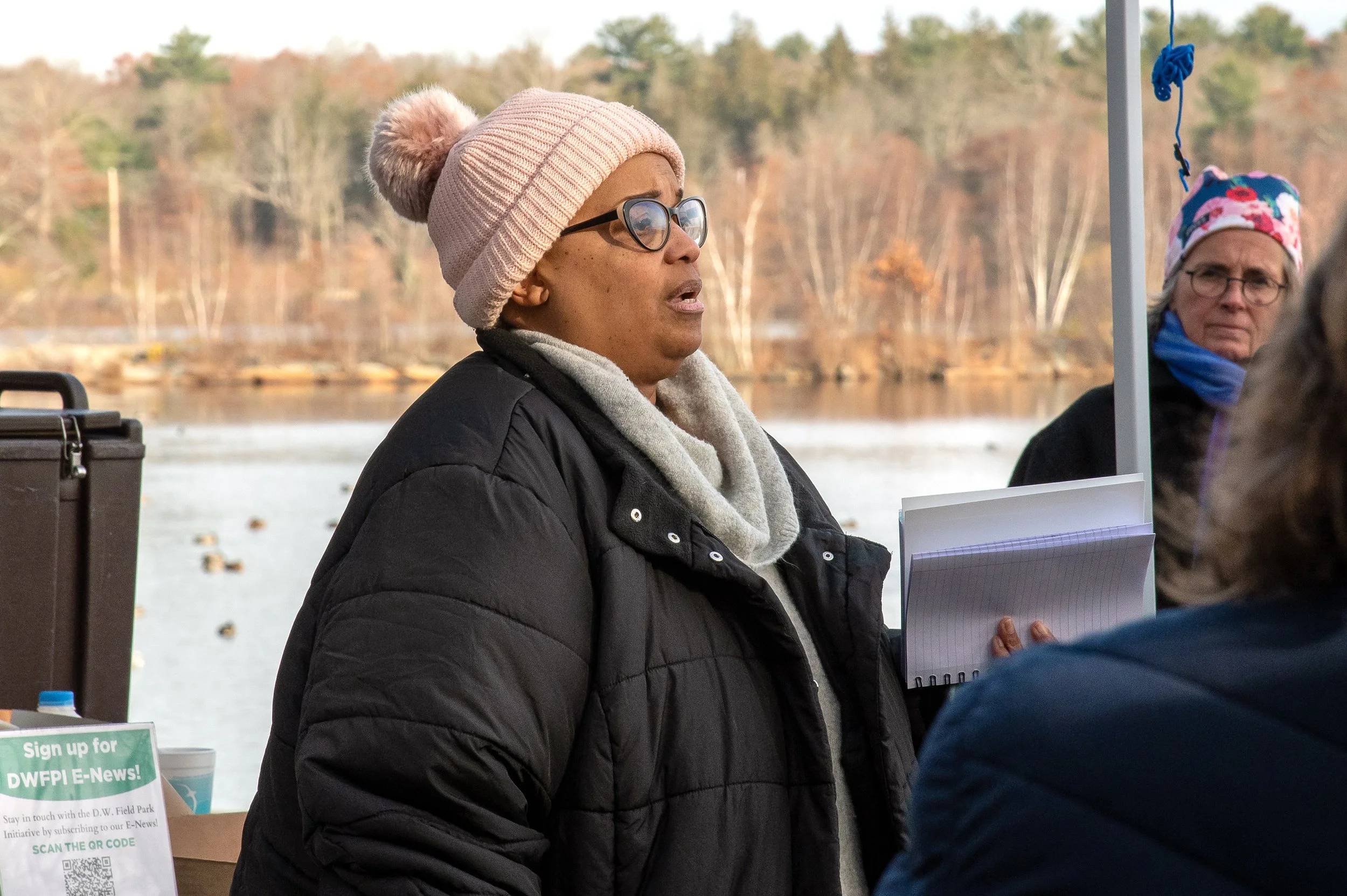
Speakers at the grand opening included City of Brockton Mayor Robert Sullivan, Massachusetts Senator Michael Brady, Town of Avon Select Board Member Shannon Coffey, Brockton City Councilor Shirley Asack, Wildlands Trust President Karen Grey, Old Colony Planning Council Executive Director Mary Waldron, and MVP Coordinator Carolyn Norkiewicz. Plymouth-based poet Tzynya Pinchback also read a poem inspired by D.W. Field Park through the Writing the Land initiative.
“As a lifelong Brocktonian who used to fish here, feed the ducks here, play golf here, and sled here as a kid, this is a great day for the City of Brockton and for the Town of Avon,” said Mayor Sullivan. “All of us have a shared vision for an unbelievable D.W. Field Park. To be able to add to this is just a wonderful endeavor.” Mayor Sullivan presented citations to Wildlands Trust and the Town of Avon for their project leadership.
“We couldn't have done this without the Edwards family,” Selectwoman Coffey said of the property’s sellers. “People who come to walk these trails for years to come will be following in the Edwards’ footsteps of stewardship and love for this community.”
“I'm constantly impressed by the collaboration of Wildlands Trust with Old Colony Planning Council, the Town of Avon, and the Brockton Garden Club,” said City Councilor Asack. “They are constantly here in the park, preserving our beautiful nature for our kids and for our community. I look forward to our continued collaboration with Wildlands Trust and to the amazing projects they have coming in the future.”
Click here to watch the full ceremony, courtesy of Avon Community Access & Media.
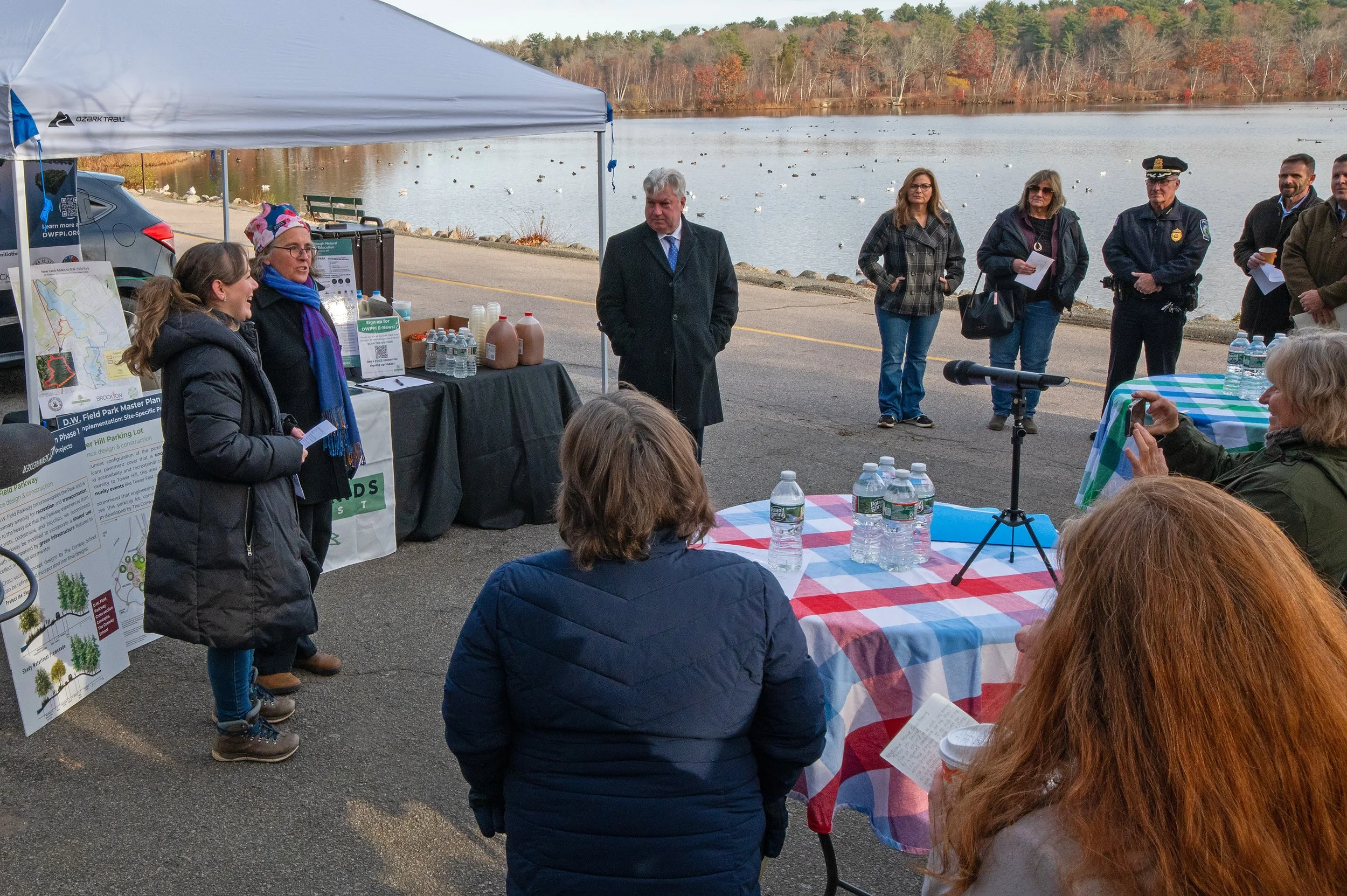
Wildlands Trust Chief of Staff Rachel Bruce and President Karen Grey thank project partners at the Fieldstone Preserve grand opening.
At the ceremony, Wildlands Trust Chief of Staff Rachel Bruce announced the award of $1.4 million in total funding for upcoming improvement projects at D.W. Field Park, including $860,000 from the MVP program for a shovel-ready roadway redesign; $425,000 from the state’s Parkland Acquisitions and Renovations for Communities (PARC) Program for the renovation of the Tower Hill parking area; and $100,000 from the EPA’s SNEP Watershed Implementation Grants (SWIG) for a stormwater management site. These projects will advance the mission of the D.W. Field Park Initiative, a collaboration launched by Wildlands Trust in 2022 to revitalize the park for people and planet.
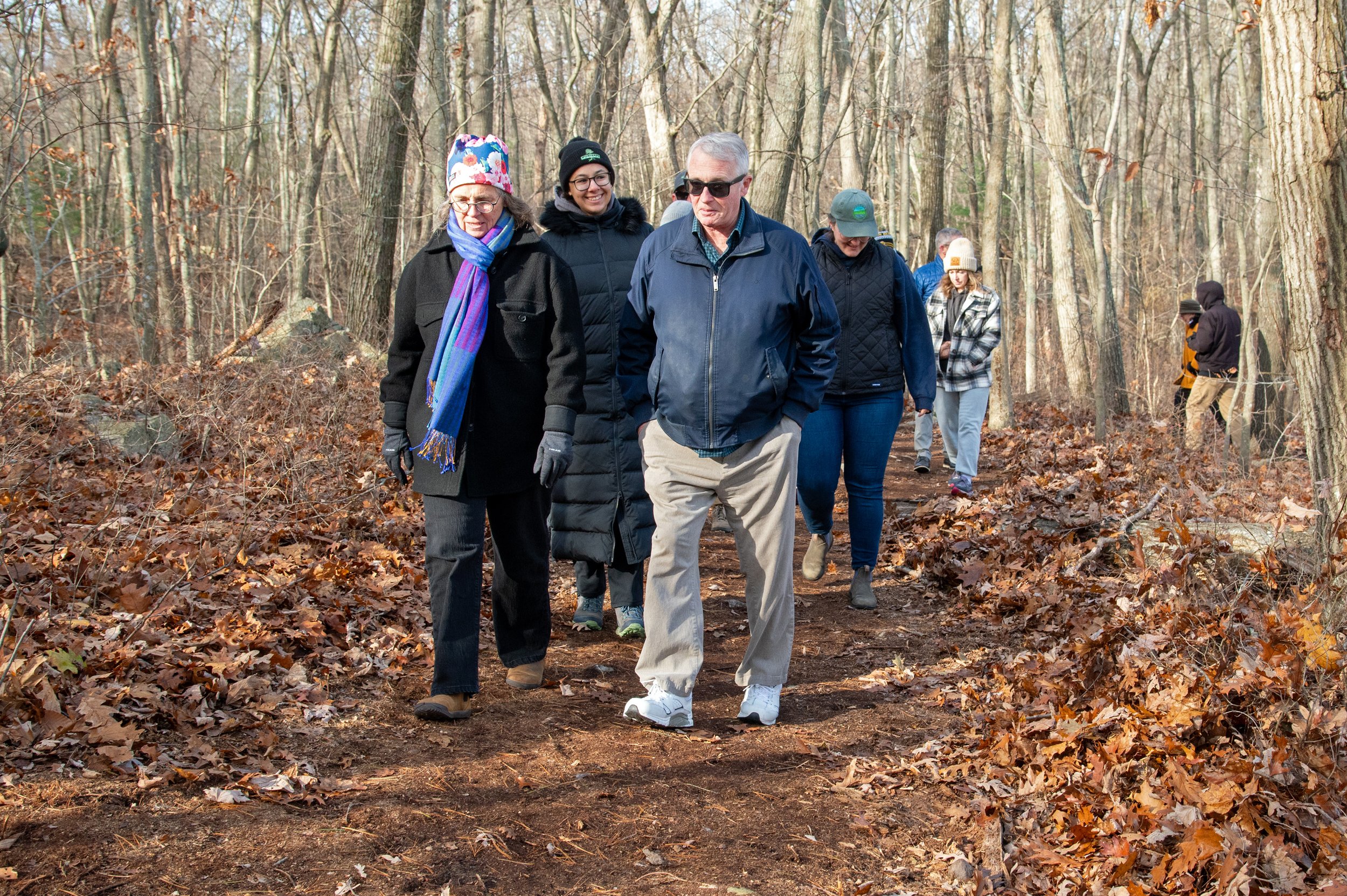
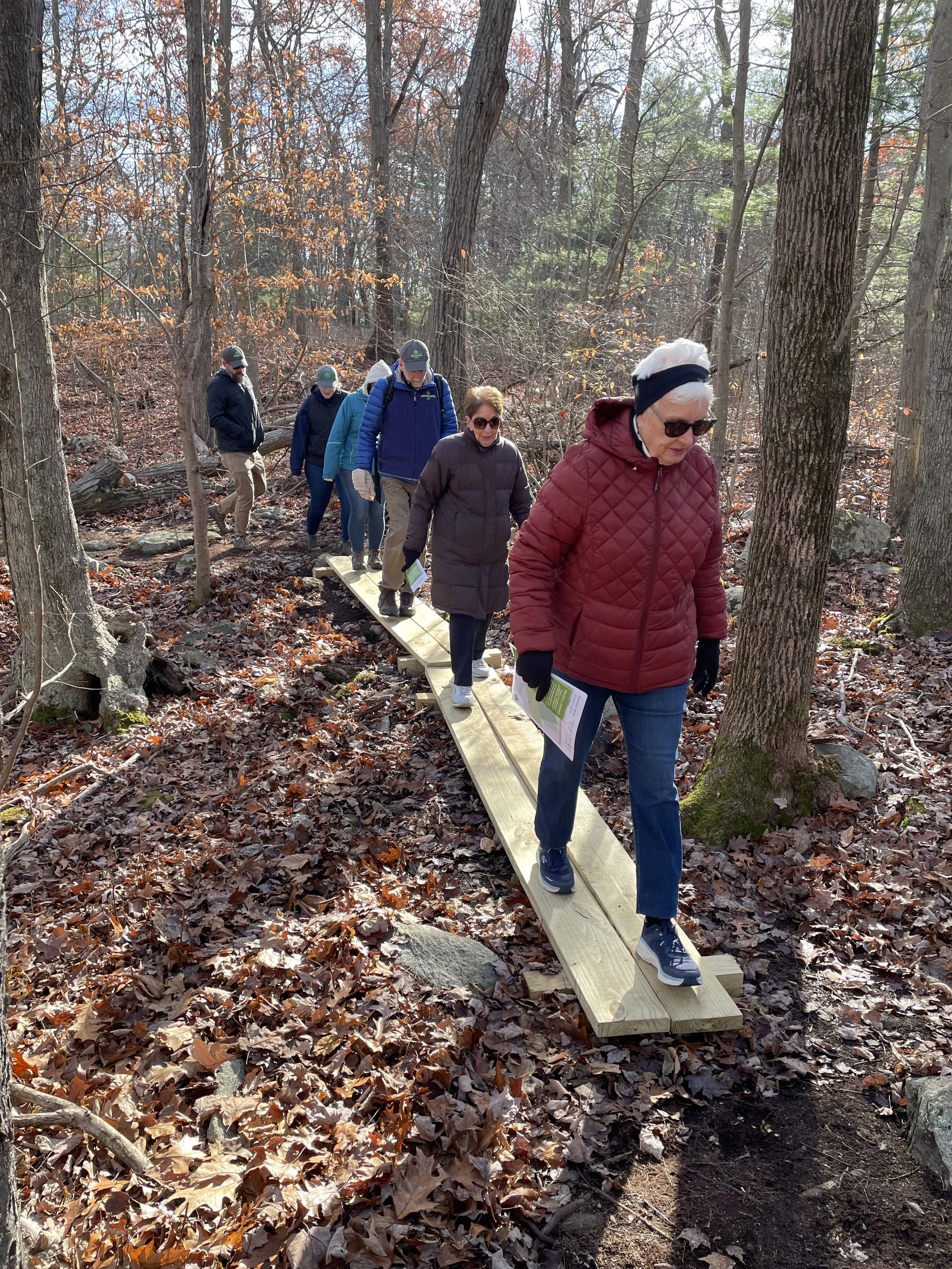
After the remarks, Selectwoman Coffey cut a ceremonial ribbon to officially open Fieldstone Preserve to the public. A public hike of the new trail ensued, guided by Wildlands Trust staff.
“D.W. Field Park already delivers so many benefits to people and wildlife,” said Wildlands Trust President Karen Grey. “We knew that the best way to expand these benefits was simply to expand the park. But in an urban environment, finding new land to protect is a tall order. We are grateful for the generosity of the Edwards family and the collaboration of the D.W. Field Park Initiative, which made this project possible.”
###
Wildlands Trust works throughout Southeastern Massachusetts to permanently protect native habitats, farmland, and lands of high ecologic and scenic value that serve to keep our communities healthy and our residents connected to the natural world. Founded in 1973, Wildlands Trust has protected more than 14,000 acres of vital lands across 59 cities and towns. For more information, visit wildlandstrust.org.
The D.W. Field Park Initiative aims to revitalize D.W. Field Park by improving recreational opportunities, accessibility, environmental health, and climate resiliency in Brockton and Avon’s largest public open space. Wildlands Trust launched the Initiative in 2022. Partners include the City of Brockton, Town of Avon, Old Colony Planning Council, D.W. Field Park Association, Environmental Partners, Manomet Conservation Sciences, Conway School, and Fuller Craft Museum. For more information, visit dwfieldparkinitiative.org.
Giving Tuesday: Support Our Brockton Youth Programs

UPDATE: Thanks to your generosity, we have raised $2,200 for our Brockton youth programs. There’s still time to help us meet our $5,000 goal! In addition to your annual giving, please consider supporting this campaign to build the next generation of environmental leaders.
There are so many causes worthy of your attention this Giving Tuesday and holiday season. Many charities give prospective donors one of two options: drive meaningful change today or make a lasting impact for the future. At Wildlands Trust, we ask: why not both?
By design, our work delivers both immediate and long-term benefits to the people and wildlife of Southeastern Massachusetts. We only invest in solutions that endure across landscapes and generations because we simply cannot afford to lose progress toward our vision of a healthy, beautiful, diverse, equitable, and resilient region for all.
Land protection is our highest-profile example of this strategy. But to truly realize and sustain our vision, we must always have people with the knowledge, skills, and passion to steward and advocate for our shared natural spaces. We can ensure this by providing youth with opportunities to explore nature early and often.
For over 10 years, Wildlands Trust has cultivated the next generation of local conservation leaders by engaging Brockton-area youth in community service and environmental learning. The Brockton High School Outdoor Club, formerly known as the Envirothon Team, is an after-school program that inspires students to explore nature and solve environmental problems together. In the summer, Brockton-area teens can pursue their interest in conservation through Green Team, a paid service-learning program primarily at D.W. Field Park. Both programs are co-led by Wildlands and Manomet Conservation Sciences. (Click here for a Green Team 2025 recap.)
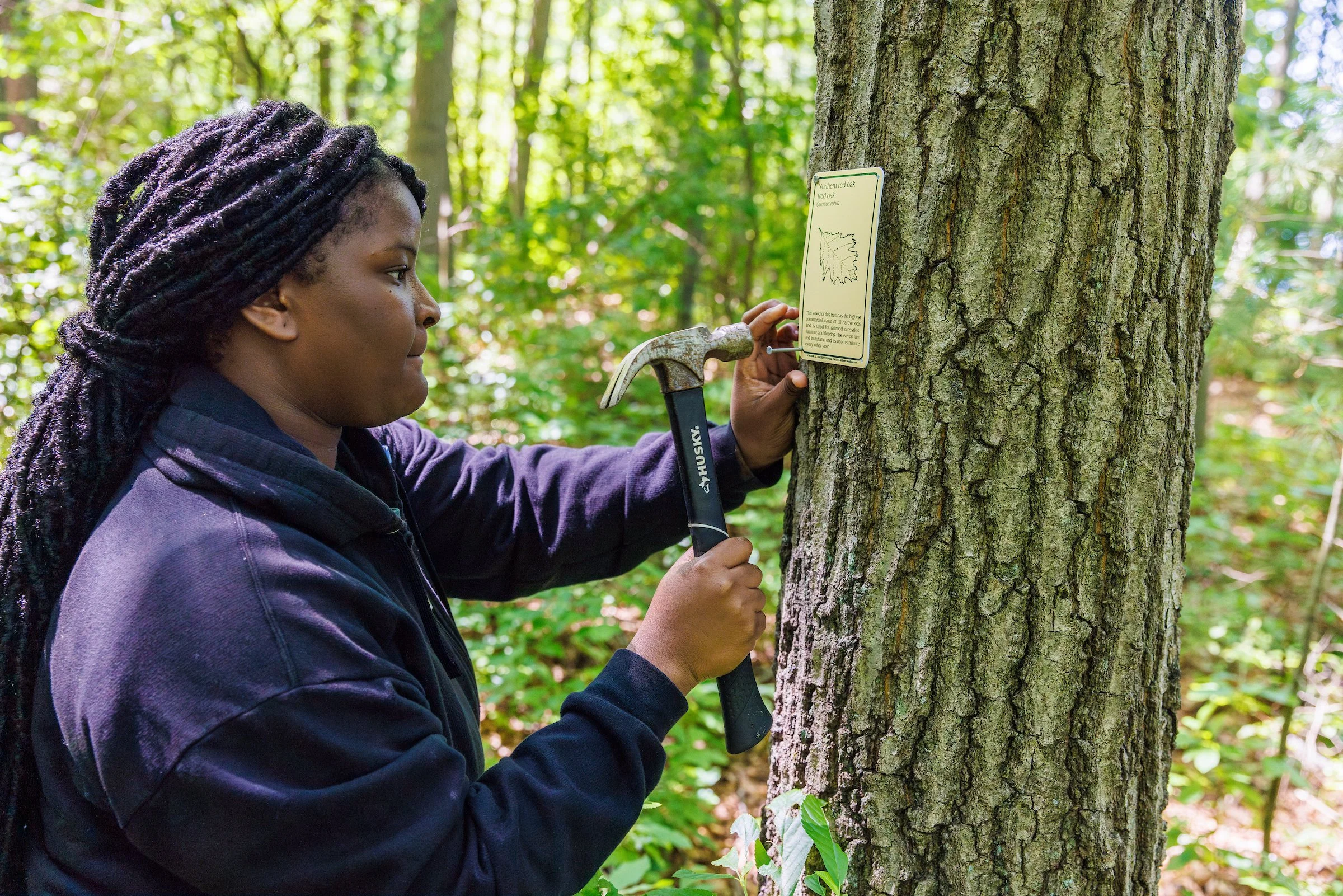
The impact of these programs is best told by the participants themselves. In a post-program survey, this summer’s Green Team members shared how the experience provided them with an immediate sense of accomplishment and an enduring sense of purpose:
“It had a big influence on what I wanted to do. It made me want to pursue a career in something involving the outdoors.”
“I was most proud of making my community cleaner and better for others. Hopefully it sets an example for others around me.”
“I learned to be brave, resilient, and a bit more outgoing.”
This Giving Tuesday, please consider donating in support of our Brockton youth programs. Our goal is to raise $5,000. Together, we can expand our investment in the next generation of environmental leaders, for the benefit of us all.
Leaders for Land: Wildlands Launches Corporate Giving Program
Making the Business Case for Saving Land For Everyone, Forever

Paula and Bill Harris, co-founders of WH Cornerstone, joined Leaders for Land to support the maintenance of Wildlands Trust’s headquarters, Davis-Douglas Farm in Plymouth.
Many forward-looking businesses today identify conservation as a core value. Business leaders with this mindset see land stewardship as a strategic investment—a way to fulfill their brand promise and build a stronger connection with their communities. This mindset inspired Wildlands Trust’s exciting new corporate partnership program, Leaders for Land.
Leaders for Land allows mission-driven businesses to make a lasting impact on local and regional communities by investing in the care of a public preserve in Wildlands’ growing portfolio of protected land across Southeastern Massachusetts. By supporting Wildlands, businesses elevate their profile and demonstrate leadership in their commitment to protecting our region’s natural resources for generations to come.
“A clear trend shows that customers, employees, suppliers, and all other business stakeholders favor conservation-conscious investments in the community and in this region we call home,” Donor Relations Manager Rob Kluin said. “Wildlands’ mission is relevant to everyone, and in a world so often divided, it’s heartening to see how that leads us to common ground.”
To learn more about Leaders for Land, visit wildlandstrust.org/corporate or contact Rob Kluin, Donor Relations Manager, at rkluin@wildlandstrust.org.
Leaders for Land Spotlight: WH Cornerstone Investments

Based in Duxbury, WH Cornerstone Investments is a trusted financial planning and investment advisory firm with over four decades of experience helping clients build wealth and secure a strong financial future. At WH Cornerstone, financial planning is about more than crunching numbers; it’s about empowering clients to navigate life’s unexpected curveballs with confidence.
WH Cornerstone Investments appreciates the value and purpose of Leaders for Land and made the decision to come aboard with a multi-year commitment.
“I first connected with Wildlands Trust over 20 years ago when I served on the Duxbury Open Space Committee, working to preserve the Historic O’Neil Farm,” said Paula Harris, co-founder of WH Cornerstone Investments. “We love the work Wildlands Trust is doing to protect our land and connect people with nature. Supporting their mission feels so natural to us. It aligns with our values.”
Wildlands is grateful for WH Cornerstone’s pioneering support as our inaugural Leader for Land.
Leadership Council Unites Over Nature, Hope, Chowder at Fall Supper
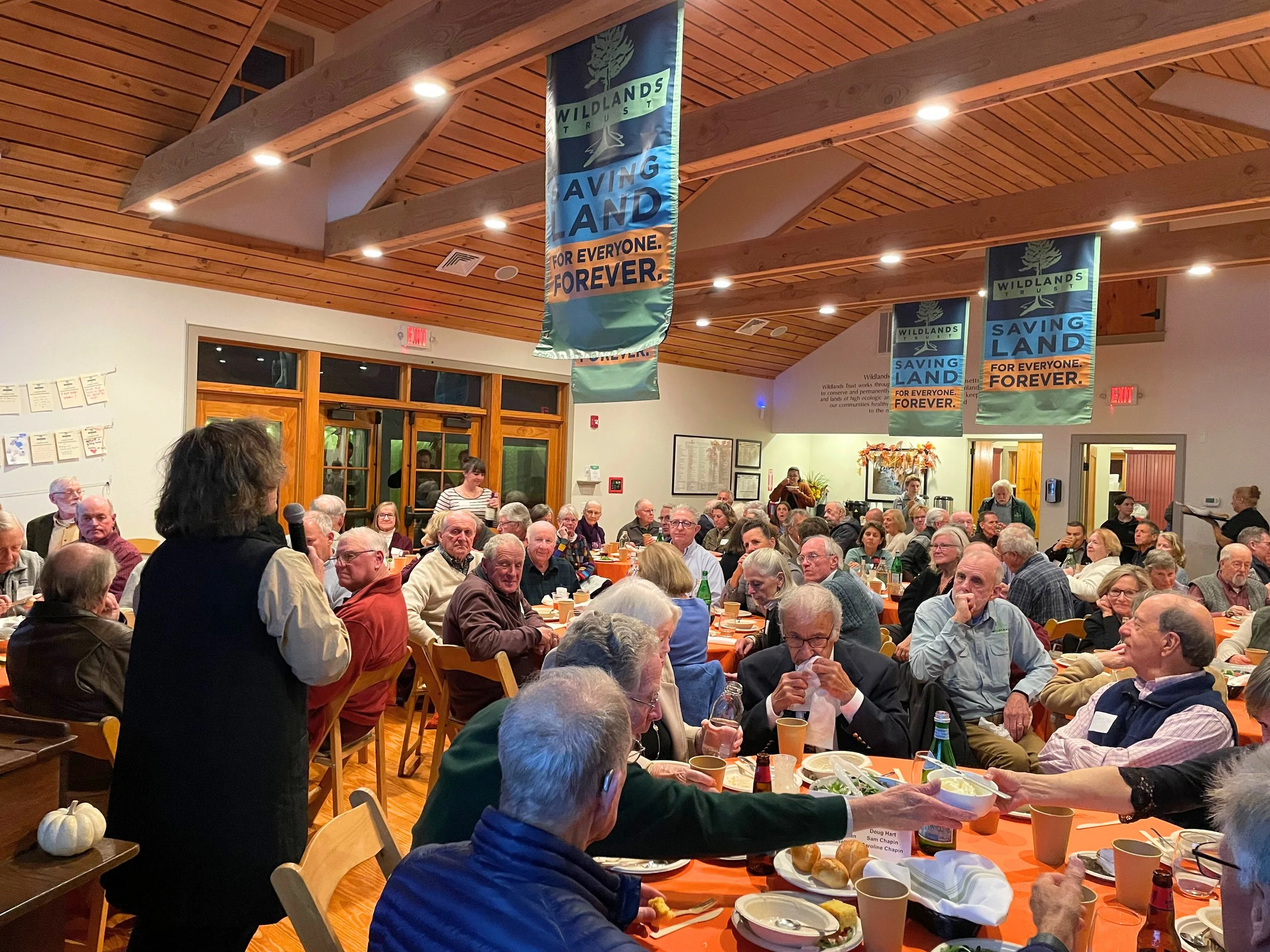
Wildlands President Karen Grey addresses the Leadership Council at the 2025 fall supper.
By Thomas Patti, Communications Coordinator
In late October, nearly 100 of Southeastern Massachusetts’ most influential conservation champions gathered at Davis-Douglas Farm in Plymouth to celebrate the work Wildlands Trust has accomplished in the past year. Wildlands hosts the Leadership Council fall supper each year to thank and unite the generous individuals who provide upper-level donor support to our mission.
It was a gorgeous autumn evening for the event. Under a tent outside the Community Conservation Barn, Leadership Council members were treated to an artisan charcuterie board, a raw oyster bar hosted by Island Creek Oysters, wine and beer from Pioppi’s Package Store, and handcrafted chocolates donated by Stuzzi Café & Sweet Shop. Inside the barn, attendees were served clam and corn chowder, and for dessert, apple and pumpkin pie. Each attendee also received a gift bag of fresh cranberries donated by the Gilmore Cranberry Company, along with a Wildlands Trust ceramic coaster.
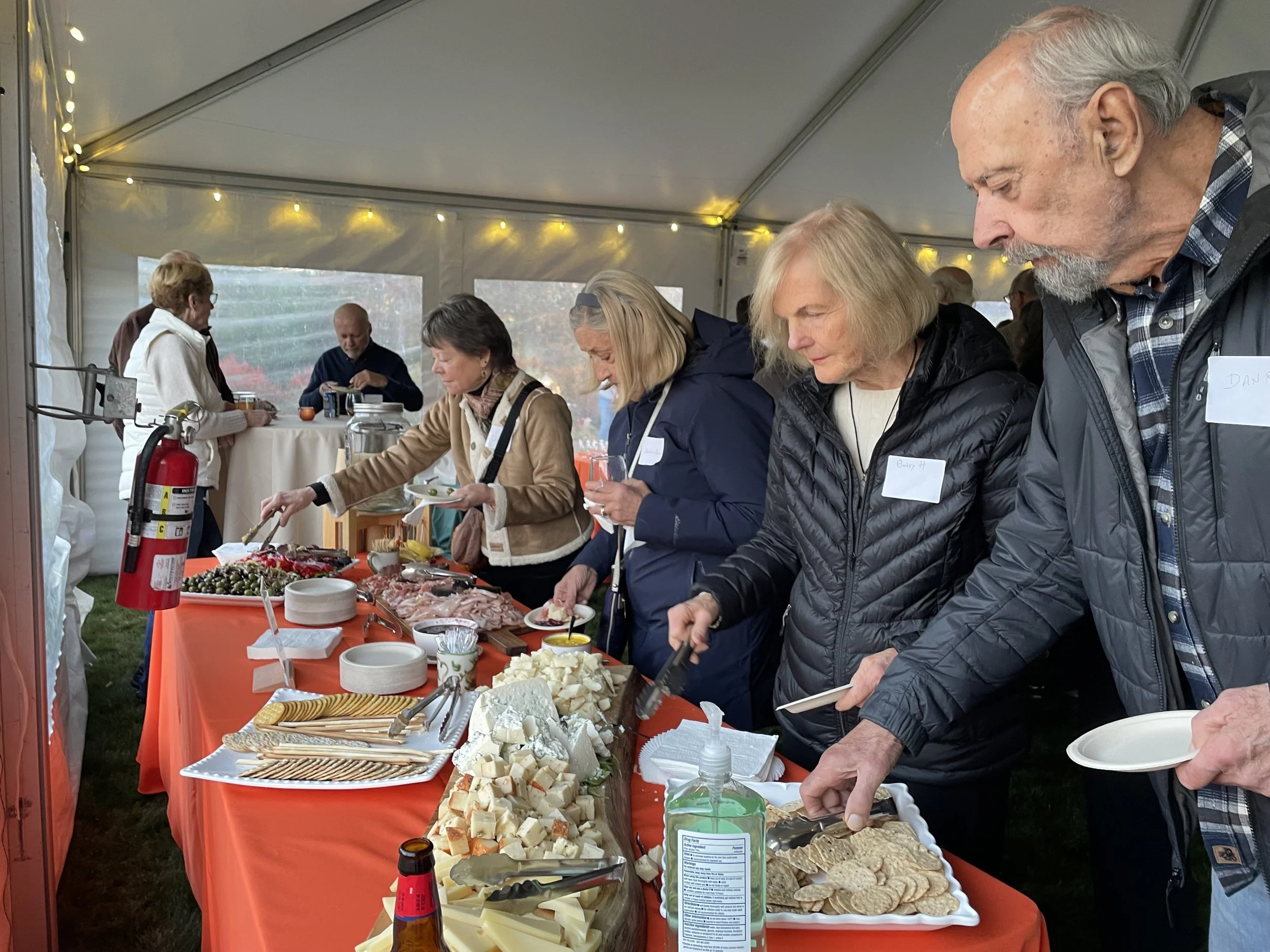
Leadership Council members enjoy the charcuterie board at the fall supper.
Yet the highlight of the evening was neither the food tasted nor gifts bestowed, but the stories told and the company shared. Two guest speakers, invited and introduced by Wildlands President Karen Grey, commended Wildlands’ unassuming yet vital work at a critical moment in local and global environmental history.
“It is an honor of my job to know so many of you and to understand the different ways each of you helps to advance our mission. You are essential partners in our work to protect land across the region, and we could not do it without you .”
First, conservation photographer Jerry Monkman reflected on his 30-year career, capturing the places and people at the heart of New England’s natural heritage. As owner of EcoPhotography and Reel Quest Films, Monkman has provided Wildlands with breathtaking photo and video content for almost two decades. To open his remarks, Monkman noted that amid a chaotic upbringing, it was his ability to roam the forests, fields, and rivers near his northern Illinois childhood home that kept him healthy and whole. Years later, when a cancer diagnosis put his adventurous career on hold, it was the nature of his own backyard in Portsmouth, New Hampshire, that saved him again. Monkman has been cancer free for over 10 years.
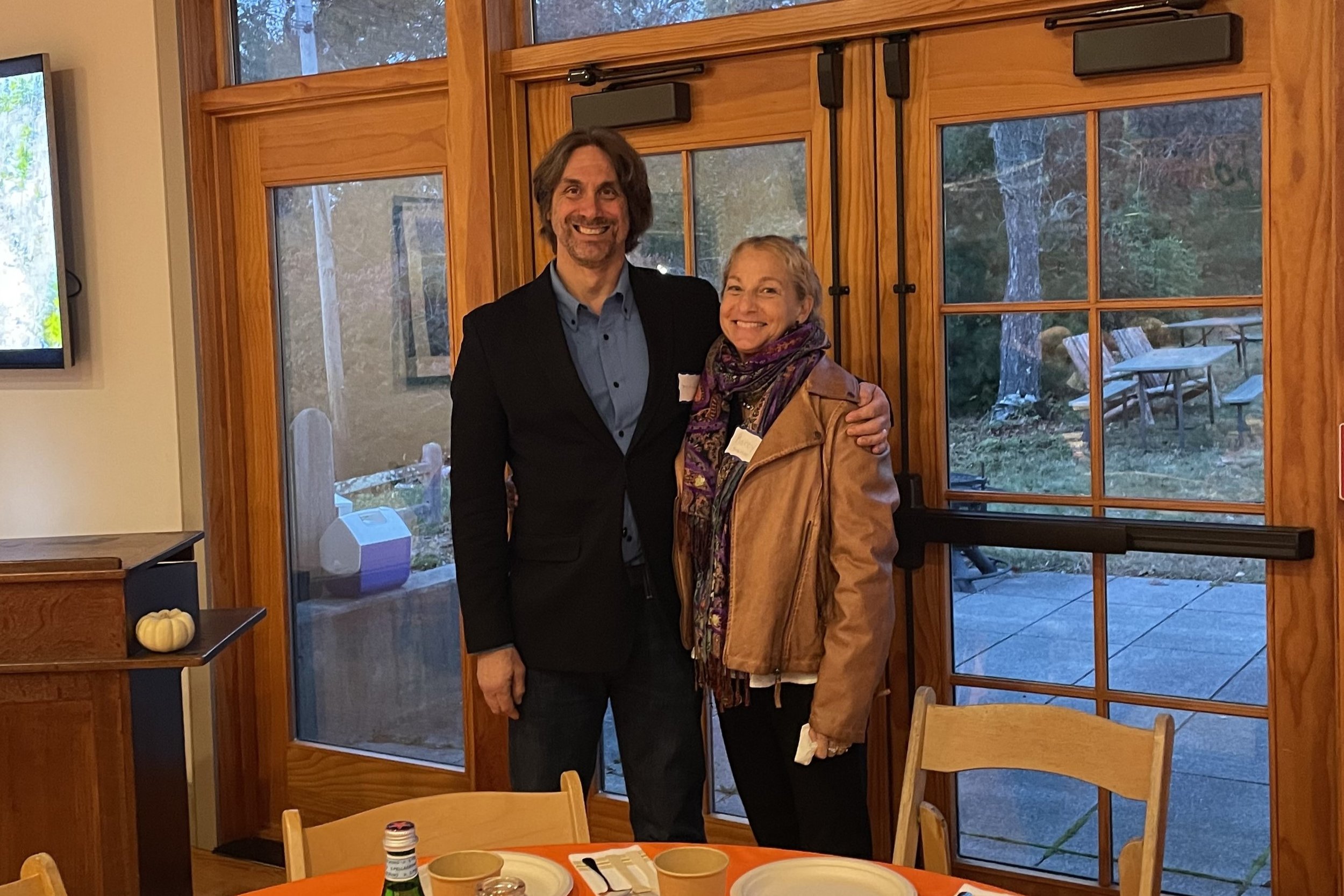
Jerry Monkman and his wife, Marcy.
“Having easy access to open space close to home, where I could go within a few minutes while I was sick and just spend an hour listening to the surf or meditating in the woods, I really believe had a strong impact on my recovery,” Monkman said. "I came to believe that easy access to open space is a basic human right, and we should all think of it that way.”
Monkman then recounted his mutually beneficial relationship with Wildlands.
“I just love working with Wildlands Trust,” he said. “They're awesome, fun people to work with. I've worked with environmental organizations from small land trusts all the way up to some of the biggest international organizations in the world. And I've got to say, Wildlands Trust is definitely one of the better-run organizations. They know how to get stuff done.”
Monkman then debuted his latest project for Wildlands, a promotional film narrated by President Grey centering on the theme, Saving Land for Everyone, Forever. Watch the film here.
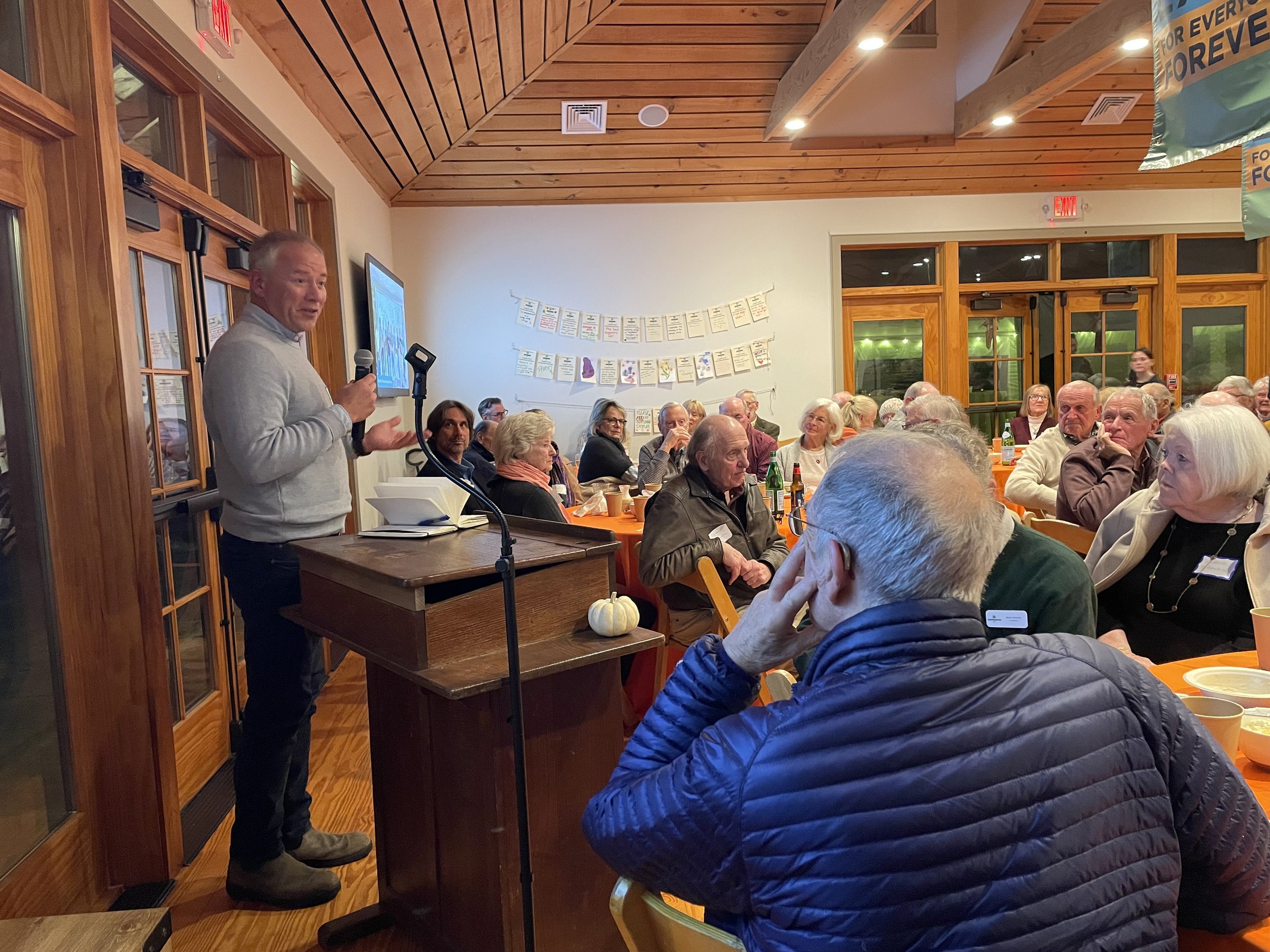
Mass Audubon President David O’Neill addresses the Leadership Council.
The final speaker of the night was David O’Neill, President of Mass Audubon. “This is what community looks like,” he marveled at the start of his address, scanning the packed room. Amid turmoil and uncertainty at the federal level, O’Neill emphasized the importance of investing in local, tangible improvements to social and environmental well-being.
“Focusing on the negative is too easy,” O’Neill said. “I'm like, ‘Look, what can we do about this? What is in our agency to make a difference today?’ It's the work that's happening in communities all across the country to do great things as a bulwark against what's happening in D.C. What Wildlands Trust is doing each and every day is what we all have to do. And we have to magnify that more than we've ever done before.”
O’Neill concluded by highlighting the Nature for Massachusetts campaign, which is advocating for the state to dedicate $100 million of existing tax revenue each year to advance land and water conservation, outdoor recreation, and climate resiliency. Spearheading the effort is the Nature for Massachusetts Coalition, a group of over 50 environmental organizations, including Mass Audubon and Wildlands Trust.

.svg&oldid=1103808567)
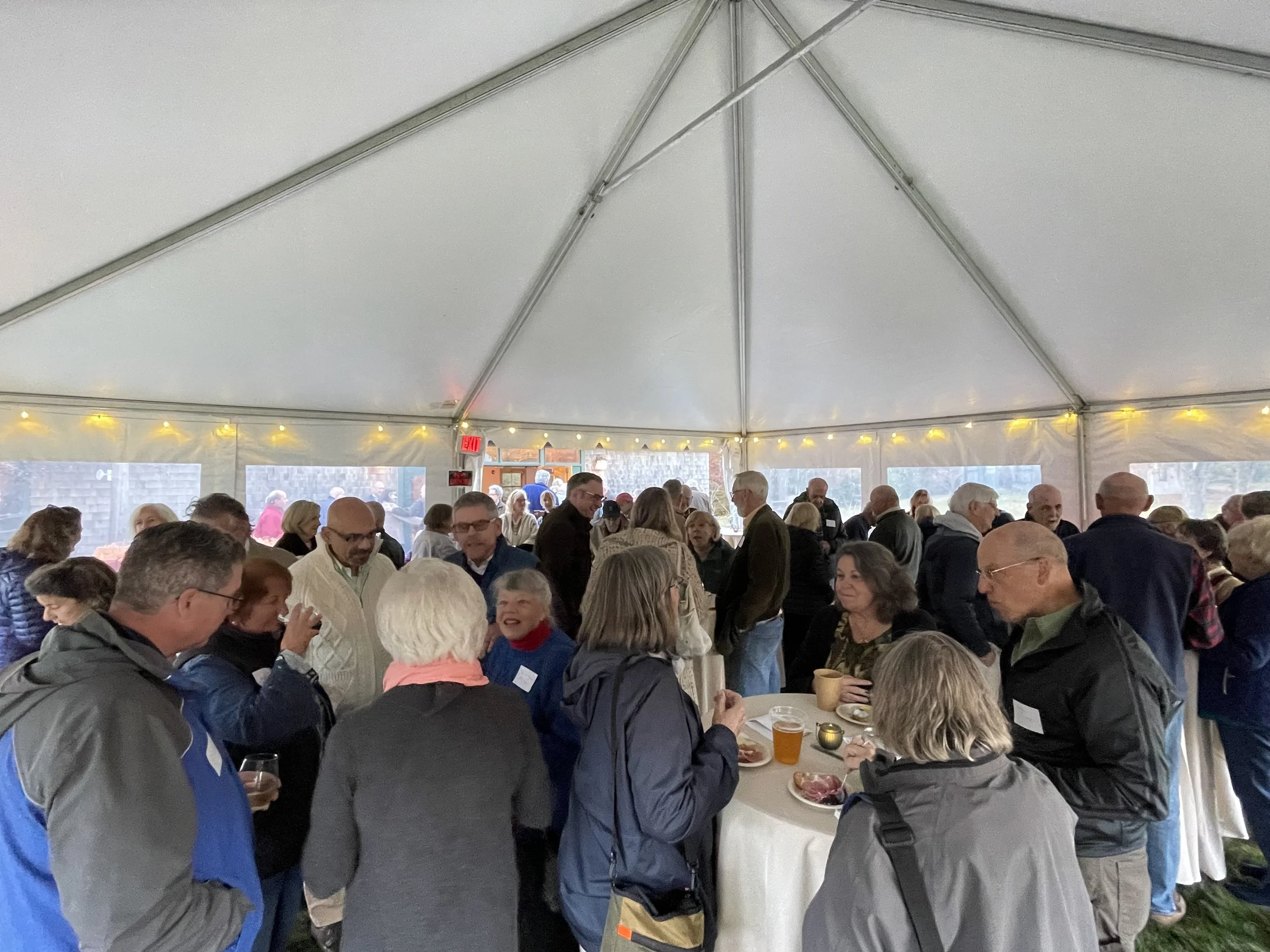
The Leadership Council enjoys light refreshments and good company under a tent outside the barn.
“Nature is a unifying force,” O’Neill added. “It should not be a political issue. It should be something that brings us together, and it does each and every day. And we need more of it. We need to protect it, and in places that don't have it, we need to offer it.”
Through laughter, stories, handshakes, and hugs, the unifying force of nature was on full display at last month’s fall supper. We extend our deepest gratitude to the generous members of the Leadership Council, who make our work possible.
Wildlands hosts two Leadership Council appreciation events each year, the fall supper and a spring preserve tour. Learn more and join the Leadership Council at wildlandstrust.org/leadership-council.