


What’s New at Wildlands
Eagle Scout Project Benefits Wildlands' Great Neck Conservation Area
By Amy Markarian, Senior Copywriter
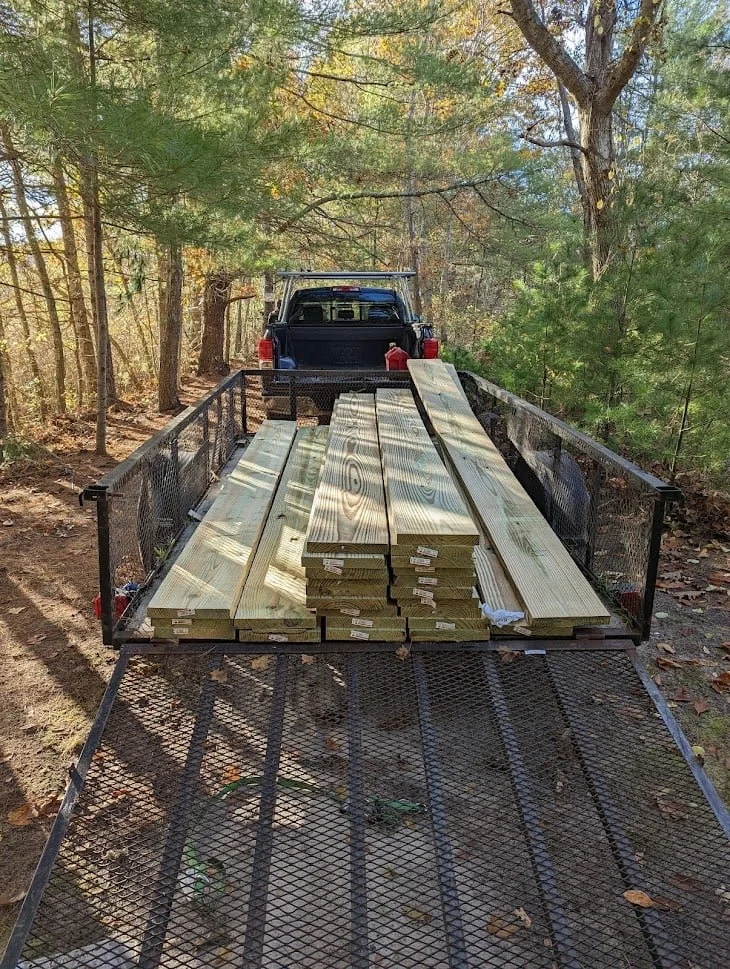
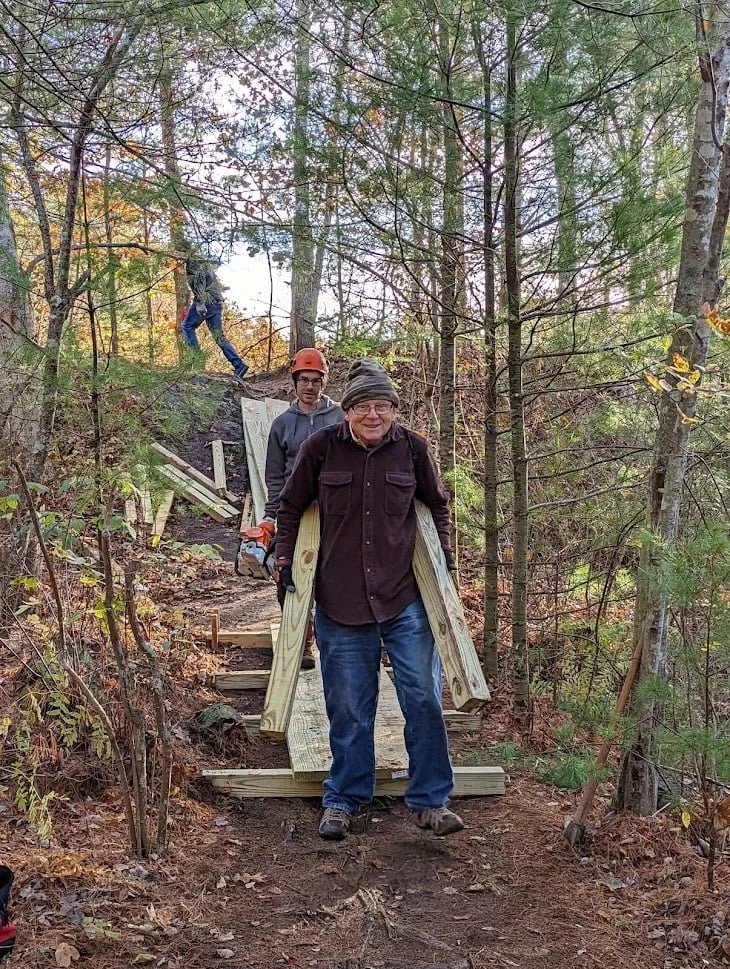
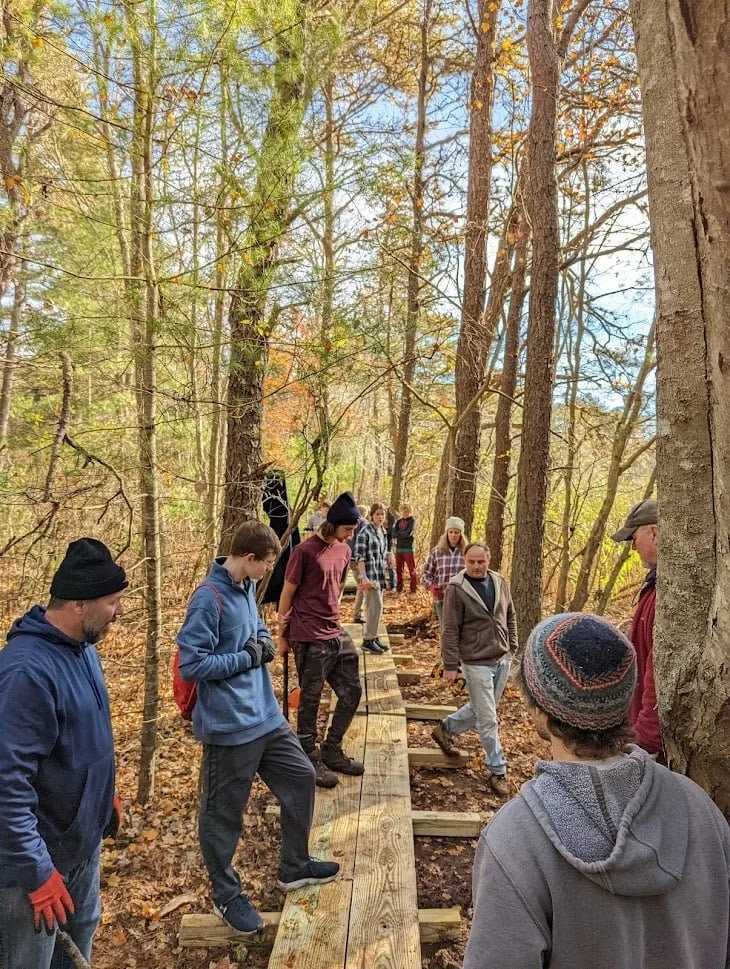
Local Eagle Scout Ethan Nardone and his team of volunteers, along with the Southeastern Massachusetts and Cape Cod chapters of the New England Mountain Bike Association (NEMBA) installed an impressive 240 feet of bog boards at Great Neck Preserve, in Wareham this month! This 24-inch wide wooden “bridge” is designed to accommodate both hiking and mountain biking. It allows trail users to avoid mud and standing water, and limits the impact of pedestrian and bike traffic on the trail and surrounding environment.
Nardone planned the workday for his Eagle Scout Service Project, recruiting volunteers and fundraising for the project. NEMBA’s generous contributions provided both financial and physical support. In coordination with Wildlands’ Director of Stewardship, Erik Boyer, Nardone’s friends and family, biking team members from a local school, members of both NEMBA chapters, and Wildlands staff and volunteers spent the day carrying lumber and tools onto the trail, then assembling the bog boards on site.
The new bog boards are a fantastic addition to the trail at Great Neck Preserve, and Wildlands is grateful to benefit from this outstanding collaboration!
Photo credit: SEMass NEMBA Chapter President, Tommy Walker


A Life Remembered: Memorial Bench Dedicated to Wildlands’ Volunteer at Halfway Pond Preserve
By Amy Markarian, Senior Copywriter

On October 15, a group of friends, family members, and Wildlands’ staff members gathered to celebrate the life of Wildlands’ volunteer, Pat O’Rourke. It was a morning spent remembering a mother, grandmother, sister, and friend. Stories were traded over breakfast, and a hike through Halfway Pond Preserve led the group to a simple wooden bench overlooking a cherished view from the trail. There, a plaque was installed to dedicate the bench in Pat O’Rourke’s memory.
In the years before her death, Pat had been both a Wildlands Trust volunteer and an active member of the Friends of Halfway Pond hiking group. She spent countless hours enjoying nature and the company of friends on the same trails walked in her memory that morning. In 2019, one of Pat’s contributions to Wildlands had been to assist in carrying a volunteer-made wooden bench through the woods to its home along the trail. Its purpose was to provide a resting spot for visitors who traverse the hilly path--a place to pause and appreciate the scenic overlook of Halfway Pond.
Pat had deeply valued Plymouth’s natural spaces and the community of friends who shared her enthusiasm for outdoor recreation. Her family recognized this and, after her passing, presented Wildlands Trust with a generous donation in her memory. As a token of Wildlands’ appreciation for Pat’s many contributions, and for the gift that was received from her loved ones, a memorial plaque was installed on the bench that she had carried, ensuring that her memory will continue to live on in the woods she so enjoyed.
At the dedication ceremony, Pat’s son Mike spoke in remembrance of his mother, as did Wildlands’ President and Executive Director, Karen Grey. Fellow volunteers and hiking friends Marilynn Atterbury and Betsy Hall also eulogized their friend and shared Robert Frost’s poem, “Stopping By Woods on a Snowy Evening,” which is quoted in the plaque’s inscription. Pat's brother Jack highlighted the synchronicity of his sister’s longstanding fondness for beech trees and the towering beech that shaded her bench with yellowing autumn leaves. At the close of the ceremony, participants followed the trail back out of the woods, reflecting on Frost’s words:
The woods are lovely, dark and deep.
But I have promises to keep.
And miles to go before I sleep.
And miles to go before I sleep.
For her friendship and commitment to our community, Wildlands gratefully remembers Pat O’Rourke.


Programming is Back!
By Amy Markarian, Senior Copywriter
Say hello (again) to the Conservation Barn at Davis-Douglas Farm and our new Programs & Outreach Manager, Claire Johnston
As we say goodbye to summer on the South Shore, we look forward to an exciting fall filled with programs. Along with the rest of the world, Wildlands’ programming team took a step back from in-person events in 2020 due to COVID-19. But now, with safety precautions in place, we are excited to resume—and expand—our programs!
In late September, the board of directors at Wildlands Trust approved the re-opening of our Conservation Barn for events. There will be a cap on the number of attendees allowed at each event, determined by the nature of the activity. All participants will be required to follow Wildlands’ COVID-19 guidelines and fill out corresponding safety agreements. With these protocols in place, we are optimistic that programming will be able to continue, despite the dropping temperatures looming just around the corner. We can’t wait to welcome members back into our community gathering space! Keep an eye on our website for lots of upcoming classes and events!
And, with so many activities filling the calendar this fall, Wildlands is also thrilled to welcome our new Programs & Outreach Manager, Claire Johnston. Claire joins Wildlands Trust from Seattle Washington, where she has spent the last 4 years working in the Outdoor Industry. She is passionate about community engagement and loves exploring. She is an avid mountain biker, hiker, climber, skier, and more! If you have any programming questions, concerns, or ideas, she is available at cjohnston@wildlandstrust.org, or (774)343-5124, ext.108, and she’d love to hear from you!

Wildlands on Wheels!


As you scroll through upcoming Wildlands Trust programs, you may see a word used with increasing frequency – biking! And, no, that’s not a typo on “hiking.” As Wildlands enters a new chapter of programming, we are looking for ways to expand to different parts of our community. With some wonderful paved bike paths and fantastic access to singletrack (narrow mountain bike trails), the South Shore is steadily becoming a biking destination.
Our new Programs and Outreach Manager, Claire Johnston, is a passionate member of the biking community. “I’ve been an avid gravel and mountain bike rider for the last few years, primarily in the Pacific Northwest. I’ve also spent four years working in bike shops, and doing community engagement in the bike industry. I love leading group rides and holding clinics to teach at-home bike maintenance. I think, with the development we are seeing in the local biking community, there’s lots of room to bring events like this to Wildlands. I’m hoping to work with the South Shore chapter of New England Mountain Biking Association to plan some rides on Wildlands Trust preserves this fall and spring.”
When asked about the difficulty of rides that Wildlands will be offering, Claire said, “Just like our hikes, difficulty will vary and depend on a number of factors. The most important considerations for participation are: ride type, mileage, elevation, and difficulty.” Event descriptions will always include what type of ride is planned and what type of bike or equipment you will need for the event. Descriptions will also include the ride length and any elevation changes that impact the level of difficulty. Wildlands plans to offer a variety of rides as our biking program evolves to meet the interests of our members.
To get you started, the following category descriptions will help you determine which rides will be right for you:
Bike Paths: Riding on bike paths is safe, accessible, and generally pleasant on any type of bike. Paths are a great place to learn how to ride a bike! Difficulty of rides may vary based on length or elevation, but riders can be confident that bike path rides will be comfortable and fun for everyone, from beginners to advanced riders.
Road: Road riding, or riding on primarily paved surfaces, is focused on endurance and distance. Most road rides will link substantial lengths of bike lanes, and are most suitable for riders with high endurance and riding experience. Road rides require on-road safety equipment, like visibility clothing and bike lights.
Gravel: While gravel riding may sound like it’s exclusively on one type of surface, it really means any non-paved surfaces. Most local gravel riding is a mix of gravel, dirt, bark, and even some pavement. Gravel rides will vary in difficulty, but require comfort with riding on non-paved surfaces and tires that are wide enough to be steady (usually 30mm +).
Mountain: While this may not always involve going up a mountain, all mountain biking will involve lots of dirt and some technical riding. Typically, rides will involve both elevation change and some obstacles while descending. But don’t be afraid! Events will vary from beginner to advanced rides, and descriptions will clearly indicate the difficulty level. Mountain biking can be a wonderful way to explore nature on two wheels. Most riders prefer having wide tires for these rides (2 inches +).
Sometimes, as trails transition to multi-use areas, such as hiking and biking on the same paths, there can be changes to the physical structure of trails. This is something the Wildlands programming and stewardship teams are aware of, and are ready to take on. According to Claire, “I personally am a huge hiker and biker, so I understand the need to maintain trails to be safe, accessible, and ecologically responsible for both communities. The properties where we host mountain biking or gravel programs will have stewardship plans updated accordingly. We plan to get some of the mountain biking community involved in work parties and routine trail maintenance. We will also work to increase awareness among our user base about ‘good’ and ‘bad’ times to ride on trails, based on weather conditions. Additionally, every program held on Wildlands properties will start with a safety lecture that includes the golden rule - bikers must always yield to hikers and communicate their presence! Trails are best when they are safe, friendly, and shared.”
Feeling intrigued but unsure about hopping back on your bike? If you have an old bike you need to fix up before getting out to ride, fear not! Claire is happy to assist Wildlands’ members with evaluating a bike--even if it's been in the garage for 20 years! She can take a look and give you advice on whether it's safe to ride, and suggest next steps for maintenance. If you have any questions about our upcoming bike programs (or just want to meet a fellow shredder) feel free to reach out to Claire at cjohnston@wildlandstrust.org. We look forward to seeing you on the trail!
Davis-Douglas Farm’s Demonstration Garden Is Abuzz With Activity!
By Amy Markarian, Senior Copywriter
In 2011, when Wildlands Trust set out to transform the Davis-Douglas Farm into the organization’s headquarters, there was a plan: break the project into several phases to ensure fundraising success. First was the site work, second was the old farmhouse restoration to serve as an office, and finally, phase 3 was the construction of the Community Conservation Barn for both events and the stewardship garage. But several years later, one visible piece was left unfinished.
In the middle of the field, at the top of the hill, lay the crumbling remains of what was once a working barn. Built in the 1890s, the old barn stood for nearly 100 years before it eventually just caved in. By the time Wildlands acquired the land, it was gone, and its beautiful, old foundation had the potential to become both a hazard and an eyesore. Knowing the value of preserving this historic artifact, Wildlands waited, and brainstormed, and waited some more. Then, in 2020 Karen Grey recruited local landscape designer Love Albrecht Howard to carry-out the new vision for the barn foundation.
The granite foundation walls would provide the perfect natural footprint for a pollinator-friendly, native perennial garden that could serve as a demonstration and teaching space for visitors to Davis-Douglas Farm. This was IT! The garden would beautify the office grounds, promote pollinator activity that is essential to maintaining native habitats, and it would be relevant to Wildlands’ mission and the needs of the community. The Davis-Douglas Farm transformation didn’t need just any structure to occupy this once-used space. It needed something with purpose and function, that would aid Wildlands in “providing the people of the region with the tools and support to build an enduring relationship with the land and water resources that are vital to our future,” as outlined in our strategic plan. What better way to fulfill this intention than by modeling and teaching others how they, too, can play an active role in the care and protection of the environment in their own living spaces?
With a plan in place, the work began in May 2020. To start, Wildlands enlisted the help of Jerry Richmond and his team, who were important partners throughout the renovation at our new headquarters. With Jerry’s help, the necessary structural changes were made: the foundation was filled; the upper entrance and garden path were developed for accessibility; a section of the wall was removed to make room for handicapped parking; and the removed pieces of granite were repurposed to create both a picturesque stairway entrance from the lower field and bench seating in the garden.
Then, in November 2020, Love Albrecht Howard led a group of volunteers in planting the first of the perennials that would bring this vision to life. A variety of flowering native plants were selected with the help of Morrison’s Garden Center to showcase blooms throughout the year. Pollinator-friendly practices were also utilized in the garden’s creation. Among these practices, Wildlands’ gardener Kim Goggin pointed out in a previous interview, are planting a variety of heights, colors and flower shapes to attract different birds and insects; keeping plants in groupings to allow pollinators to move easily from one flower to another; and refraining from raking leaves or removing stalks before the spring warm-up to provide a safe space for various insects to survive the winter months.**
Some of the many native plants on display in the demonstration garden this year are swamp milkweed, orange butterfly weed, aster, black-eyed Susan, yarrow, Coreopsis, winterberry, cranberry viburnum, and bee balm. The carefully selected flora are hosts and/or providers of nectar for a plethora of caterpillars, bees, flies, wasps, butterflies and moths year round. And if you’ve had a chance to visit Davis-Douglas Farm this summer, you’ve seen how wildly successful our first year’s efforts have been!
A peak under the leaves of a milkweed plant in early summer often revealed the trademark yellow and black stripes of monarch caterpillars preparing for their upcoming transformations. In the heat of the summer sun, the steady hum of insects at work greeted visitors even before they stepped inside the foundation walls. A short trip down the garden steps to the lower field delighted the senses with a cascading waterfall of color in tiered plantings that bordered the natural staircase. And a moment’s pause among the flowers was sure to offer the delight of butterflies flitting from bloom to bloom in the stone enclosure. As we approach the end of this pollinator garden’s first year, we are happy to report that it is thriving!
In pursuit of our vision to bring this old foundation back to life, Wildlands continues to work toward creating a space that is not only productive for the environment but also educational for visitors. In August, our gardeners installed copper markers throughout the garden. These markers now provide a self-guided lesson in plant identification, with each plant's botanical name on the front and common name on the back. For those with some native species experience, this offers a fun test of knowledge and perhaps some new insight into scientific names. For those who are new to pollinator-friendly gardening, visitors now have the ability to see a variety of plants in person and instantly learn what they are--a living instruction manual for anyone looking to support pollinators in their own backyards.
As we begin to look ahead to colder temperatures and what comes next for the demonstration garden, Wildlands Trust is making plans to add other native species to our collection, and we hope to begin offering educational tours next spring!
**https://wildlandstrust.org/news-blog/2020/5/5/pollinator-friendly-spring-cleanup-for-your-garden


