


What’s New at Wildlands
Indian Head River Trail Enhancements Continue Thanks to the Efforts of Many
Following centuries of changes along the Indian Head River, the towns of Pembroke, Hanson and Hanover work together with Wildlands Trust to improve the surrounding trail system with a MassTrails Program grant.
By Community Stewardship Program Manager Conor Michaud
Rivers are the multi-tool of the natural world, harnessed by people, they support burgeoning populations and have played a key role in shaping our civilization. Before industrialized society, rivers were free-flowing. Unobstructed by dams and development, these waters naturally deposited nutrients and sediments along the river corridor, housed essential native breeding grounds for migratory fish and provided for a biodiverse ecosystem. Today, free-flowing rivers are globally threatened, with only several remaining in Massachusetts and the North River being the only one in Wildlands’ service region.
What remains of the Waterman Tack Factory dam rest along the shores of the IHR.
The Indian Head River (IHR), a tributary of the North River, was transformed from its free-flowing state centuries ago. Throughout the 17th century and up until the early 20th century, the IHR fueled the local economy and proved an invaluable resource. As industry left the river, mills eventually ceased production, dams collapsed and the forges cooled. The train which once ran along the shoreline is long gone, its former path converted into a nature trail some years ago. For nearly four miles, the river now flows peacefully through Pembroke, Hanover and Hanson, and in many places, large swathes of the riparian corridor and forests have been conserved to help protect this treasured habitat.
In 1993, Wildlands was gifted Tucker Preserve in Pembroke, one of Wildlands’ most popular conservation areas. The northern side of Tucker sits against the IHR, affording hikers stunning views and fishing access, while the southern upland forest showcases shady hemlock stands and old rock walls, vestiges of former agricultural land. The three towns through which the IHR flows — Pembroke, Hanover and Hanson — have each conserved land along its banks and in 2018, Pembroke received funding from the Department of Conservation and Recreation’s MassTrails Program to improve the trail system on the surrounding conservation lands and increase public stewardship along the river. Over the last two years, Wildlands has managed the IHR Trail Project for the town, working with representatives from Pembroke’s conservation commission, Hanover and Hanson’s open space committees, Hanover’s Department of Public Works, and the North and South Rivers Watershed Alliance to enhance the 4-mile trail loop encircling the IHR.
The Indian Head River flowing east from State Street.
Adequately protecting the IHR, its riparian areas and nearby upland forests requires more than trail stewardship though, it requires volunteer contributions and the devotion of local residents who will continue to assist in conservation efforts long after the MassTrails grant is complete. Throughout the IHR Project, Wildlands has focused on public outreach through guided hikes, volunteer trail work events and recruitment of volunteers to our Adopt-A-Preserve program. From these efforts, a tremendous amount of volunteer support has been shown, with over $7,000 of volunteer match time collected. Most recently, local photographer Andrew Lederman generously donated his time and skills to document the preserve’s natural beauty, as well as the remnants of the IHR’s former industrial life (featured in this article). Earlier this spring, Hanover’s Department of Public Works assisted Wildlands in creating a formal parking area along Water Street, a welcome addition as trail usage continues to grow, and this summer, Wildlands will work with a boy scout from Hanover to install new trailhead kiosks and educational signs along the trail system.
Massachusetts has a long industrial history, from the massive farming culture during the 18th and 19th centuries, to mills and factories that dammed our rivers, altered the landscape and ultimately shaped our communities. The IHR Conservation Area and the IHR Trail Project are opportunities for us to study our industrial past and the impacts of having manipulated the formerly free-flowing river. The IHR Conservation Area provides a space to track the native fish species which struggle to navigate the Luddam’s Ford fish ladder, shedding light on the impacts of dams and the benefits of protecting natural free-flowing rivers. Most importantly, the IHR Trail Project demonstrates a collaborative success and the importance of spanning town boundaries to protect what little conservation land remains in our rapidly developing towns.
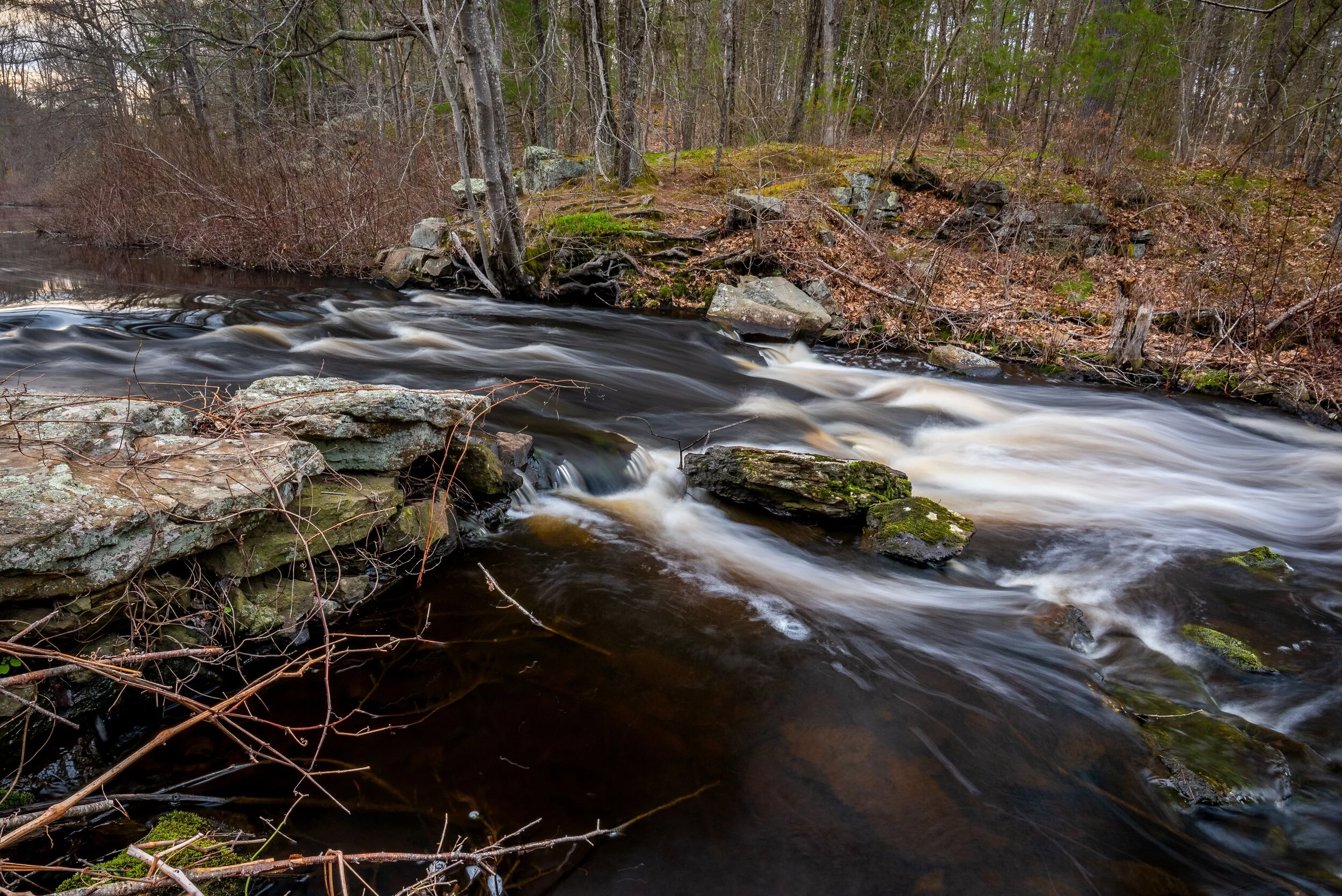

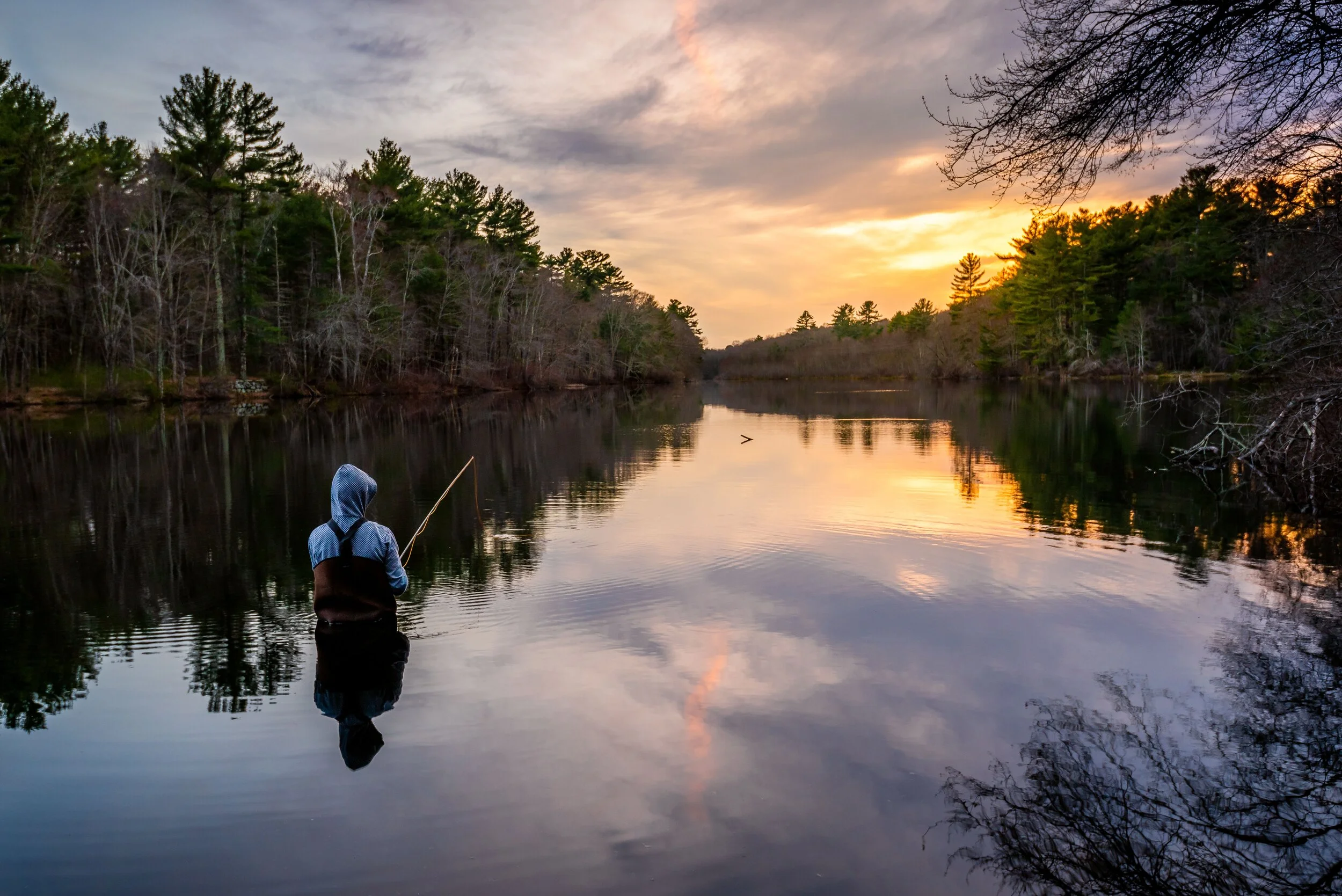
The Indian Head River is an incredible resource and outdoor enthusiasts, anglers and families seek its utilities all year long. Offering miles of trails, fishing, picnicking and water craft recreation, the IHR stands out as a top nature destination in the South Shore. With the recent COVID-19 pandemic, Wildlands has seen a surge in trail users. On weekends, the parking lots are often filled and the shores are lined with hopeful fishermen and women. Wildlands reminds you to please stay on marked trails, pickup and carry out your dog’s waste, and respect fellow hikers by following social distance guidelines. Our work at Tucker Preserve and the IHR is successful because of our dedicated volunteer base and the people who respect these natural spaces. If you are interested in learning how you can help protect your conservation land please send us an email (info@wildlandstrust.org) or give us a call (774-343-5121).
Attention Dog Owners!
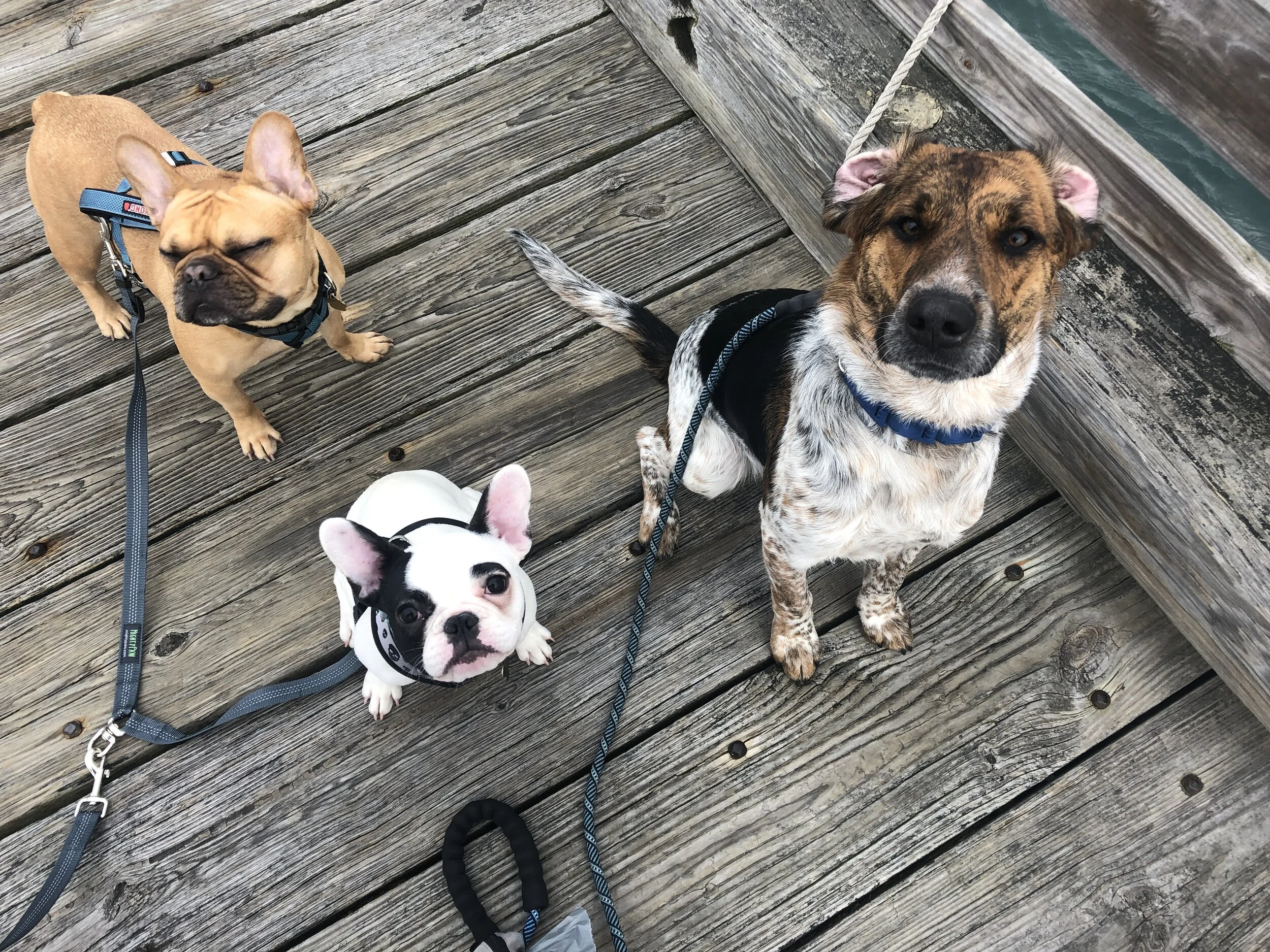
New signs will go up at Wildlands’ preserves this month, reminding visitors to practice good etiquette on the trails.
Daily, we are getting emails and phone calls about dog owners violating rules on our preserves. These rules are in place to protect the land and wildlife, and to ensure public safety. We have dedicated significant resource to developing policies and signage around canine companionship on Wildlands properties, but it appears people are not paying attention. Left with no other choice, we are going to be direct.
There are a lot of people using our trails these days and our goal is to keep our properties open for your enjoyment. However, dog owners who cannot follow the rules are wreaking havoc with our intentions. I’m sorry to say that not everyone loves dogs. As a matter of fact, many people are afraid of dogs and others are allergic. People out for a relaxing walk in nature do not want to be jumped on or barked at by a strange dog. They don’t want their own dog or child attacked by an aggressive animal, and they especially do not want to look at, or worse yet, step in dog’s feces.
We work hard to buy these lands and to take care of them for all to enjoy. Now, please do your part. It’s easy. Keep your dog on a leash and pick up poop. DO NOT LEAVE POOP BAGS HANGING ON TREES!
Thank you.
Pollinator-Friendly Spring Cleanup for your Garden
By Education and Outreach Manager Rachel Calderara
With warmer, longer days here at last, many people are getting ready to do their spring-cleaning — both indoors and out! At Wildlands Trust, it is almost time to clean up our native perennial gardens as new growth emerges from the soil. However, if we hold off on the cleanup for long enough, it gives hibernating insects time to emerge. Outreach and Education Manager Rachel Calderara spoke with Wildlands Trust’s gardener, Kim Goggin, to learn more about the native perennial gardens at Wildlands Trust headquarters, Davis-Douglas Farm, and the pollinator-friendly practices she uses.
Rachel: First, what kinds of native plants for wildlife do we have at Davis-Douglas Farm?
Kim: For bees, we have black-eyed Susan, yarrow and Coreopsis. For monarch butterflies, we have the host plants Asclepias tuberosa (orange butterfly weed) and Asclepias incarnatoa (swamp milkweed). Then we have Chelone glabra for Baltimore checkerspot butterflies and aster for pearl crescent butterflies. For birds, we have winterberry and cranberry viburnum, as well as Monarda (bee balm) for hummingbirds.
R: What insects benefit from these plants over the winter and into early spring, and why are they important?
A view of the front garden at Wildlands’ headquarters at Davis-Douglas Farm.
K: Over the winter, many insects in various forms of life burrow beneath leaves, in the soil, in decaying branches and in spent stalks of native perennials. Among them are solitary bees, syrphid flies, parasitic wasps, morning cloak butterflies and moths such as the wooly bear caterpillar. Luna moths form a chrysalis, which looks much like a curled, dried leaf, and spend the winter there.
Some of our native plants are host plants for specific butterflies to lay their eggs, while others provide nectar for pollinators throughout the season, giving them the energy they need to either migrate or overwinter. Butterflies we frequently see at Davis-Douglas Farm include monarchs, American lady and painted lady butterflies.
R: How can we help protect these insects during our spring garden cleanup?
K: Foregoing fall clean-up all together and postponing spring clean-up until temperatures have stayed consistently above 50 degrees for several days insures that insects will have enough time to emerge from their winter state of diapause. This means leaving spent stalks for the winter, delaying raking leaves and watchfully pruning, as some moths such as the Luna moth may form chrysalises on branches for the winter.
R: After cleanup, is there anything else we can do to help protect native pollinators?
A monarch chrysalis hangs from milkweed at Davis-Douglas Farm.
K: Most importantly, do not use pesticides. You can provide brush piles where insects can feed, bare patches of earth for ground nesting bees (out of the way of any foot traffic) and shallow dishes of water mixed with a bit of soil to provide minerals for butterflies. Plant a variety of heights, colors and flower shapes in your garden. Plant in groupings so pollinators can move easily from one flower to another. Provide flowering plants from early spring into late fall.
R: What plants would you recommend adding to perennial gardens this year to help native wildlife?
K: Zizia is one perennial I would like to add this year, as it is the host for the black swallowtail butterfly. In addition, Heliopsis (false sunflower) proves nectar for native bees and goldfinch love the seeds in the fall.
We want to thank Kim Goggin for all she does to keep our gardens beautiful and pollinator-friendly at Wildlands Trust! Everyone can help pollinators in their own gardens by following her simple advice. Happy spring-cleaning!
Willow Brook Updates Begin
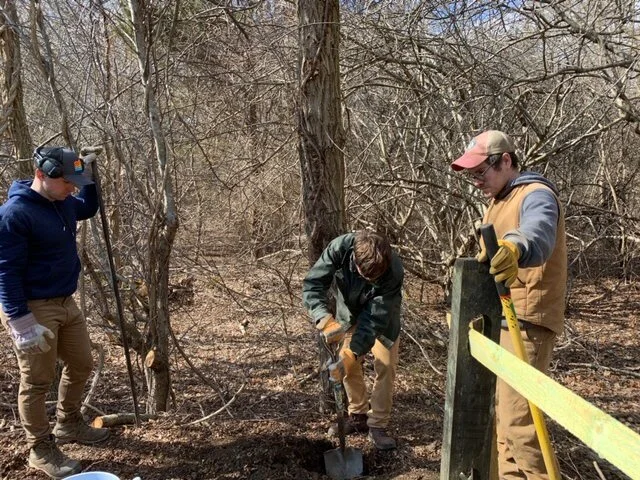
Wildlands stewardship staff, with the help of volunteers, begin improvements at Willow Brook Preserve in Pembroke last month. New split-rail fencing was installed in the parking lot, creating a clear outline of the lot and protecting the surrounding vegetation from vehicles and foot traffic. Funded by a grant through the Recreational Trails Program, the scheduled work will both improve the visitor experience at the preserve and the various habitats throughout the property.
Volunteers also spent time at Wildlands’ headquarters building 10 blue-bird boxes, which will be installed in the coming months in the fields at the 167 acre former dairy farm. Benches and bog boards will also be built and installed along the trail system. The bog boards will lift visitors up off of the more well-used portions of trail, allowing for the restoration of eroded sections and protecting the surrounding habitat.
Also keep an eye out for new educational signage along the trails which will provide information on different plants and animals found on the property. Visitors and groups will be able to lead self-guided nature lessons and have the chance to see the plants and animals while they read about them.
Together with the adjacent Herring Run Historical Park and Misty Meadows Conservation Area, these three contiguous properties comprise nearly 400 acres of public conservation land and provide habitat for a number of plants and animals. The beauty of this preserve makes it a popular spot to visit on the South Shore. We greatly appreciate the dedicated volunteers who have been helping us complete these projects and we are excited for visitors of the preserve to benefit from these improvements in the coming months.
Hiker Preparedness, More Important Now than Ever
By Rachel Calderara, Outreach and Education Manager

With schools, businesses and entertainment venues closed across the region, nature preserves have seen an uptick in visitation. Wildlands Trust trailhead parking lots have been packed as people are seeking refuge in nature in Southeastern Massachusetts. At Wildlands, we are proud to continue to provide access to nature for our communities across the region. However, being prepared for your hike and practicing social distancing on the trails is imperative during this time of national emergency.
Social Distancing on the Trails:
Our preserves are available for fresh air, nature study and as an escape from the indoors. According to the CDC, the COVID-19 virus is primarily spread between people who are in close contact with each other (within 6 feet), and avoiding exposure to the virus is the best way to protect yourself from illness. We’re counting on you to adhere to social distancing practices when using Wildlands Trust preserves to protect yourself, your family, and our communities at large. Simply follow these guidelines:
Visit our preserves alone, with your dog or with those who you live with. Avoid using our preserves to meet up with friends and family outside your home.
Keep a 6-foot distance between yourself (or your party) and other visitors.
Communicate with each other! If you see another visitor on the trails, communicate from a safe distance and have one party pull off the trail, allowing 6 feet of distance between parties.
If you are a dog owner, keep your dog leashed at all times to avoid contact with others.
Avoid touching any manmade objects such a kiosks, signs, railings, etc.
Practice patience and kindness towards other visitors. We’re all in this together.
Being Prepared:
We always encourage visitors to be prepared with appropriate gear during their visits to our preserves. Now more than ever, it is important to be independent while on the trails, and that means being prepared with more than you might regularly bring. We recommend that all visitors carry the following items, at a minimum:
Water: Hydration is important all year long. While we recommend carrying extra water during warmer months, humans need water when it is cold too. Dehydration is one of the most common ailments on trails nationwide.
Food: We get hungry when we exercise. Even if you don’t plan on needing it, bring a granola bar, trail mix, fruit, etc. so you can enjoy a snack in the beauty of nature if you need to recharge. (Remember to carry out what you carry in!)
Layers: Staying at a comfortable temperature is key during a hike. This means wearing warm layers that you can remove in the winter and wearing lightweight layers in the summer. ALWAYS bring a rain layer, even if rain is not in the forecast. Hypothermia is another common trail ailment that can be avoided by staying dry.
Map: Wildlands Trust maps are available for free to download or print on our website and are posted on the trailhead kiosks. If you don’t have a map with you when you arrive, we recommend taking a picture of the map on the kiosk with your smartphone. Whenever you come to an intersection, take a look at the map so you can follow along and always know where you are. Things to look out for at Wildlands Trust trails are color-coded trails on the map marked by colored trail blazes on the trees along the trail.
Flashlight: Say you get a little turned around on the trail during your hike. Once you’re back on track, you may end up being out a lot longer than you had planned for. A flashlight when you need it can be a real help in this situation, and it weighs almost nothing in your pack.
First aid kit: Our healthcare facilities are very busy right now, so the more you can take care of yourself, the better for everyone. Make or buy a good first aid kit and familiarize yourself with its contents. If you take an unexpected fall, you can clean out and dress a minor wound yourself without needing to call for backup.
Fully charged phone: If you do need to call for help, the last thing you want to find in your pocket is a dead cellphone. Make sure you’re charged up before hitting the trail, and try not to use apps that drain your battery while you’re hiking.
Finally, remember to do a thorough tick check after your visit to protect yourself from tick-borne illnesses. Your extra time outdoors this season may put you at a higher risk of picking up a tick, so be vigilant this spring, summer and fall. For more information on ticks in Massachusetts, visit https://www.mass.gov/service-details/tick-borne-disease-information-for-the-public.
Being prepared and practicing social distancing will help keep us all safe as we continue to enjoy the great outdoors. Visit wildlandstrust.org/trails to find a preserve near you!