


What’s New at Wildlands
Teamwork Makes the Dream Work in Brockton
A yearlong partnership with Stonehill College contributes to the ongoing success of Greening the Gateway Cities.
By Conor Michaud, Community Stewardship Program Coordinator
In the spring of 2017, Wildlands began working with Stonehill College professor Linnea Carlson to explore potential partnerships between the college, which encourages and in some cases requires community service, and Wildlands which has been working for nearly a decade in the neighboring communities of Brockton to protect land and assist in conservation efforts within the city. With the help of Wildlands’ former TerraCorps member, Tommy Blanchard, Wildlands began the early stages of the partnership and worked with Stonehill’s Sociology department to discuss a collaboration on Brockton’s Greening the Gateway cities Program (GGCP). In the fall of 2018 the partnership was fully developed and proposed to Stonehill sociology professor Jungyun Gill, who saw the potential for impactful community service on a program designed to specifically aid Brockton’s environmental justice communities. In September 2018, a group of honors sociology students began the inaugural partnership and joined the ranks of the GGCP canvassing crew.

Saplings waiting to be planted in Brockton.
As we have mentioned in previous articles, GGCP is a community based project in which the success of the program relies heavily on the encouragement of community leaders and engagement of residents to put a meaningful effort forward in order to increase the urban tree canopy. Since Wildlands’ introduction to the program we have been reaching out to community members to support the program, participating in community meetings, tabling at local events, presenting to local groups and institutions, and working with Department of Conservation and Recreation foresters to increase the outreach capacity for the program. One crucial aspect of GGCP, often overlooked from these engagements, is the ability to reach the younger generations. Wildlands periodically presented to Brockton High School students on the program but when it came to reaching the cohort between high school teenage students and the older homeowner community we were missing our mark, until the collaboration with Stonehill College.

A GGCP flyer (in English) that students helped translate into Portuguese and Cape Verdean Creole.
Many of us are able to think back fondly on our college education and years spent developing critical thinking skills and diving deep into the study of new found conceptions. The enlightened perception of our world which often goes hand-in-hand with the college experience is something Stonehill brought to the table during this partnership. Wildlands saw that it was imperative to involve the younger generation in projects such as GGCP which are specifically targeted at aiding those in need while reducing the local effects of climate change and helping to clean our local air and water. There is no way to get closer to these concepts then to step out into the street and knock on a strangers door to inform them of how a free tree from GGCP can benefit their home and their greater community.
A partnership with this institution was logical when professor Jungyun Gill explained that this honors sociology class would be what Stonehill College terms a Community Based Learning class (CBL). Meaning, each student is expected to engage in community development projects as a substantial portion of their grade and for this CBL class that project was GGCP. During the fall of 2018 each of the 15 students canvassed alongside Wildlands’ community stewardship coordinator for over 10 hours, contributing a total of 150 hours within the class. This massive canvassing campaign has been instrumental in the success of Brockton’s GGCP and served as a real-life grass-roots experience for each student. The project did not end there, each student was a part of a smaller group within the class, required to expand upon current outreach efforts of the project, including GGCP’s social media campaign, translating GGCP fliers into Portuguese and Cape Verdean Creole, translating a GGCP video into Cape Verdean Creole and writing an article for the school paper. At the end of the semester, each group presented their projects and passed along their final work to Wildlands, which continues to draw inspiration from these final works.

A DCR forester stands next to a recently planted sapling.
Due to the success of the fall 2018 partnership, Wildlands and Stonehill College decided to offer this opportunity to an additional sociology class during the spring 2019 semester. Students from the spring semester chose to join Wildlands’ ongoing canvassing efforts and used these outings to build upon the social justice issues discussed in their class. The class worked in groups once more to study global social justice issues and correlate these pressing concerns with the efforts to increase the urban tree canopy in Brockton. One group discussed the current clean water issues of Flint, Michigan and the water use and pollution issues associated with fabric dying and production. While another group tackled rainforest deforestation and what that means for our climate, biodiversity and local community groups. Each of these issues, while vast and complicated, are closely associated with GGCP efforts and solutions to these global crises can be taken directly from GGCP. We plant free trees to reduce pollution and increase financial savings through the reduction of energy expenditure, to prevent storm water runoff, to clean the air and to increase biodiversity.
In the simplest of terms, we plant free trees to benefit public health. These social justice issues linked with clean water, air and public health are being addressed throughout the world and their awareness is becoming increasingly known. The younger generations and students of today will be faced with finding solutions and developing upon previously implemented ideas to better our world and we see these partnerships with academic institutions as a way to kick start that progress.
Community: The Foundation of Conservation
How the topic of conversation surrounding the environmental movement has changed over the years and how community involvement has driven its achievements.
By Roxey Lay, Membership & Communications Coordinator
In recent years, climate change has re-ignited the national conversation over the environmental health of our planet and the role humans play in it. With Earth Day a few days away, it seems appropriate to look back at the environmental movement in the United States, how it shaped conservation and lead to the founding of organizations like Wildlands Trust.

Thousands flood the streets of New York City during the first Earth Day, April 22, 1970
First emerging during the 19th century, the environmental movement began in response to air pollution caused by the Industrial Revolution. During this same time, the conservation movement also grew throughout the United States, leading to the founding of the Sierra Club and President Roosevelt establishing bird reserves and national parks and forests throughout the country, as well as the United States Forest Service. Concern over human impact on the planet continued into the 20th century, with concerned scientists in the mid-1950s beginning to measure the Earth's carbon dioxide levels. [1]
In the 1970s, the modern environmental movement began. “On April 22, 1970, 20 million Americans took to the streets, parks, and auditoriums to demonstrate for a healthy, sustainable environment in massive coast-to-coast rallies.” [2] To this day, it remains the “largest demonstration ever in American history.” [3] In response to this widespread demand for action, the government established the Environmental Protection Agency and passed the Clean Air, Clean Water, and Endangered Species Acts later that same year. While action on a Federal level is imperative to protecting natural resources throughout the country, it was also during this time that communities began taking land protection into their own hands.

A large beech tree stands in a clearing at Emery Preserve (West), one of the first parcels of land protected by Wildlands.
In 1973, Leonna Asker, Betty Anderson and other community activists in Plymouth, worried about losing the land they loved to development, got together and formed the Plymouth County Wildlands Trust. Fast forward to today and that organization still exists as Wildlands Trust, with holdings extending throughout all of Southeastern Massachusetts. As Wildlands’ presence has grown within these communities, we continue to include residents in our work through public programming and events that promote environmental education and discussion. This month, Wildlands kicks off a three-part-series on climate change. Presented in partnership with Manomet and Mass Audubon, Wildlands will be hosting “Is it Me…Or is the Weather Kind of Weird?” Each event will consist of a short presentation, followed by questions and conversation with a professional in the field.
Although the topic of conversation has changed throughout the years, the common theme that our planet’s health is directly connected to public health, remains. By supporting the protection of local lands and engaging in conversations like the climate series, you carry on the spirit of the conservation movement by acknowledging the importance of keeping our region healthy and our communities connected to the natural world for the sake of future generations.
To learn more about the series and to register, go to: https://wildlandstrust.org/events/2019/4/22/is-it-me-or-is-the-weather-kind-of-weird
Where There’s Wildlands, There’s Wildlife
By Roxey Lay, Membership and Communications Coordinator

A female monarch drinks nectar from a sedum plant at Davis-Douglas Farm.
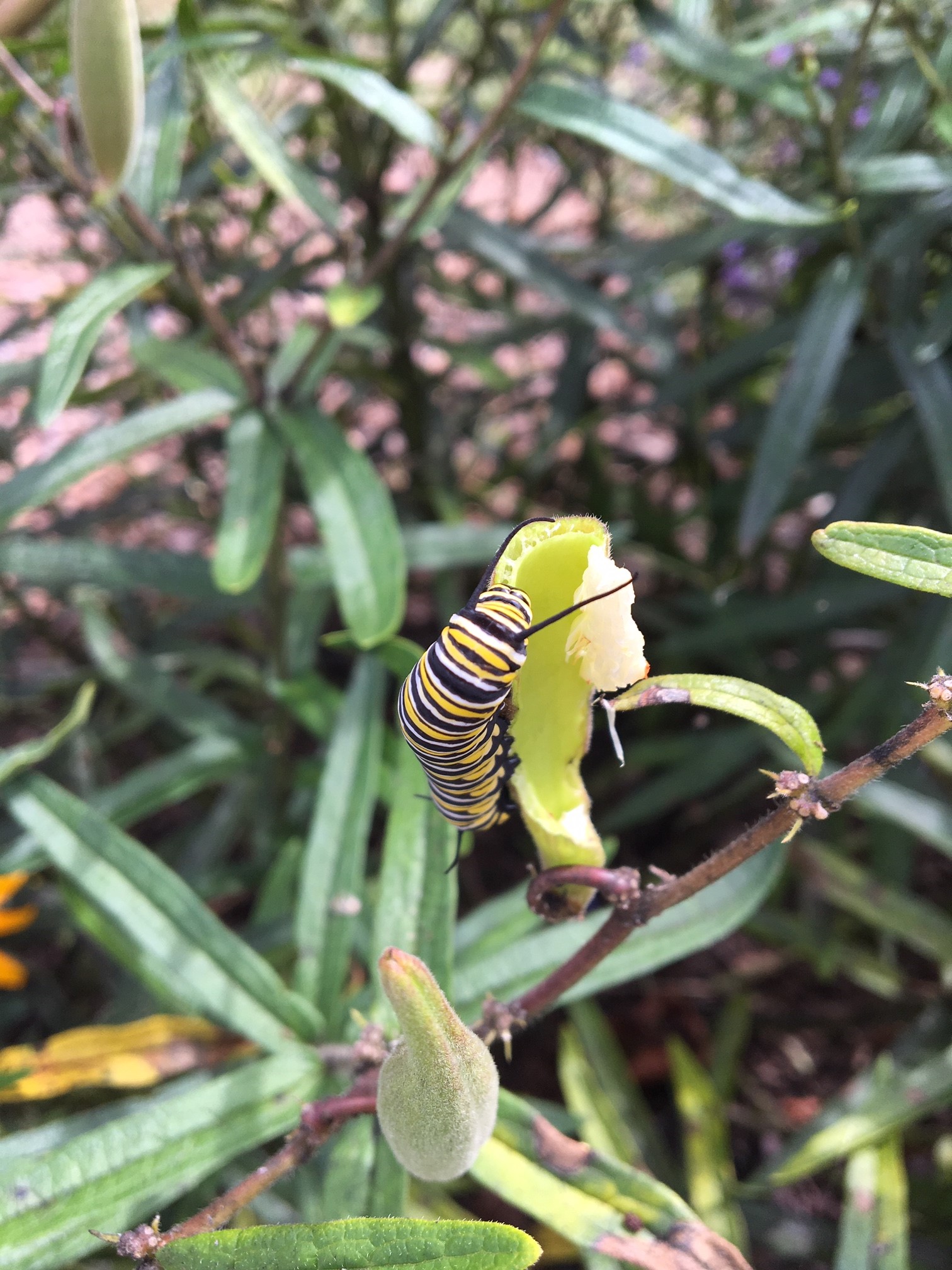
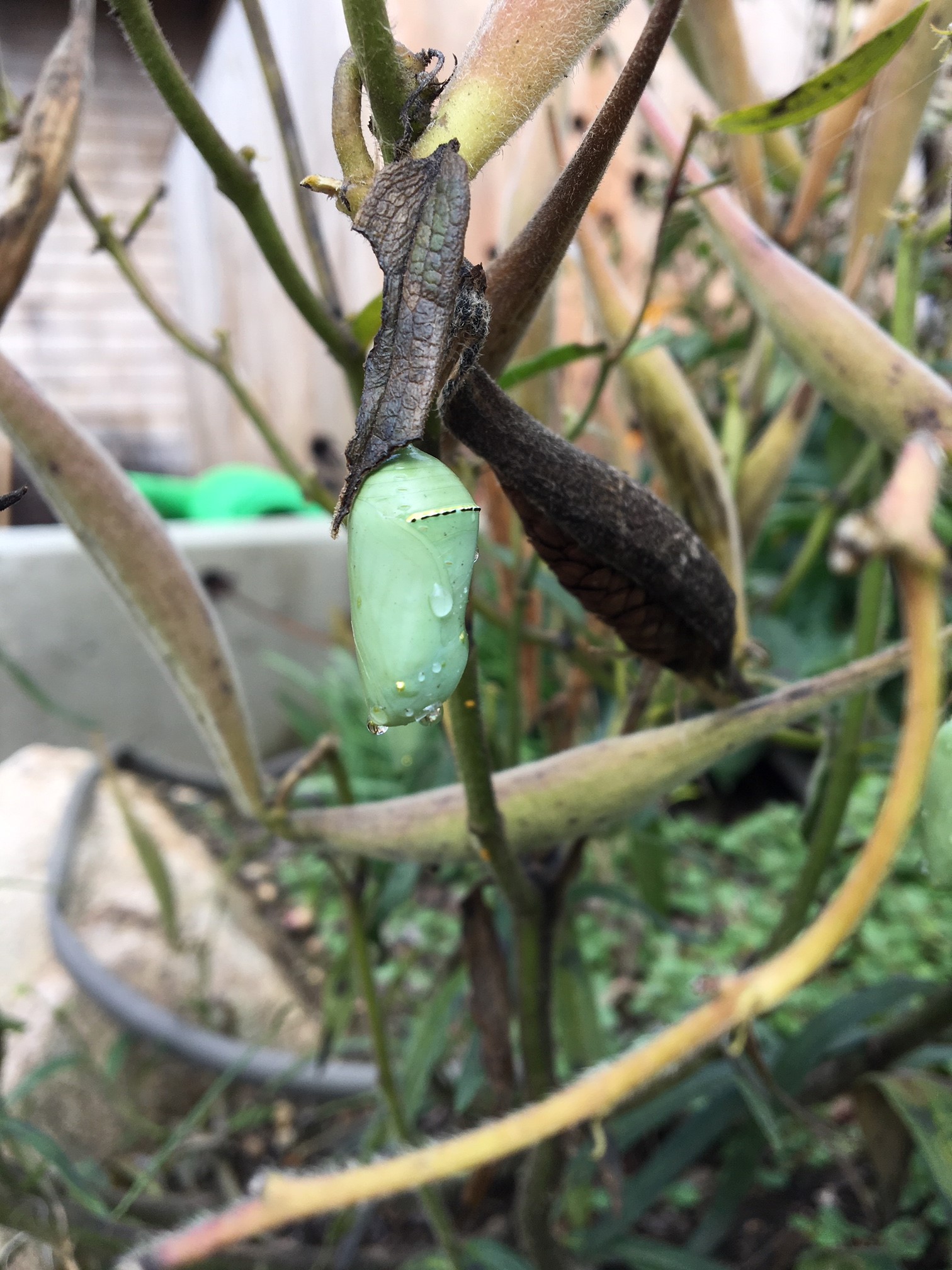
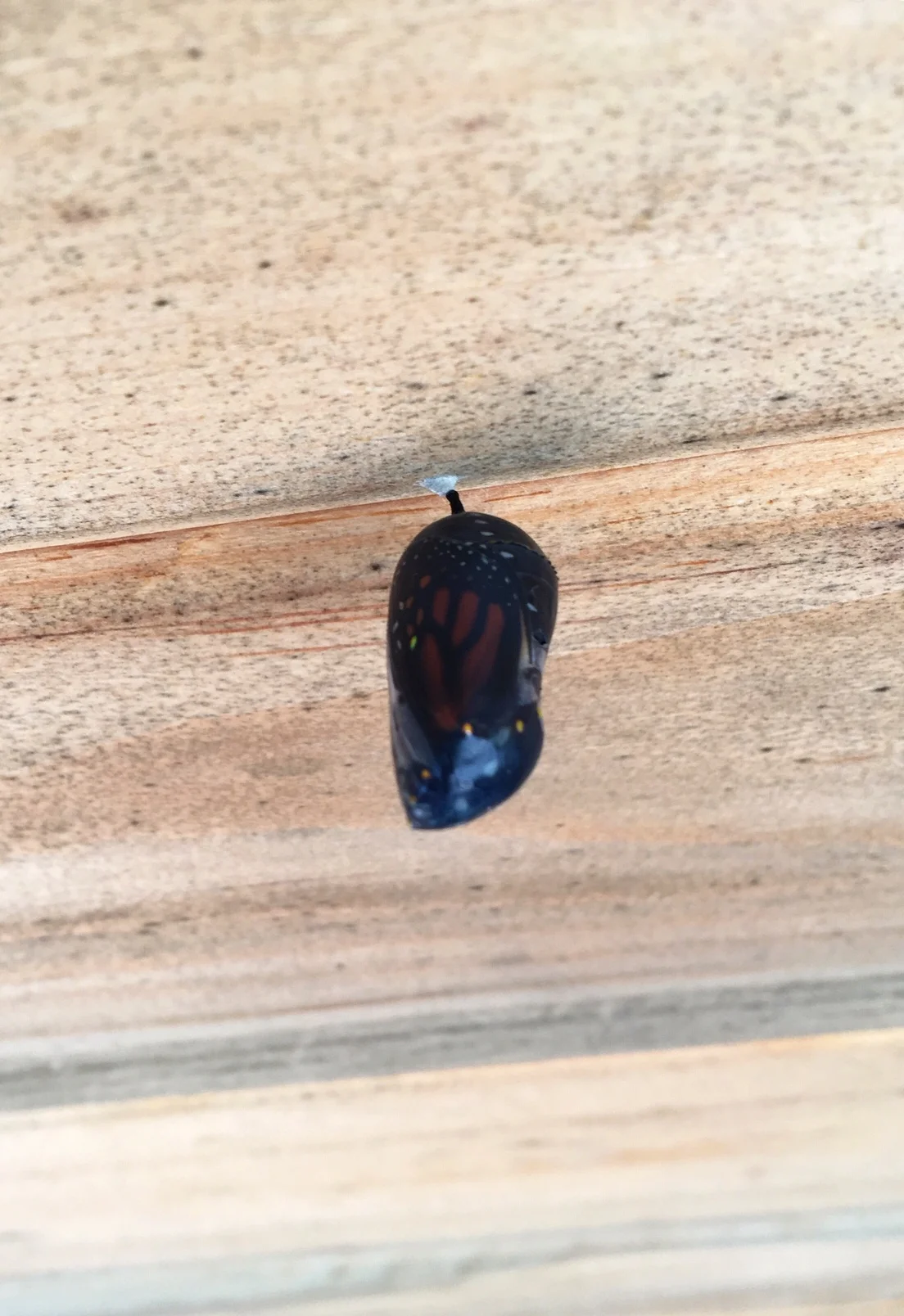
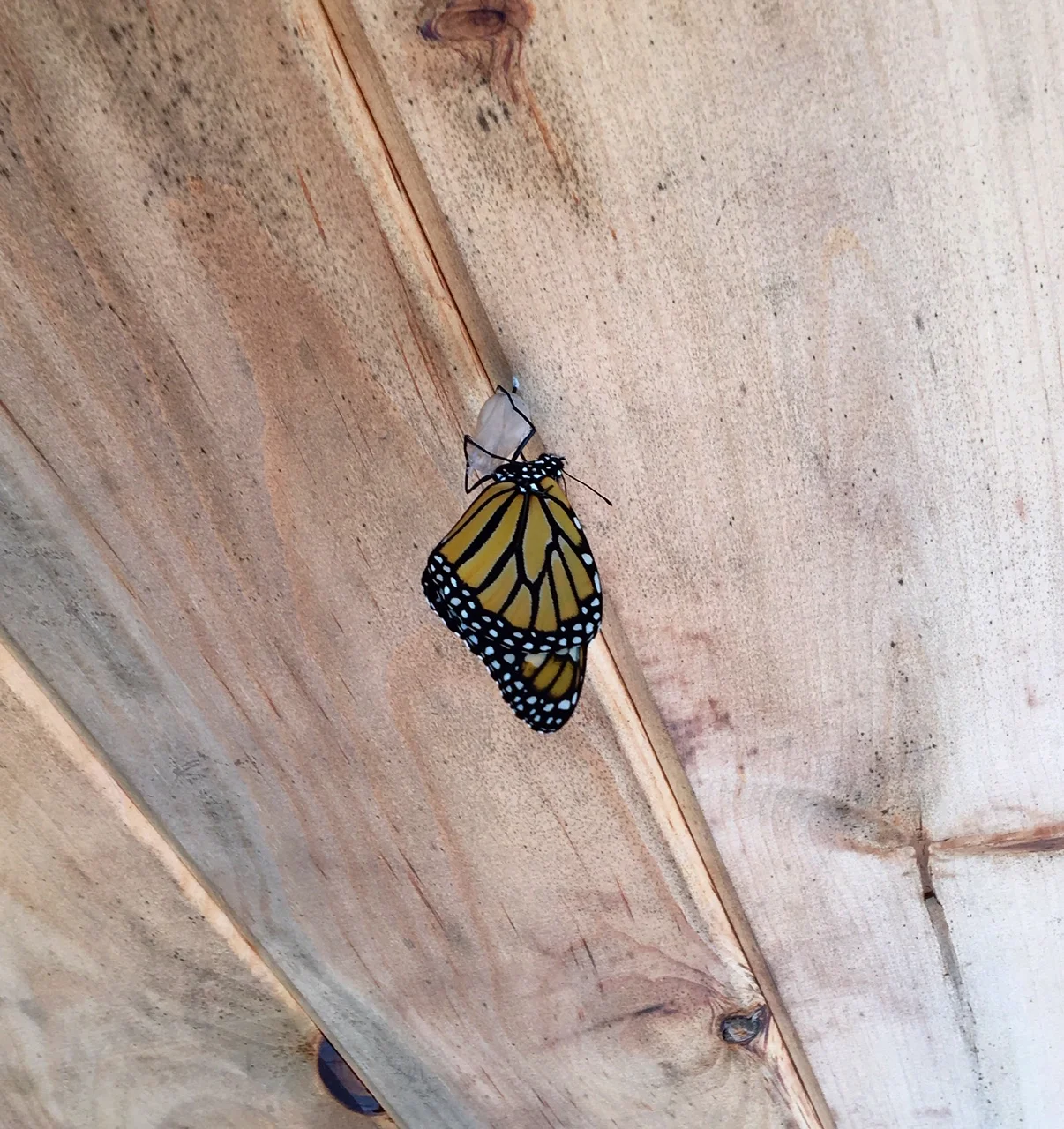
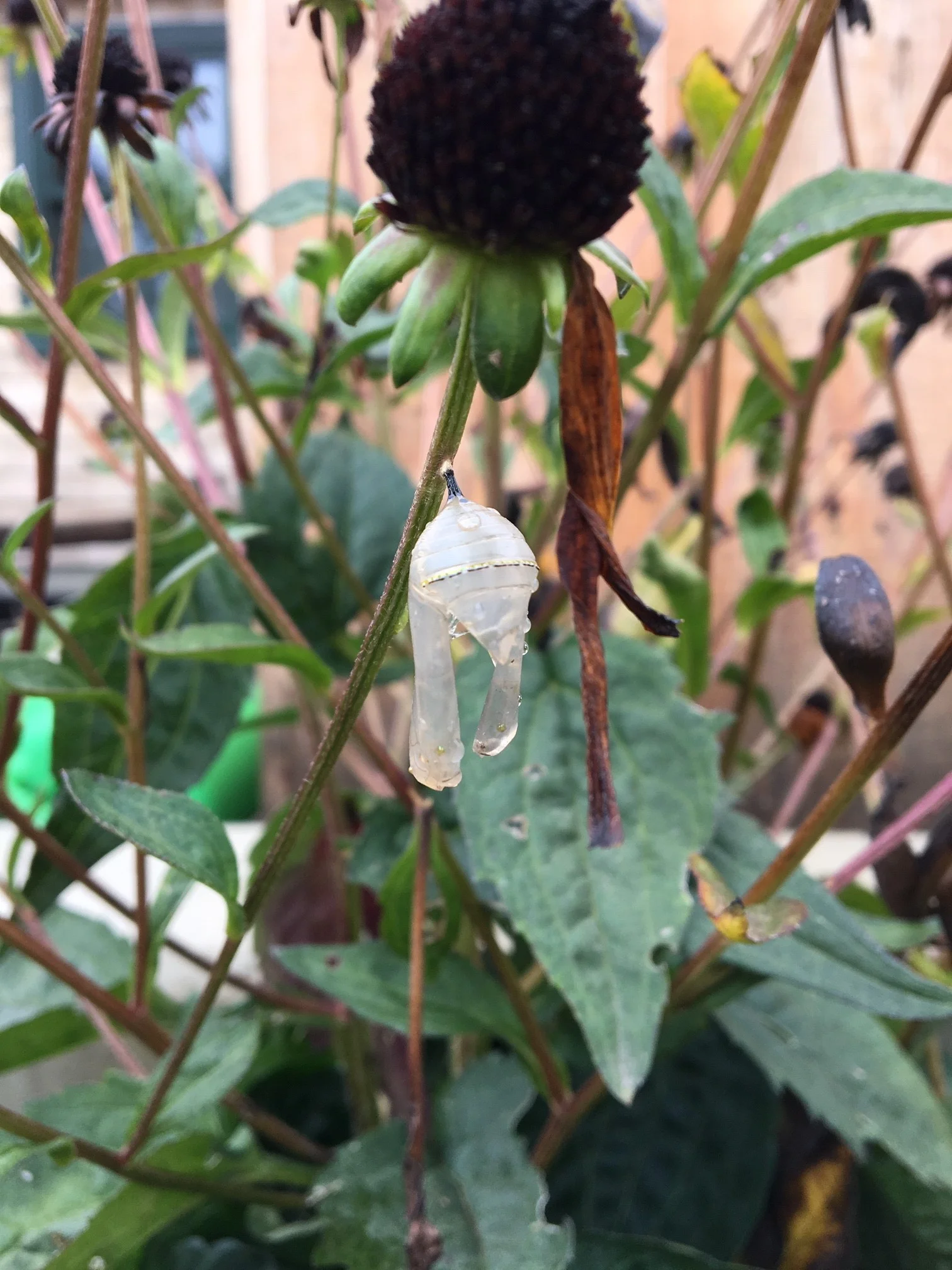
Last summer, the staff at Davis-Douglas Farm were fortunate enough to witness, up-close, the life cycle of multiple monarch butterflies. If you’ve visited the office before, you’ll know we have multiple gardens on the property, full of gorgeous plants and flowers that attract a number of pollinators; one such plant variety is swamp milkweed. Although typically found along the edges of ponds, lakes, and streams, swamp milkweed also acts as a great addition to any garden, both for its flowers and its connection to the monarch butterfly. In September, staff members first noticed a chrysalis attached to the porch roof of the Barn. Then, turning our attention to the nearby garden, we noticed a small army of monarch caterpillars munching away on the milkweed. Over the following weeks, these caterpillars shifted from using the plants as a food source, to using them as a location to attach and pupate. Excited at the opportunity to witness their metamorphosis, we periodically checked on them, documenting how each chrysalis changed; we even managed to witness a newly emerged monarch drying its wings!

Swamp milkweed, at the end of the summer.
Witnessing the process these insects go through is not only fascinating, but it’s a great reminder of how we all rely on nature to grow and survive. Unfortunately, monarch butterflies have been greatly affected by human impact on the environment. Milkweed is critical to the survival of monarch butterflies, as it is their only food source and they cannot complete their life cycles without it. [1] The use of herbicides resistant crops and dramatic shifts in seasonal temperatures have led to the loss of milkweed breeding habitats across the country and a significant decline in monarch numbers. [2] Although not formally listed as endangered, the U.S. Fish & Wildlife Service was petitioned in 2014 to protect the monarch butterfly under the Endangered Species Act; the listing decision is expected to be issued June 2019. [3]
When Wildlands protects a land parcel, it’s not only for the benefit of the surrounding community, it also maintains habitat for many species, both rare/endangered and common, that rely on that particular ecosystem. These large protected areas are incredibly important in maintaining the natural integrity of the region; however, they aren’t the only habitat local animal populations rely on. Gardens also act as habitat for various insects and, along with supporting local land trusts like Wildlands Trust, are a way you can personally help make a difference in the health of the region using your own back yard. For example, by planting milkweed and native nectar plants, you can help mitigate the habitat loss of the monarch butterfly while providing an important food source for bees and other pollinators.

The Xerces Society regional monarch-specific nectar plant guide map. Click the image to download their Northeast list.
Another way you can make a difference is by learning more about how various animals rely on the region’s natural landscapes and your affect on both them and their habitat. In past years, Wildlands has hosted presentations at our Community Conservation Barn on the topic of honey bees, owls, bats, and more with the intention of educating the public on these animals and raising awareness of the connection between wildlands and wildlife. Recently, we started our Wildlife on the Move lecture series, offering attendees a chance to learn more about regionally seasonal animals, as well as an opportunity to ask an expert any questions they may have. This month features a presentation by Professor Steven Reppert, MD on the monarch butterfly, its migration cycle, and a discussion of current threats and conservation efforts. We are also partnering with the Herring Ponds Watershed Association and hosting a presentation by Brian Bastarache and his students from Bristol County Agricultural High School on the endangered red-bellied cooter; a species of turtle that is only found in Plymouth County!
It’s through the support and commitment of you and others in which we succeed in protecting the region’s natural spaces for both our own health and enjoyment and for the animals that rely on them to survive. For more information on our Wildlife on the Move lecture series and other upcoming programs, visit: https://wildlandstrust.org/events
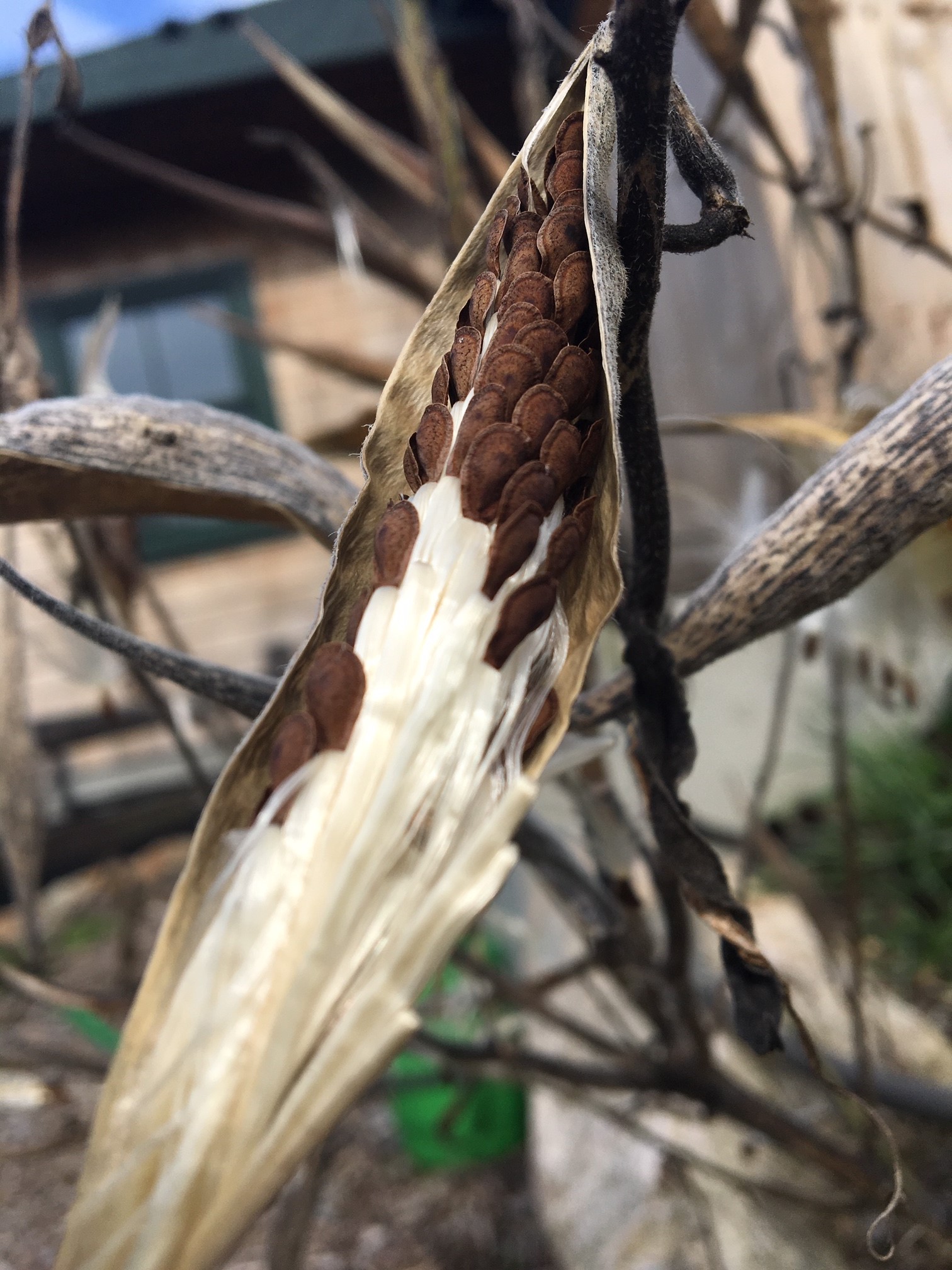
See below for some photos from last summer at the office:


Wildlands in an Urban Landscape
By Conor Michaud, Community Stewardship Program Coordinator
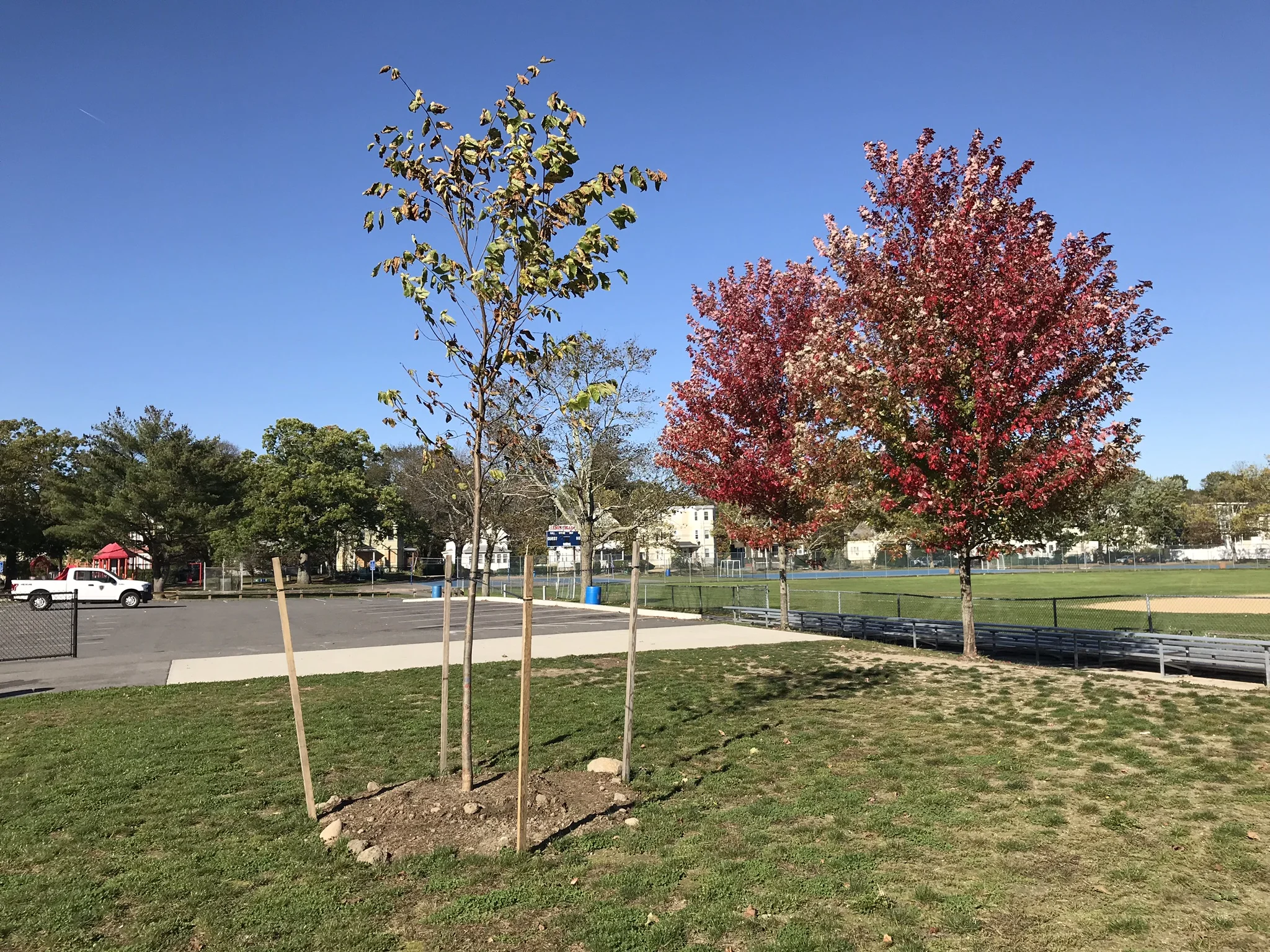
A newly planted sapling at a public park in Brockton.
Imagine a typical hot and humid July day in southern Massachusetts, with no breeze and the sun beating down. You decide, enough with the air conditioning, it’s time to breathe some fresh air for a change; so you step outside onto an asphalt driveway and greet the 90-degree day with a smile and a bead of sweat. You decide a good way to beat the heat is by visiting a local conservation area. As you begin your stroll along the woodland loop-trail, enjoying the shade of the trees, you stop at one of the benches on the trail for a short respite; you take in the cool breeze and appreciate the drastic change in temperature from your driveway to where you now sit.
Now, imagine a different scenario: On this same type of day, you stand in your driveway, sweating in the mid-day sun; you can’t believe how hot it is. Looking around, you notice there is no density to the trees along your street, only the occasional 30-foot outlier among the telephone poles, looming over asphalt; there is no nearby pond and no nature preserve within walking distance either. Realistically your only course of action to avoid this heat stress is to return to your home, the air conditioner on full-blast.

Saplings ready to be planted in Brockton.
Urban landscapes offer a multitude of benefits including public transportation, access to a variety of employment, more housing availability, and the innumerable benefits of living alongside other cultures and varying types of people; however, when left unaided, they can also result in dangerous public health conditions and environmental inequality. With minimal tree coverage, these areas become “heat islands”, where the temperature of pavement and roof surfaces can be significantly hotter than the air and, as a result, directly affect the public health and well-being of its residents. “Increased daytime temperatures, reduced nighttime cooling, and higher air pollution levels associated with urban heat islands can affect human health by contributing to general discomfort, respiratory difficulties, heat cramps and exhaustion, non-fatal heat stroke, and heat-related mortality.” [1]
GGC Brockton planting zone (click to enlarge)
In 2012, Wildlands entered into the city of Brockton’s conservation scene through our acquisition of Brockton Audubon Preserve and since then, while we have continued to preserve crucial conservation lands within the city-limits (managing and restoring Stone Farm), we’ve asked ourselves, how could we further our mission in Brockton? How could Wildlands address the ongoing environmental justice issues that affect the residents? One such way, is our work through the Greening the Gateway Cities (GGC) program. In 2017, Wildlands partnered with the Brockton chapter of GGC and, we are proud to report, we’re on track to successfully plant over 2,400 trees by June 2020. Due to its success, for the remainder of the program, we are looking to address a wider range of benefits beyond the economic relief aspects, including the improvement of resident’s quality of life. Our conscious transition to promote the physical and mental health benefits are in an effort to support the concerning public health issues many urban neighborhoods face today.
Wildlands is proud to be a partner in the project and through these collaborative efforts our conservation efforts in Brockton have gained a greater depth, our capacity to address environmental justice issues has been strengthened, and we have become a part of the greater conversation surrounding the future of Massachusetts’s Gateway Cities. While few land trusts have taken on similar environmental justice work, we believe it has been a crucial landmark in our growth as an organization allowing us to not only to tackle these pressing issues but to expand our capacity to protect land in urban areas and bring a voice for environmental conservation, education, and exposure to the commonwealth.
For more information on Greening the Gateway Cities, visit: https://wildlandstrust.org/greening-the-gateway-cities
What's Up With Wetlands?
By Roxey Lay, Membership and Communications Coordinator
EPA map displaying coastal wetlands and how far inland they extend (click to enlarge).
Swamps, marshes, bogs, and fens; all ecosystems defined by various sub-types and characteristics with one thing in common: they are all wetlands. World Wetlands Day was February 2, marking the date the Convention on Wetlands was adopted in 1971 and raising awareness of wetlands and their vital role to our planet. Massachusetts was the first state in the nation to adopt wetland protection laws during the 1960s; however, since the Colonial Period, roughly one-third of the state’s wetlands have been destroyed[1]. According to the EPA, “wetlands in coastal watersheds are experiencing disproportionate losses compared to wetlands in the rest of the country, making them particularly important areas for protection”[2]. Wildlands’ work to protect undeveloped land throughout the region includes the protection of wetlands. In fact, nearly all of the properties in Wildlands’ portfolio contain some type of wetland and provide habitat for many different species throughout the region; some of which are rare or endangered, such as the eastern box turtle and northern red-bellied cooter.
Drone view of Raven Brook in Middleborough.
Recently, I spoke with Brad Holmes, manager of Environmental Consulting & Restoration, LLC (ECR) to learn about what wetlands are and how they impact Southeastern Massachusetts. Located in Plymouth, ECR specializes in wetland consulting, permitting and restoration, and Brad, a professional wetland scientist (PWS), has worked with Wildlands at Great River Preserve and most recently, on the ecological restoration project along the shore of Halfway Pond. Read on to learn about wetlands and their significance to our region:
What is a wetland?
A wetland is an area where groundwater is located at or near the surface and where the vegetative community is dominated by plants adapted to live in saturated soil conditions. Wetlands often border on creeks, rivers, streams, ponds, lakes etc., but may also be isolated. Wetlands are [determined] by assessing three specific site conditions that include vegetation, soil, and hydrology. By definition, a wetland must include 2 of 3 conditions: a dominance of wetland vegetation, hydric soils, and/or hydrological conditions.
What is a wetland scientist?
A Professional Wetland Scientist is an individual that has been certified by the Society of Wetland Scientists based on academic and work experience in wetland science. As a PWS we work to assess and manage wetland resource areas throughout Massachusetts. Our work includes field delineation of wetlands based on specific environmental conditions (i.e. vegetation, soils & hydrology) as well as designing and permitting projects through the applicable local, state and federal regulatory authorities.
In addition to your work as a PWS, you are certified by the MA Arborists Association as an arborist, how does this influence your approach to your work?
As an MA Certified Arborist, I approach projects with a special consideration towards the care of trees, specifically when designing wetland restoration or wetland replication projects.
North River in Marshfield.
What are the benefits of wetlands?
Wetlands provide benefits to landowners and the public, [including] protection of public and private water supply, protection of groundwater supply, flood control, storm damage prevention, prevention of pollution, protection of fisheries and protection of wildlife habitat.
Why is important to protect them?
Wetlands act as a first line of defense for floodwater from storms. They also act as a filter to pollutants in our water supply. They [also] provide a specific habitat that many wildlife and fish need to survive.
Do wetlands have any significance to Southeastern Massachusetts?
There are many extensive wetland systems within Southeastern Massachusetts. For instance, the North River system in Scituate, Marshfield, Norwell, and Pembroke. Also consider the Taunton River system, the extensive freshwater ponds and the 250+ miles of coastline in Massachusetts.
It is important for property owners and the general public to be aware of the wetlands in their community and where they can seek guidance in protecting the wetland resource areas.
What is the current state of wetlands in this region? Are they threatened? If so, what can people do to help?
Wetlands in Massachusetts are protected by the Massachusetts Wetlands Protection Act and associated Wetland Regulations. [These] spell out specific performance standards for work within or nearby (buffer zone) wetland resource areas. It is important for property owners and the general public to be aware of the wetlands in their community and where they can seek guidance in protecting the wetland resource areas. Many towns in Massachusetts have a local Conservation Commission that works to protect the resource areas in their community.
What do you think the future of wetlands is?
Wetlands will be protected. The next task is protecting more land buffering wetlands, which is the current struggle.
Wetlands at Striar Conservancy, Halifax
Want to learn more about wetlands and whether there are any near your home? Talk to your local Conservation Commission, go to the State’s website on wetlands, or, if there is a Wildlands property near you, ask us what type of wetland is on the property and how you can help in maintaining its integrity for the benefit of your town and the animals that rely on its habitat. I’d like to thank Brad for taking the time to answer my questions and providing some great insight on the importance of wetlands and their impact on our region.