


What’s New at Wildlands
Wildlands Starts the New Year with a Return to Remote Activities
By Amy Markarian, Senior Copywriter
The start of a new calendar year provides an opportunity for us to reflect on the previous year's successes and challenges, and look ahead with hope to new goals and plans for the year to come. As we reported in our Fall/Winter 2021 Newsletter, Wildlands Trust ended 2021 with much excitement about the addition of our new staff members, and we had optimistically begun a post-Covid return to in-person programming.
However, if there's one thing we've learned in the last two years, it is that thriving under challenging circumstances requires both an ability to adapt and a willingness to change! This month, in response to the surge in Covid-19 cases in Southeastern Massachusetts, Wildlands Trust made the decision to, once again, reduce our in-person interactions until it is safer for the members of our community to be together.
At this time, Wildlands' staff members are working in a hybrid model, utilizing both remote work and scheduled time in the office as needed, and our board meetings are being conducted remotely until further notice. Additionally, all indoor programming has been canceled or moved outdoors. In order to keep our community connected and our members active throughout another challenging winter, Wildlands' programming team is working hard to increase outdoor and virtual program options. Please be sure to check our website and social media pages regularly to stay up-to-date with the latest information about upcoming events!
We've done this before, and we can do it again! Wildlands Trust is committed to weathering the world's changing circumstances with you, and we will (again) look forward to seeing each other in-person soon!

New Compost Units Built for Community Garden
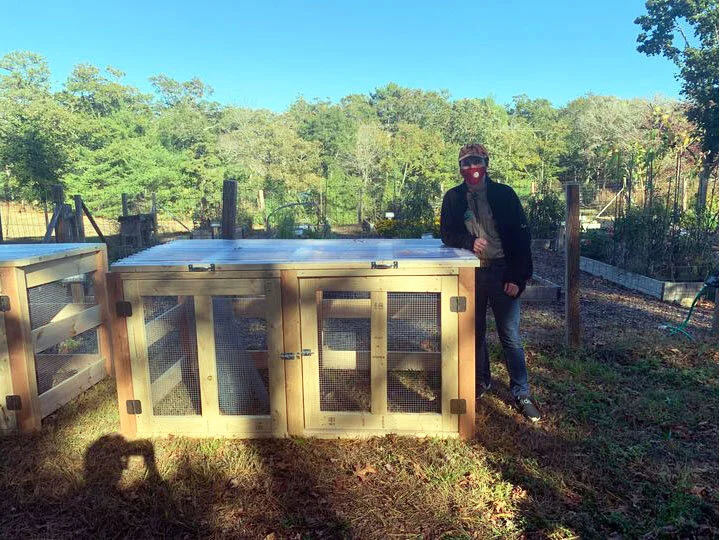
In October 2020, Plymouth Eagle Scout candidate Zach Lyons constructed two, new compost holding units for Wildlands’ community garden at Davis-Douglas Farm. Prior to Zach’s help, there was a single-cylinder compost bin at the garden that was only accessible from above, making it difficult to turn. The new containers, built using lumber and wire mesh, are able to be accessed from the top and side of the unit, making it easier to work the compost. Each unit is also made up of two bays, allowing for the compost to be divided by how far along in composition it is.
We look forward to putting these structures to good use during the 2021 gardening season, and having a more productive composting system in place for our community gardeners. Thank you to Lowes in Wareham for donating the lumber used, and to Zach for his hard work!
New Trail Configuration at Pudding Hill
Volunteers help create 0.4-mile connector trail at Pudding Hill Reservation in Marshfield.
By Stewardship Manager Erik Boyer

Mike Arsenault assists stewardship staff with raking debris from the trail.
This past September, with the help of nine Adopt-a-Preserve (AAP) volunteers, a new .4-mile trail was created at Pudding Hill Reservation in Marshfield. This project was the vision of AAP volunteer Dodie Frank who has been a steward at Pudding Hill for the past two years.
I met Dodie out at the preserve on a muggy, July morning to bushwhack and flag a new trail from the neighborhood trail entrance off Old Ocean Street to a dead-end trail on the west side of the property. We chose a route that consisted of rolling hills, old stone walls and thick stands of white pine saplings. This new connector turns the .5-mile cross-shaped trail into a 1.1-mile loop with varied topography. Over the course of three days in September, we cut through thick brush, established a rough trail tread, and then regraded sections of the trail to make for easier hiking. We then blazed the path and ensured it was ready for the first guided hike held at the property in mid-October.
Now, thanks to the hard work of many, a visit to Pudding Hill provides for a challenging, wooded, 30-minute hike on the north side of the property and a leisurely, short stroll through a meadow to an overlook spot on Chandlers Pond. I would like to give a special shout out to Dodie for her efforts and to Mike Arsenault, Stephen Connolly, Rob MacDonald, Janine Anderson, Bill Vickstrom, Roger Janson, Marilynn Atterbury and Kevin Walsh for helping out.
Reaching Higher for Environmental Justice
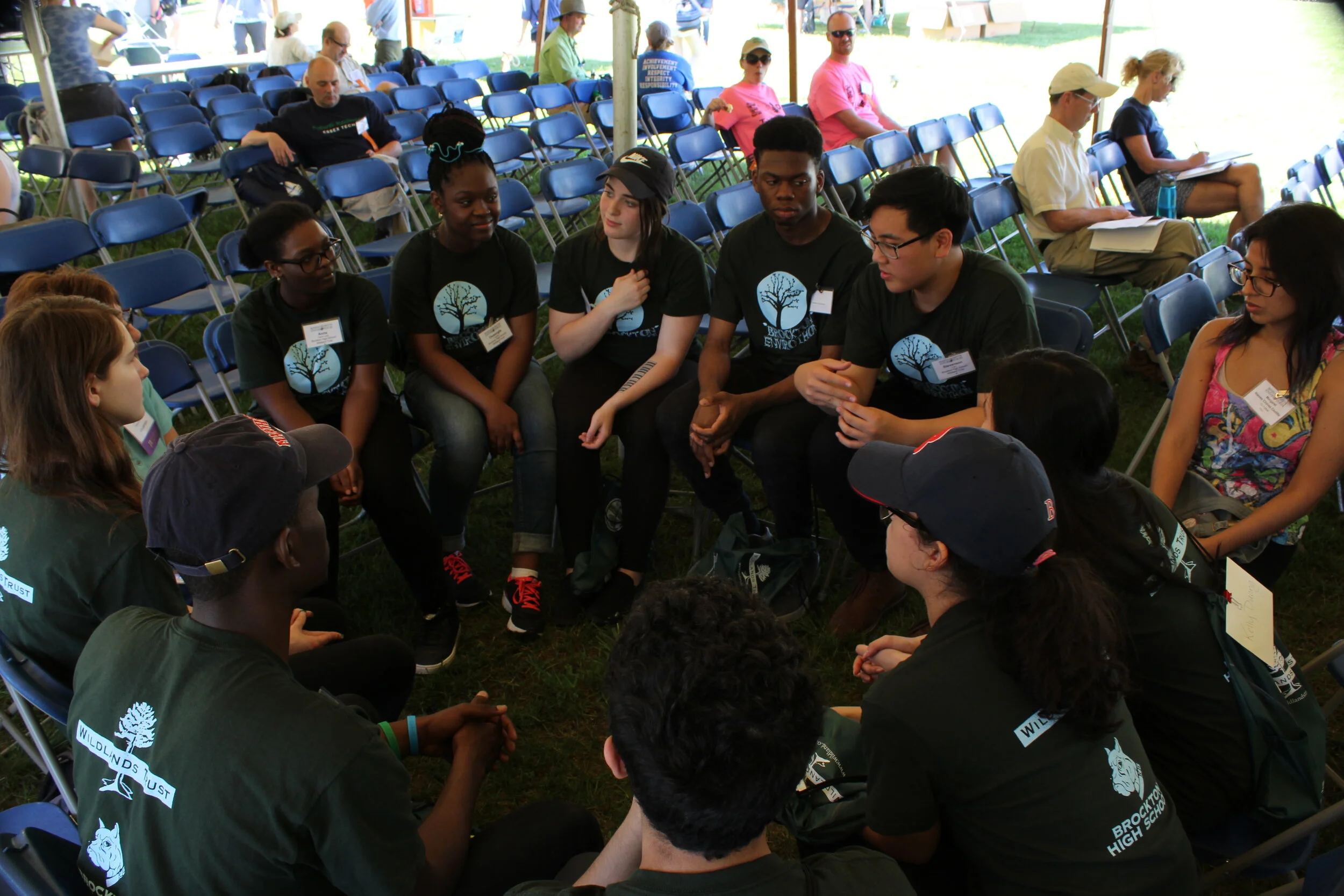
Members of Wildlands Trust are well aware of our commitment to the city of Brockton, where we have worked for over a decade. During these years, Wildlands has dedicated staff and funding to protect and restore 250 acres of much needed open space. But that is just the beginning. We have coached over 125 Brockton High School students through the Massachusetts Envirothon competition, introducing kids to environmental issues and potential career opportunities before they head off to college. We manage community outreach for the city’s urban tree planting program (Greening the Gateway Cities), aimed at lowering energy costs by creating tree canopy to reduce temperatures and provide direct shading. Through our Green Team program, we provide Brockton youth with paid service-learning positions on natural resource projects where they work alongside our staff. We convene and advise neighborhood park groups, church groups and community garden promoters who want to take more initiative to further environmental progress in the city. Currently, we are working on the restoration of the iconic Flagg Pond on the Brockton High School grounds, a project that will engage high school students and their teachers as our partners.
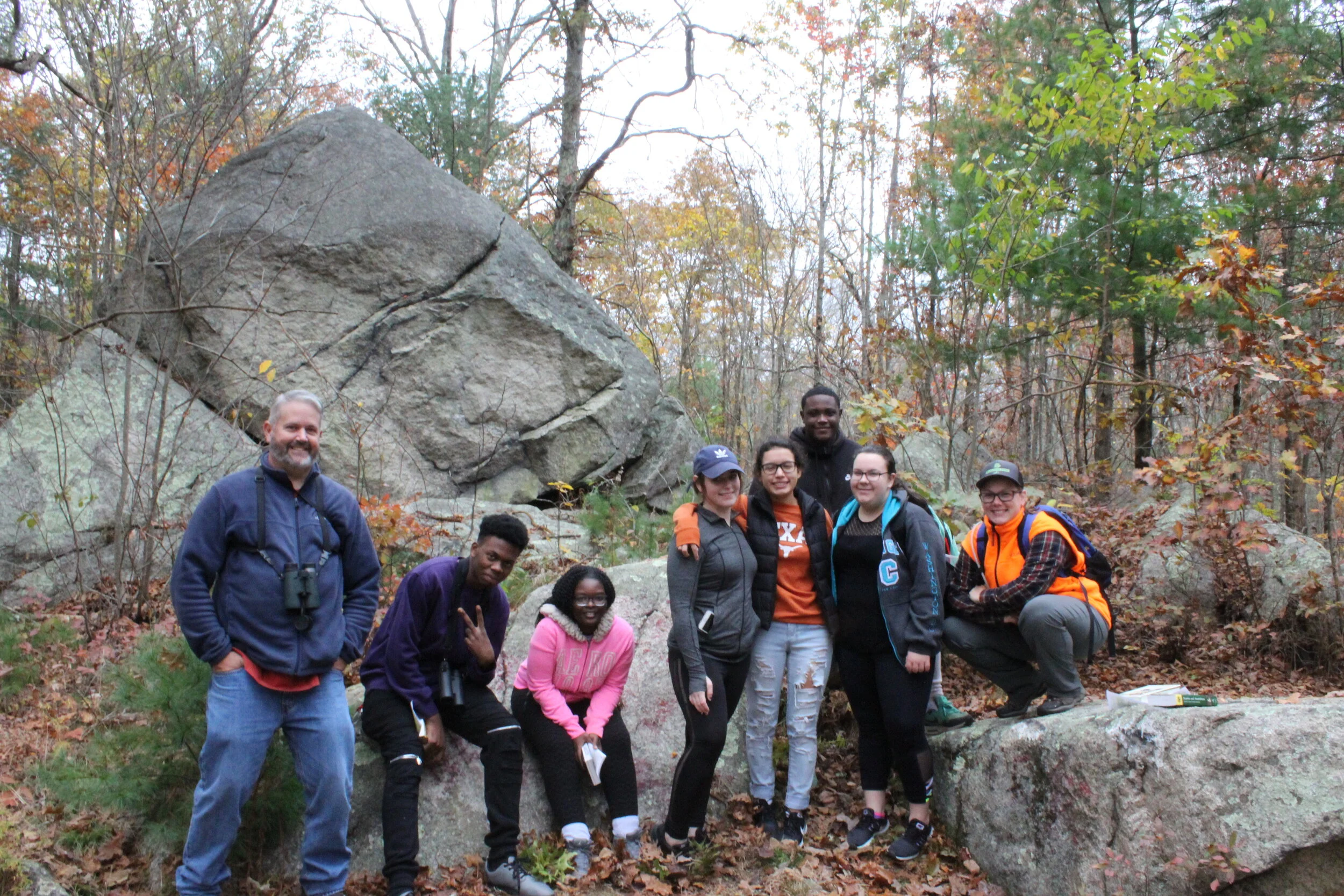
Serving this environmental justice community is some of our most meaningful work at Wildlands and we have plans to do much more. As a society, we all need to be reaching higher to help communities like Brockton, and the land trusts spread across the United States are not released from this imperative. Land trusts like Wildlands need to look beyond our habit of tallying up acres and reporting on our completed deals because these measurements fall short in a changing America. Both are the measures of a bygone era and although we will probably always apply them to gauge our success on some level, our communities are desperate for more than simply an acre count.
Essentially, land trusts are civic organizations and as such, are well-positioned to build authentic and effective partnerships that reflect the diversity and demographics of those communities that need us most, like Brockton. For the past several years, Wildlands has been part of a cohort brought together by the Island Foundation to work with environmental justice expert, Angela Parks, to learn how to embed diversity, equity and inclusion principles into our guiding documents and programmatic work. Wildlands still has a long way to go, but our clear commitment is a starting point.
Thank you to all of our supporters for making this work possible.
Karen Grey
President
Wildlands Trust Commitment to Diversity, Equity, and Inclusion
Wildlands Trust is committed to protecting land and providing access to nature for the people of our region, regardless of income, race, ethnicity, religion, sexual orientation, or gender identity. We will approach our work with complete respect for the cultures and perspectives of the communities we serve as we endeavor to connect and inspire all people to care about nature and the future of our planet.
Indian Head River Trail Enhancements Continue Thanks to the Efforts of Many
Following centuries of changes along the Indian Head River, the towns of Pembroke, Hanson and Hanover work together with Wildlands Trust to improve the surrounding trail system with a MassTrails Program grant.
By Community Stewardship Program Manager Conor Michaud
Rivers are the multi-tool of the natural world, harnessed by people, they support burgeoning populations and have played a key role in shaping our civilization. Before industrialized society, rivers were free-flowing. Unobstructed by dams and development, these waters naturally deposited nutrients and sediments along the river corridor, housed essential native breeding grounds for migratory fish and provided for a biodiverse ecosystem. Today, free-flowing rivers are globally threatened, with only several remaining in Massachusetts and the North River being the only one in Wildlands’ service region.
What remains of the Waterman Tack Factory dam rest along the shores of the IHR.
The Indian Head River (IHR), a tributary of the North River, was transformed from its free-flowing state centuries ago. Throughout the 17th century and up until the early 20th century, the IHR fueled the local economy and proved an invaluable resource. As industry left the river, mills eventually ceased production, dams collapsed and the forges cooled. The train which once ran along the shoreline is long gone, its former path converted into a nature trail some years ago. For nearly four miles, the river now flows peacefully through Pembroke, Hanover and Hanson, and in many places, large swathes of the riparian corridor and forests have been conserved to help protect this treasured habitat.
In 1993, Wildlands was gifted Tucker Preserve in Pembroke, one of Wildlands’ most popular conservation areas. The northern side of Tucker sits against the IHR, affording hikers stunning views and fishing access, while the southern upland forest showcases shady hemlock stands and old rock walls, vestiges of former agricultural land. The three towns through which the IHR flows — Pembroke, Hanover and Hanson — have each conserved land along its banks and in 2018, Pembroke received funding from the Department of Conservation and Recreation’s MassTrails Program to improve the trail system on the surrounding conservation lands and increase public stewardship along the river. Over the last two years, Wildlands has managed the IHR Trail Project for the town, working with representatives from Pembroke’s conservation commission, Hanover and Hanson’s open space committees, Hanover’s Department of Public Works, and the North and South Rivers Watershed Alliance to enhance the 4-mile trail loop encircling the IHR.
The Indian Head River flowing east from State Street.
Adequately protecting the IHR, its riparian areas and nearby upland forests requires more than trail stewardship though, it requires volunteer contributions and the devotion of local residents who will continue to assist in conservation efforts long after the MassTrails grant is complete. Throughout the IHR Project, Wildlands has focused on public outreach through guided hikes, volunteer trail work events and recruitment of volunteers to our Adopt-A-Preserve program. From these efforts, a tremendous amount of volunteer support has been shown, with over $7,000 of volunteer match time collected. Most recently, local photographer Andrew Lederman generously donated his time and skills to document the preserve’s natural beauty, as well as the remnants of the IHR’s former industrial life (featured in this article). Earlier this spring, Hanover’s Department of Public Works assisted Wildlands in creating a formal parking area along Water Street, a welcome addition as trail usage continues to grow, and this summer, Wildlands will work with a boy scout from Hanover to install new trailhead kiosks and educational signs along the trail system.
Massachusetts has a long industrial history, from the massive farming culture during the 18th and 19th centuries, to mills and factories that dammed our rivers, altered the landscape and ultimately shaped our communities. The IHR Conservation Area and the IHR Trail Project are opportunities for us to study our industrial past and the impacts of having manipulated the formerly free-flowing river. The IHR Conservation Area provides a space to track the native fish species which struggle to navigate the Luddam’s Ford fish ladder, shedding light on the impacts of dams and the benefits of protecting natural free-flowing rivers. Most importantly, the IHR Trail Project demonstrates a collaborative success and the importance of spanning town boundaries to protect what little conservation land remains in our rapidly developing towns.
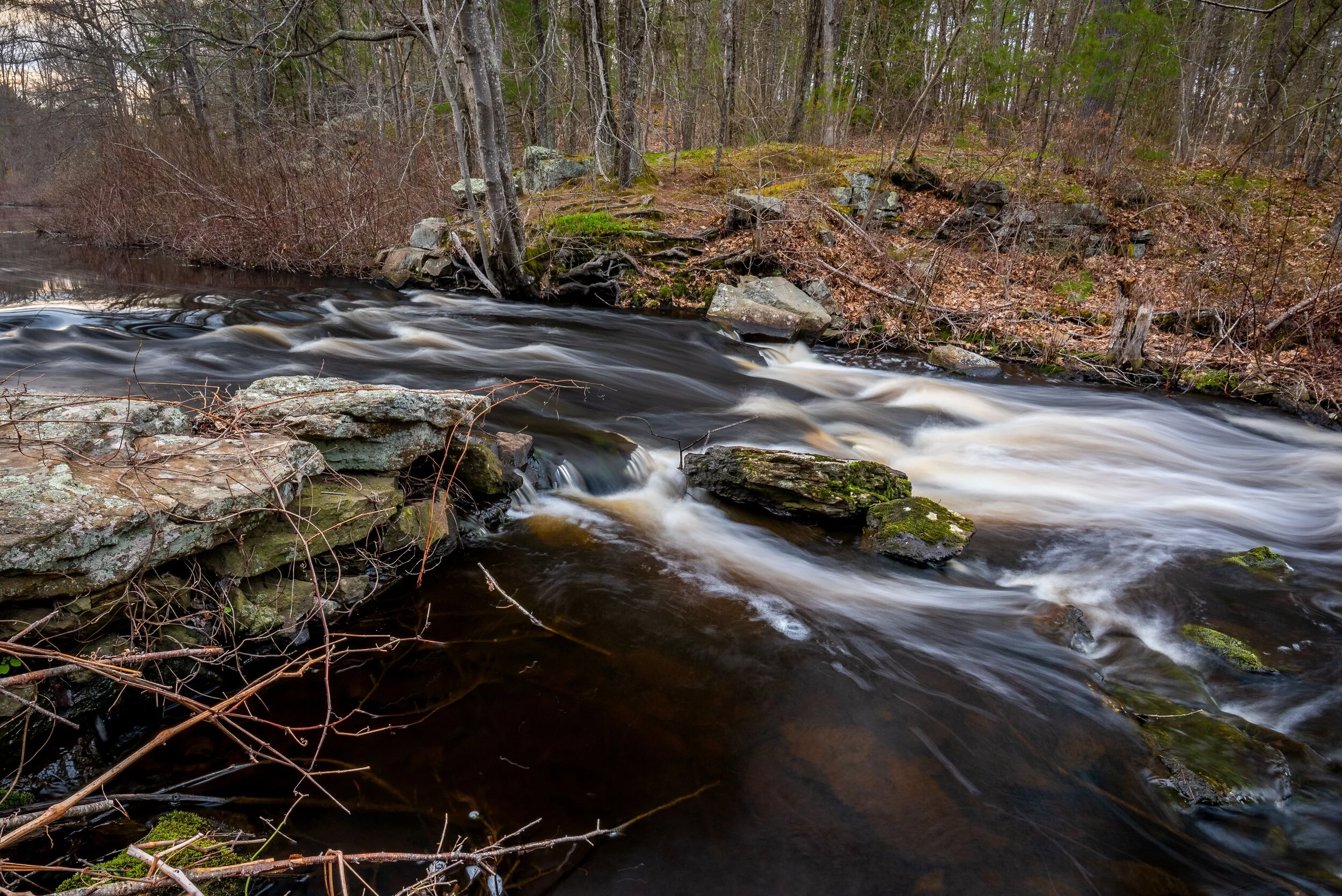

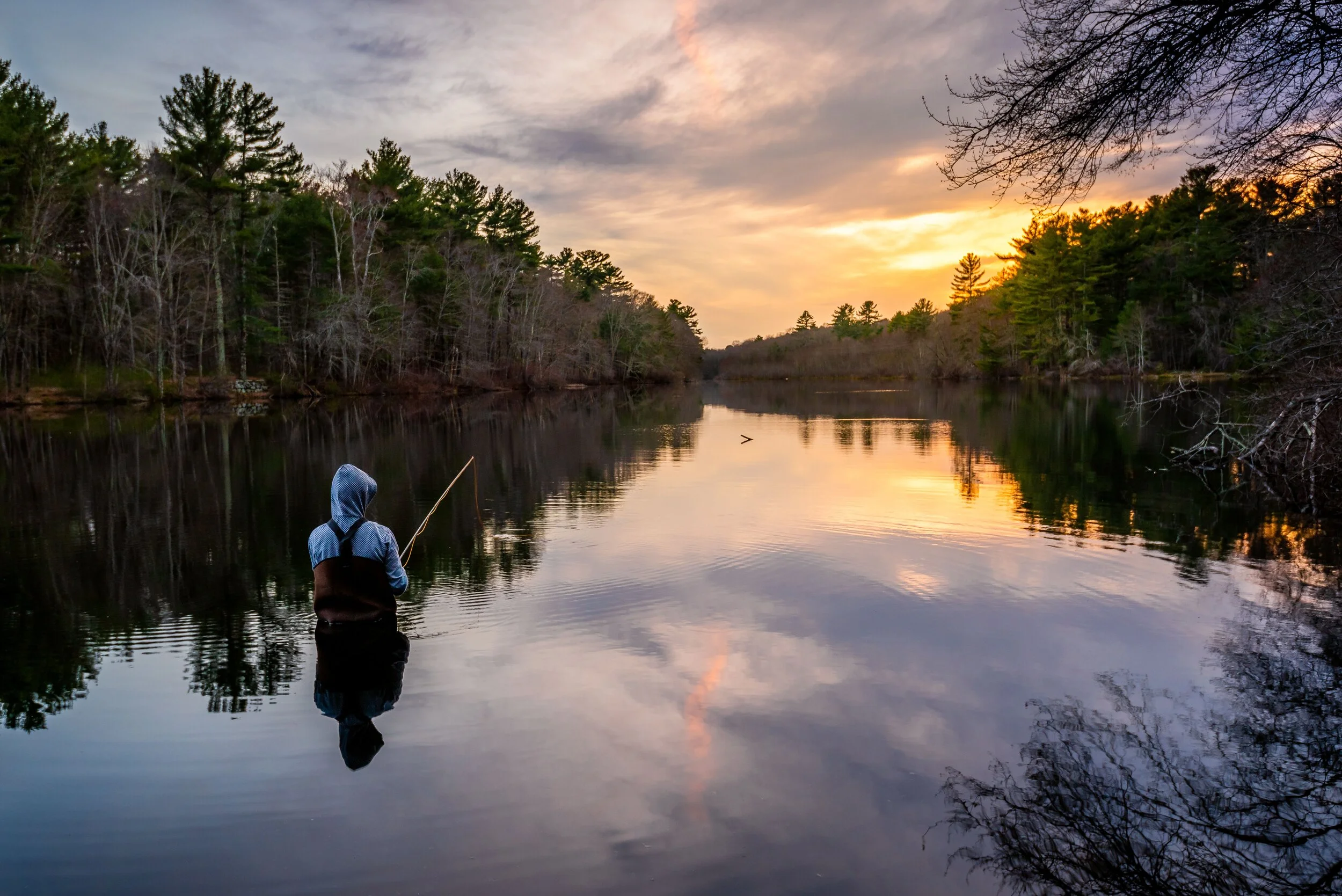
The Indian Head River is an incredible resource and outdoor enthusiasts, anglers and families seek its utilities all year long. Offering miles of trails, fishing, picnicking and water craft recreation, the IHR stands out as a top nature destination in the South Shore. With the recent COVID-19 pandemic, Wildlands has seen a surge in trail users. On weekends, the parking lots are often filled and the shores are lined with hopeful fishermen and women. Wildlands reminds you to please stay on marked trails, pickup and carry out your dog’s waste, and respect fellow hikers by following social distance guidelines. Our work at Tucker Preserve and the IHR is successful because of our dedicated volunteer base and the people who respect these natural spaces. If you are interested in learning how you can help protect your conservation land please send us an email (info@wildlandstrust.org) or give us a call (774-343-5121).