


What’s New at Wildlands
From Farmland to Grassland
How Wildlands’ management of former farmlands provides a reliable habitat for pollinators and other wildlife throughout the South Shore.
By Membership & Communications Manager, Roxey Lay
When you think of a Wildlands Trust preserve, you may immediately think of trails that lead visitors throughout woodlands to explore the undeveloped pockets of the region. What you may not think of immediately are fields. In addition to the wooded areas Wildlands protects, there are also a number of former farms, managed by stewardship staff to remain as open grasslands. Habitats like these fields tend to disappear in this part of the state, either through development, the installation of solar fields, or through lack of management. “Grasslands don’t want to stay grasslands”, Stewardship Manager, Erik Boyer explains. “Their natural state is forest.” With fewer grassland habitats throughout the region, Wildlands makes it a point to maintain a number of properties like Great River Preserve, Willow Brook Farm Preserve, and Phillips Farm Preserve, as such in order to provide a stable habitat and foraging area for wildlife that rely on vegetation that grows there.
Joe-pye weed, Eutrochium purpureum, grows at Great River Preserve in Bridgewater.
A primary group that rely on these areas are pollinators, like bees. Throughout North America, there are nearly 4,000 native species of bees [1]; however, 14 species in New England are on the decline by as much as 90% [2]. This does not include the European honey bee, which is not native to North America, having been brought over in the 1600s by the colonists. In an attempt to pinpoint the cause of this decline, “scientists have blamed a range of factors including insecticides (neonicotinoids), parasites, disease, climate change and lack of a diverse food supply” [2]. Native flower diversity is a critical part in helping the region’s native bee species as well as having various plants that bloom during different months throughout the year. “Having large open fields that have native plants that provide a continuous food supply to common and specialty bees are important”, explains Plymouth County Entomologist, Blake Dinius. “Many types of bees only forage during certain months out of the year.” A large number of common plants that attract generalist foragers like honey bees and bumble bees aren’t always adequate for specialist species who only feed on specific flowers; if those types of plants aren’t available, these species die off.
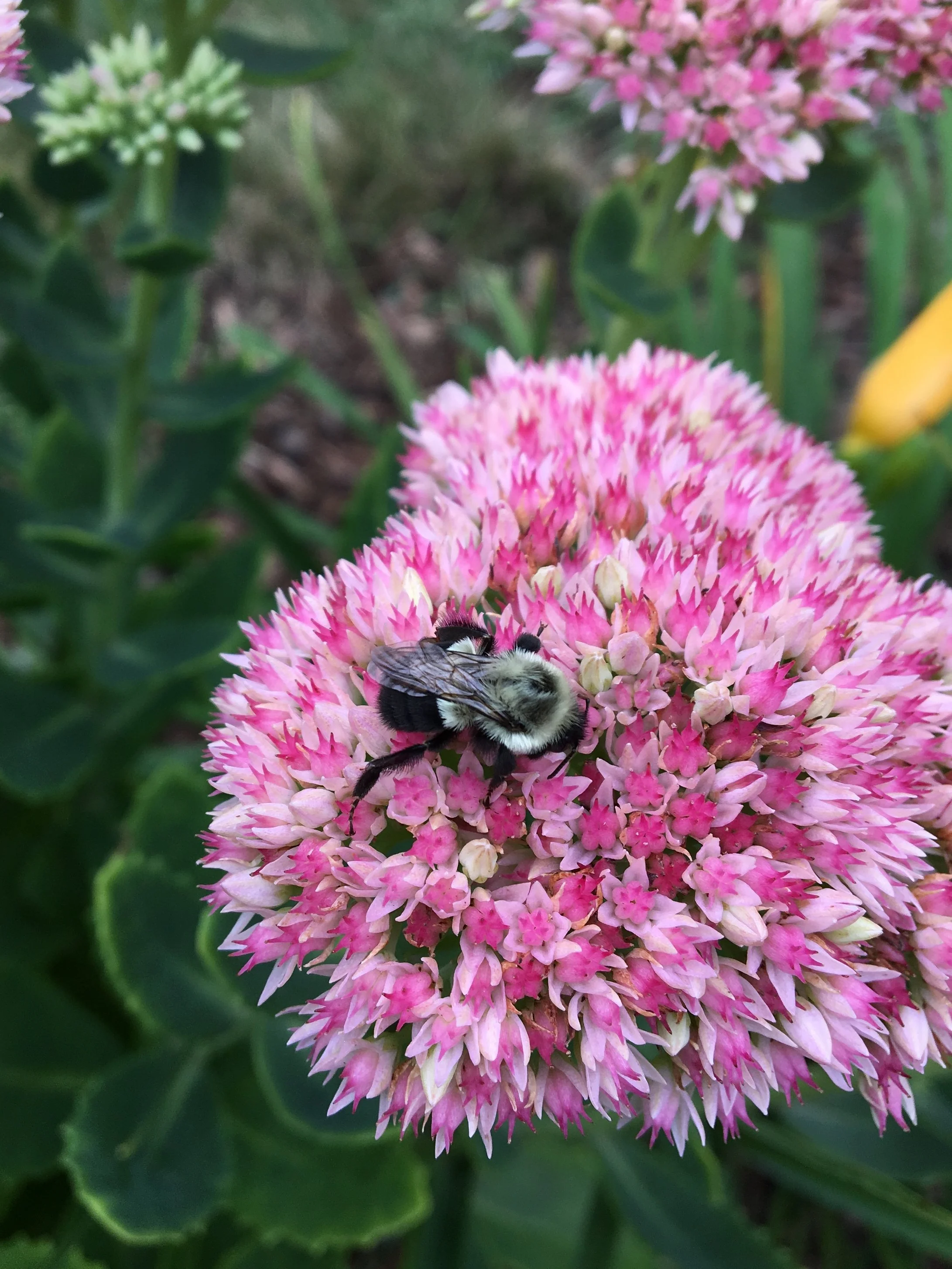
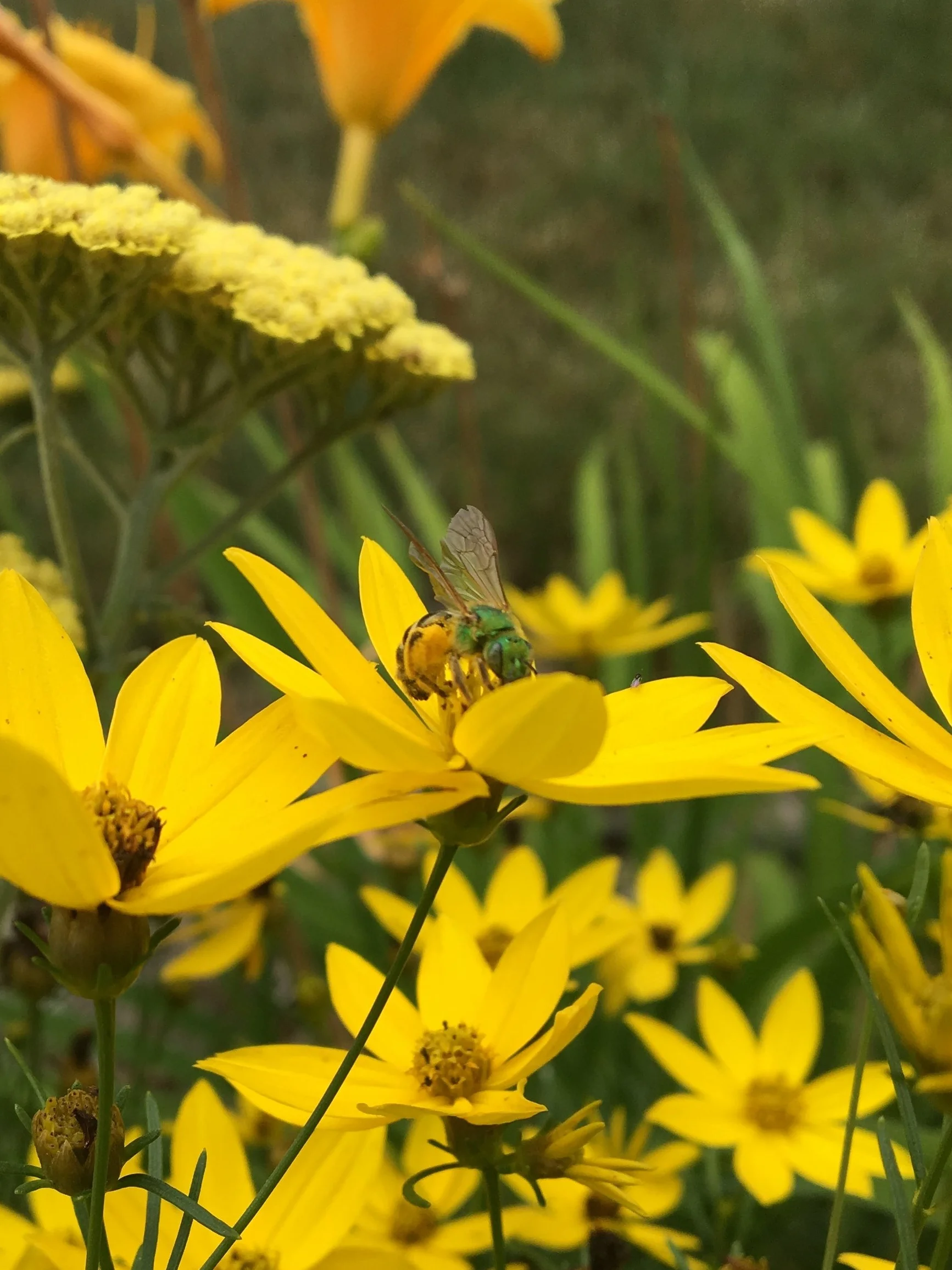

The distance between foraging sites is important as well. “Bees and other insect pollinators require nesting sites (suitable soil, dead wood, abandoned mouse nests, burrows) and floral resources (nectar and pollen) to persist” [3]. Unlike the honey bee, which lives in a hive, 70% of all bees nest underground [4] and viable nesting and foraging sites like open grasslands are at risk due to “row-crop agriculture, grazing and fragmentation of habitat” [3]. While larger species like honey bees and bumble bees travel 2-3 miles (sometimes farther) outside of their nesting location for food, many solitary bees, who are smaller yet “known to pollinate plants more efficiently than honey bees” [5], travel very short distances (typically less than a mile). Maintaining sites that are relatively close together are important in supporting the wide range of needs among various species.
Habitat loss and fragmentation, the process of reducing large tracts of land into smaller pieces via development, “are currently the main threats to terrestrial biodiversity”[6]. Wildlands works to expand continuous areas of ecological significance when acquiring land by identifying parcels that share borders with properties protected by towns and other organizations. This type of collaboration results in the creation of larger wildlife corridors throughout various habitats. Willow Brook Farm in Pembroke is a prime example of this. The roughly 167 acres that compose Willow Brook are nestled between Herring Run Historical Park and Misty Meadows Conservation Area. The shared borders between these three conservation lands results in a much larger protected area and reduces the distance between open spaces.
In short, Wildlands’ preserves which contain managed open fields provide food, a safe place to nest and a pesticide free environment for pollinators and other wildlife who rely on them. While there is much to learn in regards to why bees are facing declining numbers, there’s no doubt these spaces play an important role in their survival and the overall environmental health of the region. Through the preservation of varied habitats that include these grasslands, Wildlands and other land conservation organizations are working together to secure expansive tracts of vital habitat that may otherwise be lost forever.
A map showing the shared borders of Misty Meadow Conservation Area, Willow Brook Farm Preserve and Herring Run Historical Park.
[1] https://www.popsci.com/science/article/2013-06/10-spectacular-native-bees/
[2] https://www.apnews.com/f768748b36c648e49c14b0366fdec7e8
[3] https://www.nap.edu/read/11761/chapter/5#93
[4] https://entomology.cals.cornell.edu/extension/wild-pollinators/native-bees-your-backyard/
[5] https://www.growwilduk.com/wildflowers/bees-pollinators/take-crash-course-solitary-bees
[6] https://www.sciencedirect.com/topics/earth-and-planetary-sciences/habitat-fragmentation
What's Up With Wetlands?
By Roxey Lay, Membership and Communications Coordinator
EPA map displaying coastal wetlands and how far inland they extend (click to enlarge).
Swamps, marshes, bogs, and fens; all ecosystems defined by various sub-types and characteristics with one thing in common: they are all wetlands. World Wetlands Day was February 2, marking the date the Convention on Wetlands was adopted in 1971 and raising awareness of wetlands and their vital role to our planet. Massachusetts was the first state in the nation to adopt wetland protection laws during the 1960s; however, since the Colonial Period, roughly one-third of the state’s wetlands have been destroyed[1]. According to the EPA, “wetlands in coastal watersheds are experiencing disproportionate losses compared to wetlands in the rest of the country, making them particularly important areas for protection”[2]. Wildlands’ work to protect undeveloped land throughout the region includes the protection of wetlands. In fact, nearly all of the properties in Wildlands’ portfolio contain some type of wetland and provide habitat for many different species throughout the region; some of which are rare or endangered, such as the eastern box turtle and northern red-bellied cooter.
Drone view of Raven Brook in Middleborough.
Recently, I spoke with Brad Holmes, manager of Environmental Consulting & Restoration, LLC (ECR) to learn about what wetlands are and how they impact Southeastern Massachusetts. Located in Plymouth, ECR specializes in wetland consulting, permitting and restoration, and Brad, a professional wetland scientist (PWS), has worked with Wildlands at Great River Preserve and most recently, on the ecological restoration project along the shore of Halfway Pond. Read on to learn about wetlands and their significance to our region:
What is a wetland?
A wetland is an area where groundwater is located at or near the surface and where the vegetative community is dominated by plants adapted to live in saturated soil conditions. Wetlands often border on creeks, rivers, streams, ponds, lakes etc., but may also be isolated. Wetlands are [determined] by assessing three specific site conditions that include vegetation, soil, and hydrology. By definition, a wetland must include 2 of 3 conditions: a dominance of wetland vegetation, hydric soils, and/or hydrological conditions.
What is a wetland scientist?
A Professional Wetland Scientist is an individual that has been certified by the Society of Wetland Scientists based on academic and work experience in wetland science. As a PWS we work to assess and manage wetland resource areas throughout Massachusetts. Our work includes field delineation of wetlands based on specific environmental conditions (i.e. vegetation, soils & hydrology) as well as designing and permitting projects through the applicable local, state and federal regulatory authorities.
In addition to your work as a PWS, you are certified by the MA Arborists Association as an arborist, how does this influence your approach to your work?
As an MA Certified Arborist, I approach projects with a special consideration towards the care of trees, specifically when designing wetland restoration or wetland replication projects.
North River in Marshfield.
What are the benefits of wetlands?
Wetlands provide benefits to landowners and the public, [including] protection of public and private water supply, protection of groundwater supply, flood control, storm damage prevention, prevention of pollution, protection of fisheries and protection of wildlife habitat.
Why is important to protect them?
Wetlands act as a first line of defense for floodwater from storms. They also act as a filter to pollutants in our water supply. They [also] provide a specific habitat that many wildlife and fish need to survive.
Do wetlands have any significance to Southeastern Massachusetts?
There are many extensive wetland systems within Southeastern Massachusetts. For instance, the North River system in Scituate, Marshfield, Norwell, and Pembroke. Also consider the Taunton River system, the extensive freshwater ponds and the 250+ miles of coastline in Massachusetts.
It is important for property owners and the general public to be aware of the wetlands in their community and where they can seek guidance in protecting the wetland resource areas.
What is the current state of wetlands in this region? Are they threatened? If so, what can people do to help?
Wetlands in Massachusetts are protected by the Massachusetts Wetlands Protection Act and associated Wetland Regulations. [These] spell out specific performance standards for work within or nearby (buffer zone) wetland resource areas. It is important for property owners and the general public to be aware of the wetlands in their community and where they can seek guidance in protecting the wetland resource areas. Many towns in Massachusetts have a local Conservation Commission that works to protect the resource areas in their community.
What do you think the future of wetlands is?
Wetlands will be protected. The next task is protecting more land buffering wetlands, which is the current struggle.
Wetlands at Striar Conservancy, Halifax
Want to learn more about wetlands and whether there are any near your home? Talk to your local Conservation Commission, go to the State’s website on wetlands, or, if there is a Wildlands property near you, ask us what type of wetland is on the property and how you can help in maintaining its integrity for the benefit of your town and the animals that rely on its habitat. I’d like to thank Brad for taking the time to answer my questions and providing some great insight on the importance of wetlands and their impact on our region.
Dragonfly Species Sighting Sets New County Record!
Great River Preserve in Bridgewater has been the site of our Butterflies and Dragonflies walk for the past three years. Program leader Nick Block, Assistant Professor of Biology at Stonehill College, is not only excellent at spotting and catching dragonflies in an instant, but is a whiz at instant identification of insects, birds, amphibians, and more. Towards the end of our program on Sunday, June 25th, he spotted this Great Blue Skimmer, a new county record for Plymouth County! This southern species has likely found its way further north due to changing climate.
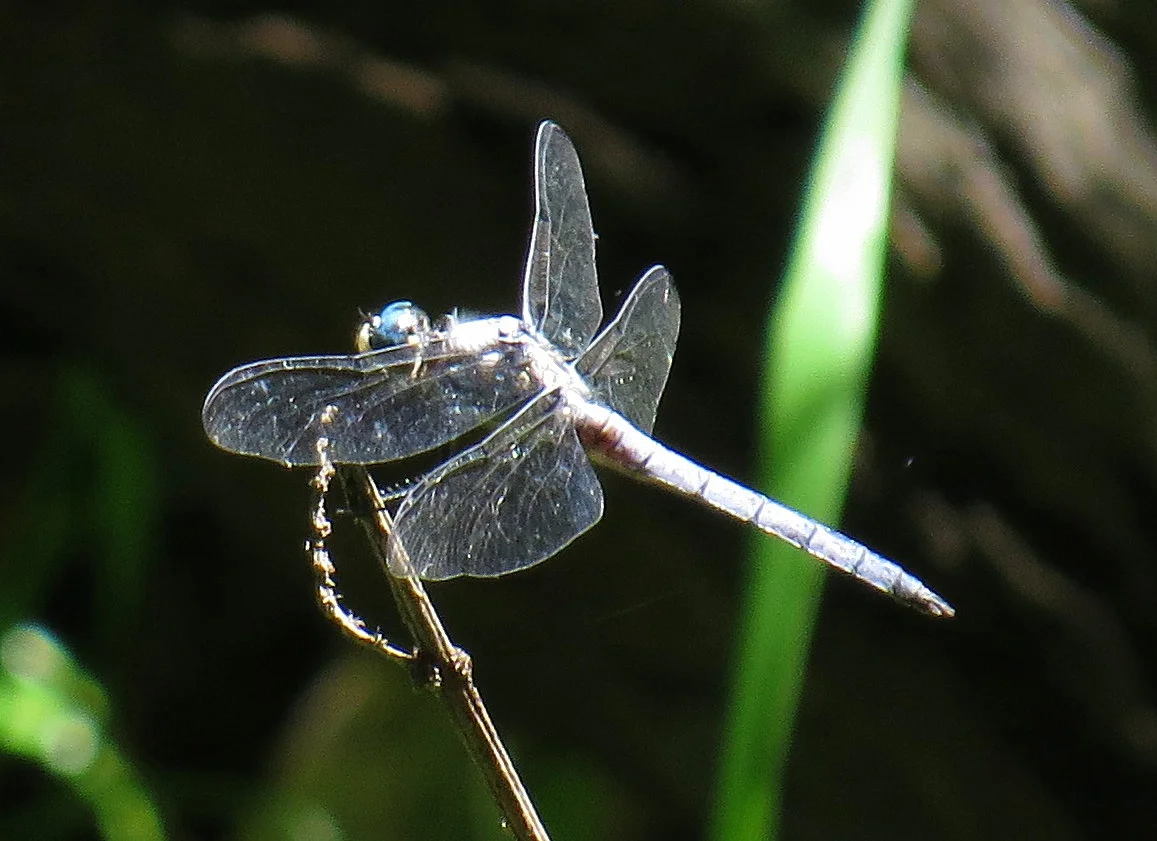
Great Blue Skimmer on the Taunton River, Great River Preserve, Bridgewater
Other notable moments from the program included watching a female Monarch lay eggs on a trail-side milkweed, getting up close and personal with multiple dragonfly and damselfly species, and a Fowler's Toad spotting!
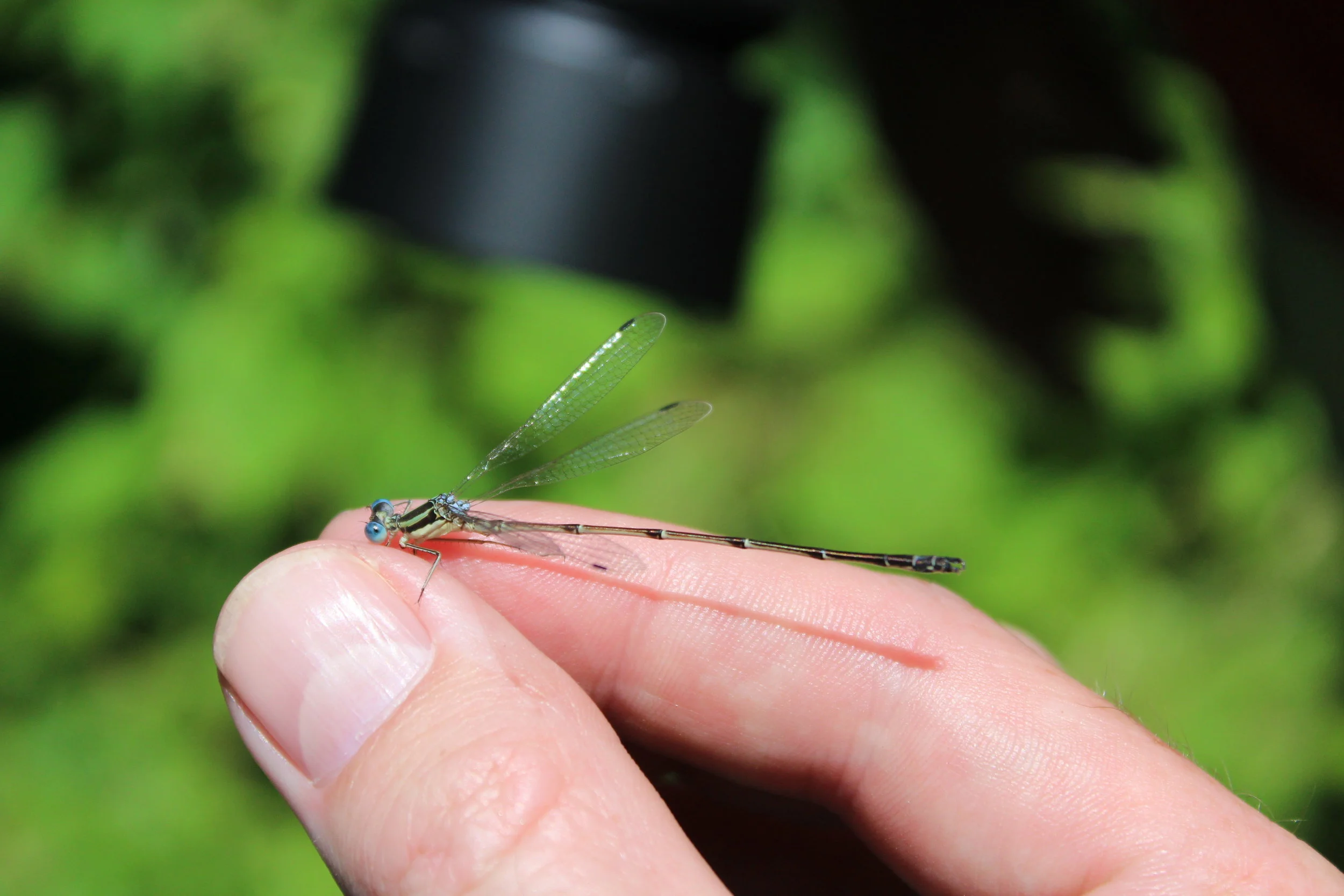
A damselfly, caught in Nick Block's insect net, Great River Preserve, Bridgewater
Nick is a fantastic teacher - knowledgeable, friendly, skillful, and has been graciously willing to lead this program year after year. Even if you've never considered these creatures to be of specific interest to you, we recommend checking this program out next spring!
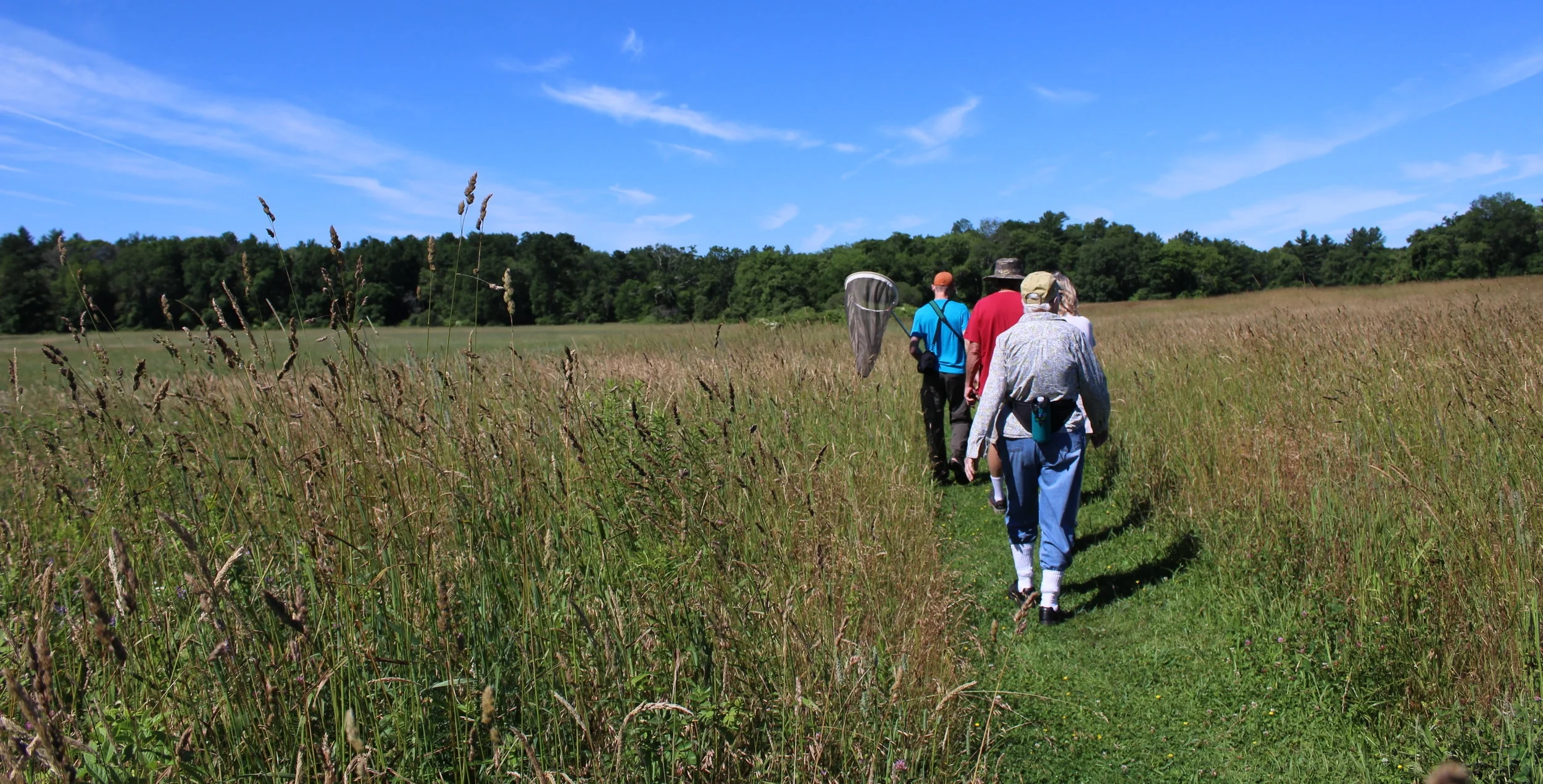
Thanks, Nick! See you next year!

Biodiversity and the Wildlands Trust
By Kathleen Anderson
Wildlands Trust now protects over 7,000 acres scattered through 35 towns from Plymouth north to Milton, west to Swansea, and encompassing much of the vast Taunton River watershed, the largest in Southeastern Massachusetts and the second-largest in the Commonwealth.
Over the years I am sure records of mammals and birds observed on various of our properties have been noted but, to my knowledge, there has been no organized effort made to record the total number of species (i.e. the biodiversity) of our properties: Not only birds and mammals but the reptiles and amphibians, the fish, the insects, and the plants.
With the seemingly endless development of our “empty” land, refugia for native species becomes less and less. Hence, the importance of Wildlands Trust properties for biodiversity protection becomes greater and greater.
For instance, during my 66 years at Wolf Trap Hill Farm in Middleboro, I have documented the following:
35 of the 50, or three-quarters, of the land mammals known to occur in Massachusetts, including Moose!
193 of the 500, or two-fifths, of the Commonwealth’s bird species (which includes sea birds not to be expected to occur so far inland)
25 of the 46, or more than 50 percent, of the known reptiles and amphibians (“Herps”).
47 of the 103 butterflies (almost half of the state’s known species)
30 of the 106 dragonflies (“Odonata”) or about one-fifth of the known species
And I am still working to learn more about the dragonflies.
Just imagine the total Massachusetts species of wildlife whose existence continues secure on our properties, many species of which we are still unaware of, I am sure.
Postscript:
Middleborough resident Kathleen “Betty” Anderson is a true eminence in the conservation field. Among her many accomplishments, she founded the Manomet Bird Observatory (now known as the Manomet Center for Conservation Sciences), co-founded Wildlands Trust and served as a board member, and served on the Massachusetts Audubon Society Board of Directors and the Massachusetts Natural Heritage and Endangered Species Program Advisory Board. She also has made substantial contributions to land protection in her community through land donations and the grant of a conservation restriction to Wildlands Trust that collectively protect over 120 acres. We are privileged to have the opportunity to share her observations on biodiversity in Southeastern Massachusetts as seen through the prism of her beloved Wolf Trap Hill Farm. Betty is keeping her eyes peeled for the next Moose to visit her property.