


What’s New at Wildlands
Newly-Formed Coalition Secures Funding for Pembroke Project
Local towns and organizations band together to improve the Indian Head River trail system.
By Community Stewardship Program Coordinator, Conor Michaud

The Indian Head River from atop the hills in Tucker Preserve.
In 1993, Sidney and Harold Tucker gifted the 78.6-acre Tucker Preserve to Wildlands Trust. Since its donation, Tucker Preserve has become a major attraction for hikers and nature lovers throughout the South Shore. Sandwiched between Hanson, Hanover, and Pembroke conservation lands, this preserve has over 2,500 feet of shoreline along the Indian Head River and 1.75 miles of trails. While its natural features are a major attraction, they are not the only source of lure to this protected land. The Indian Head River was once home to the Indigenous tribes of Southeastern Massachusetts, and throughout the 17th and 19th centuries, became an important site of regional industry hosting mills and factories which produced iron work and rubber, among other products.
Together, Tucker Preserve and the conservation lands of Pembroke, Hanson, and Hanover surrounding Indian Head River, make up 325 acres of protected land with over 6 miles of walking trails and easily accessible boating access for canoes and kayaks. Though access to outdoor recreation is plentiful along the Indian Head River trail, the funding to provide adequate trail maintenance, amenity improvements, and educational signage has been lacking over the last several years. As a result of this funding deficiency and the continued devotion to providing public access to these historic lands, these three towns, as well as Wildlands and the North and South Rivers Watershed Association, came together as the informal Indian Head River Coalition. In February 2018, the Town of Pembroke, on behalf of the coalition, submitted a funding request to the federally funded Recreational Trails Program (RTP) to grant funding which would allow the necessary improvements to the Indian Head River Trail System.

A kayaker enjoys a quiet trip down the tranquil waters of Indian Head River.
This past September, the officially titled “Indian Head River Greenway Trail System Project” was selected for funding with work slated to begin in November 2018 and wrap-up in December 2021. The recently awarded RTP grant is provided by the Department of Transportation’s Federal Highway Administration and awarded and regulated to Massachusetts grantees by the Department of Conservation and Recreation. The Indian Head River Coalition was awarded $41,487 towards the trail project and will be required to match 20 percent of this funding throughout the three-year venture. Wildlands Community Stewardship Program will manage the project by facilitating trail work with volunteers and staff to complete all existing trail maintenance, new trail construction, and amenity improvements. Wildlands will also be working with a graphic designer and the North and South Rivers Watershed Association to create updated trail maps and educational signage throughout the trail system specifically highlighting the history and ecology of the Indian Head River.
The Indian Head River Coalition designed the project to benefit the greater South Shore community by preserving this historic, natural area and providing improved access for all non-motorized passive users. In addition, the project and the RTP grant program exemplifies the partnerships that can form between municipalities, nonprofit organizations, and State and Federal Government to achieve conservation efforts specifically designed for public enjoyment and the improvement of public and environmental health.
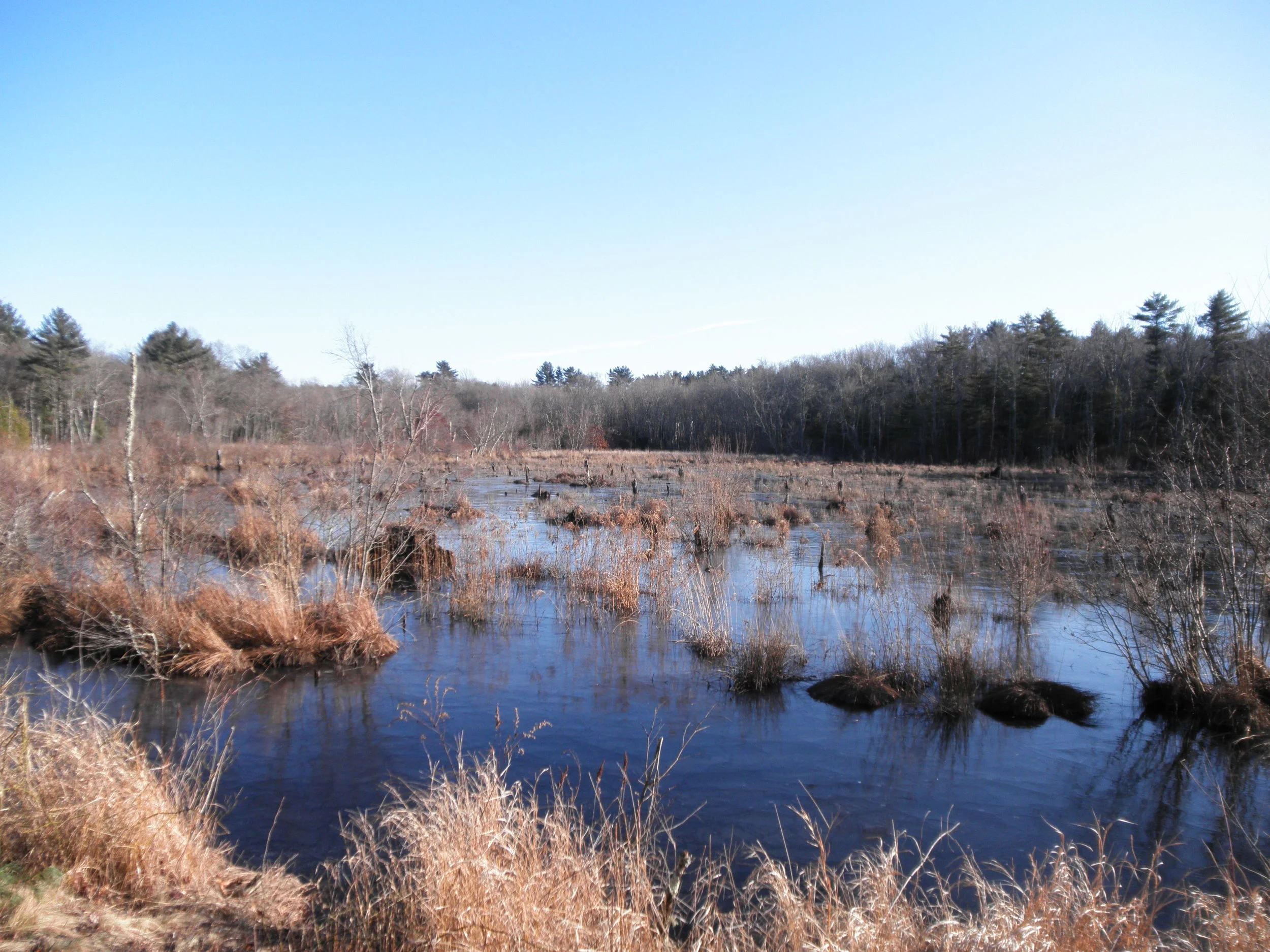
One of the Region’s Most Rural Communities Protects its First Pieces of Public Open Space
Wildlands Trust was honored to be part of the ceremony held recently to celebrate the opening of Plympton’s first conservation lands, Cato’s Ridge and Churchill Park. Karen Grey, Executive Director of Wildlands Trust, was a featured speaker at the event held to honor the many partners who helped bring this project to fruition. Grey’s comments addressed the importance of the Community Preservation Act in local land protection. In this case, a $22,000 contribution from Plympton CPA funds leveraged the permanent protection of over 100 acres of open space.
Rain and mud did not deter the crowd of almost 100 people from coming out to celebrate this momentous occasion. We congratulate all involved with impressive accomplishment.
Conservation Landowners
About Conservation Landowners
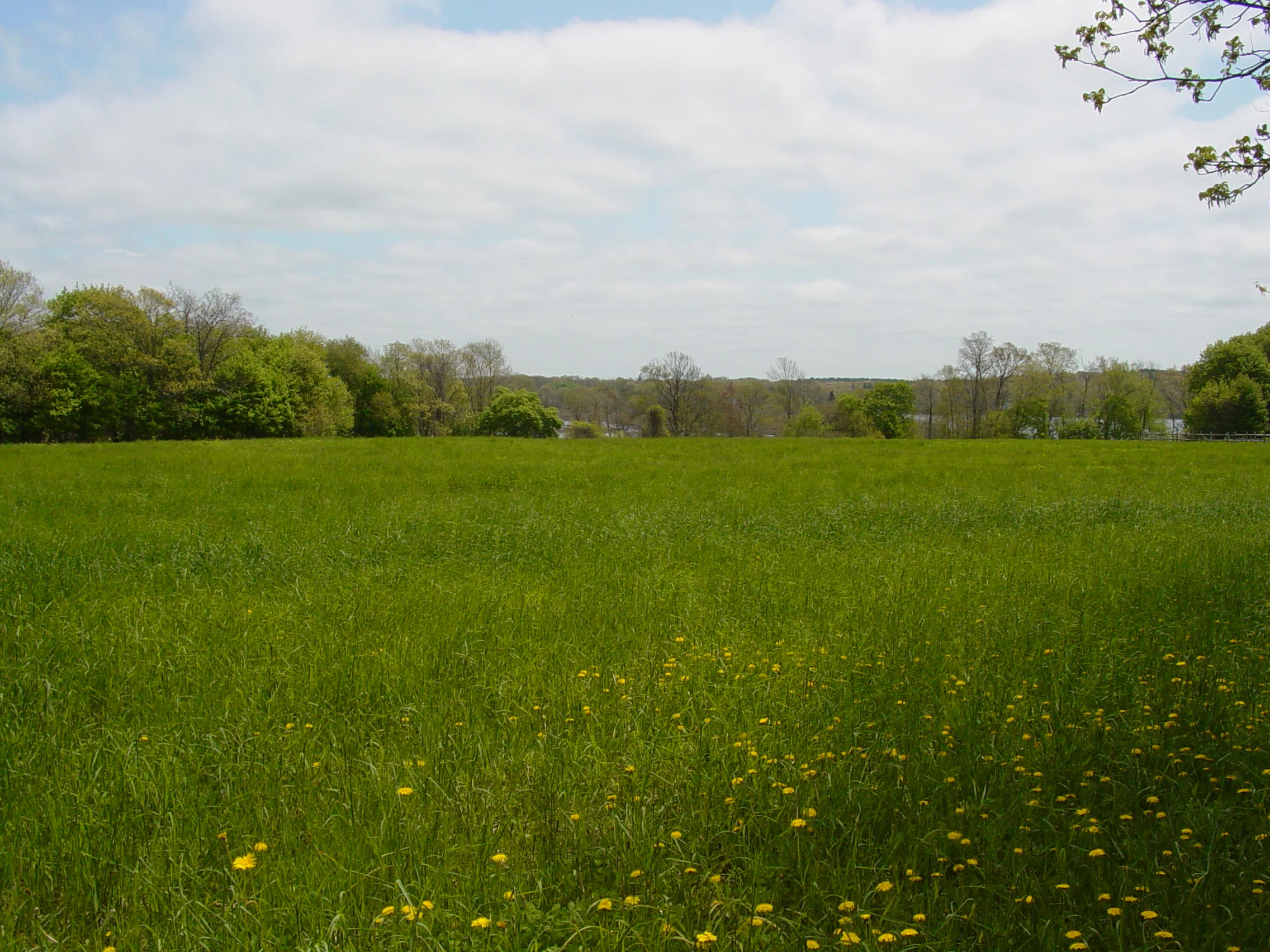
Wildlands Trust is proud to work with conservation landowners to protect over 90 separate municipal and privately-owned properties comprising over 2,200 acres throughout southeastern Massachusetts. Conservation landowners are a special group of people committed to preserving the conservation values of their properties for future generations. Through legal land protection mechanisms such as Conservation Restrictions (CRs), Agricultural Preservation Restrictions (APRs), and Deed Restrictions (DRs), Wildlands Trust is able to ensure the protection of many unique and precious habitats and landscapes.
CRs, APRs, and DRs limit specified future uses of the land, such as development, but allow you to maintain ownership, management, and the right to sell your land or pass it on to heirs. This may result in significant local and federal tax benefits. As a conservation landowner, you are responsible for complying with the specific terms of the restriction as well as all of the local, state, and federal laws that regulate land-use activities in your area.
Questions?
Wildlands Trust staff is always happy to discuss landowner interests and concerns. Contact Scott MacFaden, Director of Land Acquisitions, by e-mail at smacfaden@wildlandstrust.org or by phone at 774-343-5121 x107.
Helpful Links for Conservation Landowners
Invasive Plants of Massachusetts: http://www.massnature.com/Plants/Invasives/invasiveplants.htm
Natural Resources Conservation Service – Massachusetts: http://www.nrcs.usda.gov/wps/portal/nrcs/site/ma/home/
MA Natural Heritage Endangered Species Program: http://www.mass.gov/eea/agencies/dfg/dfw/natural-heritage/
Living with Wildlife: http://www.mass.gov/eea/agencies/dfg/dfw/fish-wildlife-plants/living-with-wildlife.html
Rare Plant Conservation: http://www.mass.gov/eea/agencies/dfg/dfw/natural-heritage/species-information-and-conservation/rare-plants/

Biodiversity and the Wildlands Trust
By Kathleen Anderson
Wildlands Trust now protects over 7,000 acres scattered through 35 towns from Plymouth north to Milton, west to Swansea, and encompassing much of the vast Taunton River watershed, the largest in Southeastern Massachusetts and the second-largest in the Commonwealth.
Over the years I am sure records of mammals and birds observed on various of our properties have been noted but, to my knowledge, there has been no organized effort made to record the total number of species (i.e. the biodiversity) of our properties: Not only birds and mammals but the reptiles and amphibians, the fish, the insects, and the plants.
With the seemingly endless development of our “empty” land, refugia for native species becomes less and less. Hence, the importance of Wildlands Trust properties for biodiversity protection becomes greater and greater.
For instance, during my 66 years at Wolf Trap Hill Farm in Middleboro, I have documented the following:
35 of the 50, or three-quarters, of the land mammals known to occur in Massachusetts, including Moose!
193 of the 500, or two-fifths, of the Commonwealth’s bird species (which includes sea birds not to be expected to occur so far inland)
25 of the 46, or more than 50 percent, of the known reptiles and amphibians (“Herps”).
47 of the 103 butterflies (almost half of the state’s known species)
30 of the 106 dragonflies (“Odonata”) or about one-fifth of the known species
And I am still working to learn more about the dragonflies.
Just imagine the total Massachusetts species of wildlife whose existence continues secure on our properties, many species of which we are still unaware of, I am sure.
Postscript:
Middleborough resident Kathleen “Betty” Anderson is a true eminence in the conservation field. Among her many accomplishments, she founded the Manomet Bird Observatory (now known as the Manomet Center for Conservation Sciences), co-founded Wildlands Trust and served as a board member, and served on the Massachusetts Audubon Society Board of Directors and the Massachusetts Natural Heritage and Endangered Species Program Advisory Board. She also has made substantial contributions to land protection in her community through land donations and the grant of a conservation restriction to Wildlands Trust that collectively protect over 120 acres. We are privileged to have the opportunity to share her observations on biodiversity in Southeastern Massachusetts as seen through the prism of her beloved Wolf Trap Hill Farm. Betty is keeping her eyes peeled for the next Moose to visit her property.

PUBLIC/PRIVATE PARTNERSHIP SAVES 22-ACRE SWANSEA PROPERTY AT THE 11TH HOUR
By Scott MacFaden, Director of Land Protection
Over the past several months, the Trust partnered with the Town of Swansea and a generous private donor to preserve the 22-acre Tierney property in southwest Swansea, near the Palmer River and the Rhode Island border. The Trust helped facilitate the project to its conclusion, and the Town came away with the ownership interest in the premises.
In November, Swansea Conservation Agent Colleen Brown requested our assistance in exploring options to preserve the Tierney property, which was only days away from being sold to a private, non-conservation buyer. Colleen advised that the owner might be willing to consider selling for conservation. However, as a public entity that must typically obtain Town Meeting approval for large expenditures, and with the next Town Meeting many months distant, the Town was not in a position to purchase the property on short notice.
Fortunately, the Trust was favorably positioned to mobilize quickly and advance the project to a successful outcome. One of the advantages nonprofit land conservation organizations possess is the ability to respond to opportunities with dispatch. For this project, the Trust was able to obtain agreement with the landowner to sell the land for conservation within a few days, and raise the $10,000 needed to purchase the property thanks to the generosity of a nearby business concern. A fundraising request to Todd Blount, the principal owner of Blount Fine Foods in Fall River, was almost immediately answered favorably. The Trust raised the balance needed to cover closing costs.

The Palmer River in Swansea
The Tierney property is the Trust’s first completed project in Swansea since we acquired the holdings of the former Swansea Land Trust in 2007. Its 22 wooded acres support a mix of upland and wetland habitats, and includes at least one potential vernal pool. The property is proximate to a 15-acre parcel recently acquired by the Town, as well as the Trust’s Barney-Bell Preserve. Collectively, these properties are an important component of the Palmer River corridor, a long-established local and regional protection priority. The Palmer River is part of the Barrington-Palmer-Warren Rivers watershed, which comprises 67.8 square miles in Massachusetts and Rhode Island. The Palmer eventually converges with the Barrington River to form the Warren River, which is a significant contributor to Upper Narragansett Bay.
The Tierney project is yet another example of how successful land protection efforts are often contingent upon partnerships nurtured on many levels. Although the Trust has a small staff, the geographic area we serve is extensive, and ranges from Boston’s shadow south to the Cape Cod Canal and west to the Rhode Island line. In order to maximize our land protection efforts, we rely on a wide network of allies and supporters, and particularly municipal colleagues like Colleen, to keep us abreast of potential land conservation opportunities in their communities. These local contacts also provide us with detailed knowledge of priority parcels, and important historical context for their protection.
As Colleen noted, “the preservation of this land along with our recent acquisition of a nearby property were key pieces for land and river protection on the Palmer River, a class A river. More than 20 years ago. Jeanne Wadleigh, a member of the Swansea Conservation Commission and a member of the Swansea Land Trust worked very hard with members of the Barrington Land Trust formulating a plan to protect this corner of Swansea and Barrington RI. They recognized that this area is significant for animal and plant habitat, endangered and otherwise, as well as water quality of the Palmer River. It is also historically significant, as this area was the birthplace of the Town of Swansea, the site of the beginning of King Philip’s Wars and is very significant to colonial American history. Now with the acquisition of the Tierney land, more than 100 acres of land are protected in the Palmer River watershed. “
On behalf of all of us at the Trust, many thanks to Colleen for her tireless efforts on behalf of open space protection in Swansea. And special thanks to the employees and owners of Blount Fine Foods, whose generous and timely donation made this 11th-hour acquisition possible.