


What’s New at Wildlands
Year in Review: What We Protected in 2025
Plus: What You Read in 2025 — Top Stories from Wildlands E-News
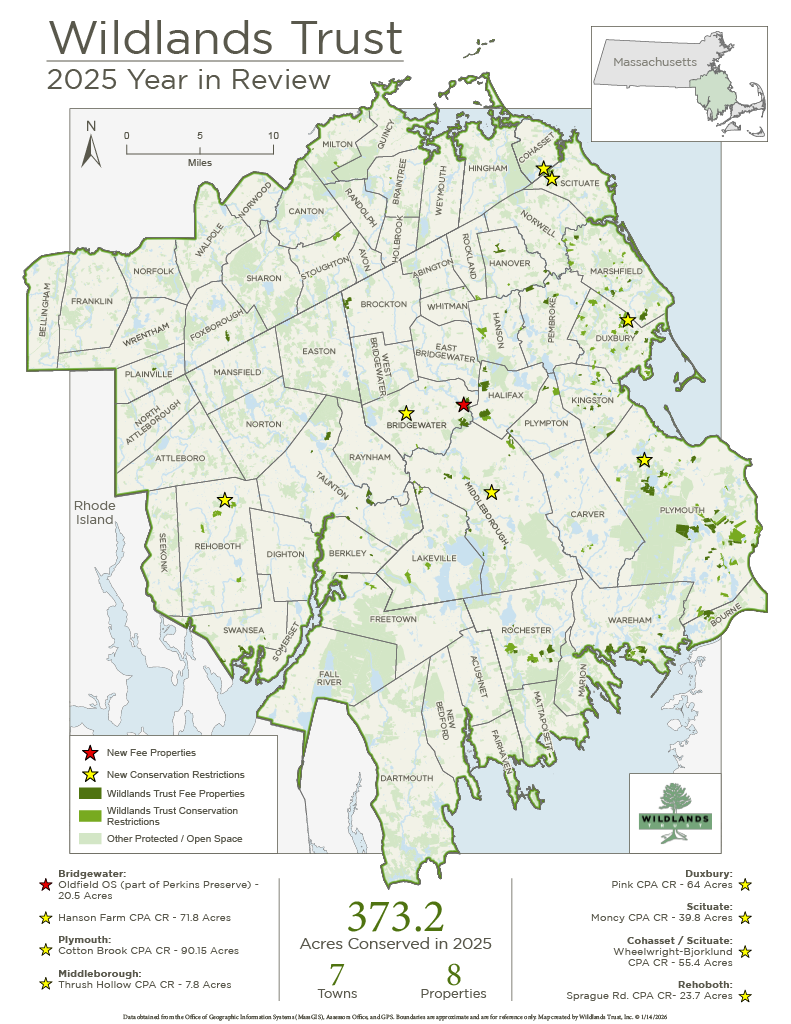
Wildlands’ 2025 land protection projects. Click the map to view a full PDF.
New Year’s Reflections from the Land Protection Office
By Scott MacFaden, Director of Land Protection
Helping CPA Towns Turn Investment into Impact
We completed five new Community Preservation Act (CPA) Conservation Restrictions (CRs) in 2025: the Hanson Farm CR in Bridgewater, the Cotton Brook Preserve CR in Plymouth, the Thrush Hollow CR in Middleborough, the Pink CR in Duxbury, and the Sprague Road CR in Rehoboth. Although these CRs are in different communities and protect different types of habitats, the connecting thread between them is that they all represent locally driven land conservation projects enabled in large part by CPA funds. A quarter-century after it became law, the CPA remains an invaluable asset to community-driven land preservation.

Hanson Farm in Bridgewater.
Saving Farmland
The Hanson Farm CPA CR in Bridgewater was the highlight of the year for farmland protection projects. We now co-hold a CR with the Town of Bridgewater on the 72-acre Hanson Farm, the last working farm of scale in Bridgewater and regionally beloved for its ice cream stand and farm store. The CR will forever ensure the protection of this last bastion of Bridgewater’s agricultural heritage.
Conserving Land in New Towns
We continued to expand our geographic footprint by adding two new communities to our portfolio through the acceptance of two CPA CRs previously held by the Maxwell Conservation Trust in Scituate and Cohasset. Collectively protecting 96 acres in the West End neighborhood, primarily in Scituate but including a small portion in Cohasset, these CRs encompass a variety of landscapes and habitat features, including scenic woodlands and vernal pools.
Founded in 1997, the all-volunteer and locally based Maxwell Conservation Trust prioritized protecting land in the West End neighborhood and worked closely with the Town of Scituate to successfully complete multiple projects in that area, including the two properties protected by these CRs. Similar to several all-volunteer land trusts Wildlands has worked with, the Maxwell Conservation Trust eventually determined it could no longer continue as an active organization and sought a qualified successor to accept an assignment of its CRs before shutting down its operations. Learn more here.
Looking Ahead to 2026
We’re excited about several new farmland projects that are either underway or in the early stages of preparation. In the former category, we’re working with the Friends of Holly Hill Farm and the Town of Cohasset toward completing a CR on a currently unprotected portion of that farm. If all goes as anticipated, the CR will be completed by early summer. In the latter category, a project that would achieve a permanent preservation outcome for Hornstra Farms in Whitman is in the planning stages.
Best of E-News: What Inspired You in 2025
When people are informed, connected, and inspired to protect the nature around them, the entire region benefits. That is what Wildlands E-News is all about. Below are five of the most-read E-News articles from 2025.
Curious about a particular aspect of our work or our region’s natural resources? Tell us in the comments below, and we might explore your question in a future newsletter!
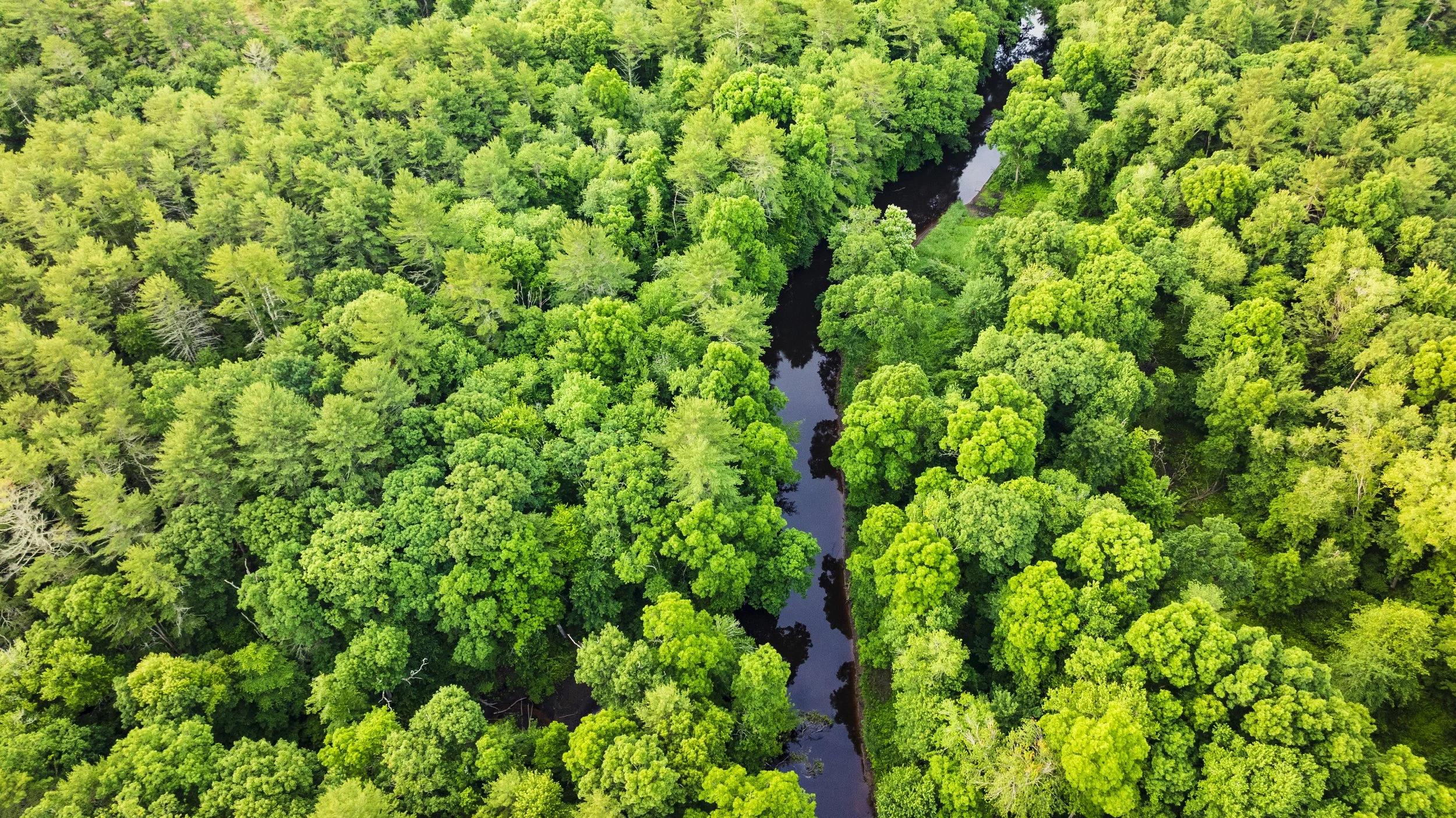
Taunton River at Wyman North Fork Conservation Area in Bridgewater.
1. Human History of Wildlands: The Taunton River Watershed
Key Volunteer Skip Stuck continued his popular series in 2025, spotlighting the human history hidden beneath the foliage of Wildlands’ most beloved preserves. In this most-viewed article of 2025, Skip broadens his focus to an entire region—the Taunton River watershed, where Wildlands has prioritized land protection for decades due to its unique ecological and cultural heritage.
2. Land Protection Update: Duxbury, Scituate, Cohasset
Scott MacFaden recounted Wildlands’ recent land protection victories, including a Conservation Restriction (CR) next to O’Neil Farm in Duxbury and two CRs in Scituate and Cohasset, Wildlands’ first-ever acquisitions in those towns.
Wildlands members receive exclusive updates from our land protection office through their complimentary subscription to our biannual print newsletter, Wildlands News. Become a member today at wildlandstrust.org/membership.
3. White Pine: A Common Tree’s Uncommon History
In his Wildlands E-News debut, local farmer, naturalist, and volunteer hike leader Justin Cifello shines a light on a somehow overlooked giant of our forests—the white pine. From their symbolism in Indigenous and colonial cultures to the surprising reason behind their occasional deformity, Justin traces a history that places the white pine at the center of our region’s social and ecological identity.
4. Welcoming New Staff
We said hello to four new staff members in 2025. Rebecca Cushing joined us in January as one of two new Land Stewards. Callahan Coughlin joined us in February as the second. Already, Rebecca and Callahan have earned new titles to reflect their increasing responsibility: Rebecca is now our Stewardship & Volunteer Coordinator, while Callahan is our Stewardship & Training Coordinator.
In May, we welcomed Rob Kluin as our new Donor Relations Manager. Rob succeeds Sue Chamberlain, who retired after 12 years at Wildlands. In August, Jason Risberg came aboard as our first-ever GIS Manager, giving a major boost to our mapping and analysis capabilities.
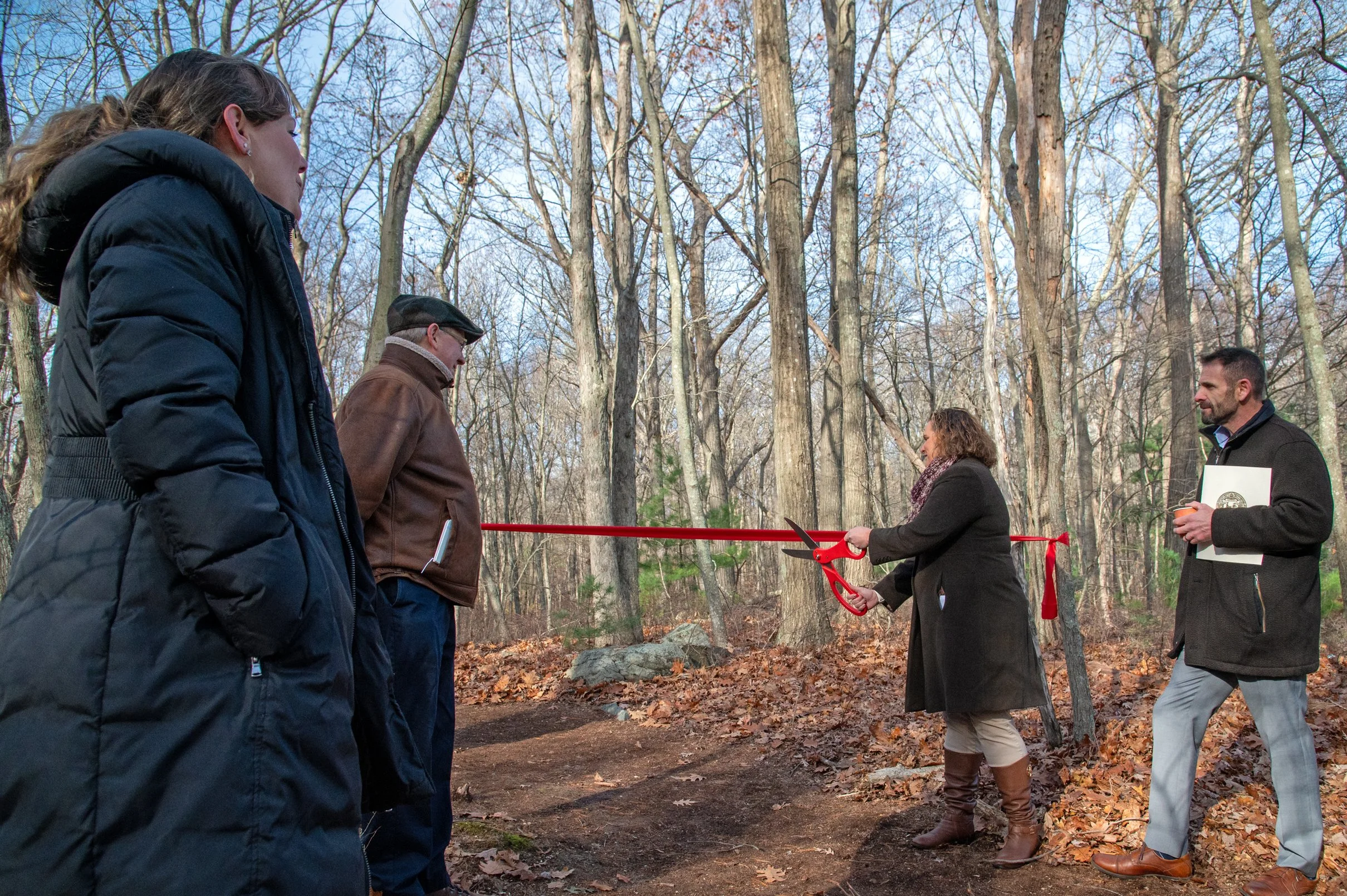
Town of Avon Select Board Member Shannon Coffey cuts the ceremonial ribbon to open Fieldstone Preserve.
5. Fieldstone Preserve Gives Avon & Brockton Residents New Place to Enjoy Nature
In November, Fieldstone Preserve opened to the public, providing Avon, Brockton, and surrounding communities with new access to nature in the region’s densest urban landscape. The 30-acre woodland features 0.7 miles of trails that connect to D.W. Field Park. The Town of Avon acquired the property in 2024 with funds from a state grant and a private foundation, secured by Wildlands Trust. The grand opening ceremony brought together public officials and nonprofit leaders working collaboratively to improve the area via the D.W. Field Park Initiative.

Bernie Cooper Riverfront Park Dedicated in Norwood

Ribbon-cutting ceremony for Bernie Cooper Riverfront Park in Norwood.
By Thomas Patti, Communications Coordinator
No one knows a town better than its residents who dedicate their lives to public service. That’s why Wildlands Trust begins every conservation project by listening to local leaders and helping them achieve their community’s unique open space goals.
In Norwood, a fledgling 6.8-acre park proves what’s possible when passionate townspeople take initiative over the future of their natural spaces, and conservation professionals provide the expertise needed to turn residents' vision into a reality.
On May 9, a ribbon-cutting ceremony celebrated the dedication of Bernie Cooper Riverfront Park. Nestled between Balch Elementary School and the Neponset River in the environmental justice neighborhood of South Norwood, Bernie Cooper Riverside Park will pack outsized social and environmental impact into its modest acreage. With wheelchair-accessible trails, an outdoor classroom, river overlooks, and green stormwater infrastructure, the park will give all Norwood residents a chance to connect with nature.

After the ceremony, project partners explored the park, despite torrential rain.
In 2018, the parcel was set to be converted to a parking area for a car dealership’s overflow inventory. With a shared vision for the land and its local people and wildlife, the community came together to chart a better way forward. Two years later, the Town of Norwood acquired the property using Community Preservation Act (CPA) funds. In accordance with CPA requirements, the Town granted a Conservation Restriction (CR) on the property to Wildlands Trust, permanently protecting it from development. The CR marks Wildlands’ first acquisition in Norwood.
A community design process ensued, led by the Town of Norwood, the Horsley Witten Group, Offshoots, Inc., and the Neponset River Watershed Association. Construction began in 2024. Awards from two state programs, the MassTrails Grant Program and the Land and Water Conservation Fund Grant Program, helped fund the design and construction.

The ribbon-cutting ceremony also honored the legacy of Bernie Cooper, who served the Town of Norwood for 49 years as assistant town manager and civil defense director. Cooper died in 2021.
“This park, like Bernie, represents growth, community, and the enduring power of nature,” said Patty Bailey, chair of the South Norwood Committee. "It's a living tribute to someone who dedicated their life to making our community a better place.”
“[My dad’s] tireless energy, the love for his town, and the deep sense of responsibility is reflected in the park,” added Amelia Noel, Cooper’s youngest daughter. “This space isn’t just a collection of trails and trees; it’s designed for everybody. ... It’s a place where neighbors will gather, where families will play, and where people will build the kind of community he believed so deeply in.”
Wildlands Trust is proud to play a small role in forever rooting Cooper’s legacy to the natural landscape of Norwood. We are grateful for the dedicated public servants in every town we serve, who make our work possible.


Land Protection Update: Duxbury, Scituate, Cohasset

Bates Lane Conservation Area in Scituate.
By Scott MacFaden, Director of Land Protection
Editor’s Note: This land protection update first appeared in the Spring 2025 issue of Wildlands News, our biannual print newsletter for Wildlands Trust members. Be the first to hear about Wildlands projects and events by becoming a member today at wildlandstrust.org/membership.
Another Duxbury CPA CR in Hand
In November 2024, we completed the DeLorenzo Community Preservation Act (CPA) Conservation Restriction (CR) in Duxbury.
The 27-acre DeLorenzo property was a priority for preservation primarily because of its direct proximity to the northern portion of the Historic O’Neil Farm, potential to support agricultural activities, wildlife habitat value in the form of two potential vernal pools, and location within a Zone II Wellhead Protection Area.
Duxbury residents approved the purchase of the property at the Annual Town Meeting in March 2018, and the Town closed on the land in October 2018. The Town used CPA funds to acquire the Property. The Town is granting the CR to Wildlands to comply with the CPA’s requirement that every CPA-funded open space acquisition be protected with a CR running to a qualified third-party entity.
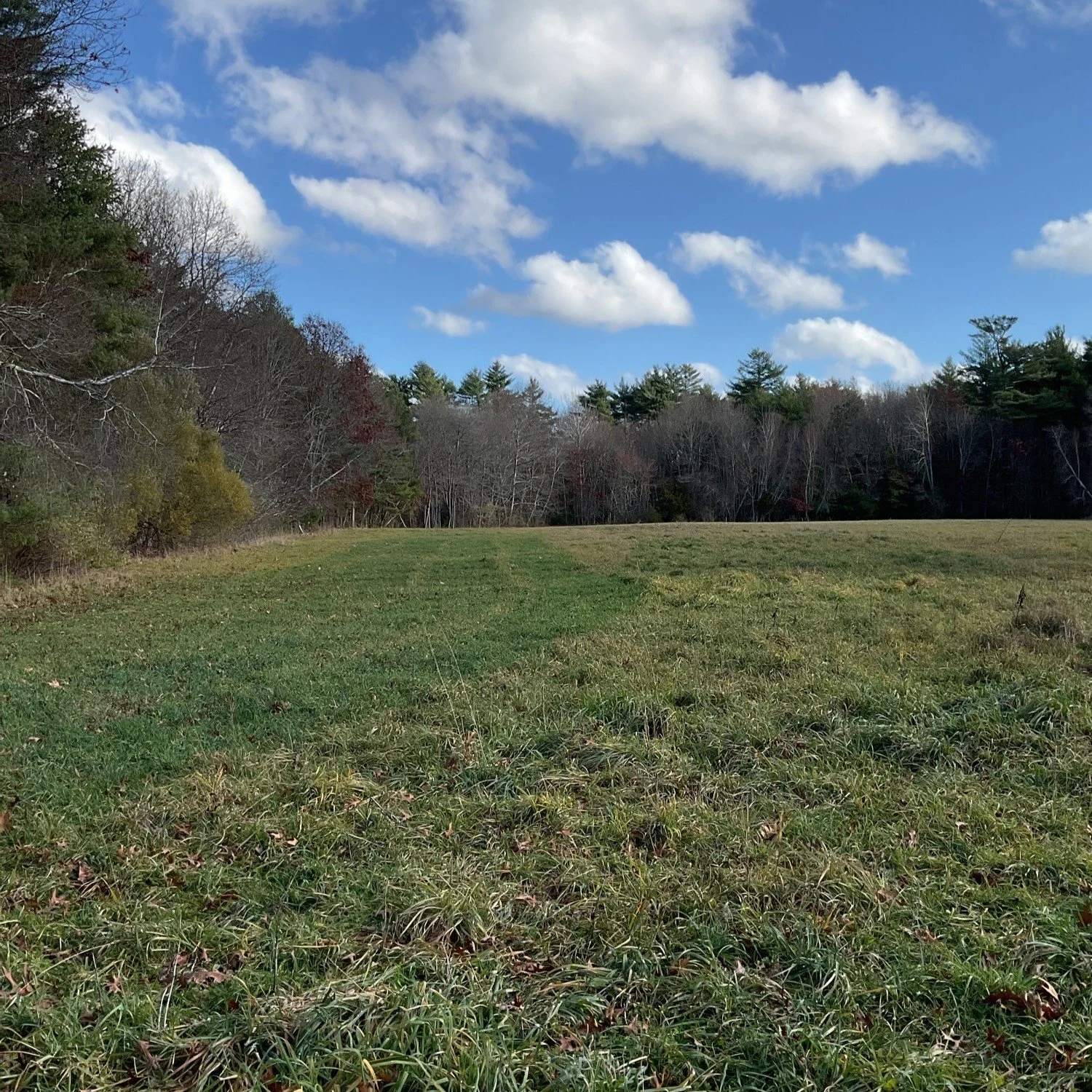
The DeLorenzo property in Duxbury, along its boundary with the O’Neil Farm.
The DeLorenzo parcel is irregularly shaped and includes two non-contiguous areas of road frontage on Route 53. Apart from a cleared area in its center and a rectangular strip of open field running parallel to its southern boundary line with the O’Neil Farm, the property is primarily wooded. It includes two distinct areas of mixed deciduous/coniferous wooded wetland, with the largest such area extending southwesterly into the O’Neil Farm. Topography is mostly level.
A local farmer licenses a portion of the DeLorenzo property from the Town to raise sheep, goats, and chickens, and maintain beehives. The farmer’s future plans include constructing hoop houses to grow produce and establishing a seasonal farmstand.
Wildlands Accepts Assignment of Two CRs in Scituate and Cohasset
On May 1, in the latest of a series of partnerships with local land trusts in our service area, we accepted an assignment of two CRs comprising 98.4 acres, mostly in Scituate and partially in Cohasset, from the Maxwell Conservation Trust. Formed in 1997, the Scituate-based all-volunteer land trust is legally dissolving and identified Wildlands as a qualified entity to accept the CR assignments.
Over the past two decades, we have collaborated with several all-volunteer land trusts that determined their most prudent option was to transfer their assets and then dissolve, including the Swansea Land Trust, the Milton Land Conservation Trust, and the Brockton Audubon Society.
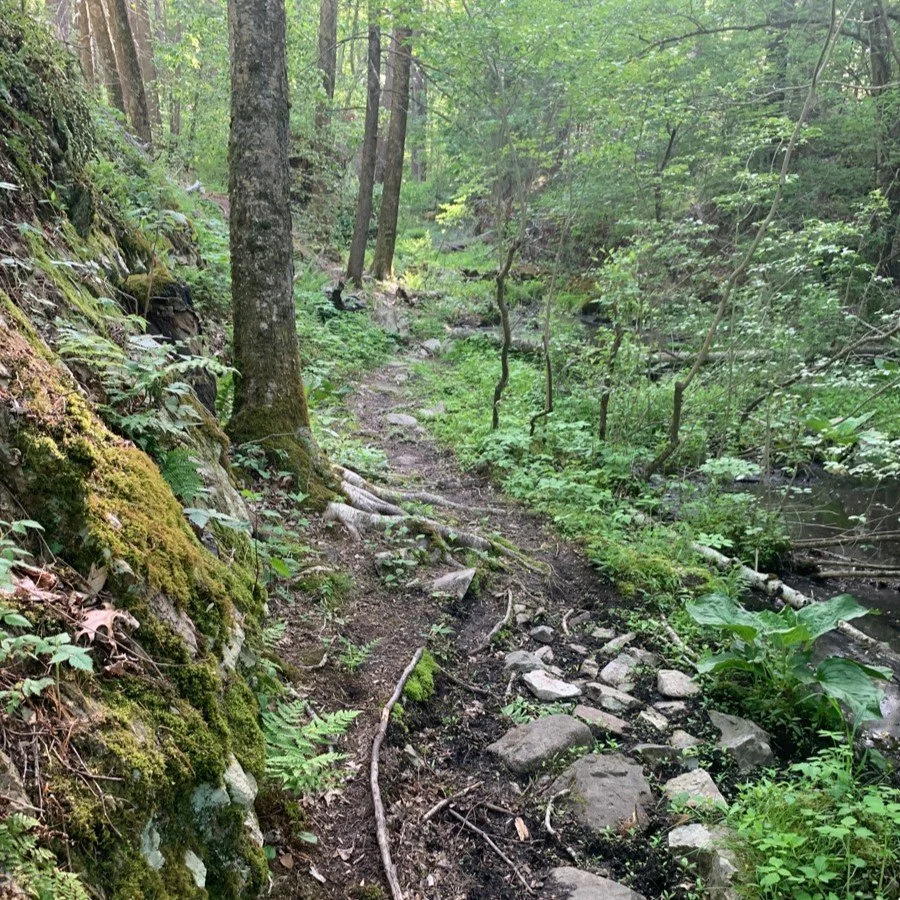
Bates Lane Conservation Area in Scituate.
Both CRs protect land owned by the Town of Scituate and located within a 330-acre expanse of Town conservation land known as the Bates Lane Conservation Area.
Completed in 2007, the Moncy CR protects 45.3 acres along the north side of Bates Lane and two smaller contiguous parcels situated approximately 1,000 feet to the north. All three parcels are primarily wooded upland but include pockets of wetlands. The Moncy CR is situated within areas the Commonwealth’s Natural Heritage and Endangered Species Program (NHESP) identifies as significant wildlife habitats.
Completed in 2011, the Wheelwright-Bjorklund CR protects 53 total acres—51.1 acres in Scituate and 2 acres just over the municipal boundary in Cohasset. The land protected by this CR is primarily wooded and mostly upland, with variable topography. The Wheelwright-Bjorklund CR is also situated within multiple areas NHESP identifies as significant wildlife habitats.
The CRs represent our first acquisitions of any kind in Scituate and Cohasset.
We thank the Maxwell Conservation Trust for its years of dedication to preserving land, and for entrusting these CRs to our stewardship.
Spring 2023 Land Acquisitions Update
By Scott MacFaden, Director of Land Protection

The Lake Street CR includes frontage on Jones River Brook, a tributary of the Jones River (pictured). Photo by Jimmy Powell of Jones River Landing.
Thus far in 2023, we’ve completed several projects that protect a diverse array of habitats and conservation values, and in one case further strengthen a long-standing collaboration with one of our municipal partners.
Lake Street CR, Plympton
In January, we completed a 31-acre Conservation Restriction in northeast Plympton near the Kingston line. The CR area is part of a larger privately owned property that will include a solar energy installation. Because the proposed project site is within mapped habitat for the Eastern Box Turtle, a species of “Special Concern” as identified by the Commonwealth’s Natural Heritage and Endangered Species Program (NHESP), the project proponents were required to grant the CR.
The CR protects land identified by NHESP as containing significant wildlife habitat, including “Priority Habitat of Rare Species” and “Estimated Habitats of Rare Wildlife.” The CR land includes frontage on Jones River Brook, a tributary of the Jones River.
As solar projects continue to proliferate across Southeastern Massachusetts, those that are proposed within areas subject to NHESP’s regulatory purview typically require the granting of a CR. We are actively evaluating several other solar project-associated CR’s across the region, and expect we will be offered more projects of this type in the future.
McCarthy Farm Conservation Area CR, Rockland
In March, we secured a Conservation Restriction (CR) on 36 acres in southwest Rockland. The Town of Rockland acquired the parcel in late 2021 using Community Preservation Act and other state funds. To learn more about the history and natural profile of the property, click here.
Sleeper Conservation Area CR, Hanson

The Bay Circuit Trail, a 200-mile hiking path that lies near the Sleeper Conservation Area in Hanson. By John Phelan, CC BY 3.0
In April, we completed a 12-acre Community Preservation Act (CPA) CR on the Town of Hanson’s Sleeper Conservation Area. Acquired by the Town in 2022 with a combination of CPA funds and a Local Acquisitions for Natural Diversity (LAND) grant from the Commonwealth of Massachusetts, the Sleeper Conservation Area primarily comprises forested upland, punctuated by several isolated pockets of wooded deciduous wetland.
The Sleeper Conservation Area’s position within the broader landscape bolsters its conservation impact. It directly abuts the Town of Hanson’s Camp Kiwanee, a long-cherished community asset on Maquan Pond, as well as the Town’s Alton J. Smith Preserve and the neighboring Town of Pembroke’s Town Forest. The preservation of the Sleeper Conservation Area thus strengthens the landscape connectivity between these two municipally owned open space assemblages.
A section of the Bay Circuit Trail, the premier long-distance hiking trail in Eastern Massachusetts, runs just to the west of the conservation area. Preserving this parcel helps protect the scenic integrity of the trail’s corridor and maintain the recreational value of this regionally and historically significant footpath, a chronological contemporary of the Appalachian Trail.
In addition to its favorable landscape context, significance for wildlife corridor connectivity, and proximity to the Bay Circuit Trail, the Sleeper Conservation Area also contributes to water resources protection. The parcel lies within multiple areas identified by the Massachusetts Department of Environmental Protection as significant for drinking water and aquifer protection, and sits near Great Sandy Bottom Pond, which provides drinking water for the neighboring towns of Rockland and Abington.
The LAND grant award was critical to obtaining the support of Hanson Town Meeting voters for the project. The award provided almost two-thirds of the project’s funding, with CPA funds providing the balance. As part of our ongoing partnership with the Town of Hanson, Wildlands staff helped prepare the LAND grant application and provided additional assistance as needed. Many thanks to Hanson Conservation Commission Chair Phil Clemons, whose indefatigable efforts ensured the project’s success. Phil has served as our primary contact person in Hanson for decades, and is a true champion of all things conservation.
Upcoming Projects
We’re working to close more acquisitions over the next several months, including projects in Middleboro, Bridgewater, and Rehoboth. Stay tuned!
Get Involved
Hoping to protect your property’s natural and cultural heritage for generations to come? Learn about Conservation Restrictions, Deed Restrictions, land donations, and more on our Conserve Your Land page.
McCarthy Farm Conservation Area in Rockland Dedicated
On October 21, the Town of Rockland dedicated its newest open space preserve—McCarthy Farm Conservation Area.
By Scott MacFaden, Director of Land Protection
On October 21, the Town of Rockland dedicated its newest open space preserve—McCarthy Farm Conservation Area. Comprising 36 acres in extent, the Farm is situated on the west side of Beech Street in southwest Rockland, bordering the Town of Hanson and closely proximate to the southeast corner of the Town of Whitman.

Rockland Open Space Committee Chair Don Cann Makes Short Work of the Ribbon
Until recently, McCarthy Farm was one of two remaining active farms in Rockland and one of the largest remaining unprotected, privately-owned properties in the town—thus a high priority for preservation.
Louise McCarthy and her family acquired the property in 1952 and maintained a small-scale working farm for many decades. Among other agricultural endeavors, the McCarthys raised chickens and cultivated various types of flowers.
With Louise’s departure from the premises several years ago due to ill health, the property was effectively abandoned, and its era as an active farm relegated to history. In March 2021, Louise’s heirs entered into a purchase and sale agreement with a developer who sought to convert a portion of the farm into 36 units of residential housing. Fortunately, the farm was enrolled in Chapter 61A, and the Town therefore retained a right of first refusal on the property. The Chapter 61 Programs allow owners of qualifying open space lands, including farm and forestland, to receive significant reductions in their property tax assessment in return for keeping their land undeveloped. Chapter 61 is for forestland, Chapter 61A is for agricultural land, and Chapter 61B encompasses open space lands not falling into either of the other two chapters. Municipalities retain a right of first refusal to purchase land enrolled in any of the Chapter 61 programs if the landowner seeks to sell their land for development or develop it themselves.
Rockland open space preservation advocates successfully mobilized an effort to encourage the Town to exercise its first refusal rights, and after considerable deliberation the Town’s Board of Selectmen did vote to exercise that right.
Rockland voters approved the purchase of the farm at a Special Fall Town Meeting on September 13, 2021, and the Town closed on the land on December 29, 2021. The Town used a combination of Community Preservation Act (CPA) funds and “LAND” Grant funds from the Commonwealth of Massachusetts to acquire the property. As part of ensuring compliance with CPA requirements, the Town is granting a Conservation Restriction (CR) on the property to Wildlands Trust. This CR will represent Wildlands’ first acquisition of any kind in the Town of Rockland, and we are pleased to welcome the town as a partner in our regional land preservation efforts.
Despite its history as a working farm, the majority of the property is wooded. The area that was farmed is along the property’s southerly boundary and adjacent to the former McCarthy farmhouse. A small pond that was likely expanded and deepened during the McCarthys’ tenure is in the approximate center of the property. The summit of the 122-foot-high Rye Hill is located in the property’s southwest corner. It also includes at least two potential vernal pools.
Topography ranges from level to gently rolling. Pockets of wetland habitat are interspersed throughout, with the largest area of wooded swamp in the property’s southeast corner. Two intermittent streams flow through the property that are tributaries of French’s Stream, a North River tributary.
The property now includes a trailhead parking area and an approximately one-mile hiking trail loop that provides visitors with ample opportunities to enjoy a leisurely woodland stroll.
McCarthy Farm Conservation Area sits within a corridor that includes numerous undeveloped parcels, some of which are preserved. Directly abutting to the west is a 10-acre parcel owned by the Town of Rockland, and directly abutting to the north and northwest, respectively, is a 30-acre undeveloped parcel owned by the adjacent Town of Whitman that was formerly part of a Girl Scouts Camp, and a 12-acre privately owned undeveloped parcel. In the larger landscape context, there is the potential for future connections to the Town of Rockland’s Beech Street Conservation Area, situated approximately 0.6 mile to the northwest.
Congratulations to all the town officials and volunteers whose collective efforts ensured McCarthy Farm’s permanent preservation. Town Administrator Douglas Lapp, and particularly the members of the Rockland Open Space Committee, deserve special mention for their unceasing commitment to the preservation effort. We at Wildlands have an acute understanding of how difficult it can be to protect land enrolled in Chapter 61A within the crucible of a proposed conversion to development, a process that in many ways places all concerned under significant logistical, financial, and temporal duress. Future generations of Rockland residents will owe a debt of gratitude for the perseverance of those who accepted the challenge of preserving McCarthy Farm.