
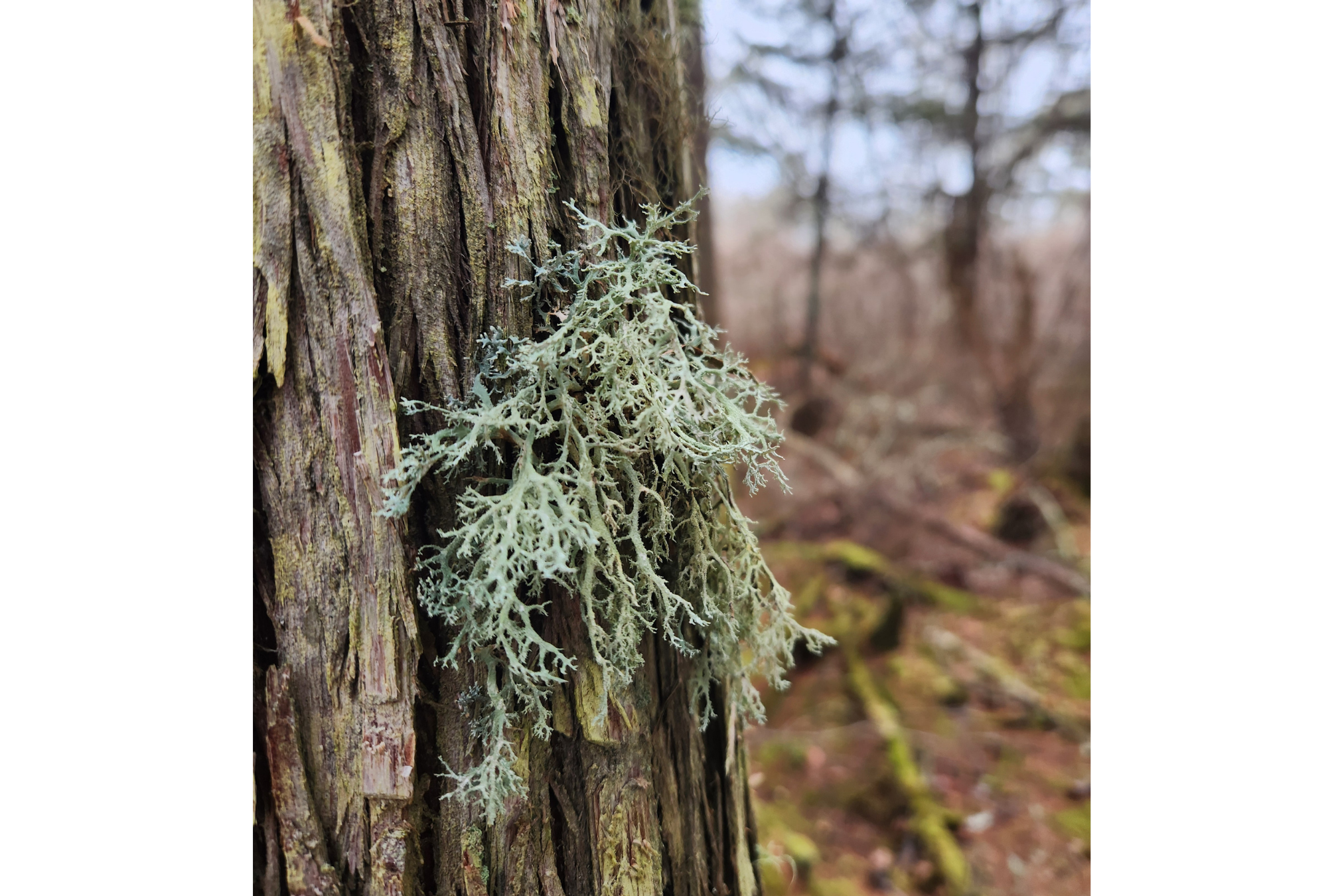
This lichen is growing on an Atlantic white cedar. Photo by Justin Cifello.
By Justin Cifello
The treetops usually loom high out of our reach and sight. However, this winter’s heavy snowfall pulled portions of the forest canopy to the ground, affording us the rare opportunity to see it up close. The much-awaited thaw has revealed a second snowfall—a spongy carpet of fallen lichen that now blankets the forest floor. As we await the unfurling of leaves over the next month, we can ponder the rich miniature worlds of these enigmatic organisms.
Small as they are, lichens are ecosystems; each one contains a variety of organisms. Unlike other taxonomic groups, like mammals or flowering plants, lichens do not have a single common ancestor. Lichen can instead be thought of as a strategy, one that has evolved independently multiple times. Though often confused with moss, lichens are not actually plants. They are composite organisms comprising fungi and other microbes, living intertwined in symbiosis. The common denominator is fungus, which provides the structure that hosts the other residents. Since lichen-forming fungi cannot exist on their own, lichen species names describe the fungal host.
Lichen fungi cannot forage for food the way other fungi do. They have no roots or mycorrhizae to extract nutrients from the surfaces they live upon. Instead, they trap photosynthetic algae and/or cyanobacteria and incorporate them permanently into their body, called a thallus. The fungus then lives off the sugars produced by its microbial partners and acquires the rest of its nutrition from the rain and atmosphere. Though they are trapped within the lichen, the algae benefit, too. In the wild, most algae are short-lived, vulnerable to predation and weather fluctuations. The fungus offers stability and security. By changing its pigmentation, lichen protects its algal partners from lethal UV radiation. [1]
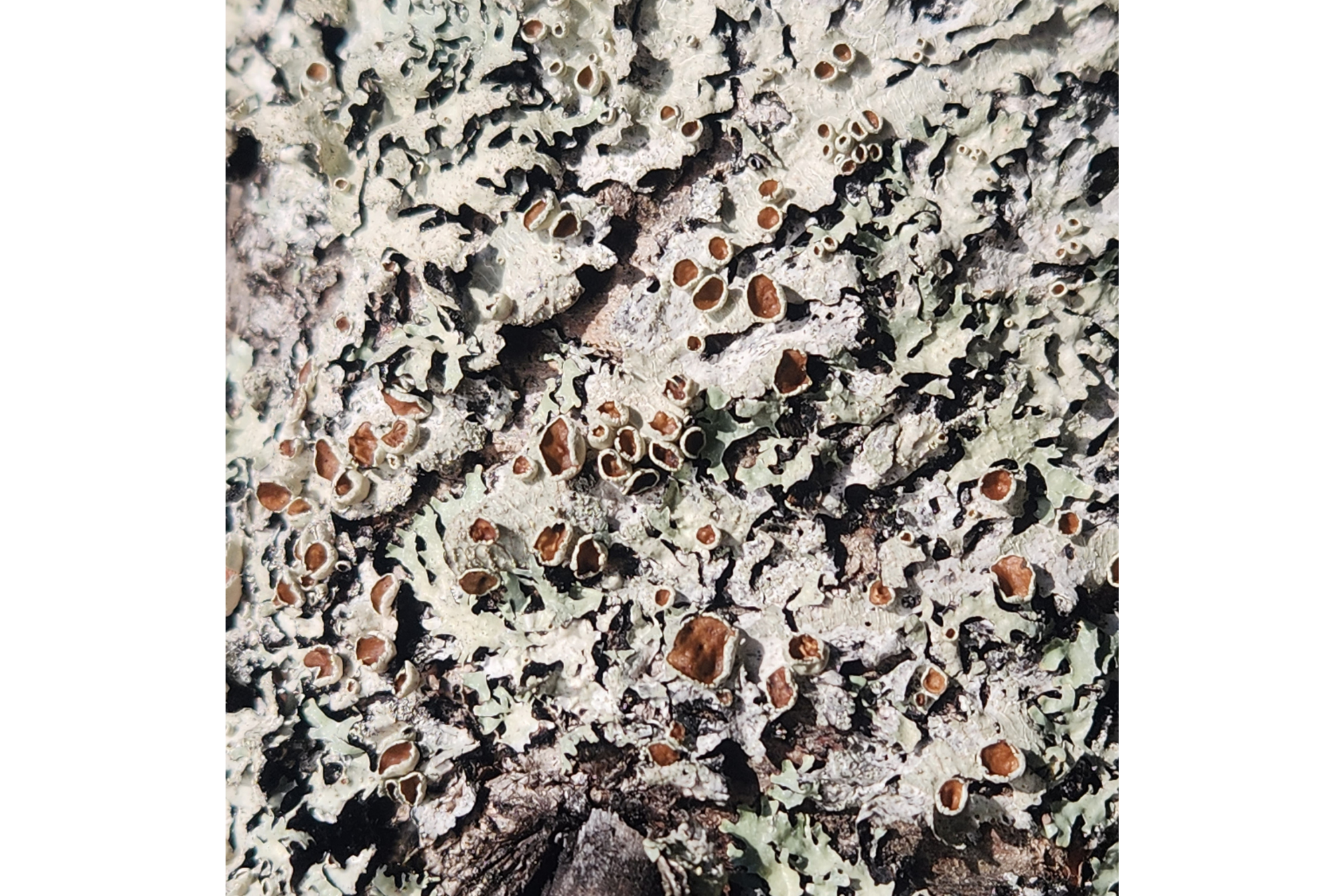
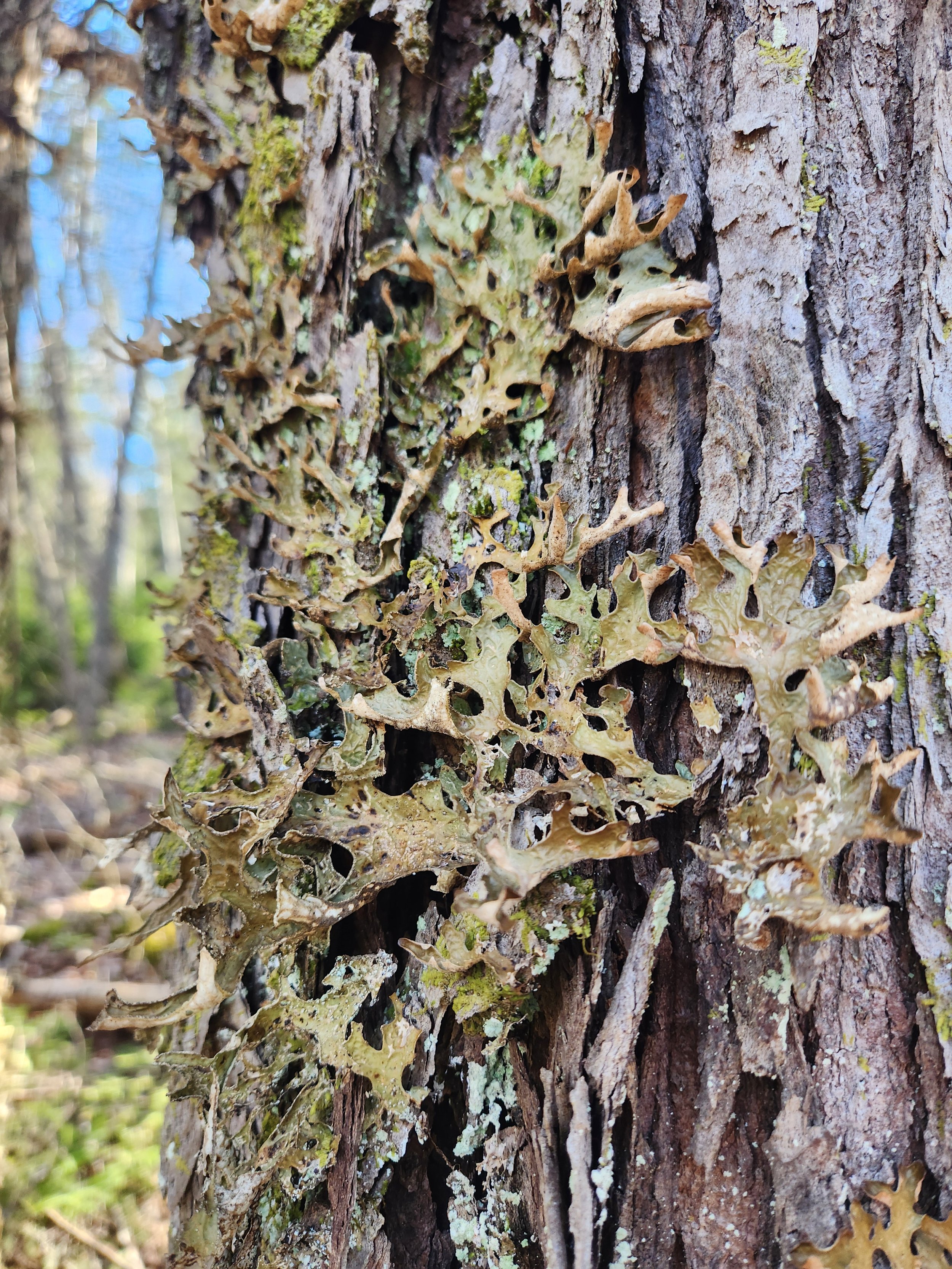
A ruffle lichen, Parmotrema, with spore-producing cups. Photo by Justin Cifello.
Scientists have only recently been able to appreciate these complexities and lichen’s role in the environment. Though small, lichen are numerous. By greatly increasing the surface area of whatever substrate they grow on, they create micro-habitats that support the tiny creatures that feed the larger ecosystem. As nitrogen fixers, lichen supply the forest with this vital element. Reliant as they are on the atmosphere, they are uniquely vulnerable to pollution. Lichens are indicators of good air quality and have even helped locate emission sources. [2]
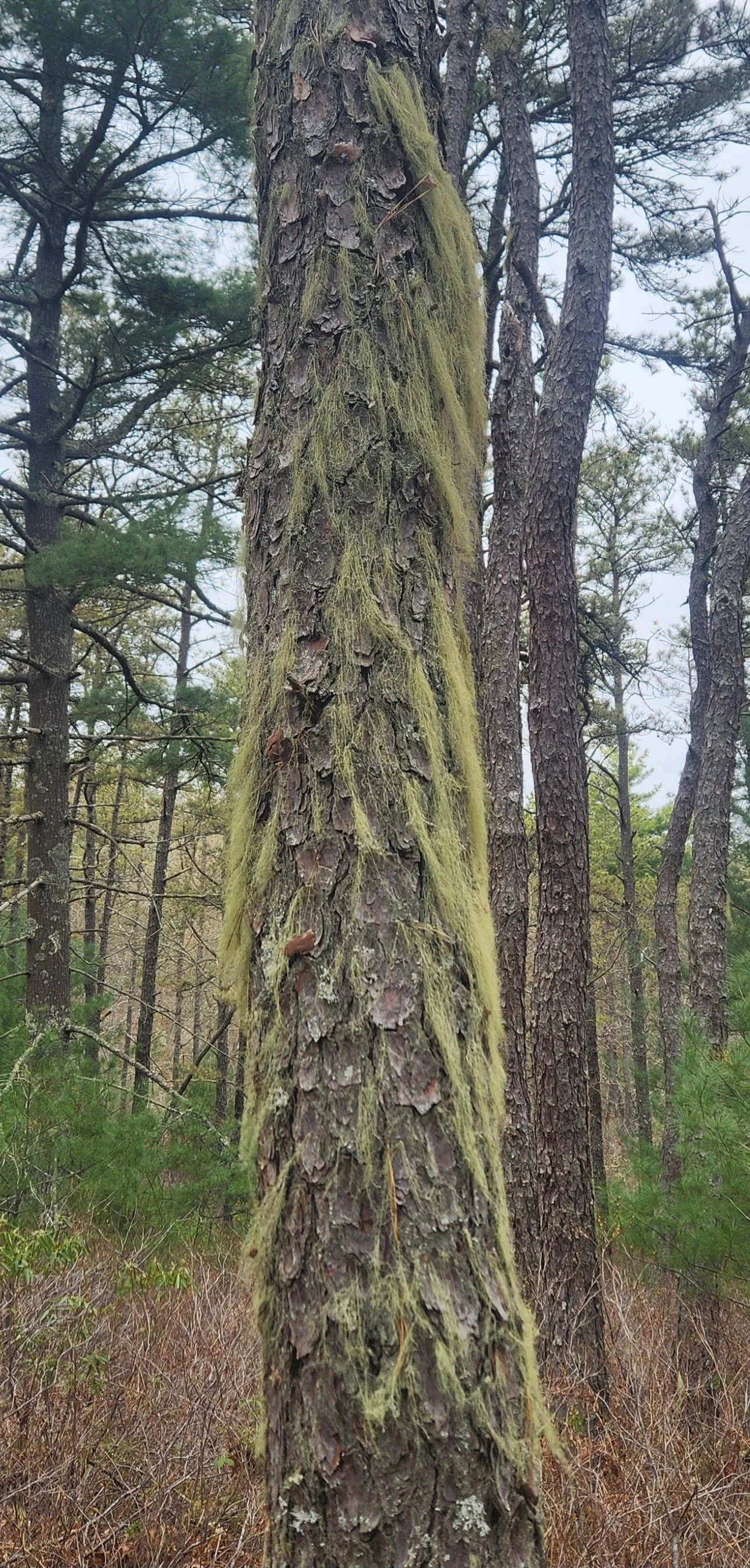
A combination of aging forests and successful anti-smog legislation have helped lichens reclaim their space in the canopy. In humid areas, some trees can be festooned with them. This resurgence has led some to fear that lichens are a new forest pest, since they were not always so abundant. They are often seen on dead and dying trees, but the relation isn’t causal; the lichens are responding to increased light as their host dies from other causes. The lichens themselves are harmless. [3]
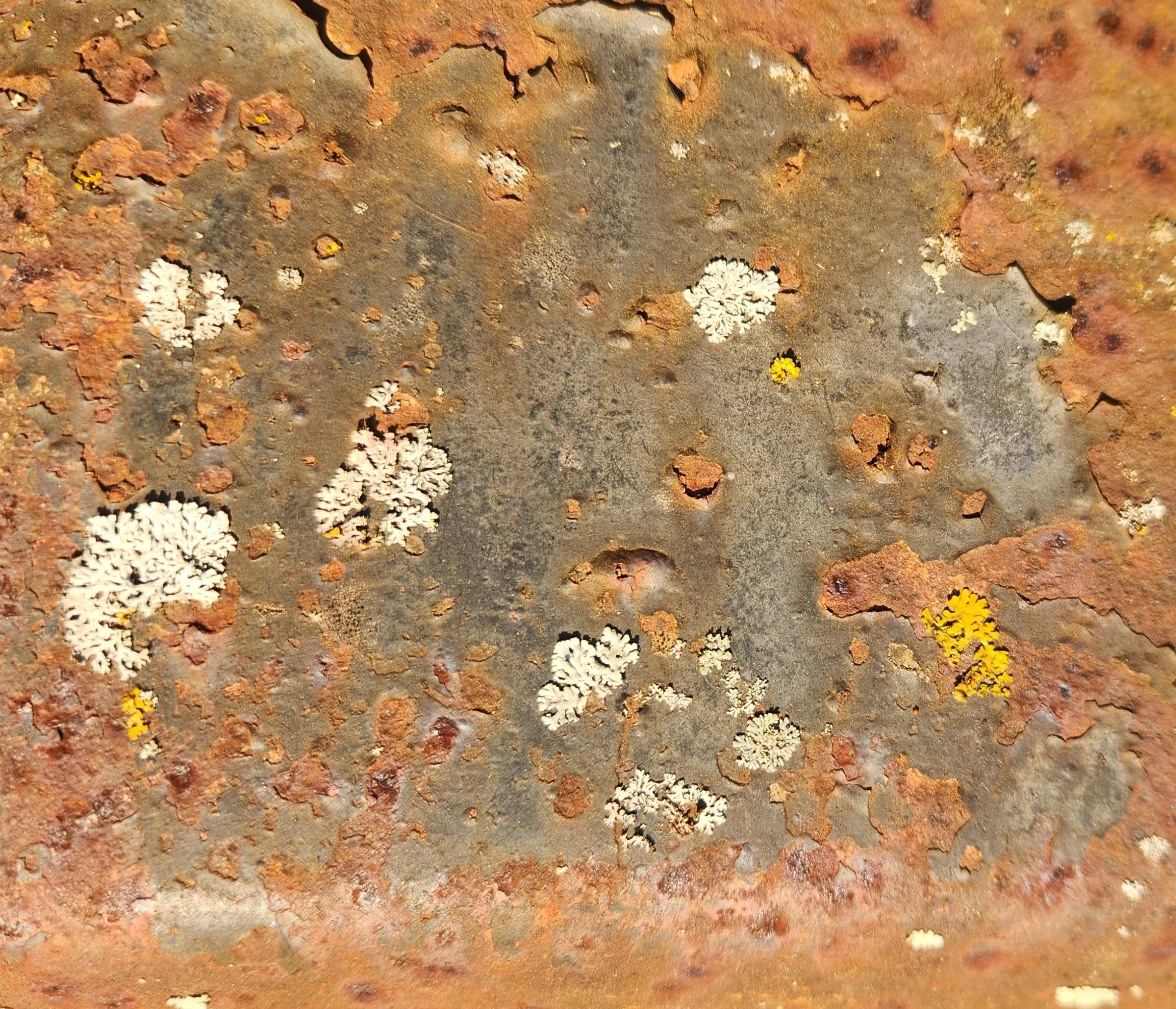
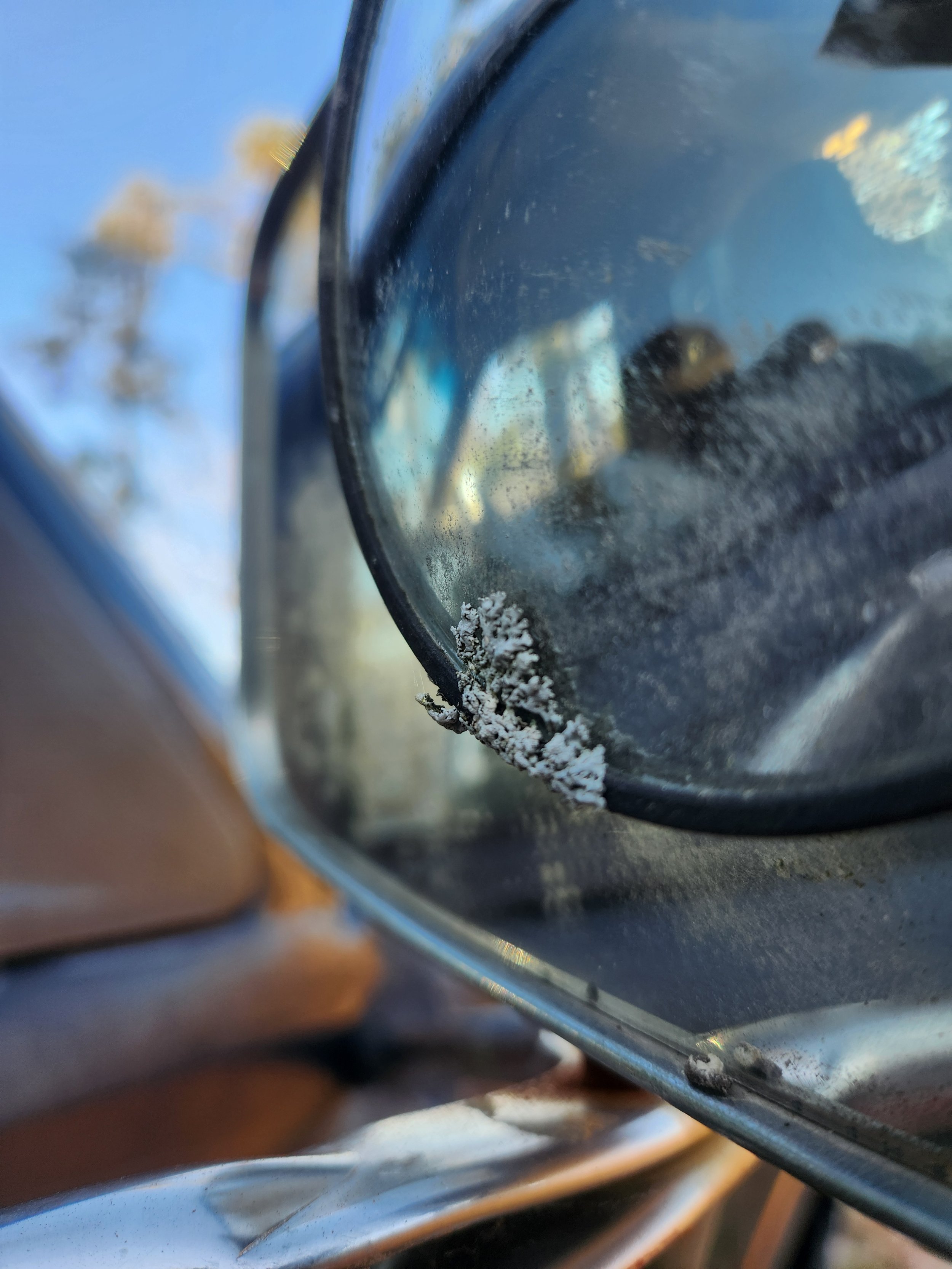
A variety of lichens colonizing the rusty surface of an old dump truck. Photo by Justin Cifello.
Recent analysis suggests that lichens began to appear at least 400 million years ago, after the earliest terrestrial plants. Lichens and mosses are credited with forming the first soils on earth by eroding rock while trapping minerals and water. Lichens continue to thrive in harsh places today, from the intertidal zone and the arctic to desert sands and car doors. Lichen even survived a year and a half outside of the International Space Station. [4][5]
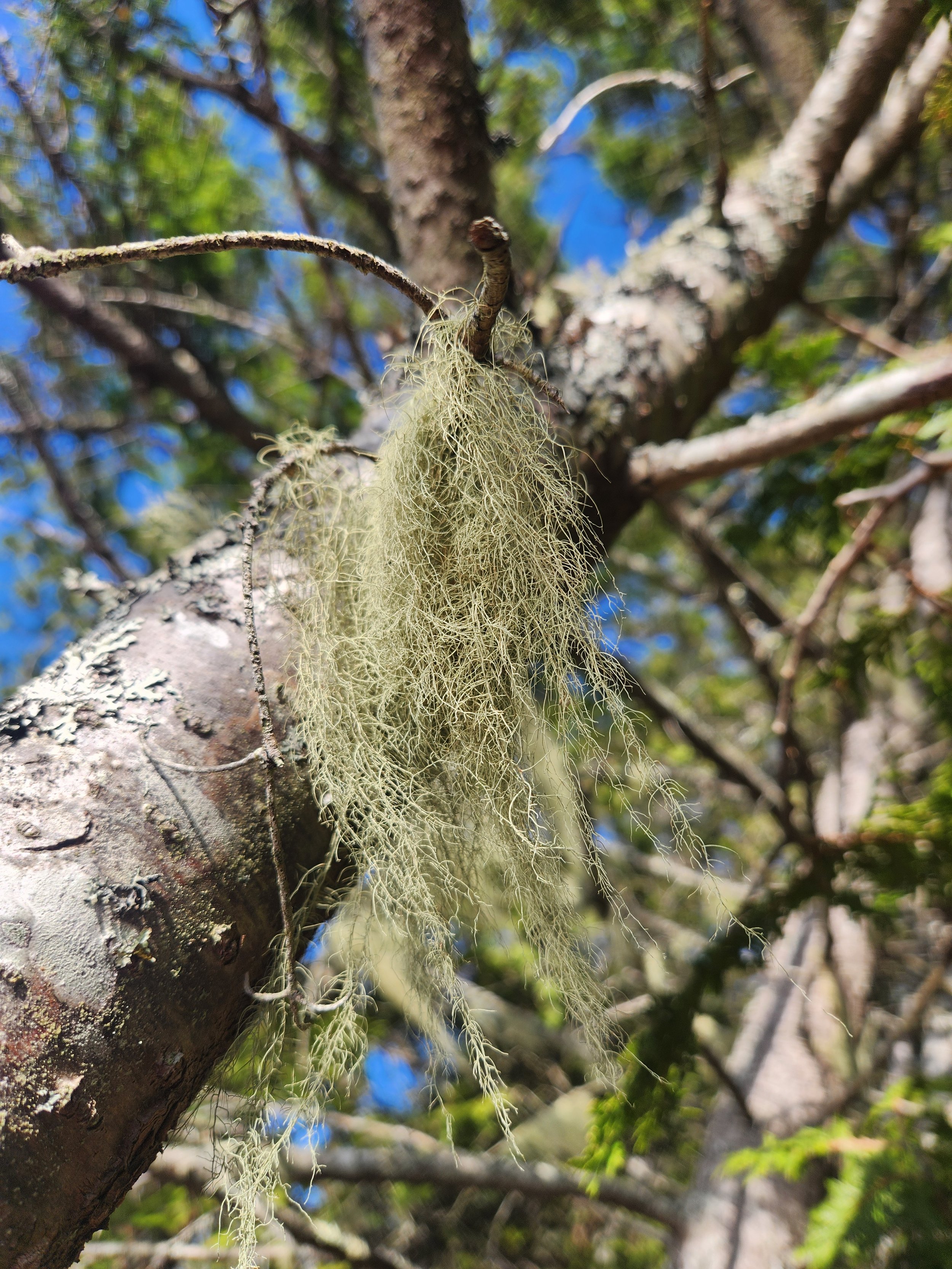
Found in every environment, in every season, lichens are a constant companion on our outings. Hundreds of species live in New England, in a dazzling array of forms and colors, from thin films and dust to dangling chains, several feet long. We can see their complicated relationships by observing how some only grow on certain species or materials. With a magnifying class, you can better appreciate their fractal intricacy. They remind us that nothing in nature is simple; we are surrounded by resilient beauty and complexity, if only we look closely. [6]
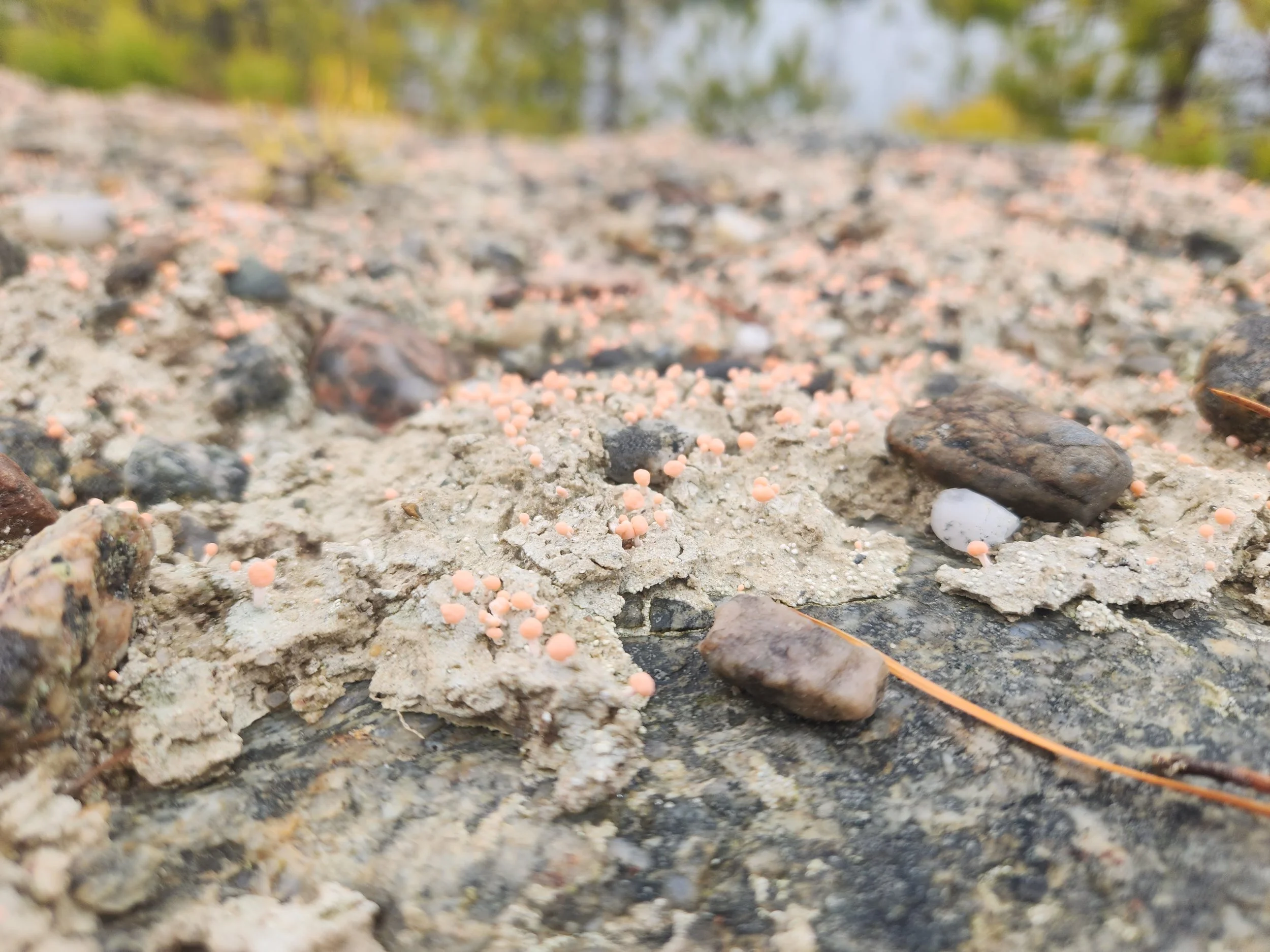
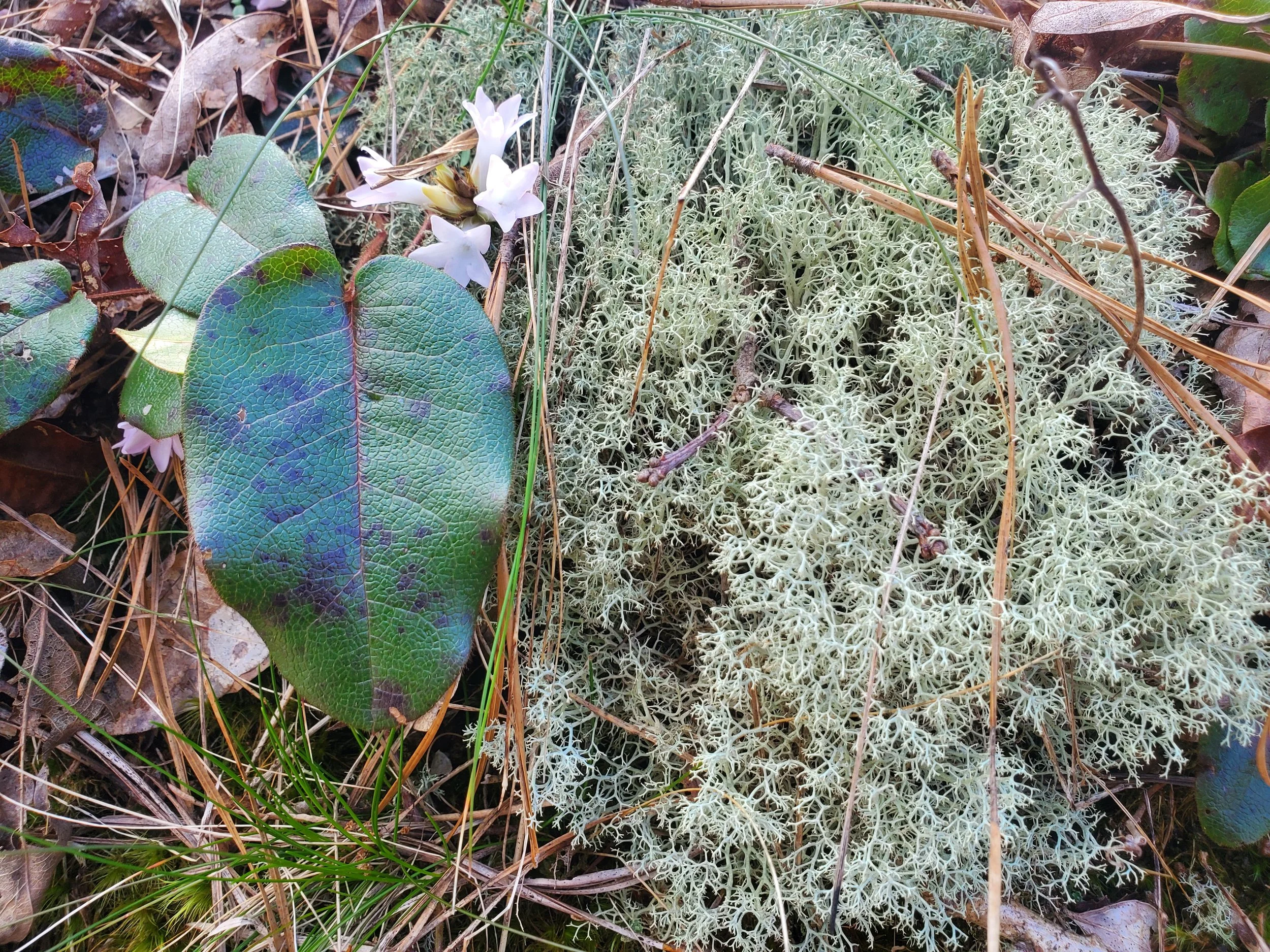
Click on the photos below to learn more about these diverse lichens. All photos by Justin Cifello.
[1] Symbiosis: https://www.purdue.edu/newsroom/archive/releases/2016/Q3/yeast-emerges-as-hidden-third-partner-in-lichen-symbiosis.html
[2] Emissions Monitoring: https://gis.nacse.org/lichenair/index.php
[3] Tree Health: https://extension.unh.edu/blog/2019/04/should-i-be-worried-about-lichens-growing-bark-my-apple-trees
[4] Lichen Origins: https://www.science.org/doi/10.1126/sciadv.adw7879
[5] Lichens in Space: https://futurism.com/fungi-lichens-just-survived-18-months-outside-iss-means-might-able-survive-mars
[6] Lichens of New England: https://massnature.com/lichens