


What’s New at Wildlands

Solstice Celebration: Let’s Show Up for the Region’s Lands and Waters
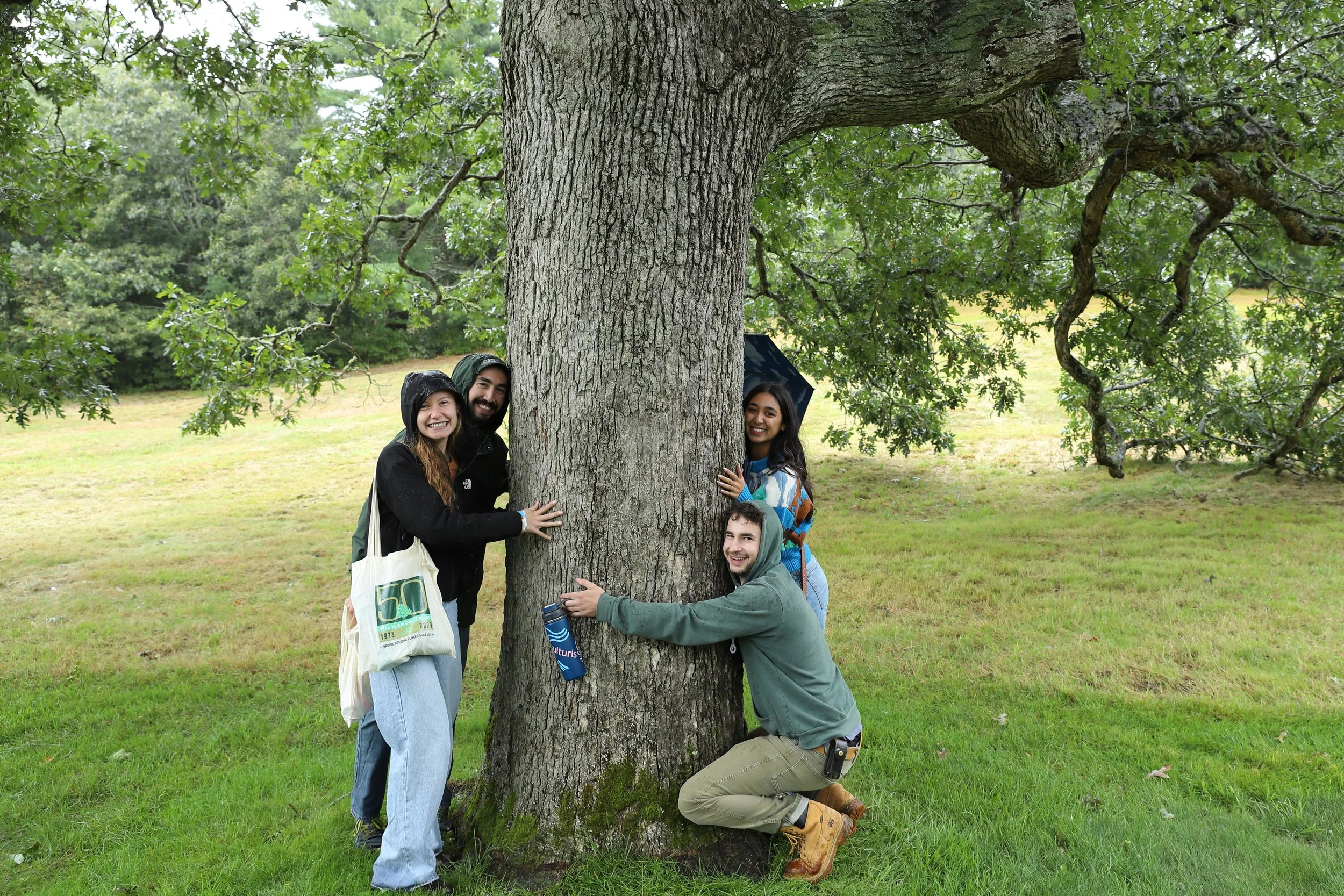
Attendees of Wildlands Trust’s 50th Anniversary Celebration in 2023 embrace the ancient white oak tree at Davis-Douglas Farm in South Plymouth. (Photo by Paul Carey)
By Thomas Patti, Communications Coordinator
(This piece first appeared in the Plymouth Independent.)
For a bird lover like me, the view from my office window is a blessing and a curse. A blessing because the full diversity of avian life on the South Shore—warblers and waxwings, hummingbirds and hawks, bluebirds and bald eagles—visits with enough regularity to call them coworkers. A curse because these coworkers are highly distracting, with flagrant disregard for the rhythms of a nine-to-five workday.
Luckily, I work for Wildlands Trust, a nonprofit organization with sympathy for those who wander. Founded in 1973, Wildlands Trust is one of the state’s oldest and largest land trusts, protecting and stewarding the natural places that make Southeastern Massachusetts a remarkable place to live, work, and play. Our headquarters at Davis-Douglas Farm is a hidden gem tucked within a vast expanse of globally rare forest and pond habitats in South Plymouth. Outside my window, a pollinator garden, wildflower meadow, and secluded woodland converge to form a hotspot of natural beauty, punctuated by the iconic water tower on Long Pond Road.
If you visit Davis-Douglas Farm this spring, the first birds you’ll likely see (but certainly not the last) are tree swallows. The iridescent blue backs of these sparrow-sized songbirds will catch the sunlight and your eye as they bank, swoop, glide, twist, and turn in flocks of dozens over the wildflower meadow, snapping up insects on the wing. Catching enough bugs to fuel their acrobatic frenzy is a full-time job. In fact, they rarely seem to land.
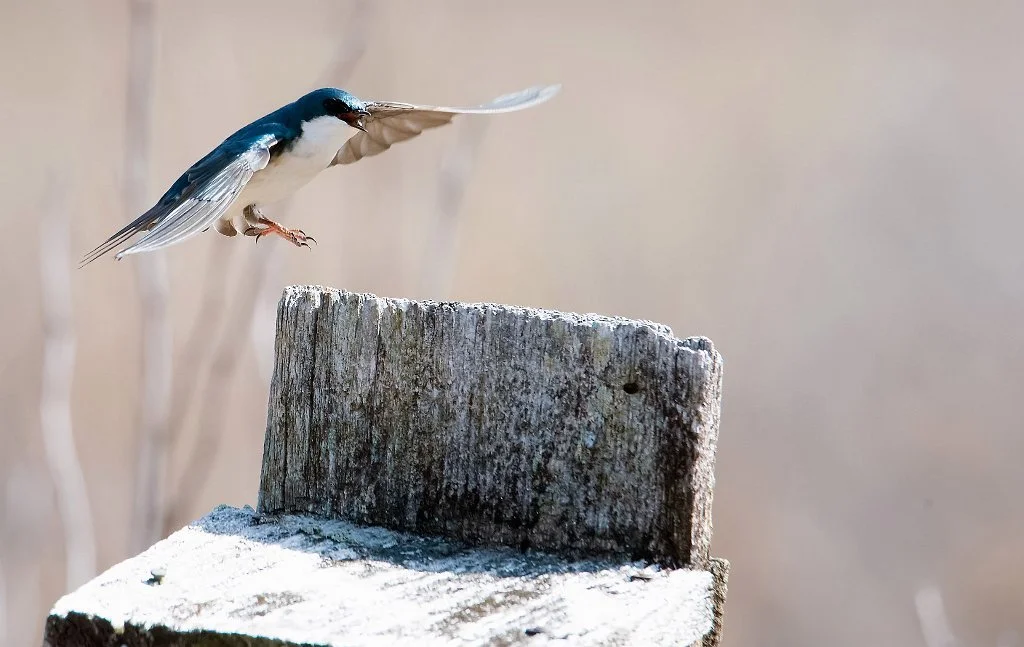
A tree swallow landing on a nest box. (Photo by Rob MacDonald)
Sometimes, the social and environmental challenges of our time can feel like those tree swallows, swirling in our minds and clamoring incessantly for our attention. In the news and on social media, rage, despair, and misinformation startle our anxieties up to the sky and offer them no place to land—no way to stand up for our beliefs, defend our values, or effect positive change.
On the issue of the environment, Wildlands Trust is a place to land. We know that most people don’t have the time to take the preservation of our region’s natural health and beauty into their own hands. But we also know that most people share our vision for the future of Southeastern Massachusetts. A resounding majority of Americans, regardless of political affiliation, support the expansion of natural climate solutions, such as protecting forests and restoring coastal wetlands. In Massachusetts, a national leader in environmental protection, over two-thirds of residents think we need to do even more to conserve land, water, and wildlife habitat.
With such broad public support for conservation, the accelerating loss of natural land across the state and country can make grassroots efforts feel hopeless. It's true that we face an uphill battle. Far too often, the fate of our beloved lands and waters is decided behind closed doors, at tables where money determines the size of your seat and the volume of your microphone.
Wildlands Trust is your chair at those tables. It may be a lawn chair. But with 52 years of experience serving 59 cities and towns, Wildlands Trust knows how to leverage every dollar and every show of support into a case for nature that money can’t buy off. The more members we represent, the better our case. Together, our voices are too loud and our vision is too strong to ignore.
On Saturday, June 21, the Wildlands Trust Solstice Celebration at Davis-Douglas Farm will have something for everyone—music, food, hikes, crafts, raffles, and more. It will also serve as an undeniable testament to the size and strength of the regional conservation community. Let's come together to make a resounding statement that nature is non-negotiable in the future of our region. Whether you're a longtime member or just now learning about Wildlands Trust, here is your chance to show up for the lands and waters of Southeastern Massachusetts—and celebrate the start of summer with family, friends, and neighbors.
When the tree swallows of Davis-Douglas Farm finally run out of steam, they find refuge in a row of bird boxes on the meadow’s edge. Here, they escape the heat, rest their wings, and tend to the next generation. Later this month, people across the region will descend on Davis-Douglas Farm to do the same. Wildlands Trust can’t help with all the worries flying around your head. But your passion for the natural world is safe with us.

A VolunTuesday to Remember at Clark’s Island

By Marilynn Atterbury, Wildlands Trust board member & Key Volunteer
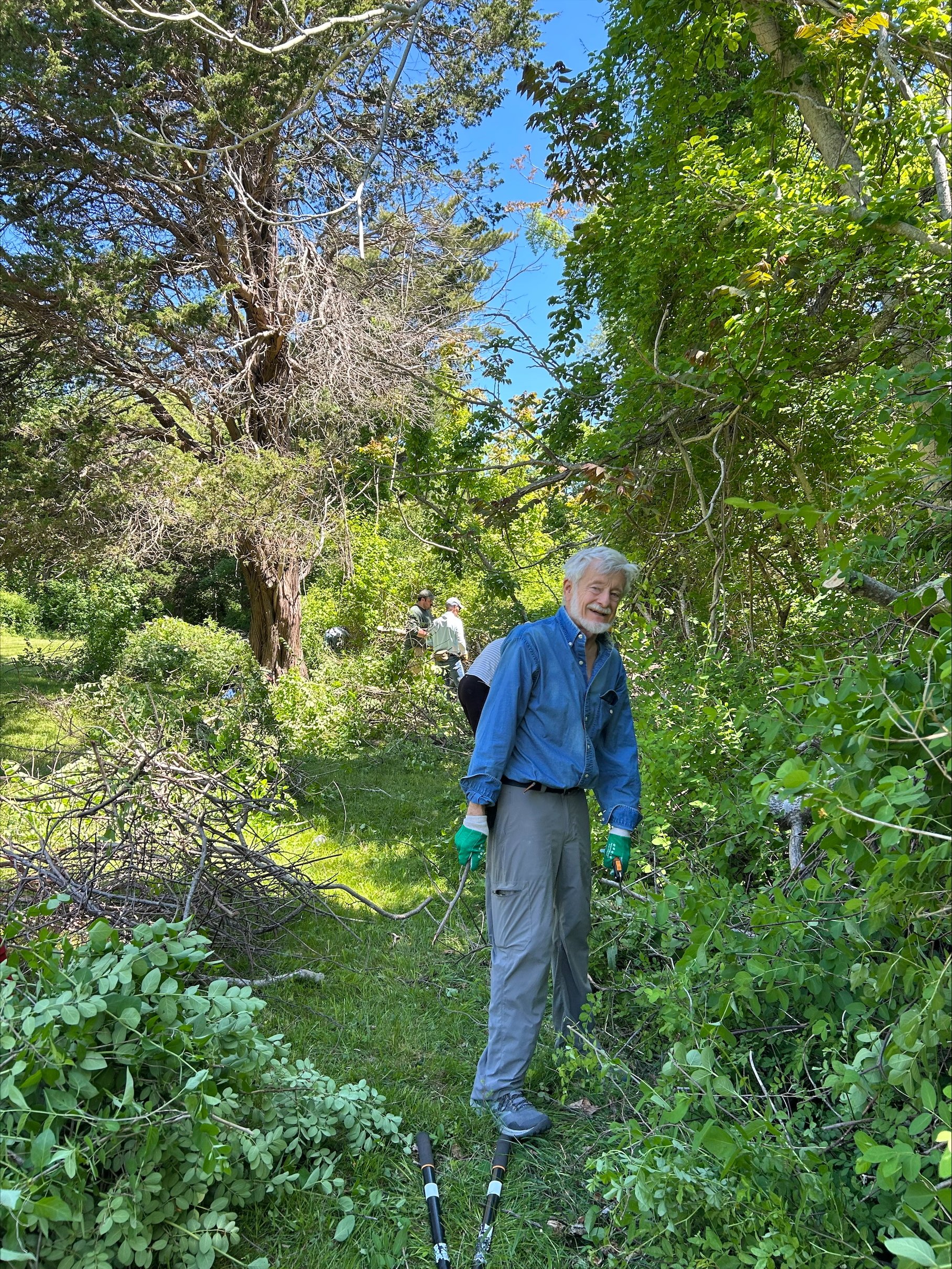
As a Wildlands Trust volunteer for over 11 years, I have seen many Wildlands preserves, many times over. So, you can imagine my excitement when I found out that on a special VolunTuesday in May, we would be venturing to a brand-new location, one that our fleet of pickup trucks couldn’t reach. On May 27, about 20 Wildlands staff and volunteers voyaged across Duxbury Bay to help the Duxbury Rural & Historical Society (DRHS) maintain its beautiful property on Clark’s Island.
Picture this: a beautiful Grady-White Boat with 300-horsepower twin engines flying across Duxbury Bay on a perfect May morning. The VolunTuesday crew was beyond excited for our adventure.

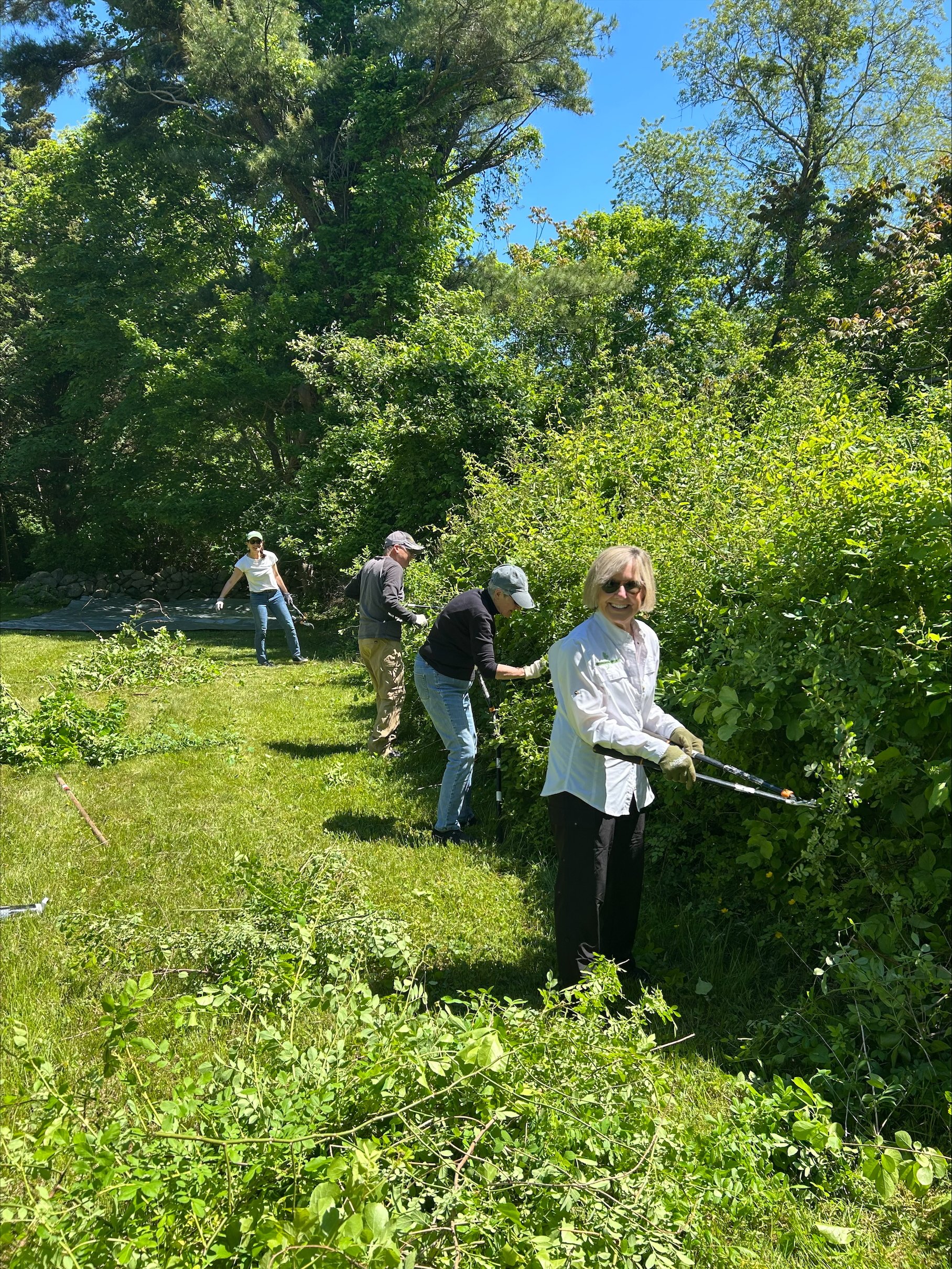
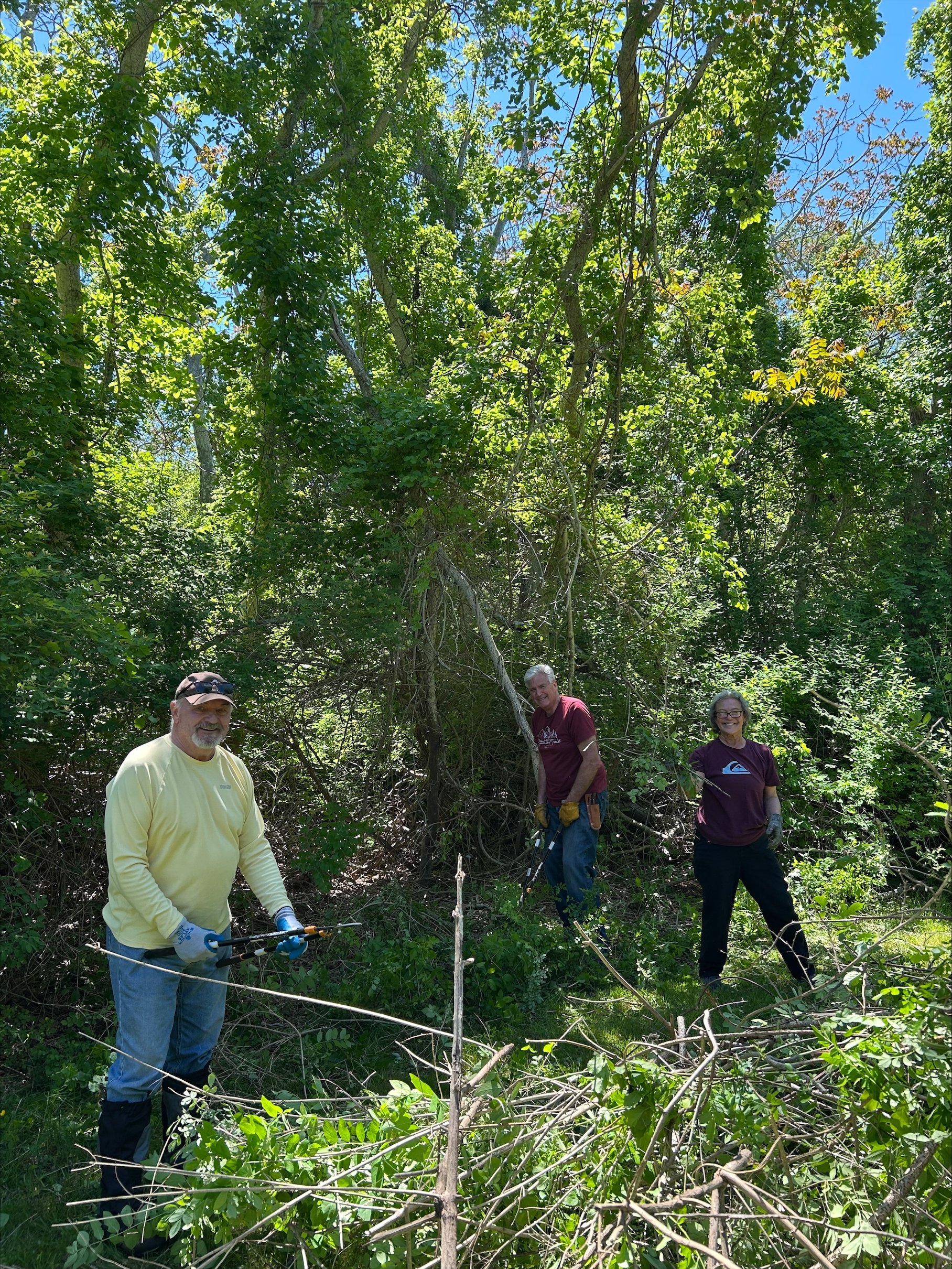
After wading through knee-deep water with chainsaws, loppers, and lunch in our arms, we proceeded to our mission for the day: removing invasive plant species from the meadow around Pulpit Rock, or what some consider the true Plymouth Rock!
DRHS owns 17 acres of land on Clark’s Island, which today is part of Plymouth. (Wildlands helps care for DRHS properties through our Community Stewardship Program.) In 1620, Mayflower passengers, led by first mate John Clark, made landfall on the island before they reached the Plymouth mainland. There, they found an enormous boulder and held their first worship service ashore.

The VolunTuesday crew at Pulpit Rock on Clark’s Island.
It’s important to acknowledge the darker side of history on Clark’s Island. During King Philip’s War (1675-1676), Plymouth Colony used the island as an internment camp to detain over 1,000 Indigenous people, many of whom starved to death. You can read a more detailed account of Clark’s Island history, along with a land acknowledgment, on the DRHS website.
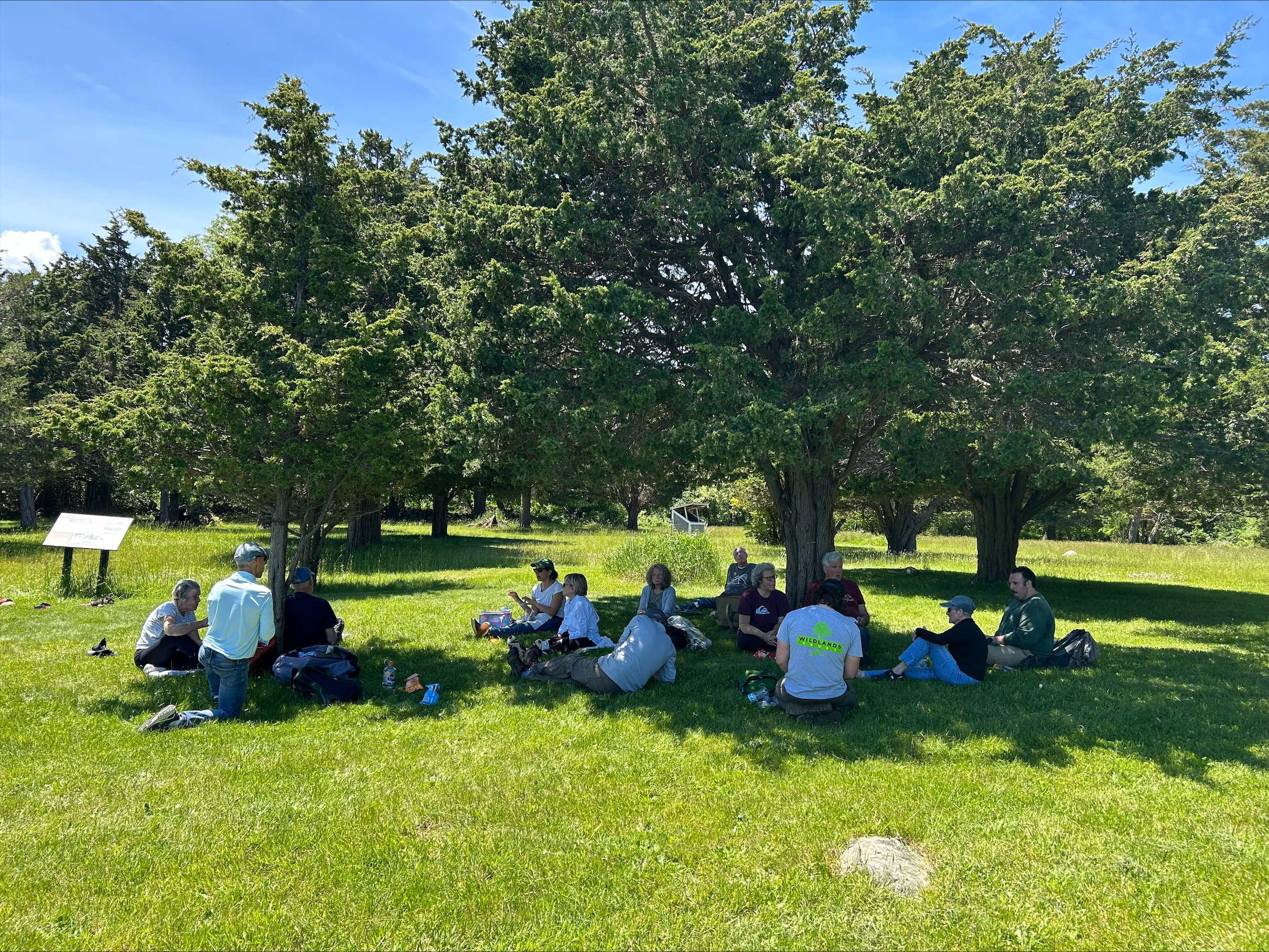
Back to the present. It was a long, arduous VolunTuesday, interrupted only by a fantastic lunch on the lawn facing the Bay. We accomplished so much and learned so much about the history of Clark’s Island. Spirits were high as we motored back home. Everyone agreed it was one of the finest volunteer programs we had ever participated in.
***
Want to explore new places, join a fun-loving community, and give back to local nature? Explore upcoming VolunTuesday projects here!




Welcome, Rob Kluin!

Wildlands Trust is ecstatic to welcome Rob Kluin to our growing staff! As Donor Relations Manager, Rob will forge and foster relationships with generous individuals and businesses across Southeastern Massachusetts, securing vital support for our mission. Get to know Rob in the bio below, and reacquaint yourself with our whole staff at wildlandstrust.org/staff.
Rob replaces longtime Donor Relations Manager Sue Chamberlain, who retired this spring after 11 years of service to Wildlands. We look forward to honoring her at our Leadership Council brunch next month. Stay tuned for more reflection on Sue’s impactful career.
If you would like to support our work to protect the region’s remarkable lands and waters, Rob would love to hear from you! Say hello at 774-343-5121 ext. 113 or rkluin@wildlandstrust.org.
---
Rob Kluin, Donor Relations Manager - ☎️ 📧
A people person and a nature person, Rob Kluin is a rarity in the conservation field. As Donor Relations Manager, Rob leverages his networking and communication skills to connect Wildlands Trust with vital support from the communities we serve.
Growing up in the Adirondacks, Rob developed a lifelong respect for land protection and stewardship. At a crossroads in his career, Rob knew he wanted to settle in a place with the same reverence for the natural world. As he flipped through an atlas for potential next stops, Plymouth’s ragged coastline caught his eye. Then came a serendipitous job offer that made his dream a reality. Rob moved in near Shifting Lots Preserve, where he got to know Wildlands’ far-reaching work. Two decades later, Rob jumped at the chance to put his people skills to work for the organization that helped him fall in love with the region.
“I truly love people, and Wildlands brings people together for the common good,” Rob said. “That’s a very positive and impressive thing in a world of so many differences. I would love for my legacy to be that I opened doors for new people to support Wildlands’ mission.”
As Donor Relations Manager, Rob collaborates with the Wildlands team to grow the donor base and maintain strong relationships with existing contributors. Before joining Wildlands, Rob held senior communications and marketing positions with corporate and nonprofit organizations, including Manomet Conservation Sciences and Plimoth Patuxet Museums. He continues to serve on Manomet’s board of trustees and was vice president of the board for Cape Rep Theatre for eight years. Rob holds a bachelor’s degree in business administration from the State University of New York and a master's degree in Corporate Communications from Ithaca College.
Outside of work, Rob enjoys gardening, traveling, cooking, swimming, and spending quality time with his family, friends, and cat Mocha.

Human History of Wildlands: Striar Conservancy
Striar Conservancy is a 162-acre Wildlands showcase preserve located in Halifax, on the northern bank of the Winnetuxet River. It was acquired by Wildlands in 1999 from the Striar family, with hiking trails established the following year. The Town of Halifax's Randall-Hilliard Preserve abuts Striar from the south, creating a cushion of undeveloped land on both sides of the Winnetuxet.

Striar Conservancy in Halifax. Photo by Jerry Monkman.
By Skip Stuck, Key Volunteer
Wildlands Trust’s land conservation work is all about context. No parcel is protected before the staff scrutinizes its place within regional trends in ecology and land use. Last month, I decided it was time for “Human History of Wildlands” to adopt the same approach. In accordance with Wildlands’ decades-long initiative to protect land along the Taunton River, I zoomed out my lens from individual preserves to the entire Taunton River watershed. From this 30,000-foot view, much came into focus about how the region has evolved over time and why it’s so critical to protect. For the next few months, I will zoom back in to the diverse histories of Wildlands preserves within the Taunton River watershed. But first, I encourage you to read "Human History of Wildlands: The Taunton River Watershed." It is from this context that the following accounts will come to life.
Striar Conservancy is a 162-acre Wildlands showcase preserve located in Halifax, on the northern bank of the Winnetuxet River. It was acquired by Wildlands in 1999 from the Striar family, with hiking trails established the following year. The Town of Halifax's Randall-Hilliard Preserve abuts Striar from the south, creating a cushion of undeveloped land on both sides of the Winnetuxet.
The area that would become Halifax was part of the 1661 "Twenty-six Men's Purchase" by settlers from the Plymouth Colony. The land contained parts of several current towns, including Middleborough, Plympton, Pembroke, and Halifax. In 1669, one of these 26 men, John Tomson, built his house on a large landholding of 6,000 acres on the Winnetuxet River. What would become Thompson Street (named after John, albeit with an alternate spelling) was described as an ox trail and cart path between Middleborough Green and the Tomson homestead. Other settlers soon followed. The land was fairly flat, swampy, and muddy, with few rocks owing to its past as a lakebed for Glacial Lake Taunton. It did have abundant woodlands of pine, oak, and especially the highly valued cedar, clearing the way for logging to become a principal industry.
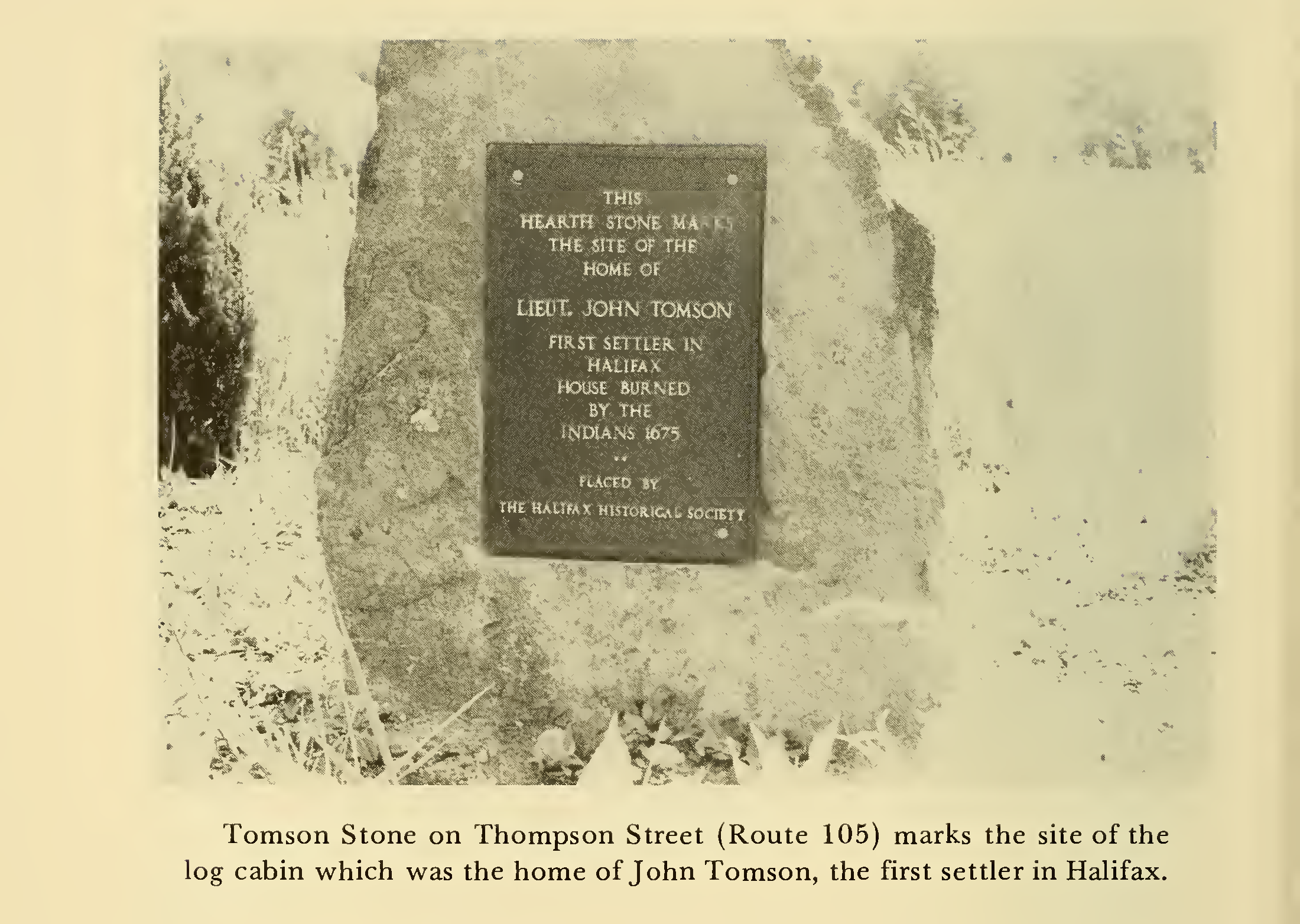
From History of Halifax, Massachusetts by Guy S. Baker (1976), page 126.
The initial settlers didn't prosper for long, because in 1675, King Philip's War broke out. Since their houses were spread out along Thompson Street, they could not be easily defended, and the raids burned many. John Tomson and others abandoned their homes and fled to a fort in Nemasket. Tomson took charge, but it soon became apparent that that their location was untenable, so he led the settlers to Plymouth for safety. Tomson soon became known as Halifax's "First Soldier."
The next year, Captain Benjamin Church fought and captured 120 of the Monponsett ("near the deep pond") band of the Wampanoag Tribe at White Island, imprisoning them until the end of the war in Plymouth. Monponsett was the original name for the town of Halifax, and Monponsett Pond lies near the town’s center.
When the war was over, settlers returned and rebuilt their homes, and the community grew once again. Forestry and now farming were taken up by the residents. The Winnetuxet River’s flow proved suitable for waterpower, and dams were soon built by the Thompsons, the Sturtevant family, and others. The dams powered sawmills, granaries, and a thriving charcoal industry. Remains of the Thompson Mill dam remain to this day at Striar Conservancy.
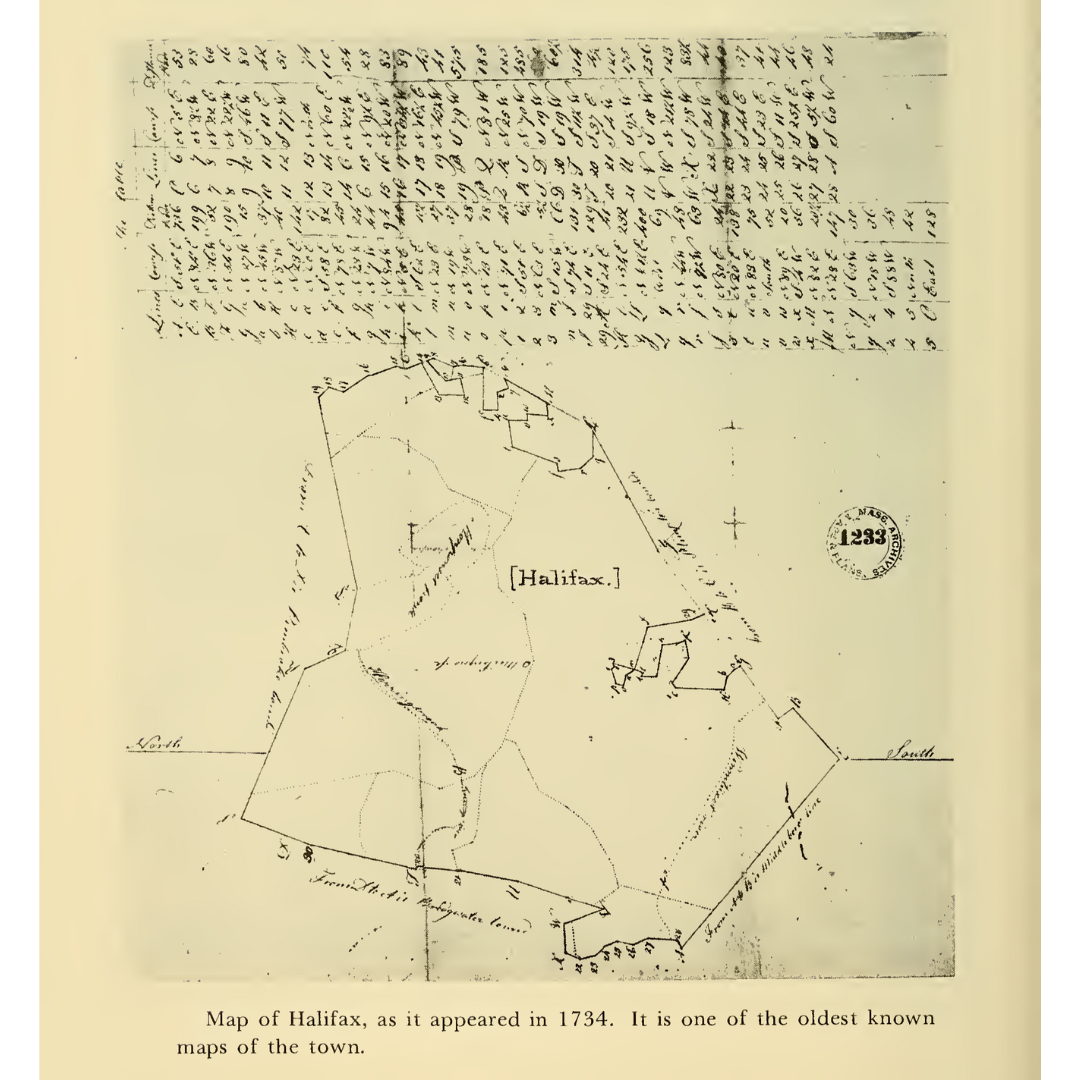
From History of Halifax, Massachusetts by Guy S. Baker (1976), page 168.
In 1677, the first public grammar school was formed, although for most of the next 100 years, there was no school building; instead, classes were held in private homes. In 1734, the Town of Halifax was incorporated from parts of Middleborough, Plympton, and Pembroke. Agriculture grew in importance, with cranberry cultivation leading the charge, as in the rest of Southeastern Massachusetts.
Halifax played an active role in the American Revolution, hosting the longest continuous militia company in Massachusetts. In fact, the first official mention of the war was made in Halifax, before it even began: "On December 26, 1774, it was voted that minutemen drawn out for military exercise shall have their pay for two half days in a week at 8 cents per half day." A week later, the town voted to send a member, Ebenezer Thompson, to the Provincial Congress in Cambridge.

From History of Halifax, Massachusetts by Guy S. Baker (1976), page 115.
Halifax experienced slow, steady growth in the 19th and 20th centuries. Forests returned to the landscape in the place of abandoned farms. Maintaining its rural character and continuing cranberry production, Halifax evolved into an attractive modern bedroom community.
Here, I have to include what some might see as a digression, but many might find entertaining. During World War II, a Halifax native made national headlines as the person who invented graffiti. His name was James Kilroy. In the 1940s, he worked at the Fore River Shipyard in Quincy. Perhaps out of boredom, he began signing his name on ships being built. The idea was picked up by servicemen, and soon the phrase "KILROY WAS HERE," often accompanied by a man with a big nose looking over a fence, adorned military ships, buildings, and equipment. Few might remember it now, but WWII vets and baby boomers might remember Kilroy as a local celebrity.

Kilroy engraved on the National World War II Memorial in Washington, D.C.
When you visit Striar Conservancy, the preserve’s natural history will speak louder than its human history. With pristine frontage on the Winnetuxet River, five certified vernal pools, and various other woodland and wetland habitats, Striar is home to as much wildlife as any Wildlands property. But when you imagine the battles fought, products made, and communities sustained in the area, the human stories are equally audible—if you’re willing to listen.
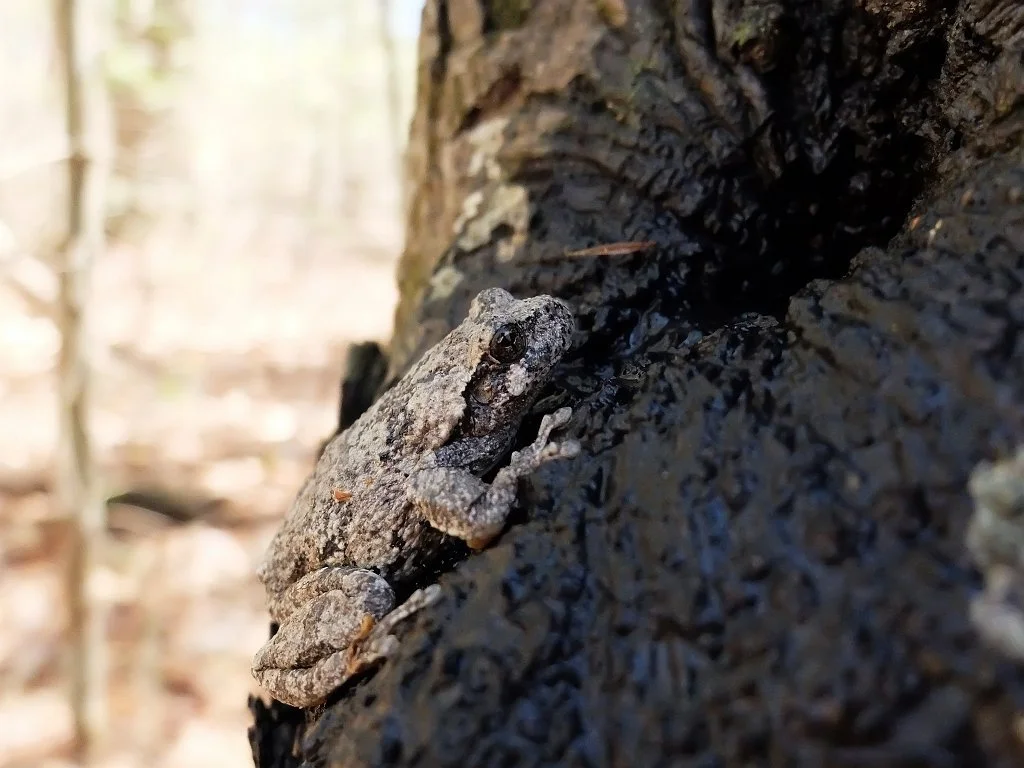
Gray treefrog at Striar Conservancy in Halifax. Photo by Rob MacDonald.
Resources utilized in the preparation of this history include:
The History of Halifax, Massachusetts by Guy S. Baker, 1976.
Yesterday and Today: 250th Anniversary of Halifax, 1734 -1984.
“History of Halifax Massachusetts,” Mega Matt’s Ponderings, YouTube.
Recollecting Nemasket, Michael Maddigan, 7/17/2009.
The Human History of the Taunton River Watershed, April 2025, Wildlands Trust.
Photographs and background by Rob MacDonald: robsphotos.blog/wildlands-trust/striar-conservancy/index.html.
Thank you to Wildlands Trust Communications Coordinator Thomas Patti for his editing and encouragement.

Land Protection Update: Duxbury, Scituate, Cohasset

Bates Lane Conservation Area in Scituate.
By Scott MacFaden, Director of Land Protection
Editor’s Note: This land protection update first appeared in the Spring 2025 issue of Wildlands News, our biannual print newsletter for Wildlands Trust members. Be the first to hear about Wildlands projects and events by becoming a member today at wildlandstrust.org/membership.
Another Duxbury CPA CR in Hand
In November 2024, we completed the DeLorenzo Community Preservation Act (CPA) Conservation Restriction (CR) in Duxbury.
The 27-acre DeLorenzo property was a priority for preservation primarily because of its direct proximity to the northern portion of the Historic O’Neil Farm, potential to support agricultural activities, wildlife habitat value in the form of two potential vernal pools, and location within a Zone II Wellhead Protection Area.
Duxbury residents approved the purchase of the property at the Annual Town Meeting in March 2018, and the Town closed on the land in October 2018. The Town used CPA funds to acquire the Property. The Town is granting the CR to Wildlands to comply with the CPA’s requirement that every CPA-funded open space acquisition be protected with a CR running to a qualified third-party entity.
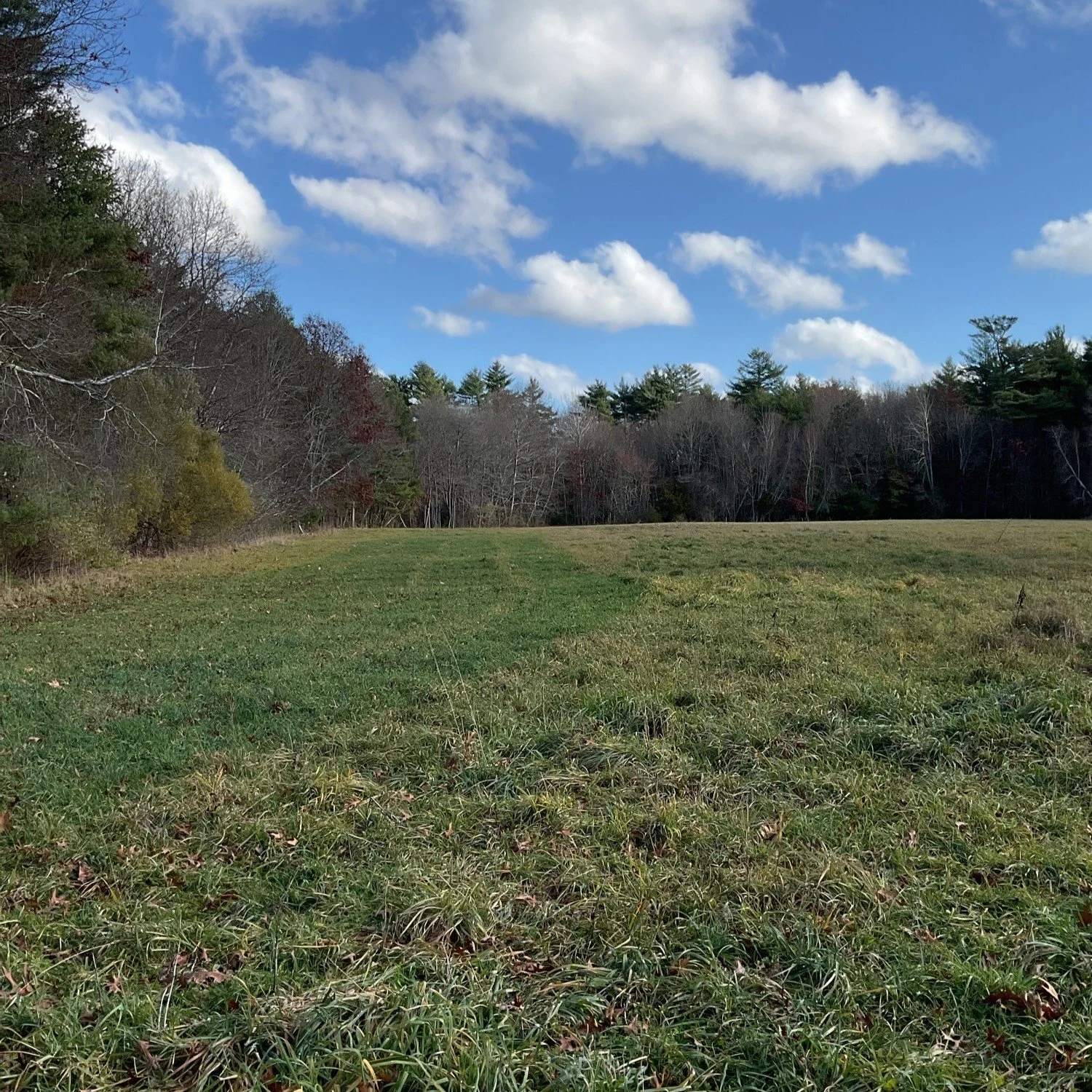
The DeLorenzo property in Duxbury, along its boundary with the O’Neil Farm.
The DeLorenzo parcel is irregularly shaped and includes two non-contiguous areas of road frontage on Route 53. Apart from a cleared area in its center and a rectangular strip of open field running parallel to its southern boundary line with the O’Neil Farm, the property is primarily wooded. It includes two distinct areas of mixed deciduous/coniferous wooded wetland, with the largest such area extending southwesterly into the O’Neil Farm. Topography is mostly level.
A local farmer licenses a portion of the DeLorenzo property from the Town to raise sheep, goats, and chickens, and maintain beehives. The farmer’s future plans include constructing hoop houses to grow produce and establishing a seasonal farmstand.
Wildlands Accepts Assignment of Two CRs in Scituate and Cohasset
On May 1, in the latest of a series of partnerships with local land trusts in our service area, we accepted an assignment of two CRs comprising 98.4 acres, mostly in Scituate and partially in Cohasset, from the Maxwell Conservation Trust. Formed in 1997, the Scituate-based all-volunteer land trust is legally dissolving and identified Wildlands as a qualified entity to accept the CR assignments.
Over the past two decades, we have collaborated with several all-volunteer land trusts that determined their most prudent option was to transfer their assets and then dissolve, including the Swansea Land Trust, the Milton Land Conservation Trust, and the Brockton Audubon Society.
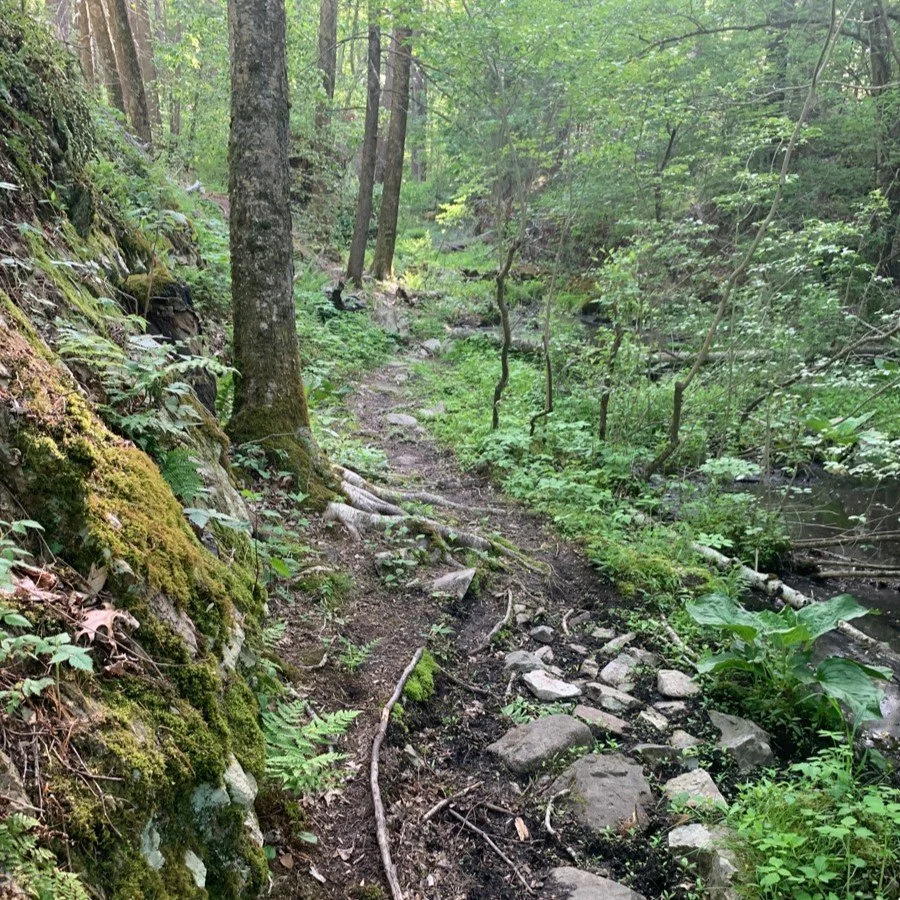
Bates Lane Conservation Area in Scituate.
Both CRs protect land owned by the Town of Scituate and located within a 330-acre expanse of Town conservation land known as the Bates Lane Conservation Area.
Completed in 2007, the Moncy CR protects 45.3 acres along the north side of Bates Lane and two smaller contiguous parcels situated approximately 1,000 feet to the north. All three parcels are primarily wooded upland but include pockets of wetlands. The Moncy CR is situated within areas the Commonwealth’s Natural Heritage and Endangered Species Program (NHESP) identifies as significant wildlife habitats.
Completed in 2011, the Wheelwright-Bjorklund CR protects 53 total acres—51.1 acres in Scituate and 2 acres just over the municipal boundary in Cohasset. The land protected by this CR is primarily wooded and mostly upland, with variable topography. The Wheelwright-Bjorklund CR is also situated within multiple areas NHESP identifies as significant wildlife habitats.
The CRs represent our first acquisitions of any kind in Scituate and Cohasset.
We thank the Maxwell Conservation Trust for its years of dedication to preserving land, and for entrusting these CRs to our stewardship.