What’s New at Wildlands
The Scoop on Dog Poop (and Other Trail Etiquette Tips)
By Roxey Lay, Membership & Communications Coordinator
*Editor’s note: In 2020, Wildlands Trust adopted a “leash rule,” requiring dogs to be on leash (leash in hand) at all times on Wildlands property, regardless of towns’ policies about pet control. Read on for more valuable information about dog safety and etiquette on trails.*
With temperatures rising, people from all over the region are getting back out onto the trails. Having access to open public lands is one of the great qualities of living in Southeastern Massachusetts and it’s up to all of us who use these lands to follow appropriate dog etiquette when visiting with four-legged companions. So, before you hit the trails this year, we want to give a refresher on some quick dog etiquette tips for your next visit.

A pup ready to hit the trails with a group of hikers.
Your dog pooping on the trails may not seem like it’s a big deal, but it is. Everyone knows not to leave trash on the trail, however, it’s just as important to pick up your dog’s poop, carry it out with you and dispose of it properly. One of the primary reasons is that it can spread disease. “People think it’s fine [to leave it] because it’s natural, but it’s not [fine],” says Stewardship Manager Erik Boyer. “If you’re a dog owner, it should be a concern for your own dog’s safety, as well as for others on the trail.” Animals, including your dog, do occasionally eat other animal’s waste and if they happen to come across some that contains harmful bacteria and/or parasites, it can make them sick. This also applies to humans, who may come in contact with it or unintentionally consume contaminated soil or water. When your dog’s poop breaks down, it may be physically gone but the bacteria remains in the soil or water it has washed into. If you get contaminated soil on your hands and then happen to get it in your mouth or drink contaminated water, it can make you sick too.
Beyond the bacteria, the nutrients found inside your dog’s poop can negatively affect the surrounding ecosystem. Wild animals that live on our preserves eat resources and nutrients from that ecosystem and then return those same nutrients to the area. The nutrient-rich dog food your dog eats, however, results “in poop that’s very rich in substances like nitrogen and phosphorous—the same ingredients you’ll find in fertilizer. The addition of that nutrient-rich poop to an ecosystem leads to an imbalance that, when it’s washed into water sources, can lead to algae blooms and promote the growth of invasive plant species on land.” [1] Nearly every Wildlands preserve has either a wetland or body of water, which eventually connects to the ocean and can affect other areas on the way. For example, 17 different streams connect to the Taunton River and run through 3 counties and 12 cities, populated with 1.7 million people, before emptying into the Atlantic Ocean in Wareham. Contaminating a body of water, no matter how small, can have a larger impact than you may realize.

Bagged dog waste left on the trail.
Bagging it up and leaving it on the ground (or hanging it in a tree) isn’t a good idea either. Now, instead of only your dog’s poop decomposing on the trail, you’ve introduced plastic into the equation. The bag will take years to breakdown and when it eventually does, microplastics, along with the bacteria from the poop, will remain in the soil (or wash into a waterway). The presence of your dog’s waste can also alert prey species to the existence of possible predators, putting undue stress on wildlife that live in that area.
It’s also just plain unsightly. Public preserves are for everyone and no one wants to see dog poop bags littering the trail. “Part of what we do is teach good land ethics and picking up after your dog sets a good example for other trail goers and younger generations,” says Community Stewardship Program Coordinator Conor Michaud. So, if you are out on the trail with your dog this summer, please remember to bring dog waste bags with you and dispose of it appropriately.
Now that we’ve gotten that out of the way, here are some additional tips for dog etiquette on the trails:

Dogs check out their surroundings on Wildlands’ Post Feast Waddle.
Know the Town Leash Law:
On any Wildlands property, visitor guidelines require dogs to be under control at all times in order to protect sensitive wildlife and respect other visitors. Prior to your visit, you should familiarize yourself with the leash laws where the preserve is located so you can comply with that town’s definition of “control”. These laws can vary town to town and can range from requiring a leash at all times (sometimes with leash length maximums) to allowing voice command control. In areas that allow voice command, assess your dog’s level of obedience and determine whether or not that is the best option for them or if it’s better, for your dog’s and other visitor’s safety, for them to be on a leash.
Yield Trail Right-of-Way:
When on a trail, if you have a dog and you happen upon another visitor, you should yield the right-of-way to the other visitor. This means stopping and moving to the side of the trail with your pup. If you are in a town that allows voice command control and your dog is not on a leash, you should leash the dog when moving to the side of the trail until the other visitor has passed. You may know your dog is friendly, but others don’t and may not be comfortable with your dog approaching them.
Reflective Gear:
Hunting on Wildlands properties is prohibited unless otherwise posted; however, we do suggest visitors (and their dogs) wear brightly colored or reflective clothing during hunting seasons. Some Wildlands properties share borders with or have trails that cut through other town/organization-owned properties that may allow hunting and it is always a good idea to make sure you and your animal are visible to hunters.
Stay on the Trail:
When visiting any Wildlands property, please respect the wildlife and vegetation around you and stay on the trail. Please don’t let your dog run into the woods as it may disturb local wildlife and destroy sensitive vegetation.
Getting out on the trails is a healthy and fun way for you and your dog to spend your days and we thank you for taking the time to be courteous to both our properties and other visitors!
Wildlands Keeps Brockton Beautiful
By Hayley Leonard, Community Engagement Coordinator
Saturday, April 27, Wildlands Trust partnered with the city of Brockton for their annual ‘Keep Brockton Beautiful Day’. The day is an opportunity for community members to come together with the shared goal of cleaning up trash throughout the city, culminating with an afternoon cookout for those that volunteer. This year marks the second year that Wildlands Trust has participated in the event, the first being in 2012 when Wildlands first acquired Brockton Audubon Preserve.

The weather didn’t discourage our dedicated group of volunteers.
Early that morning, despite the dreary conditions, a crew of 11 Brockton residents came together to help Wildlands Trust staff and AmeriCorps members clean up trash from Stone Farm and Brockton Audubon Preserves. These properties are some of the last intact parcels of open space left in the city and together they total about 240 acres. Armed with gloves, trash pickers and bags provided by the city, we made our way into the most littered areas of the properties. We spent almost three hours cleaning and removed around 20 bags worth of trash by the end of the morning. With everyone’s help, we were even able to clear out some larger items that had been there for quite some time, such as a broken flat screen television, an old tire and what remained of a spring mattress.

Volunteers wrap-up after spending three hours cleaning the properties.
Local clean-up efforts tie into Wildlands’ mission of connecting residents with their natural environments – what better way to build a connection with a place than to help care for it? As a heavily urbanized area, residents of Brockton have fewer opportunities to explore natural spaces than those in the surrounding towns of Plymouth County. Events like this are an important addition to the work Wildlands Trust is already doing in Brockton with Greening the Gateway Cities and the Brockton High School Envirothon Team because they provide residents with the opportunity to actively engage with and learn about their environment, and understand how it connects to other aspects of their lives.
Teamwork Makes the Dream Work in Brockton
A yearlong partnership with Stonehill College contributes to the ongoing success of Greening the Gateway Cities.
By Conor Michaud, Community Stewardship Program Coordinator
In the spring of 2017, Wildlands began working with Stonehill College professor Linnea Carlson to explore potential partnerships between the college, which encourages and in some cases requires community service, and Wildlands which has been working for nearly a decade in the neighboring communities of Brockton to protect land and assist in conservation efforts within the city. With the help of Wildlands’ former TerraCorps member, Tommy Blanchard, Wildlands began the early stages of the partnership and worked with Stonehill’s Sociology department to discuss a collaboration on Brockton’s Greening the Gateway cities Program (GGCP). In the fall of 2018 the partnership was fully developed and proposed to Stonehill sociology professor Jungyun Gill, who saw the potential for impactful community service on a program designed to specifically aid Brockton’s environmental justice communities. In September 2018, a group of honors sociology students began the inaugural partnership and joined the ranks of the GGCP canvassing crew.

Saplings waiting to be planted in Brockton.
As we have mentioned in previous articles, GGCP is a community based project in which the success of the program relies heavily on the encouragement of community leaders and engagement of residents to put a meaningful effort forward in order to increase the urban tree canopy. Since Wildlands’ introduction to the program we have been reaching out to community members to support the program, participating in community meetings, tabling at local events, presenting to local groups and institutions, and working with Department of Conservation and Recreation foresters to increase the outreach capacity for the program. One crucial aspect of GGCP, often overlooked from these engagements, is the ability to reach the younger generations. Wildlands periodically presented to Brockton High School students on the program but when it came to reaching the cohort between high school teenage students and the older homeowner community we were missing our mark, until the collaboration with Stonehill College.

A GGCP flyer (in English) that students helped translate into Portuguese and Cape Verdean Creole.
Many of us are able to think back fondly on our college education and years spent developing critical thinking skills and diving deep into the study of new found conceptions. The enlightened perception of our world which often goes hand-in-hand with the college experience is something Stonehill brought to the table during this partnership. Wildlands saw that it was imperative to involve the younger generation in projects such as GGCP which are specifically targeted at aiding those in need while reducing the local effects of climate change and helping to clean our local air and water. There is no way to get closer to these concepts then to step out into the street and knock on a strangers door to inform them of how a free tree from GGCP can benefit their home and their greater community.
A partnership with this institution was logical when professor Jungyun Gill explained that this honors sociology class would be what Stonehill College terms a Community Based Learning class (CBL). Meaning, each student is expected to engage in community development projects as a substantial portion of their grade and for this CBL class that project was GGCP. During the fall of 2018 each of the 15 students canvassed alongside Wildlands’ community stewardship coordinator for over 10 hours, contributing a total of 150 hours within the class. This massive canvassing campaign has been instrumental in the success of Brockton’s GGCP and served as a real-life grass-roots experience for each student. The project did not end there, each student was a part of a smaller group within the class, required to expand upon current outreach efforts of the project, including GGCP’s social media campaign, translating GGCP fliers into Portuguese and Cape Verdean Creole, translating a GGCP video into Cape Verdean Creole and writing an article for the school paper. At the end of the semester, each group presented their projects and passed along their final work to Wildlands, which continues to draw inspiration from these final works.

A DCR forester stands next to a recently planted sapling.
Due to the success of the fall 2018 partnership, Wildlands and Stonehill College decided to offer this opportunity to an additional sociology class during the spring 2019 semester. Students from the spring semester chose to join Wildlands’ ongoing canvassing efforts and used these outings to build upon the social justice issues discussed in their class. The class worked in groups once more to study global social justice issues and correlate these pressing concerns with the efforts to increase the urban tree canopy in Brockton. One group discussed the current clean water issues of Flint, Michigan and the water use and pollution issues associated with fabric dying and production. While another group tackled rainforest deforestation and what that means for our climate, biodiversity and local community groups. Each of these issues, while vast and complicated, are closely associated with GGCP efforts and solutions to these global crises can be taken directly from GGCP. We plant free trees to reduce pollution and increase financial savings through the reduction of energy expenditure, to prevent storm water runoff, to clean the air and to increase biodiversity.
In the simplest of terms, we plant free trees to benefit public health. These social justice issues linked with clean water, air and public health are being addressed throughout the world and their awareness is becoming increasingly known. The younger generations and students of today will be faced with finding solutions and developing upon previously implemented ideas to better our world and we see these partnerships with academic institutions as a way to kick start that progress.
Community: The Foundation of Conservation
How the topic of conversation surrounding the environmental movement has changed over the years and how community involvement has driven its achievements.
By Roxey Lay, Membership & Communications Coordinator
In recent years, climate change has re-ignited the national conversation over the environmental health of our planet and the role humans play in it. With Earth Day a few days away, it seems appropriate to look back at the environmental movement in the United States, how it shaped conservation and lead to the founding of organizations like Wildlands Trust.

Thousands flood the streets of New York City during the first Earth Day, April 22, 1970
First emerging during the 19th century, the environmental movement began in response to air pollution caused by the Industrial Revolution. During this same time, the conservation movement also grew throughout the United States, leading to the founding of the Sierra Club and President Roosevelt establishing bird reserves and national parks and forests throughout the country, as well as the United States Forest Service. Concern over human impact on the planet continued into the 20th century, with concerned scientists in the mid-1950s beginning to measure the Earth's carbon dioxide levels. [1]
In the 1970s, the modern environmental movement began. “On April 22, 1970, 20 million Americans took to the streets, parks, and auditoriums to demonstrate for a healthy, sustainable environment in massive coast-to-coast rallies.” [2] To this day, it remains the “largest demonstration ever in American history.” [3] In response to this widespread demand for action, the government established the Environmental Protection Agency and passed the Clean Air, Clean Water, and Endangered Species Acts later that same year. While action on a Federal level is imperative to protecting natural resources throughout the country, it was also during this time that communities began taking land protection into their own hands.

A large beech tree stands in a clearing at Emery Preserve (West), one of the first parcels of land protected by Wildlands.
In 1973, Leonna Asker, Betty Anderson and other community activists in Plymouth, worried about losing the land they loved to development, got together and formed the Plymouth County Wildlands Trust. Fast forward to today and that organization still exists as Wildlands Trust, with holdings extending throughout all of Southeastern Massachusetts. As Wildlands’ presence has grown within these communities, we continue to include residents in our work through public programming and events that promote environmental education and discussion. This month, Wildlands kicks off a three-part-series on climate change. Presented in partnership with Manomet and Mass Audubon, Wildlands will be hosting “Is it Me…Or is the Weather Kind of Weird?” Each event will consist of a short presentation, followed by questions and conversation with a professional in the field.
Although the topic of conversation has changed throughout the years, the common theme that our planet’s health is directly connected to public health, remains. By supporting the protection of local lands and engaging in conversations like the climate series, you carry on the spirit of the conservation movement by acknowledging the importance of keeping our region healthy and our communities connected to the natural world for the sake of future generations.
To learn more about the series and to register, go to: https://wildlandstrust.org/events/2019/4/22/is-it-me-or-is-the-weather-kind-of-weird
Where There’s Wildlands, There’s Wildlife
By Roxey Lay, Membership and Communications Coordinator

A female monarch drinks nectar from a sedum plant at Davis-Douglas Farm.
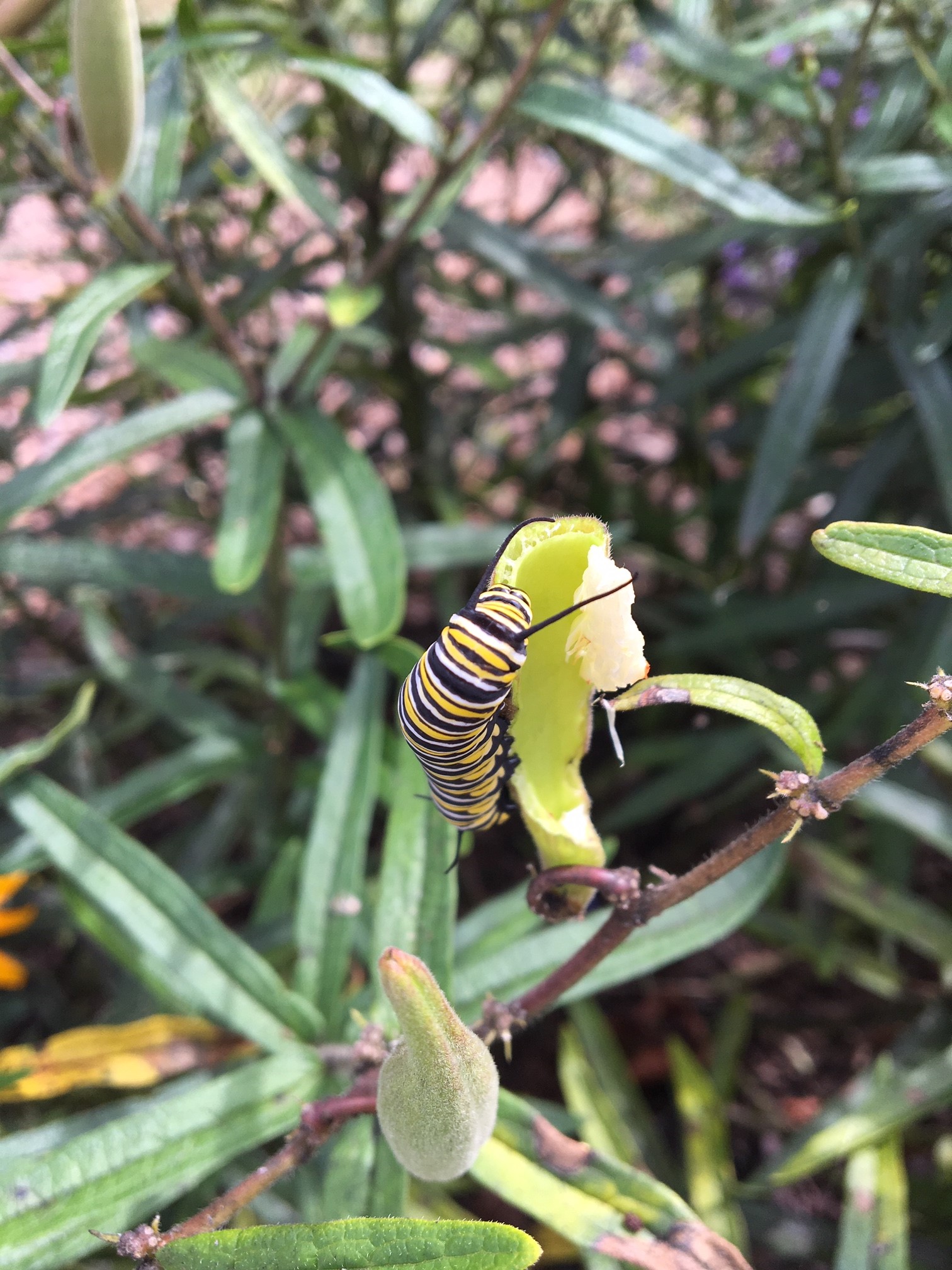
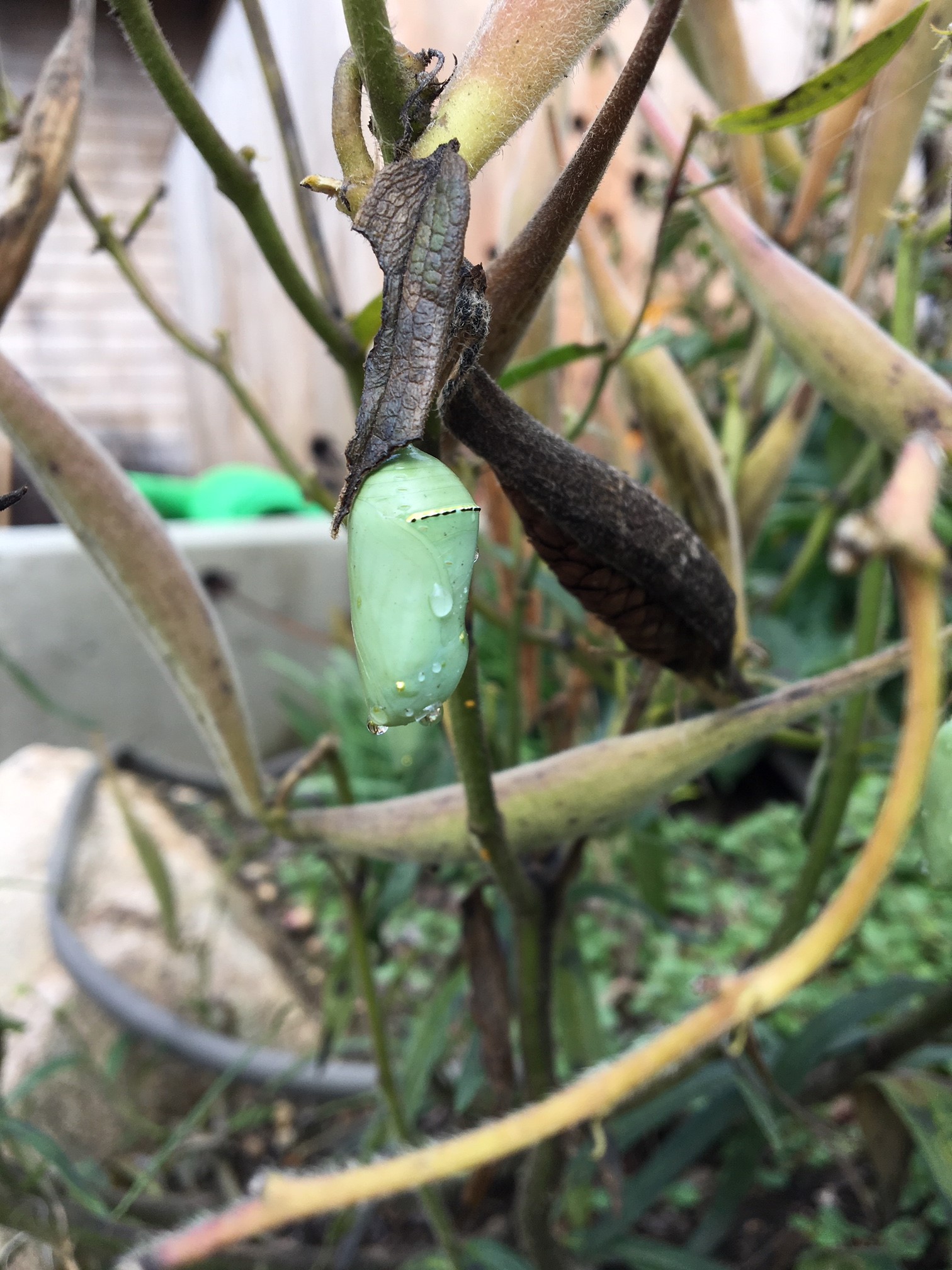
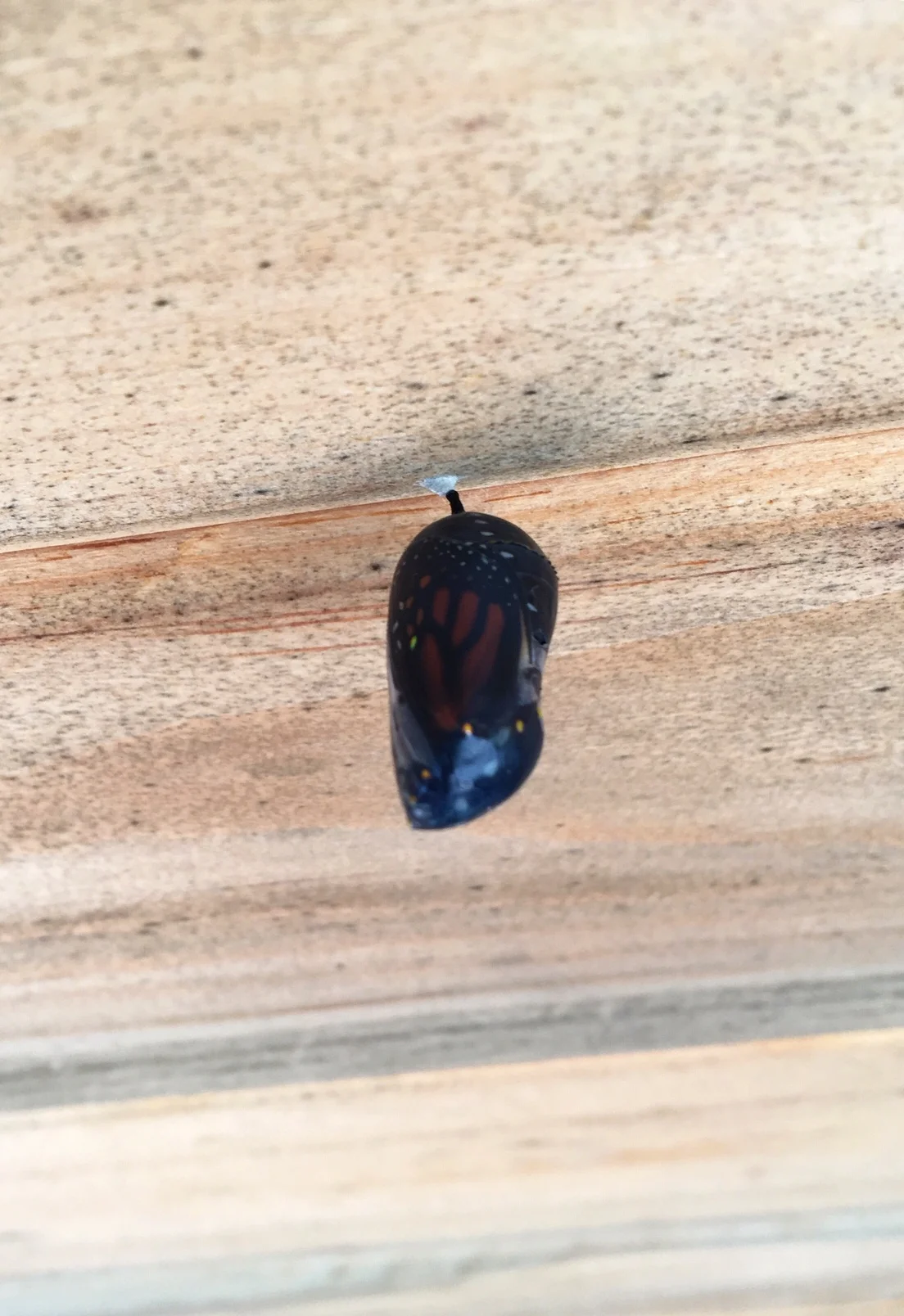
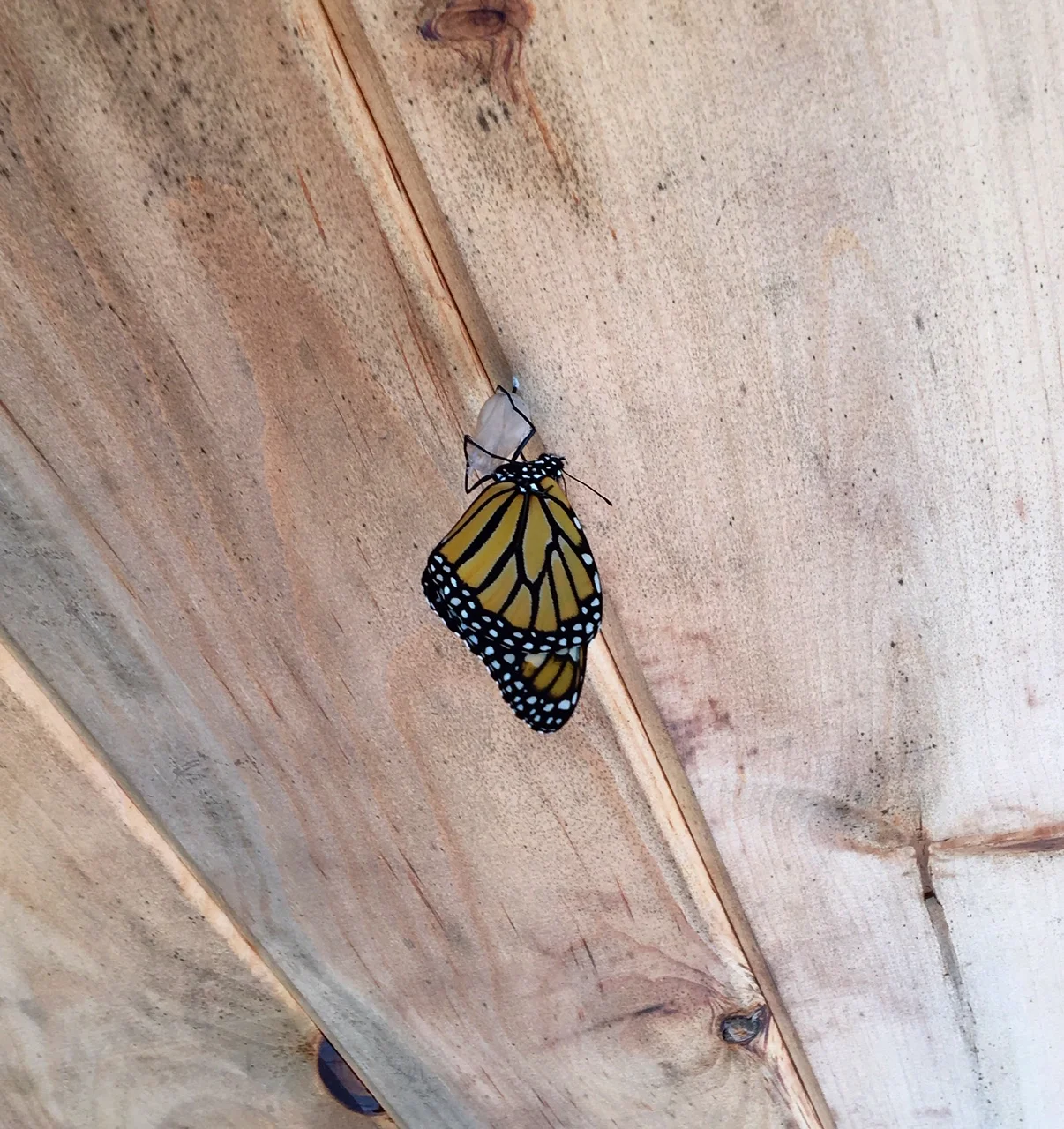
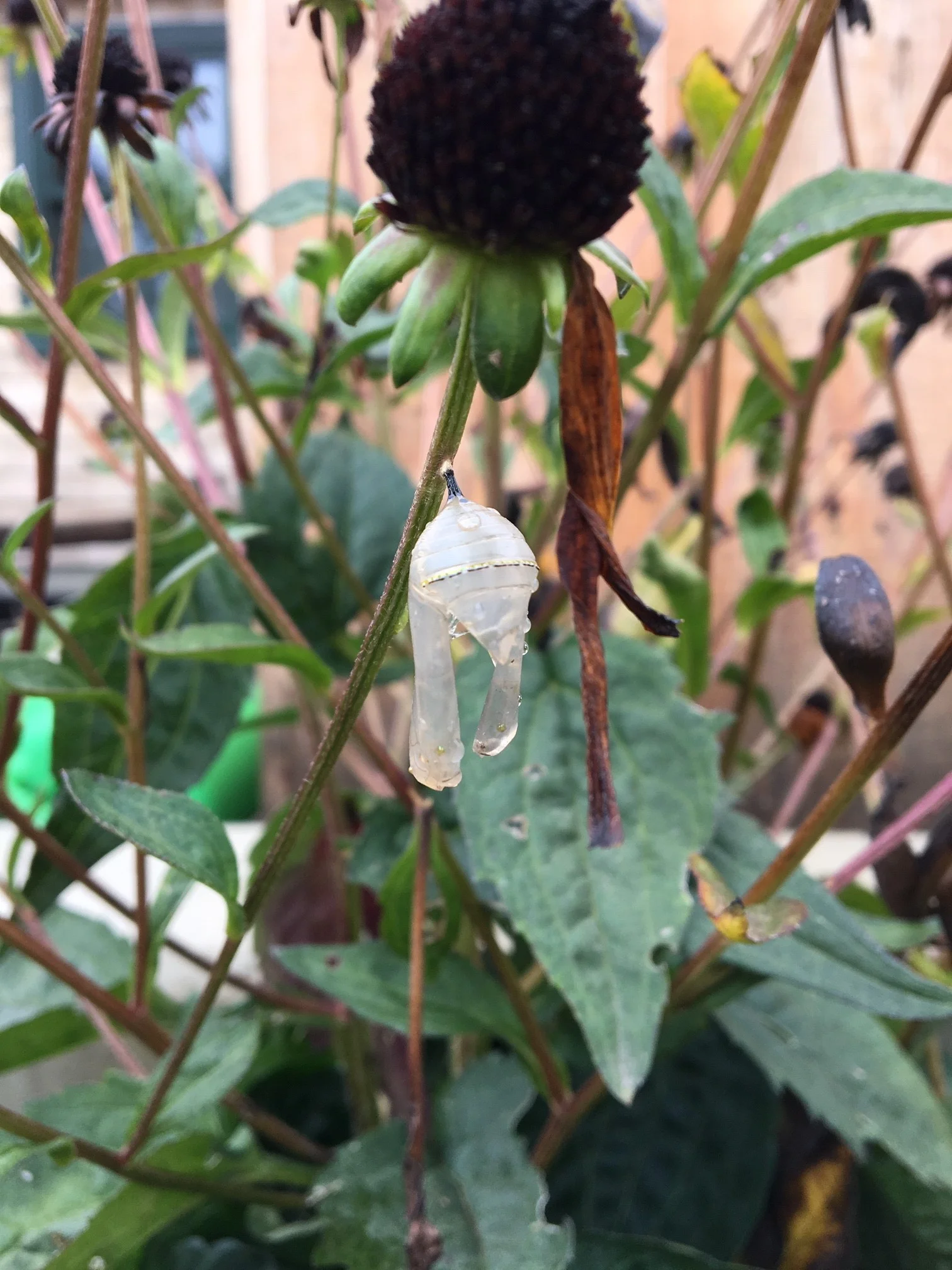
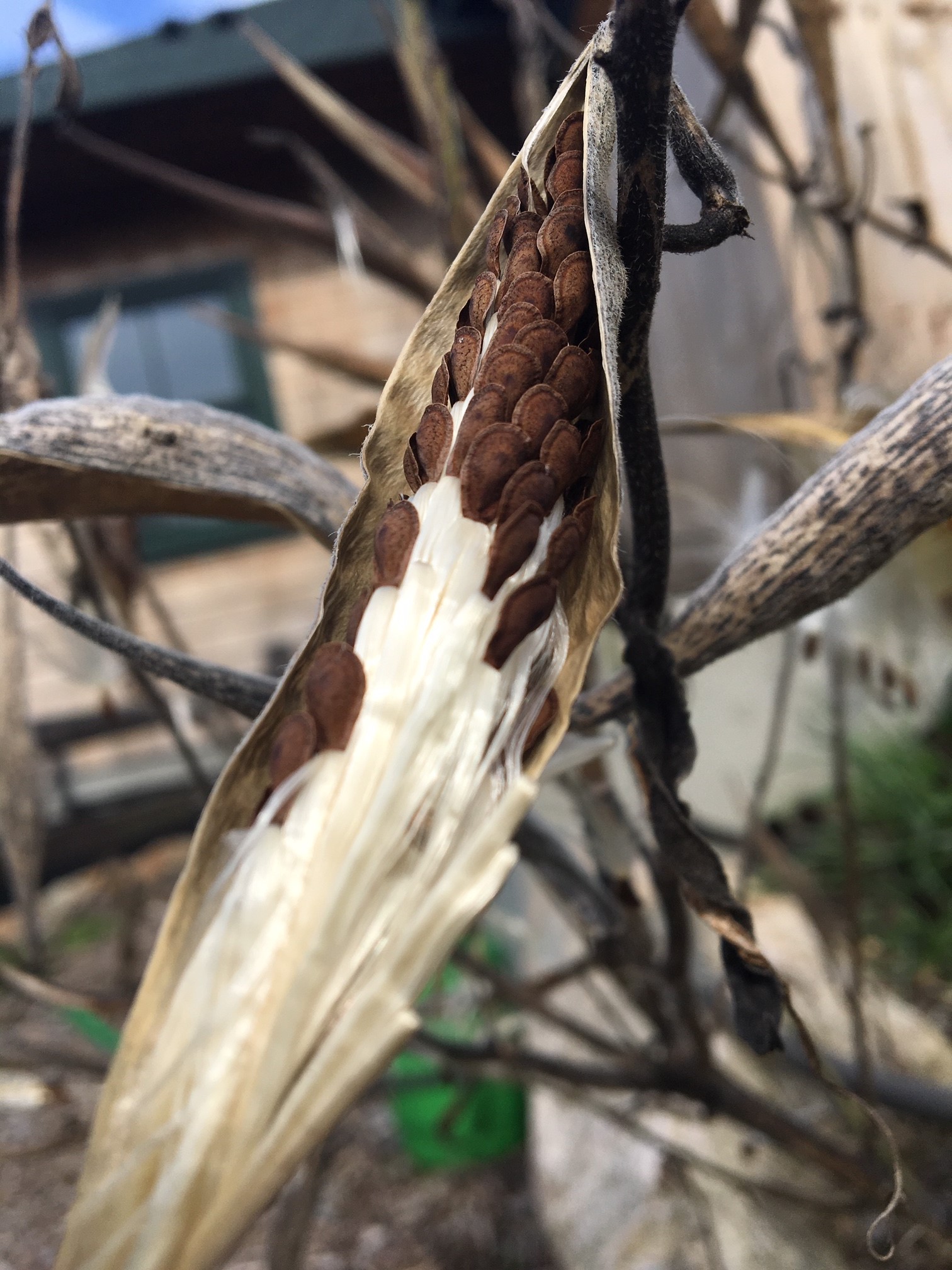
Last summer, the staff at Davis-Douglas Farm were fortunate enough to witness, up-close, the life cycle of multiple monarch butterflies. If you’ve visited the office before, you’ll know we have multiple gardens on the property, full of gorgeous plants and flowers that attract a number of pollinators; one such plant variety is swamp milkweed. Although typically found along the edges of ponds, lakes, and streams, swamp milkweed also acts as a great addition to any garden, both for its flowers and its connection to the monarch butterfly. In September, staff members first noticed a chrysalis attached to the porch roof of the Barn. Then, turning our attention to the nearby garden, we noticed a small army of monarch caterpillars munching away on the milkweed. Over the following weeks, these caterpillars shifted from using the plants as a food source, to using them as a location to attach and pupate. Excited at the opportunity to witness their metamorphosis, we periodically checked on them, documenting how each chrysalis changed; we even managed to witness a newly emerged monarch drying its wings!

Swamp milkweed, at the end of the summer.
Witnessing the process these insects go through is not only fascinating, but it’s a great reminder of how we all rely on nature to grow and survive. Unfortunately, monarch butterflies have been greatly affected by human impact on the environment. Milkweed is critical to the survival of monarch butterflies, as it is their only food source and they cannot complete their life cycles without it. [1] The use of herbicides resistant crops and dramatic shifts in seasonal temperatures have led to the loss of milkweed breeding habitats across the country and a significant decline in monarch numbers. [2] Although not formally listed as endangered, the U.S. Fish & Wildlife Service was petitioned in 2014 to protect the monarch butterfly under the Endangered Species Act; the listing decision is expected to be issued June 2019. [3]
When Wildlands protects a land parcel, it’s not only for the benefit of the surrounding community, it also maintains habitat for many species, both rare/endangered and common, that rely on that particular ecosystem. These large protected areas are incredibly important in maintaining the natural integrity of the region; however, they aren’t the only habitat local animal populations rely on. Gardens also act as habitat for various insects and, along with supporting local land trusts like Wildlands Trust, are a way you can personally help make a difference in the health of the region using your own back yard. For example, by planting milkweed and native nectar plants, you can help mitigate the habitat loss of the monarch butterfly while providing an important food source for bees and other pollinators.

The Xerces Society regional monarch-specific nectar plant guide map. Click the image to download their Northeast list.
Another way you can make a difference is by learning more about how various animals rely on the region’s natural landscapes and your affect on both them and their habitat. In past years, Wildlands has hosted presentations at our Community Conservation Barn on the topic of honey bees, owls, bats, and more with the intention of educating the public on these animals and raising awareness of the connection between wildlands and wildlife. Recently, we started our Wildlife on the Move lecture series, offering attendees a chance to learn more about regionally seasonal animals, as well as an opportunity to ask an expert any questions they may have. This month features a presentation by Professor Steven Reppert, MD on the monarch butterfly, its migration cycle, and a discussion of current threats and conservation efforts. We are also partnering with the Herring Ponds Watershed Association and hosting a presentation by Brian Bastarache and his students from Bristol County Agricultural High School on the endangered red-bellied cooter; a species of turtle that is only found in Plymouth County!
It’s through the support and commitment of you and others in which we succeed in protecting the region’s natural spaces for both our own health and enjoyment and for the animals that rely on them to survive. For more information on our Wildlife on the Move lecture series and other upcoming programs, visit: https://wildlandstrust.org/events
See below for some photos from last summer at the office: