


What’s New at Wildlands
Giving Up the Sun: Parasitic and Mycoheterotrophic Plants
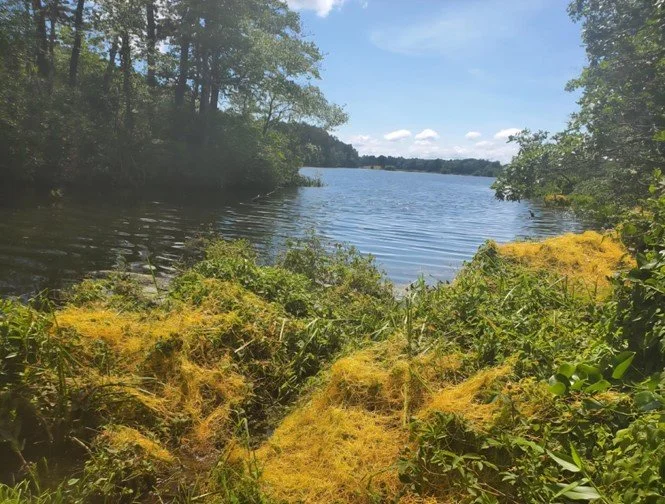
Dodder, Cuscuta sp., sprawling across a pond shore. Its entirely yellow growth and lack of leaves are hallmarks of holoparasites
By Justin Cifello
“Plants are green and get energy from the sun.” Elementary school truisms like this stick with us, but reality is far more complicated. Nature, in its profligate experimentation, produces exceptions to almost every category with which we try to describe it. It is true that most plants are autotrophs, collecting energy directly from the sun, while heterotrophic animals and fungi get their energy second-hand from plants or bacteria. However, there are always outliers. Carnivorous plants, famously supplement their diets by catching and eating animals. As strange as these plants are, they still have green leaves and their metabolism is still solar powered through photosynthesis. There is another group of plants that use an even more unconventional strategy: parasitic plants. Parasitism reasonably makes us uncomfortable. It seems like an ignoble, sneaky form of sustenance, more akin to disease than the hunting prowess of a bald eagle, but it is an incredibly complex form of predation.
Interdependency between species is known as symbiosis, and it comes in three main forms. The term is popularly—but incorrectly—understood to mean a relationship that benefits both parties, such as the relationship between flowers and bees. However, that is just one form of symbiosis, known as mutualism. Commensal symbiosis benefits only one party without harming the other; while parasitic relationships benefit one species to the detriment of the host. There is some gray area between these three groups, and the boundaries are limited by our understanding. It may well be that relationships believed to be parasitic do confer a benefit on the host that we just don’t know about yet. [1-Symbiosis]
An astounding amount of animals—over 40%—are parasitic; the strategy is thought to have independently evolved over 200 times. Since plants are generally incapable of rapid movement and have limited sensory input, it makes sense that they would have a harder time finding and catching a host. Besides, the sun is readily available. Despite this, about 4,500 species of plants are known to be parasitic. While this sounds like a lot, it only equates to 1% of all plants. [2-Parasites]
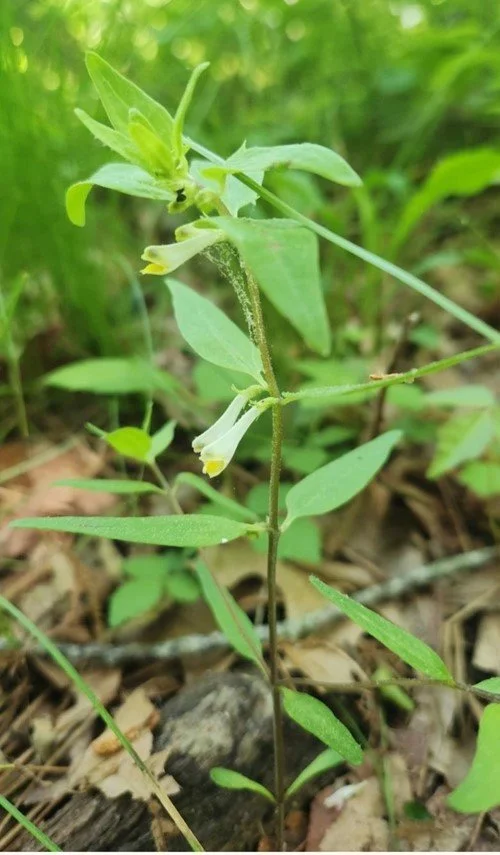
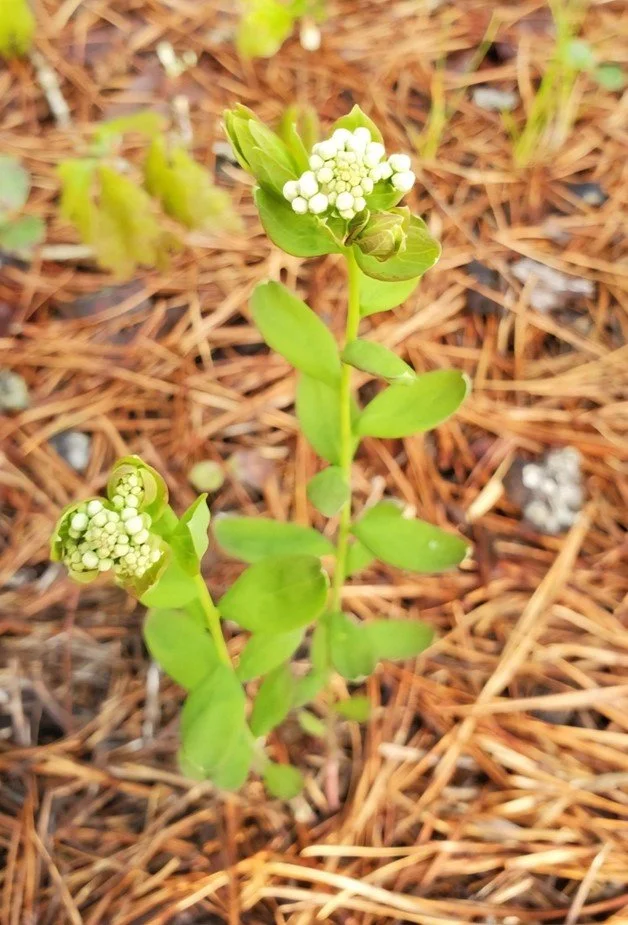
Luckily for us, parasitic plants do not target animals— with the exception of some marine algae that parasitize crustaceans. Algae isn’t really even a plant, so we’ll leave them be for today. Parasitic plants target slower hosts: other plants, and occasionally, fungi. Plants that derive all of their sustenance from other plants are called holoparasites; these plants do not photosynthesize at all, have no leaves, and come in a variety of non-green colors. Hemiparasites, by contrast, don’t fully commit to the lifestyle. They derive partial sustenance from their hosts and may have green, photosynthetic leaves or roots drawing water and/or nutrients from the soil. Often, these look like your average plant.
Though plant parasitism independently evolved numerous times and occurs across 20 different families, they all invented the same organ: the haustoria. These structures, believed to be modified roots, splice into the host’s vascular system, fusing the two plants together. This is similar to grafting, where farmers will, for example, fuse one variety of apple to another. This isn’t an uncommon practice; most tree fruit is grafted and is generally limited to within a species or genus. Parasitic plants fuse themselves to all manners of plants and fungi, far beyond humanity’s current technology. By producing a variety of compounds, these plants evade their host’s defenses. Some even hack into the host plant’s genome and steal parts of it for themselves through horizontal gene transfer, which is exceedingly rare in multicellular organisms. Some species of dodder have genetic material from over 100 other plant species embedded in their genome, like a thief copying house keys. [3-Gene Hacking]
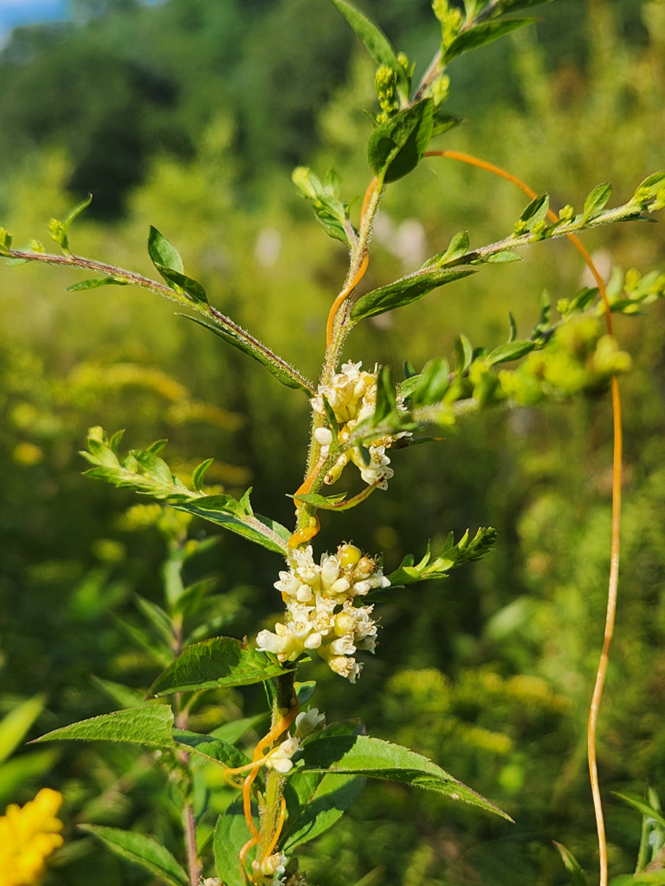
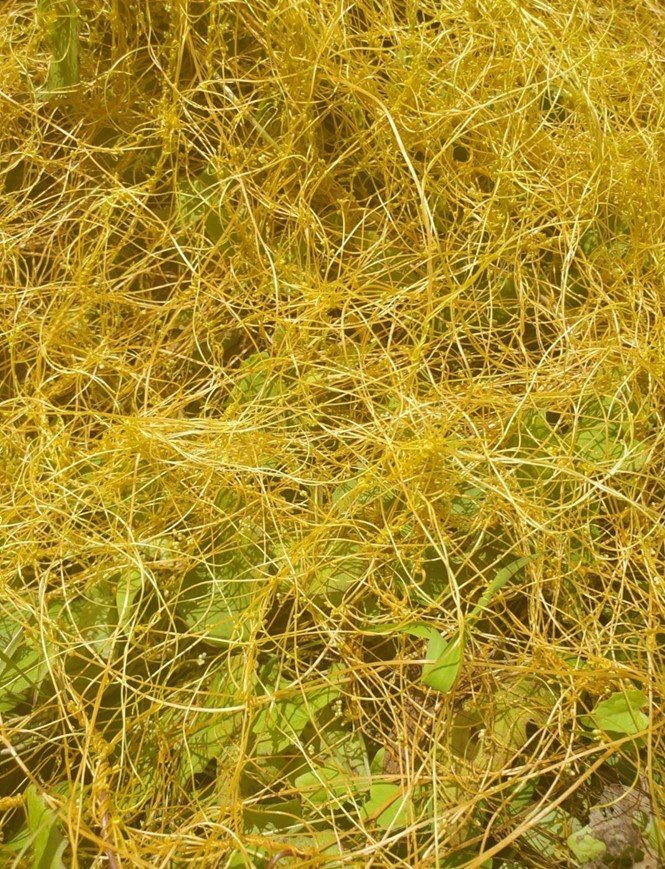
Though rare from a numbers perspective, these plants aren’t too hard to find. Dodder, for example, can be found in many wetlands. This member of the morning glory family is fully parasitic and has lost all leaves and chlorophyll; it looks a bit like yellow silly-string. Dodder lacks the hormones that trigger flowering and steals that ability; look for its small flowers attached to the stems of its host plants. There are many species of dodder, and most are generalists, targeting numerous host species.
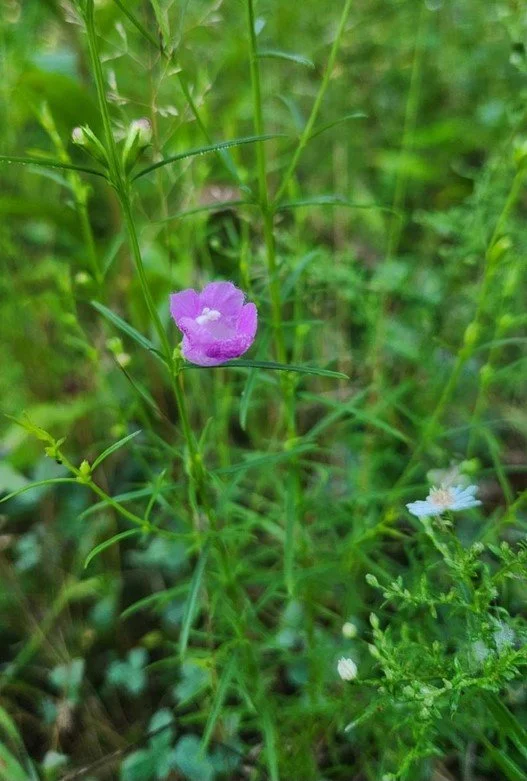
False Foxgloves, Agalinis spp., can be found in fresh and saltwater wetlands, where it is hemiparasitic on a variety of hosts.
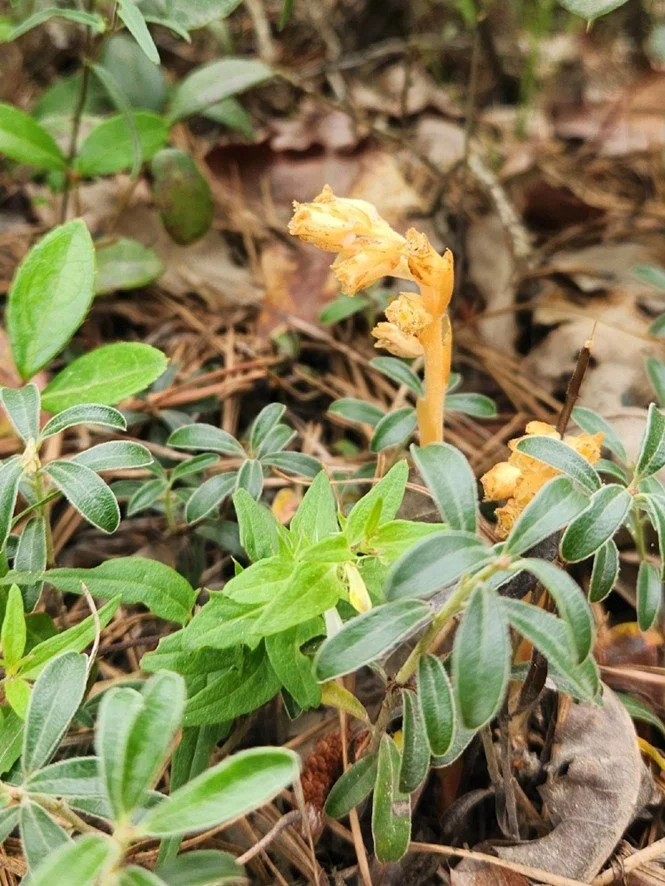
Our other local holoparasites are more specific. Beechdrops only grow on their namesake beech. These striking red and yellow plants can be found in most beech forests. Unlike dodder, they are not thought to harm their much larger hosts. Our other two native holoparasites are less common. I have yet to encounter bearcorn or one-flowered cancer root, though they are documented in our area. We are just south from dwarf mistletoe’s range, but keep an eye out for it on conifers on trips north. This holoparasite grows in the canopy, and has explosive seedpods that can launch its seeds at speeds up to 60 mph. [4-Mistletoe]
Hemiparasites aren’t uncommon, but are harder to notice, since they still have green leaves and appear as normal plants. These include toadflax, false foxglove, cow-wheat, and wood betony. These can be found in a variety of habitats utilizing a variety of hosts. One, the American chaffseed, is incredibly rare, with only one known population in Massachusetts, located in Barnstable. Some hemiparasites are only facultative parasites, meaning they are capable of living fully on their own. [5-Native Species]
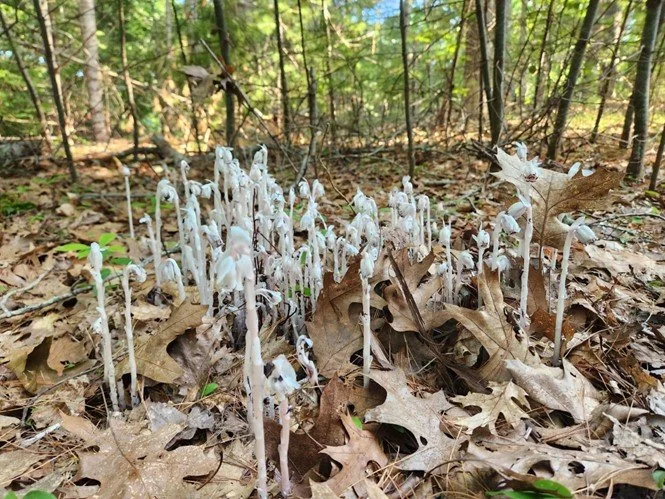
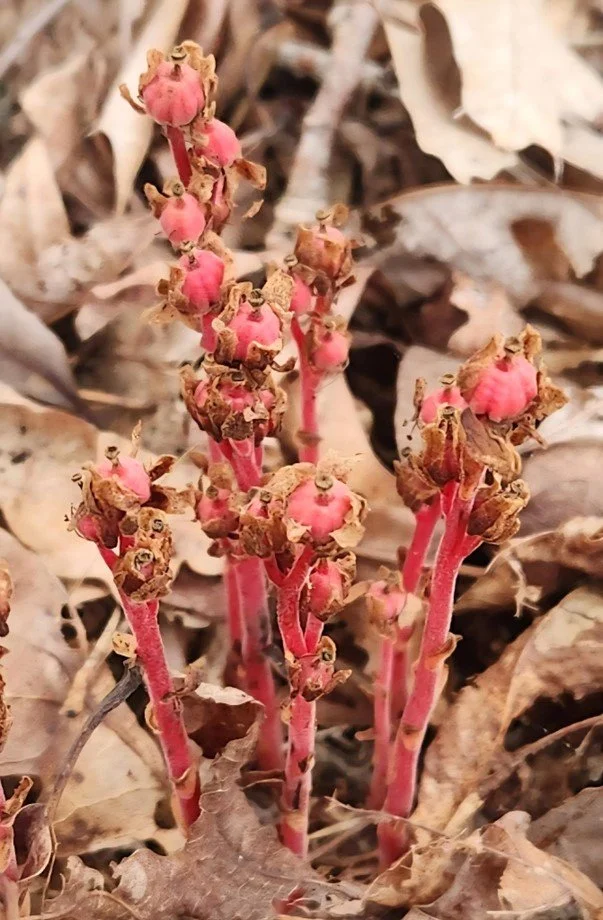
Plants that are parasitic upon fungi are called myco-heterotrophs, which can look quite like mushrooms themselves. The most well-known of these are ghost-pipes, whose white flowers can be found blooming in deep shade. Pinesaps, with red and yellow stems, are less common. A great many plants have relationships with soil fungi, and some, like lady-slipper orchids, are fairly dependent on them. Most of these relationships are believed to be mutualistic. However, since these occur underground and can involve multiple species, they are poorly understood. It is likely some of these relationships are indeed parasitic. [6-Myco-Heterotrophs]
Some parasitic plants are serious agricultural pests, though they aren’t a major issue in our area. With the exception of some dodder species, all of the plants discussed here are native. Parasites, as squeamish as they may make us, offer a variety of ecosystem services. By offering nectar and pollen and creating unique structures and habitats, they help diversify our forests. Their strange habits create novel channels for nutrient cycling. Even seemingly destructive ones, like the dodders, create openings in dense vegetation, giving other species room to grow. By connecting various host plants, some parasites serve as “signal highways,” allowing hosts to communicate with one another and better respond to environmental stress. The sophisticated mechanisms found in these plants can also help our understanding of genetics and chemistry. For us as hikers and land stewards, they offer yet another glimpse into nature’s endless complexity. One never knows what drama is unfolding in the small plants in the leaf-litter, or that mess of silly-string tangled in a bog. [7-Signal highways] [8-Ecosystem Services]
Further Reading:
[1]Symbiosis- https://stri.si.edu/story/its-complicated
[2] Parasites- https://www.smithsonianmag.com/science-nature/parasites-are-everywhere-so-why-do-so-few-researchers-study-them-180984753/
[3] Gene Hacking- https://www.psu.edu/news/research/story/parasitic-plants-use-stolen-genes-make-them-better-parasites
[4] Mistletoe- https://ucanr.edu/blog/forest-research-and-outreach/article/mysterious-mistletoe
[5] Native Parasitic Plants (search individual species for images and descriptions- https://gobotany.nativeplanttrust.org/search/?q=parasitic
[6] Myco-Heterotrophs- https://www.indefenseofplants.com/blog/tag/Mycoheterotrophic
[7] Signal Highways- https://academic.oup.com/plphys/article/196/2/716/7695732
[8] Ecosystem Services- https://www.currentconservation.org/parasites-unloved-unseen-essential/
Wildlands’ Mighty Sourwood
By Marilynn Atterbury, Key Volunteer
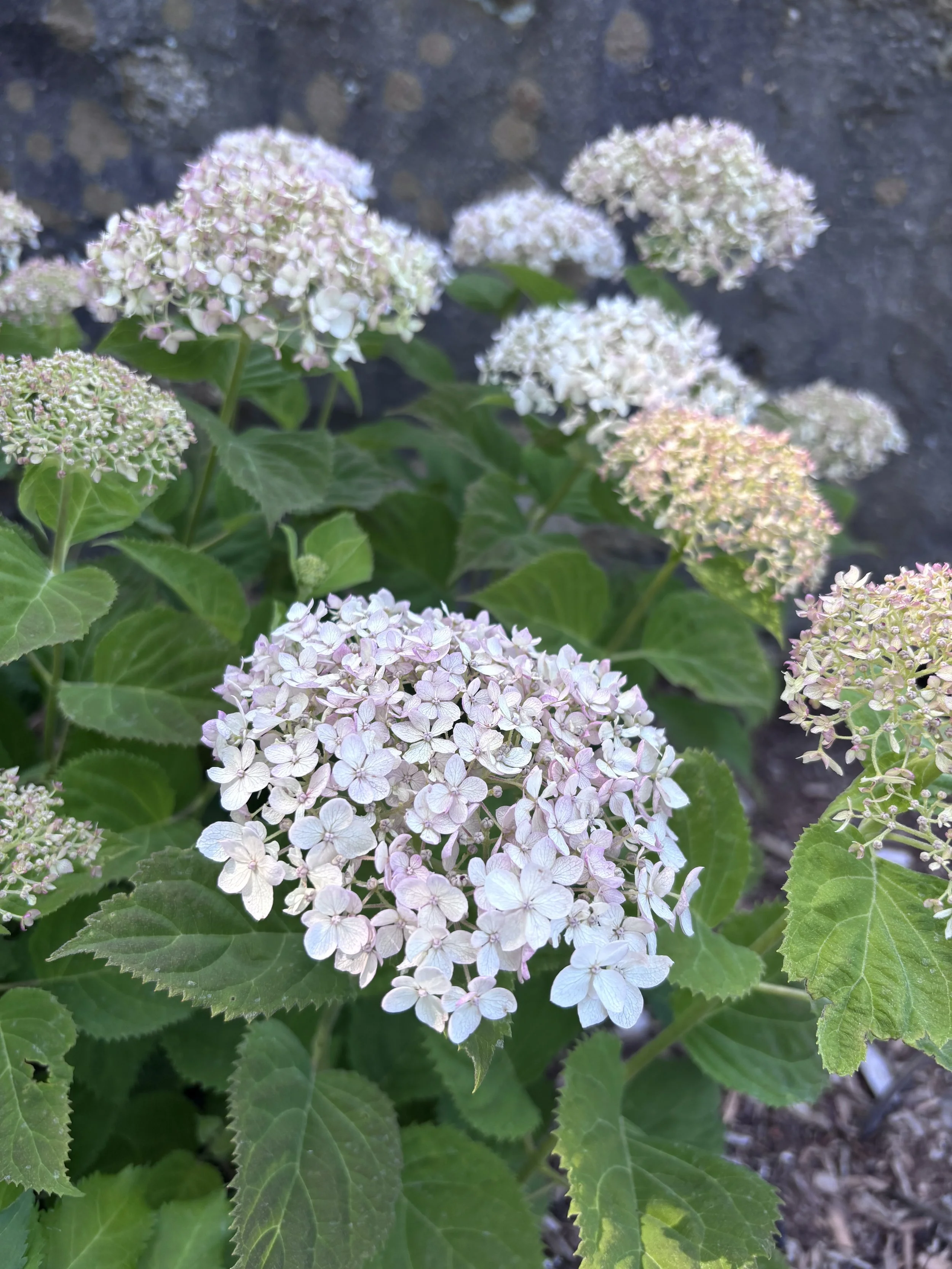
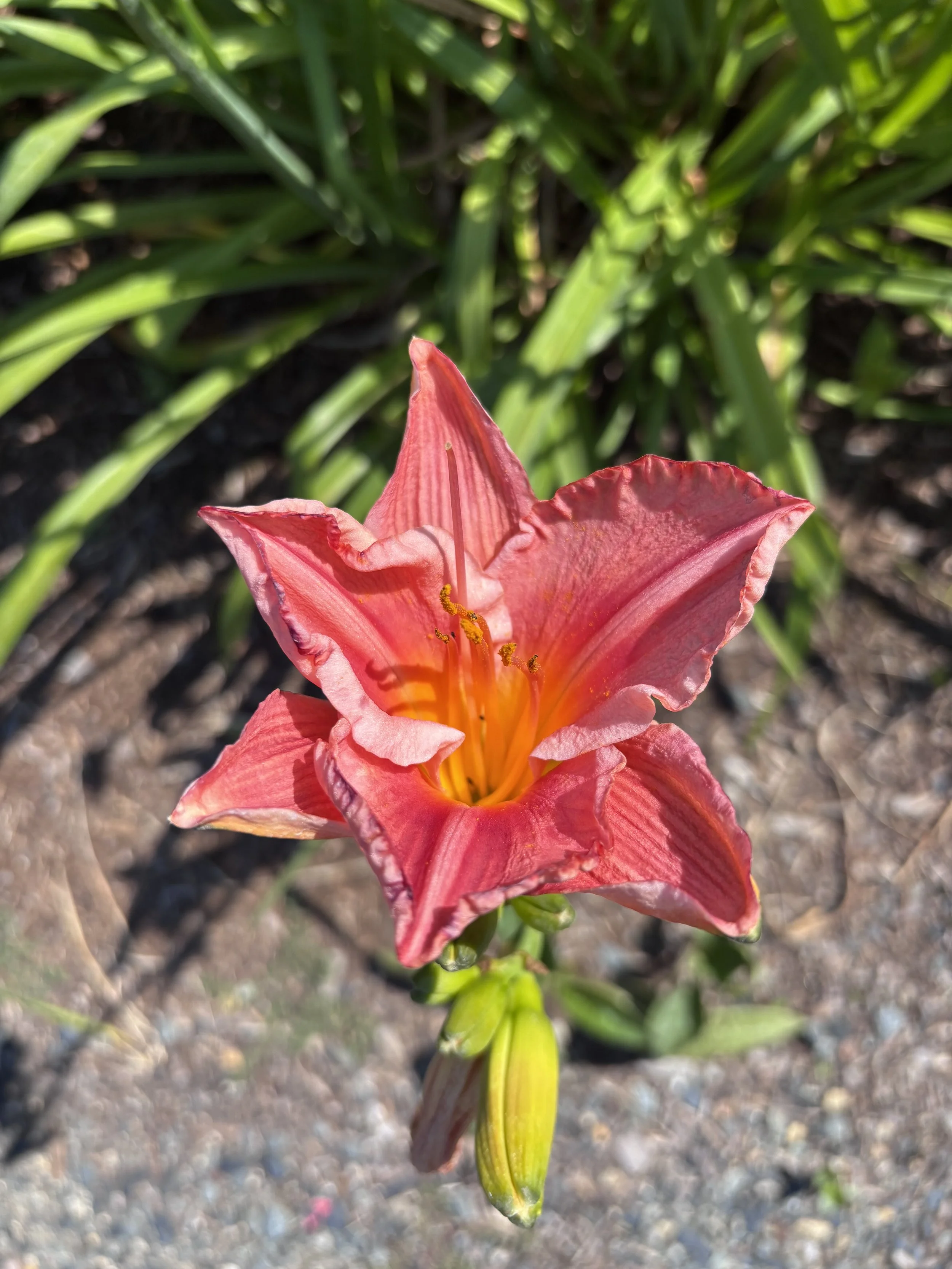
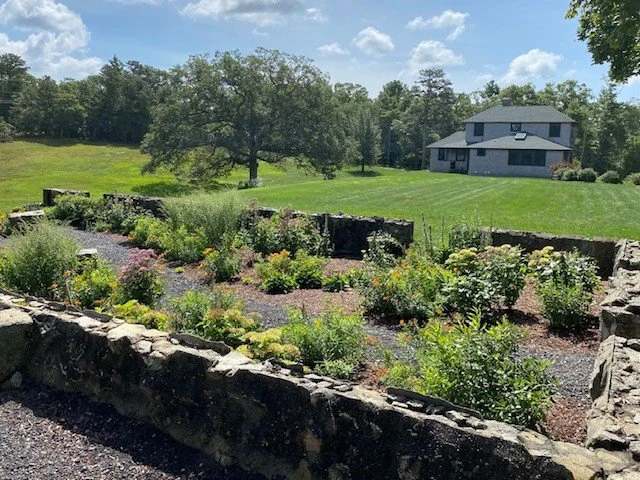
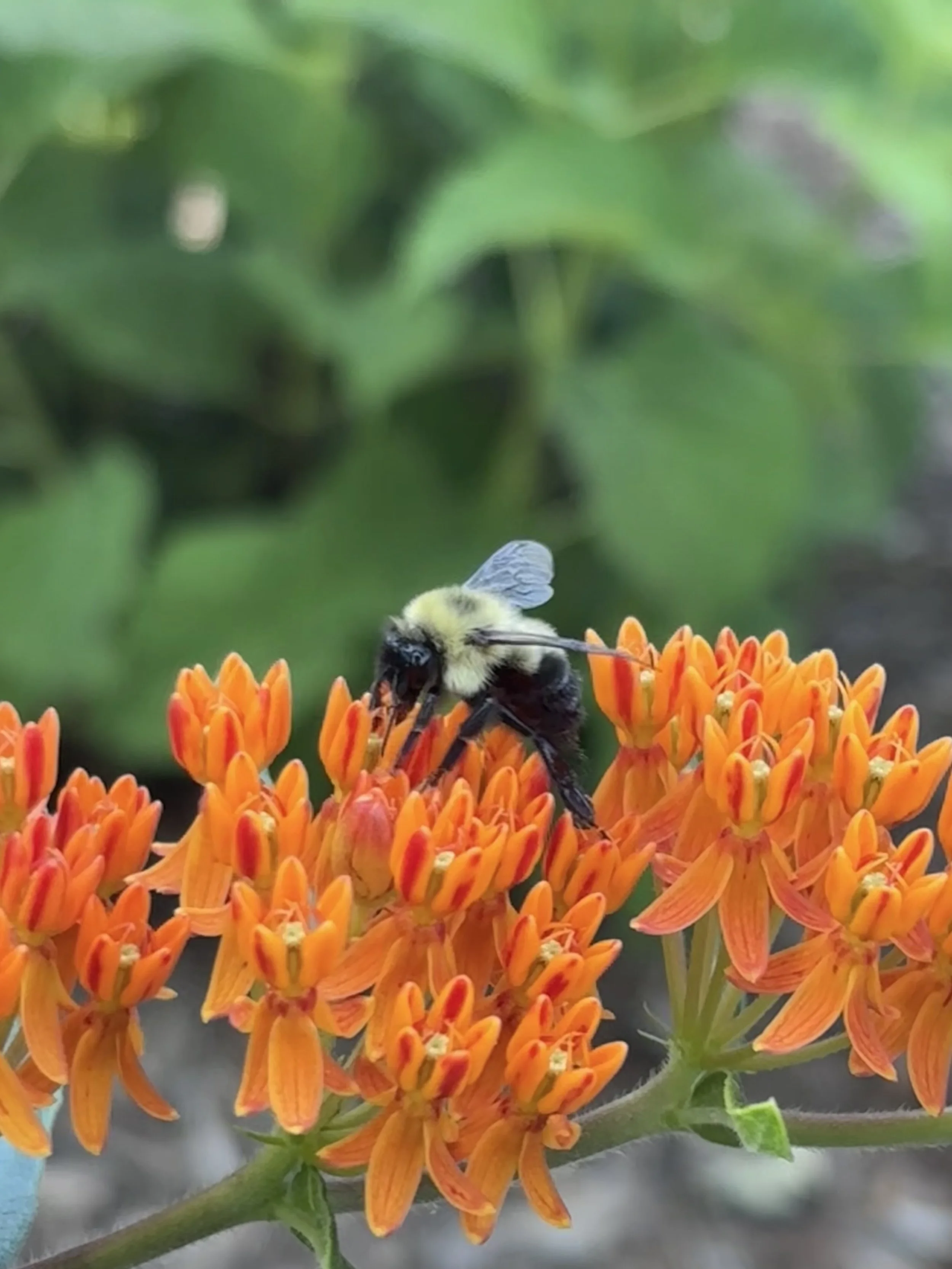
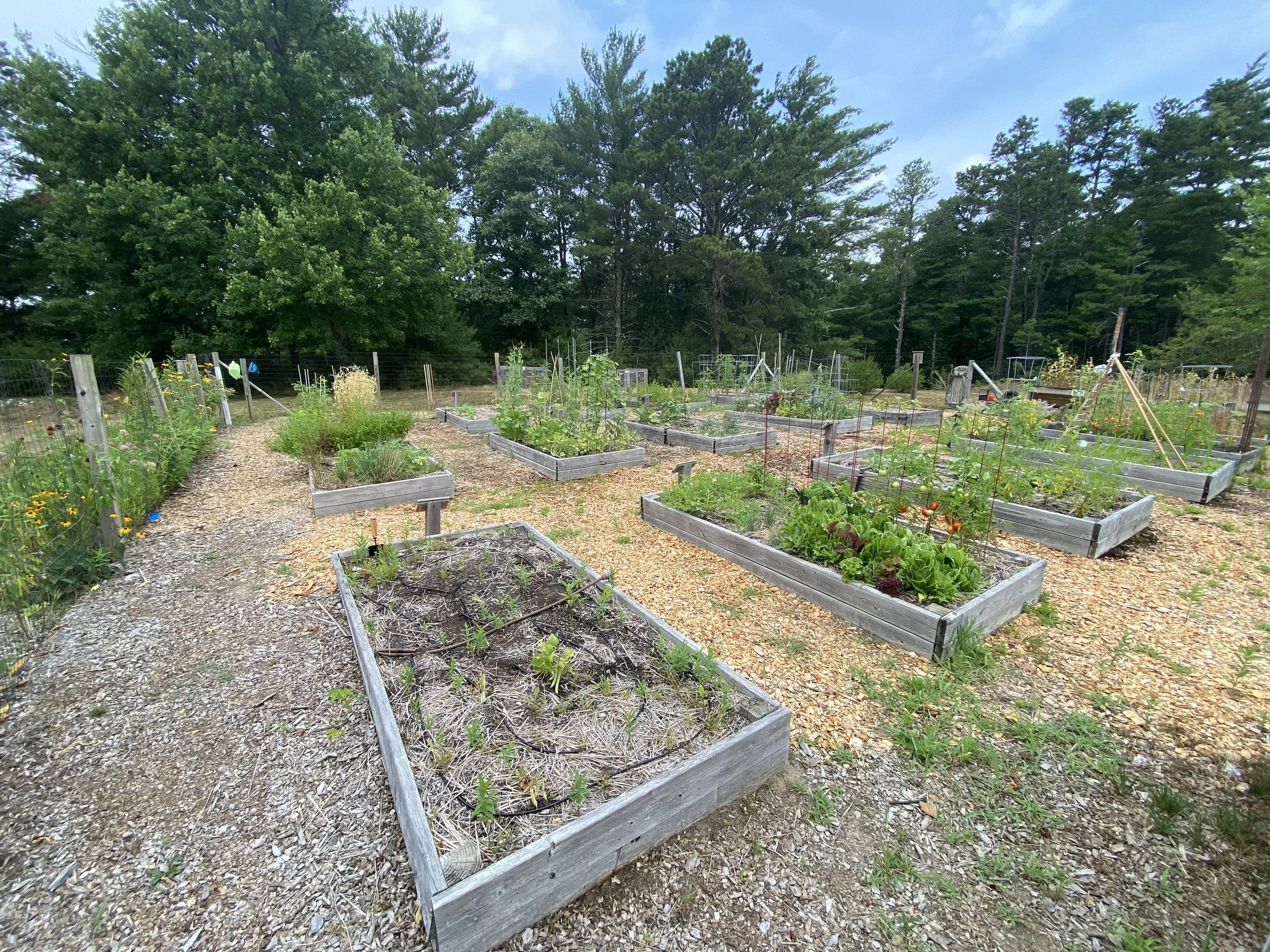
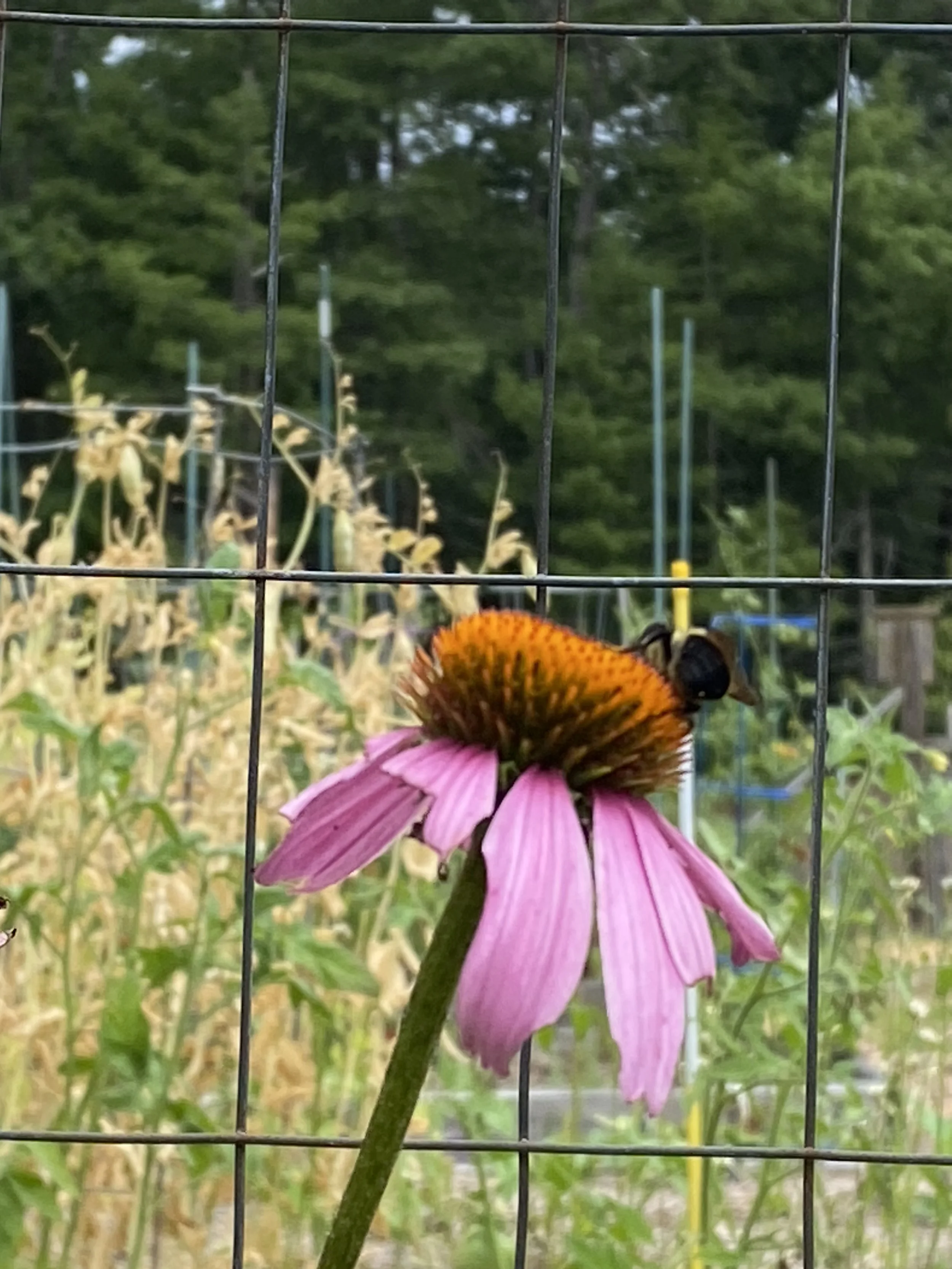
At Wildlands Trust, we primarily garden with native pollinator plants. However, there are a few exceptions.
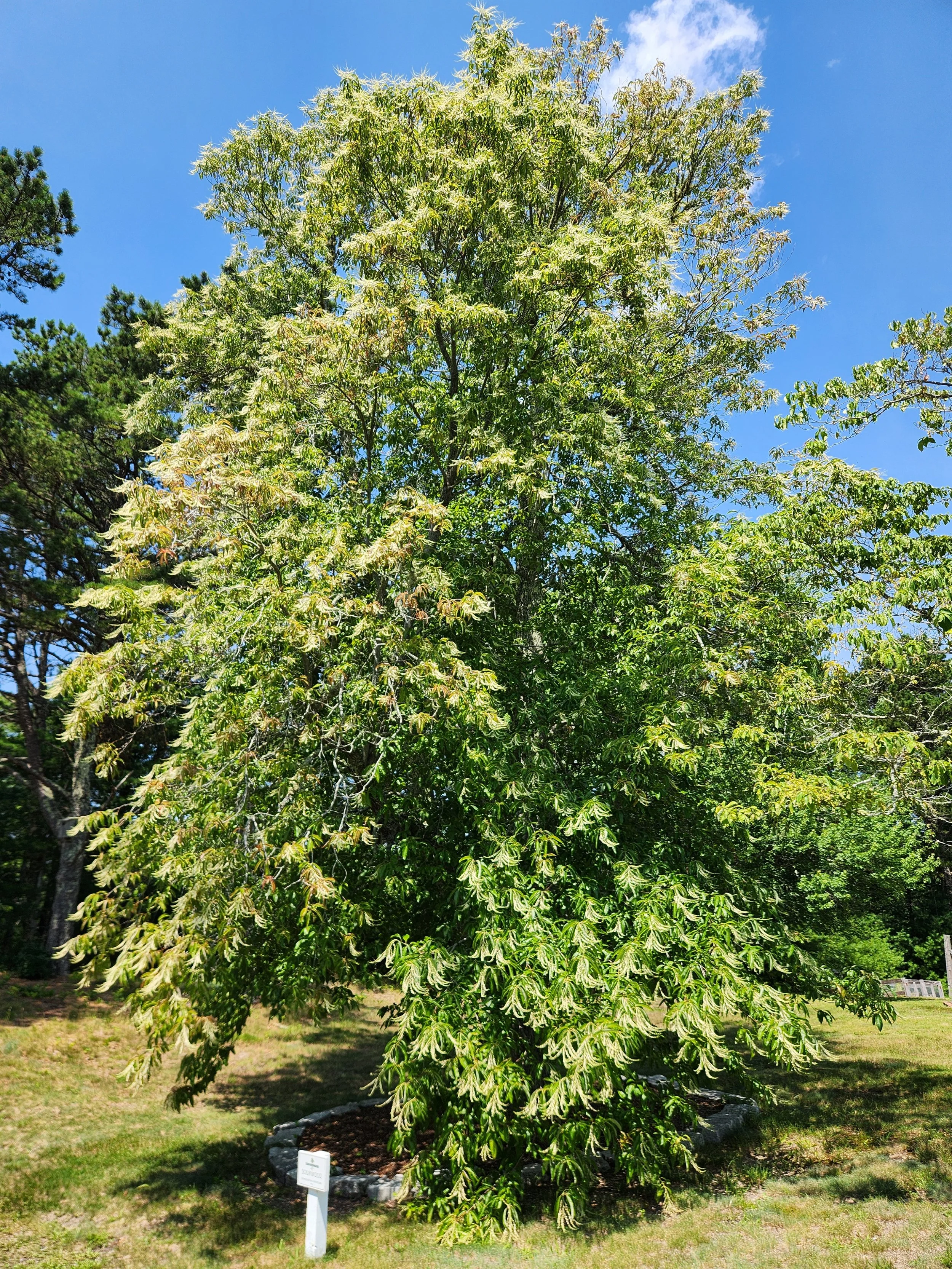
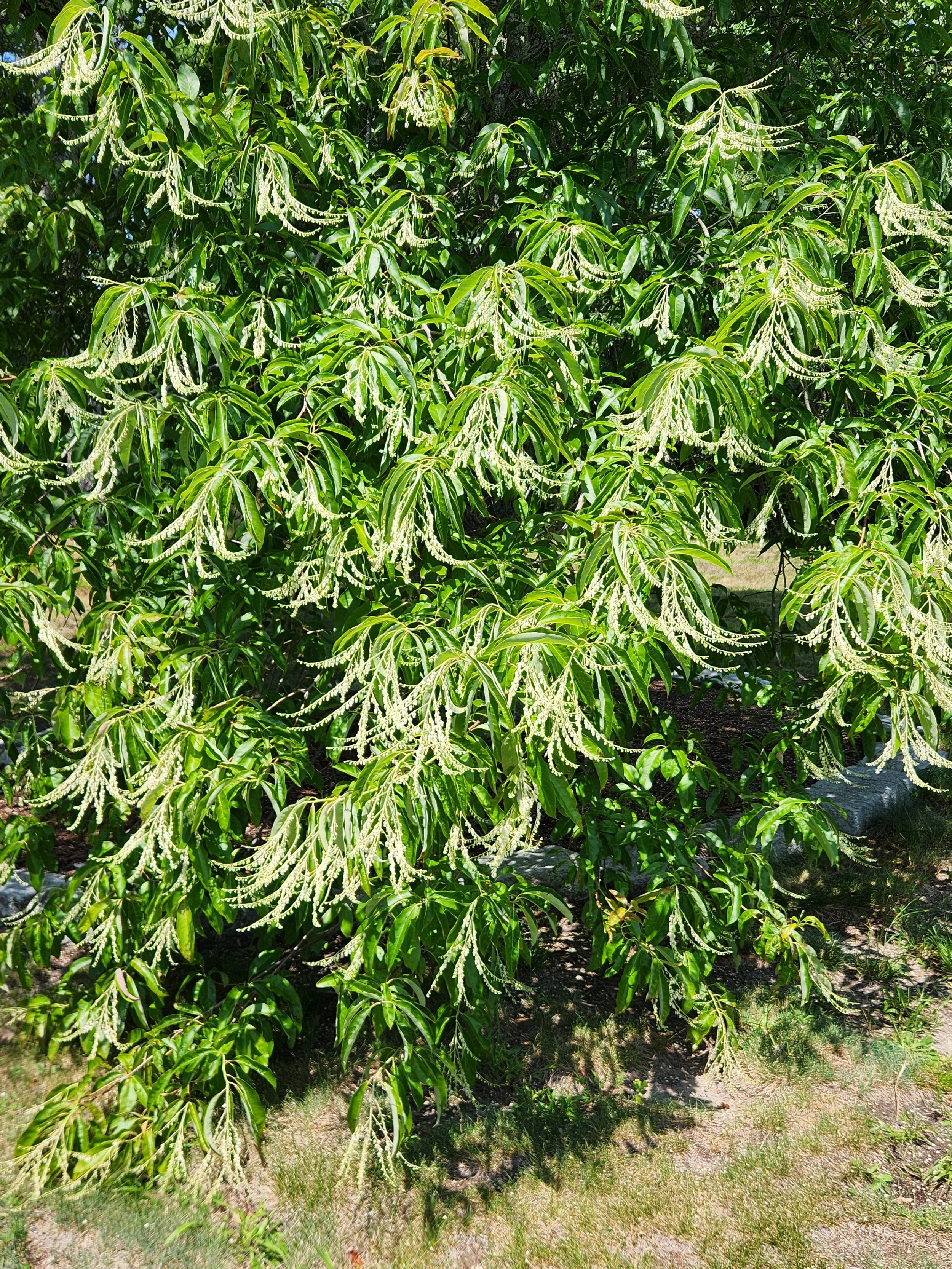
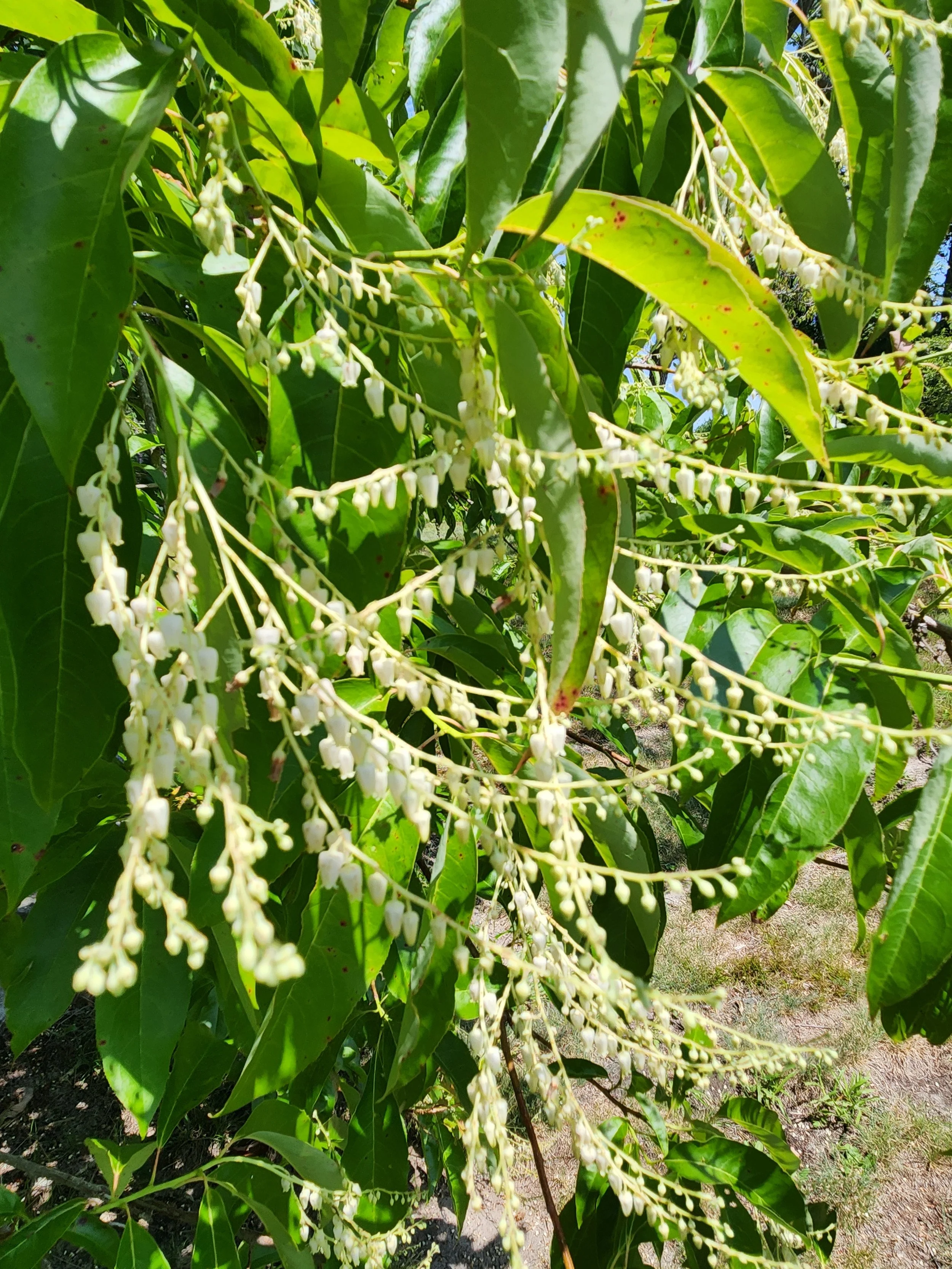
One of exception is our majestic Sourwood tree. It is believed to have been planted over 60 years ago by the Bongiovanni boys who once farmed the Davis-Douglas Farm.
The Sourwood tree is native to Eastern North America from Pennsylvania and south, yet it has flourished here at the Wildlands Trust Headquarters in Plymouth. And, yes, it is a pollinator tree.
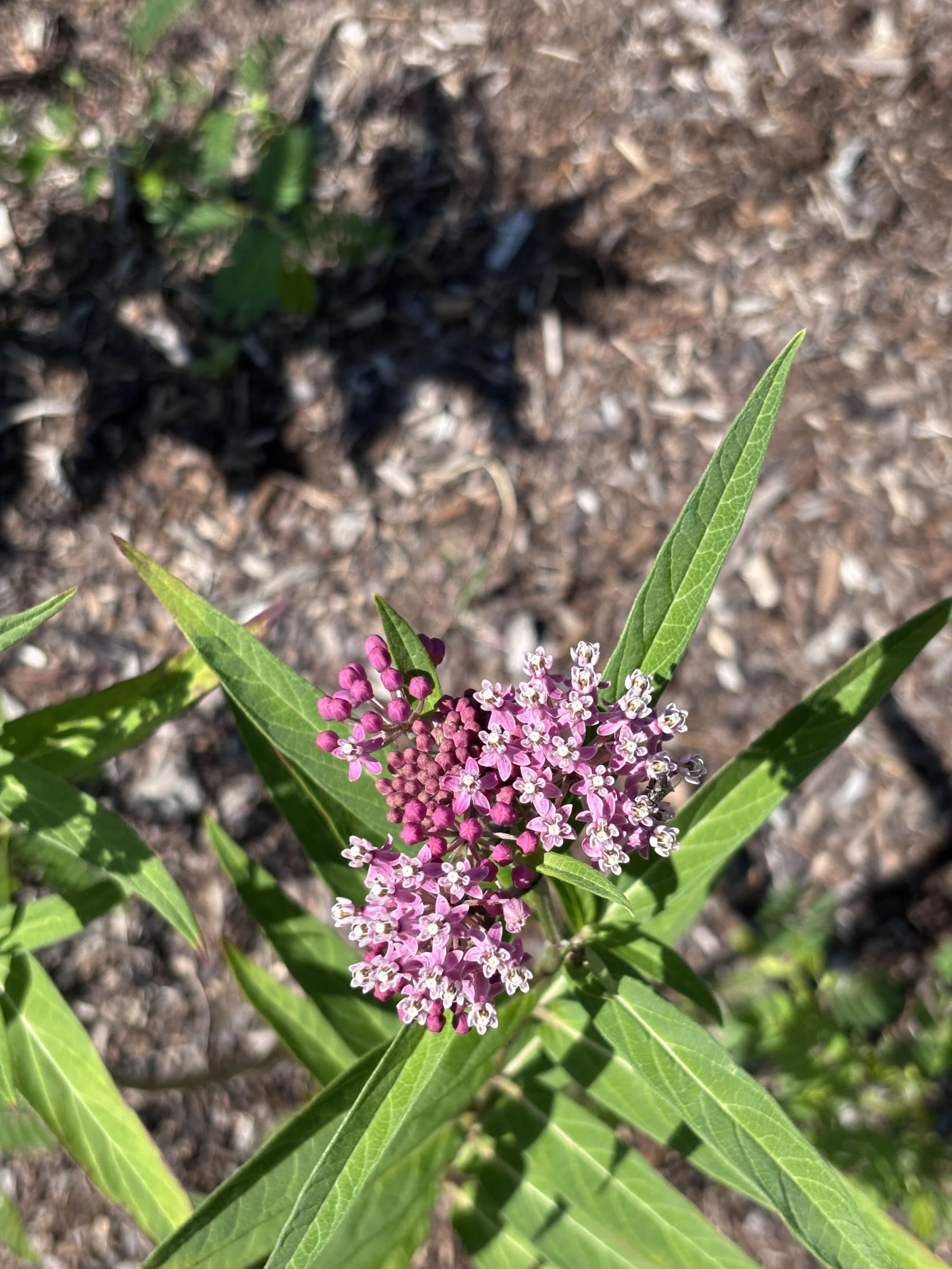
In July, it is covered with beautiful, creamy white flowers that resemble Lilly-of-the-Valley, attracting bees that produce a highly prized honey. And in the Fall, the leaves turn a vibrant color.
So, please feel free to stop by the Wildlands Trust Headquarters at Davis- Douglas Farm to admire our beloved Sourwood tree and, while you are there, visit all of our native pollinator gardens.
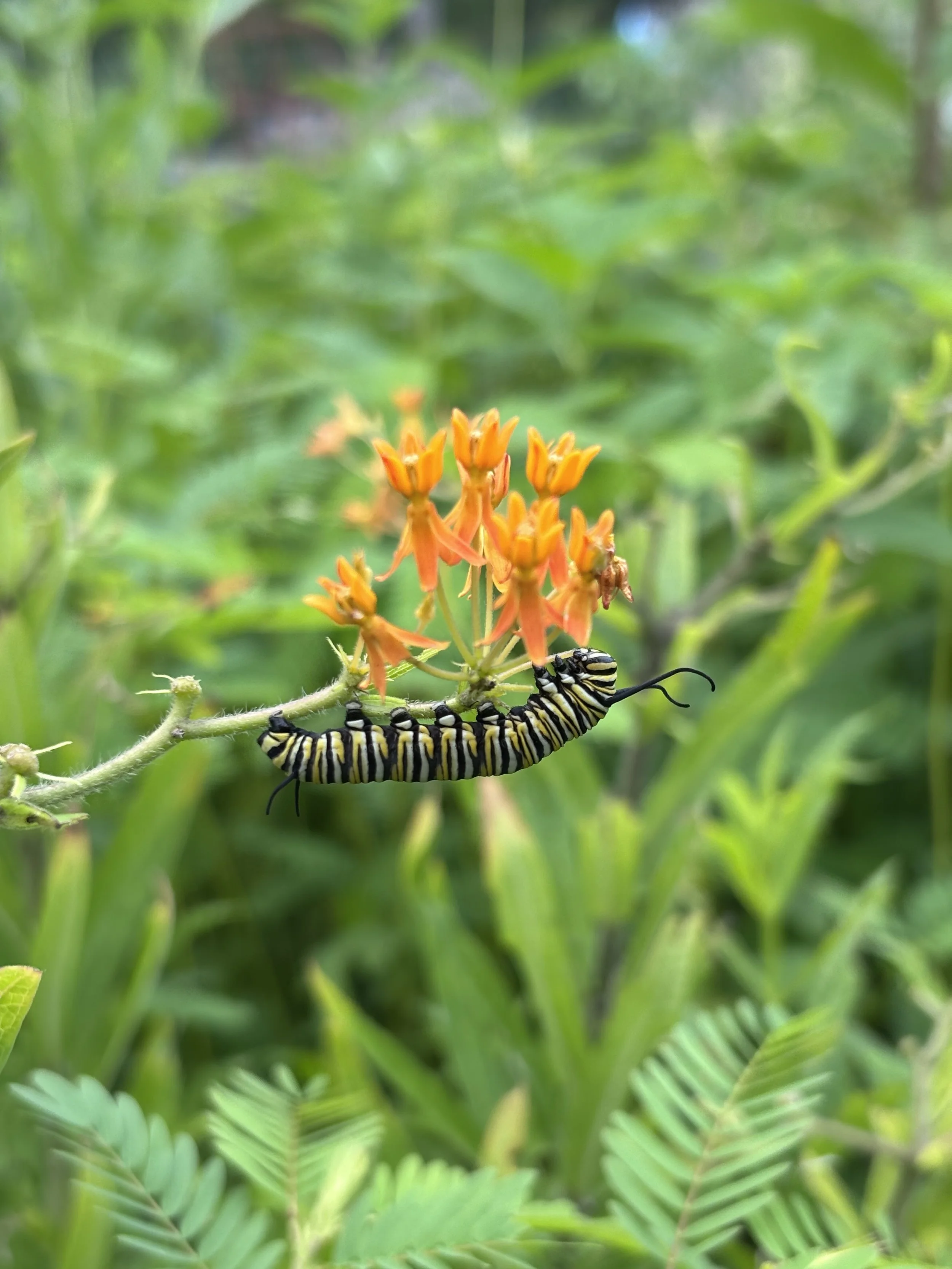
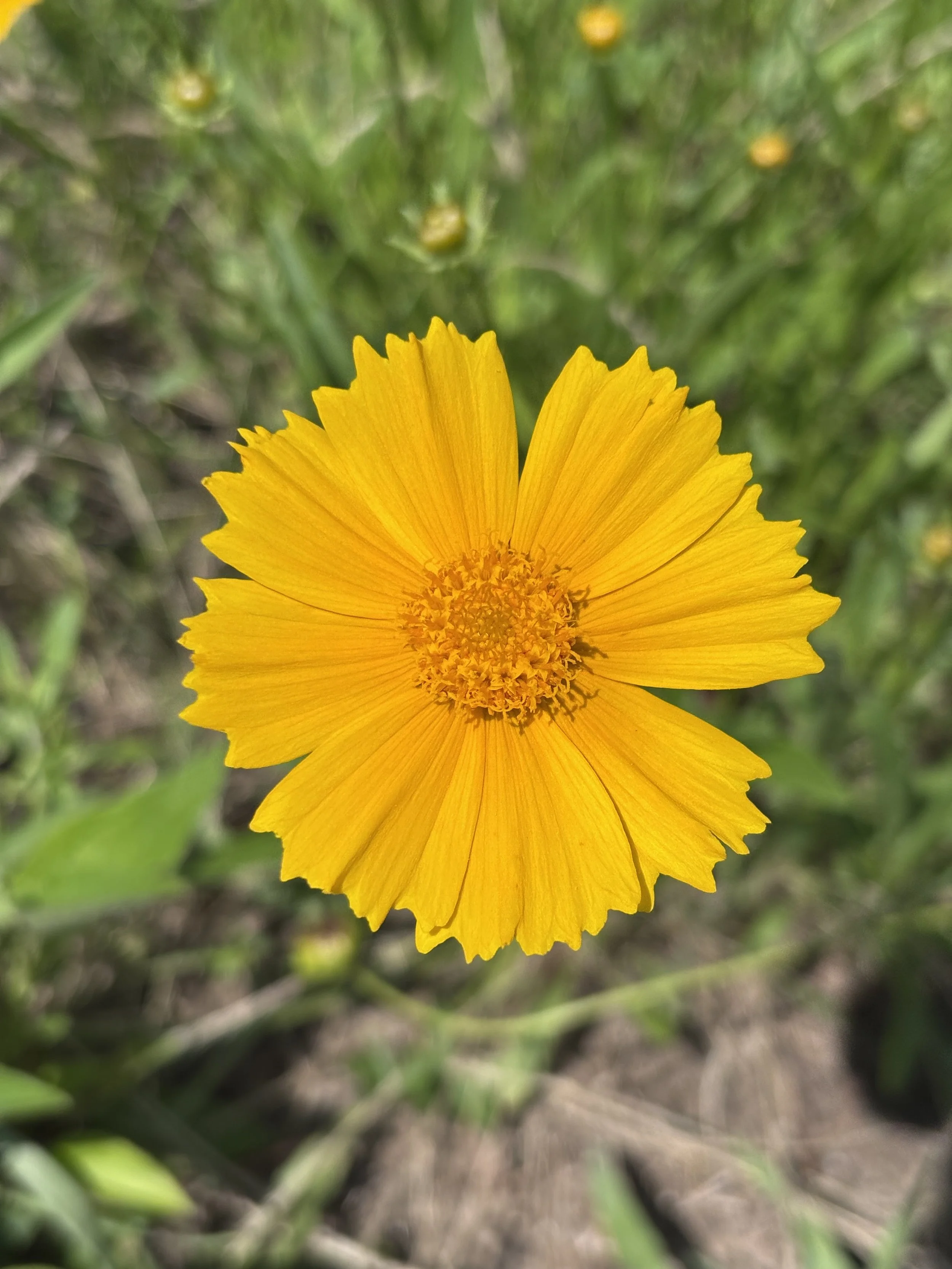
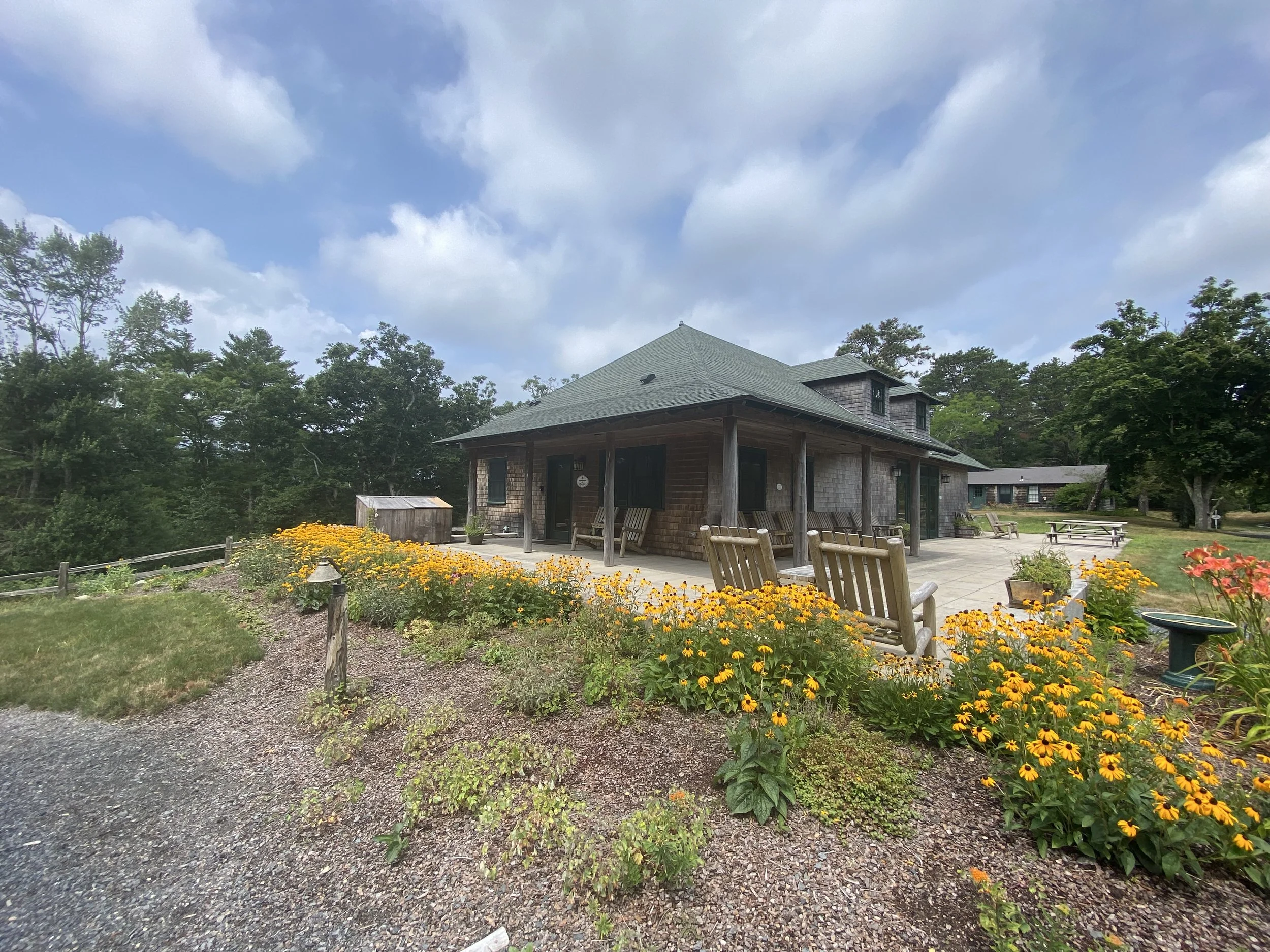
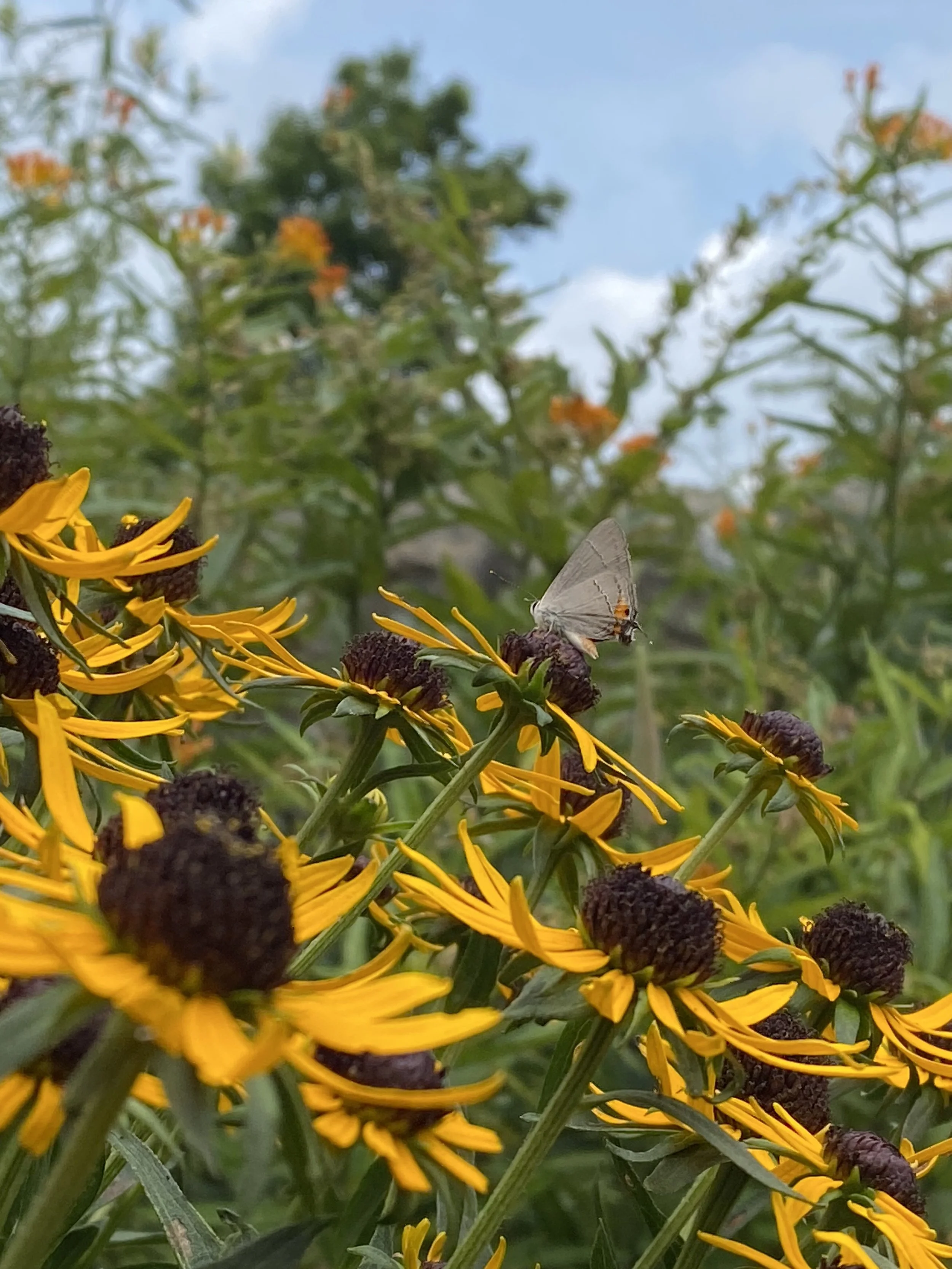
Listening to the Landscape: BSU Students Discover the Sounds of Great River Preserve
By Maria T. Armour, M.S., Staff Associate and Instructor at Bridgewater State University
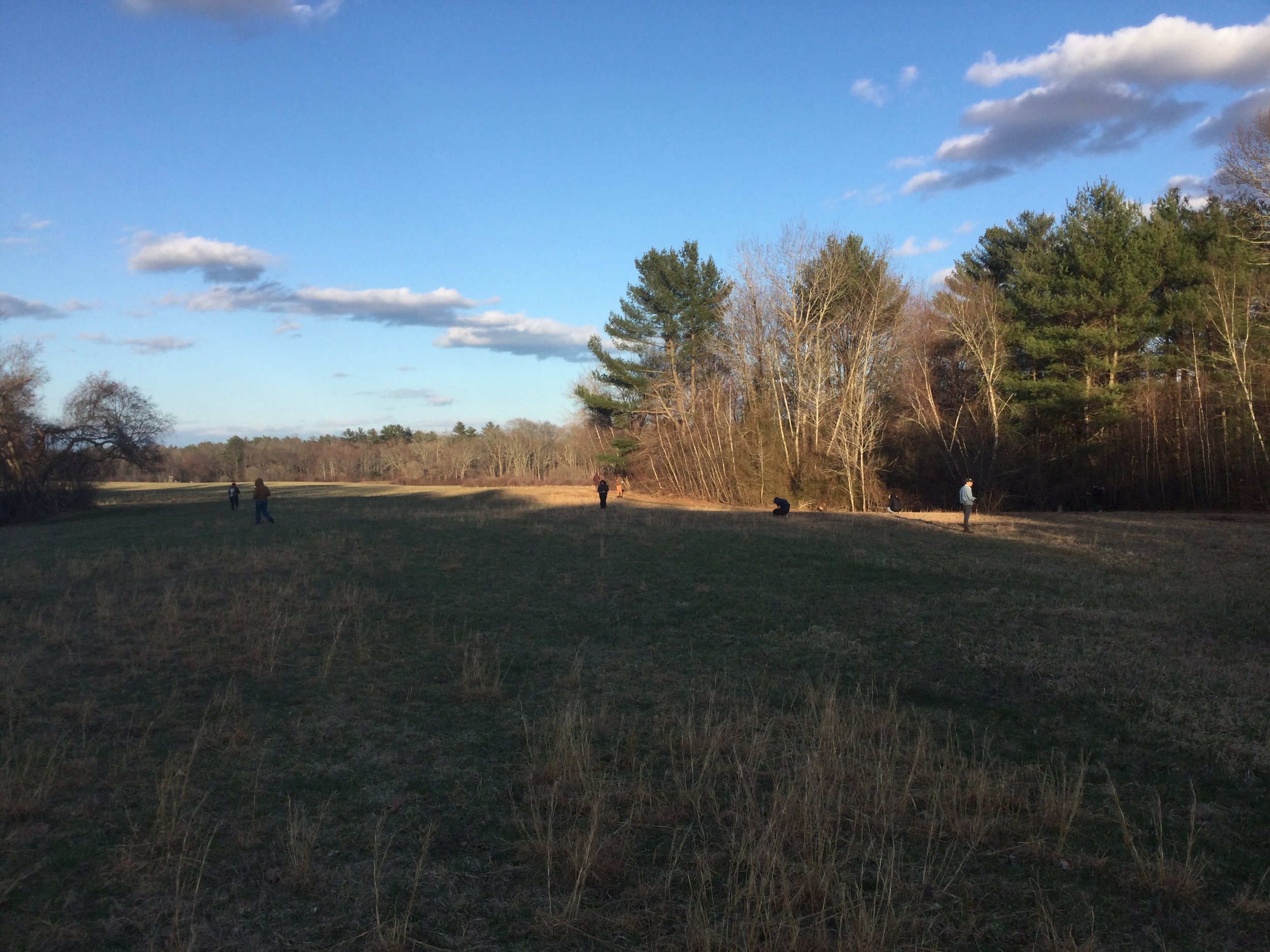
Bridgewater State University Soundscape Ecology students conducting their observations at Great River Preserve.
This past April, students from Bridgewater State University's Soundscape Ecology course traded in the classroom for the trails of Wildlands Trust’s Great River Preserve. At Great River Preserve, they explored the landscape through one of our most overlooked senses: hearing. With its diverse habitats of open fields, woodlands, and river frontage, the preserve provided an ideal outdoor laboratory for undergraduate and graduate biology students to investigate how wildlife- and human-made sounds can reveal the health and diversity of an ecosystem.
The BSU students visit to the preserve combined both passive and active monitoring. They deployed passive ultrasonic bat recorders for a week to document bat activity at the preserve, while also participating in an evening soundscape activity designed to sharpen their own listening and identifying skills. During this active activity, students were asked to sit quietly in the field with their eyes closed. Students first focused on simply noticing the sounds around them before creating a mental map where those sounds originated. They then used the Merlin Sound ID app to identify birds by their songs. For many students, the hardest part of the exercise wasn't identifying birds, it was putting their phones away long enough to truly listen! The activity was a powerful reminder that careful scientific observation begins by slowing down and paying attention to the world around you.
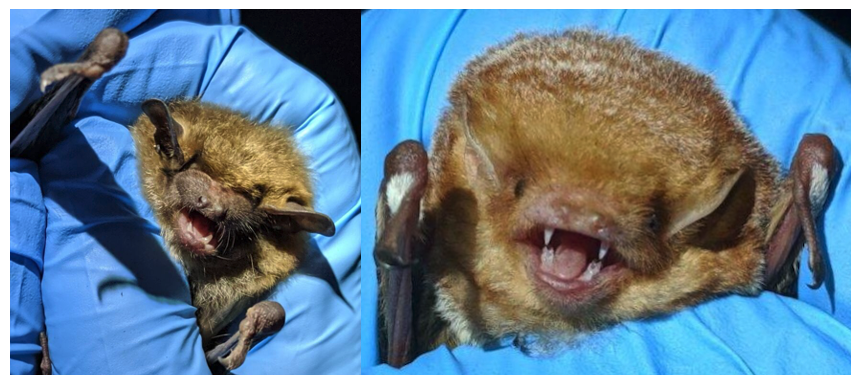
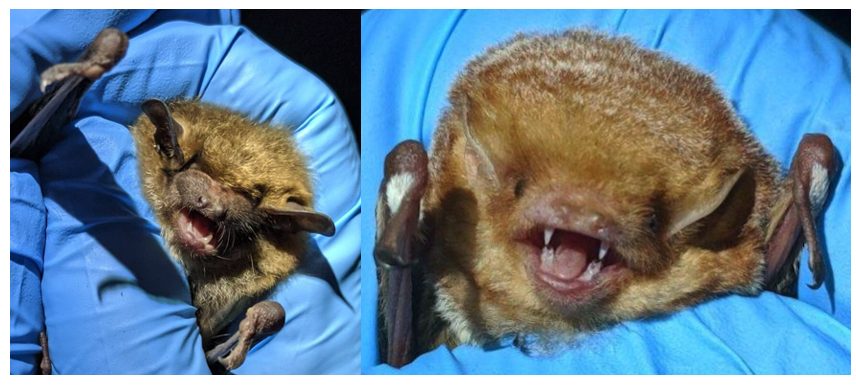
Big brown bat (left) and eastern red bat (right), two bat species documented at Great River Preserve. Photo by M. Caitlin Fisher-Reid.
The passive week-long bat survey also helped students grasp the value in acoustic studies. Massachusetts is home to nine bat species, and despite sampling during early spring, when bat activity is still relatively low, students detected five species using ultrasonic recorders: big brown bats, eastern red bats, hoary bats, silver-haired bats, and little brown bats. Activity was highest along the forest edge and river corridor, while the middle of the open field recorded no bat activity; a pattern that reflects where bats typically forage for insects. Big brown bats were the most detected species, while little brown bats remained comparatively scarce, likely reflecting the ongoing impacts of White-nose Syndrome on many of our native bat populations.
Beyond collecting valuable ecological data, this experience allowed students to practice every step of the scientific process - from developing research questions and testing hypotheses to collecting and analyzing real field data. Just as importantly, time spent immersed in the sounds of Great River Preserve fostered a deeper appreciation for the remarkable wildlife and protected landscapes that Wildlands Trust works to conserve. By listening closely, students discovered the story this habitat has to tell.
***
Want to learn more about the wonderful world of bats with Maria Armour? Register for our FREE Bat Walk at Great River on September 3! Maria will begin the event by sharing her knowledge of and passion for bats. Then, as dusk settles, she will guide visitors on a walk through parts of Wildlands Trust’s Great River Preserve in search of these magnificent flying mammals.
Lichen: The Forest in the Trees
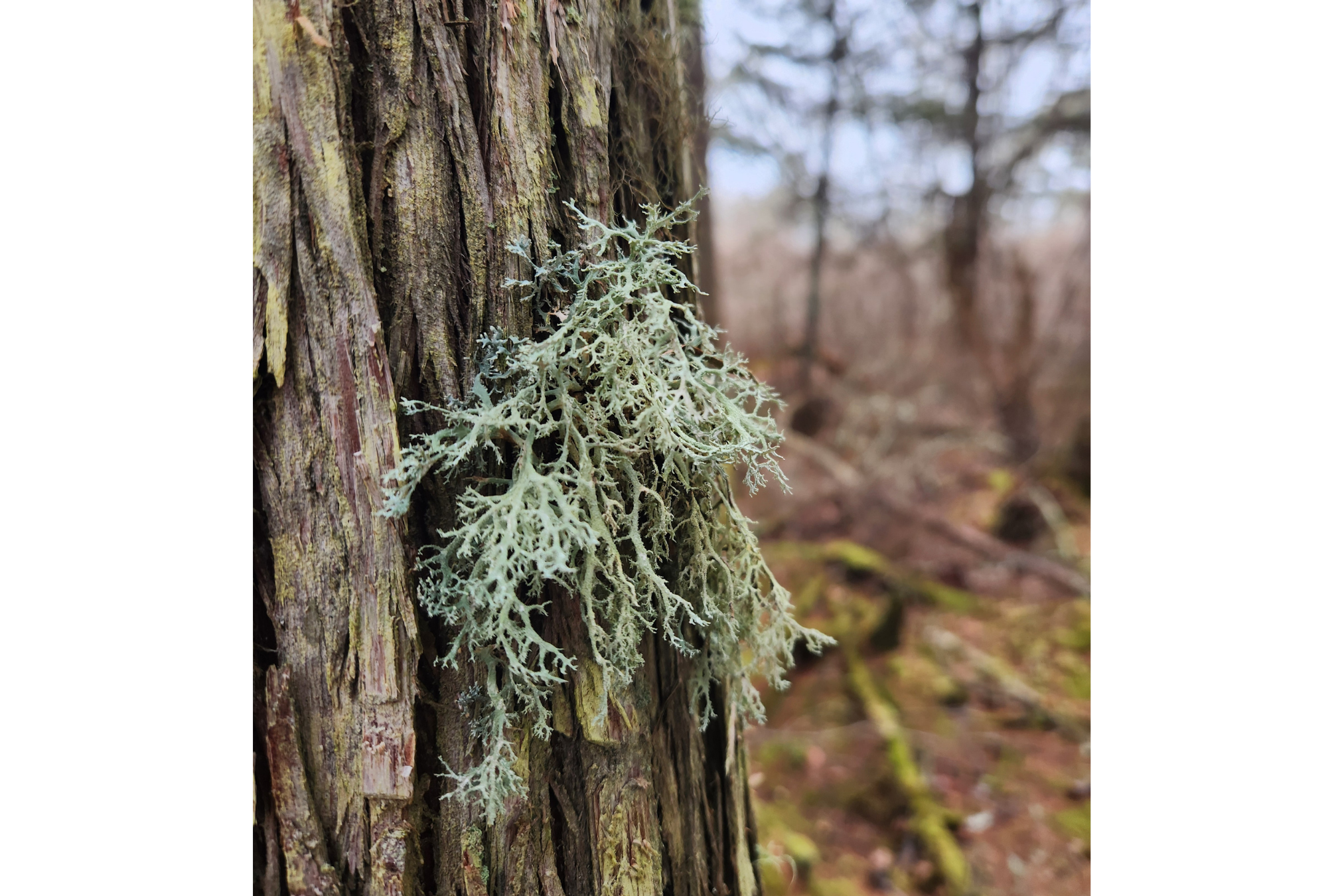
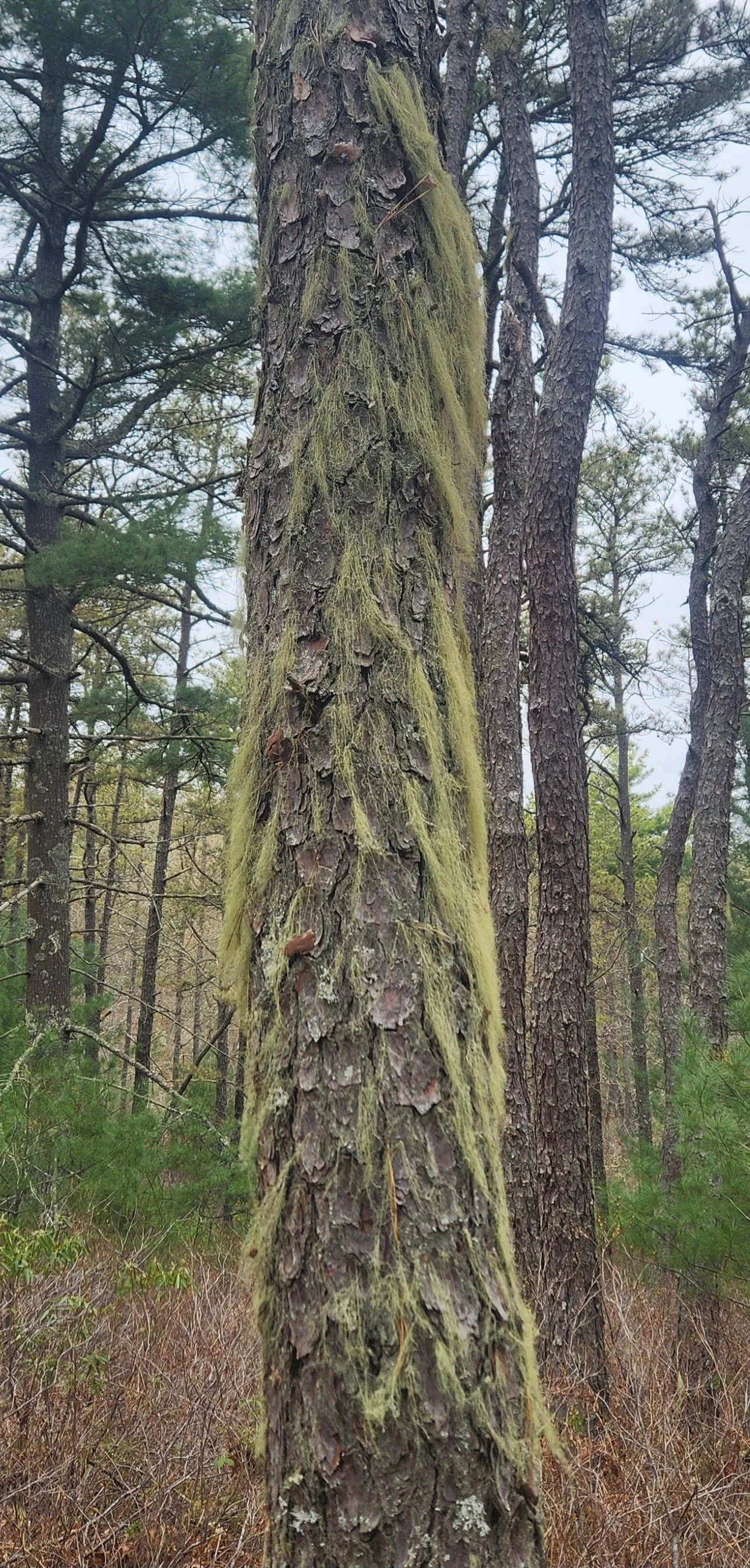
This lichen is growing on an Atlantic white cedar. Photo by Justin Cifello.
By Justin Cifello
The treetops usually loom high out of our reach and sight. However, this winter’s heavy snowfall pulled portions of the forest canopy to the ground, affording us the rare opportunity to see it up close. The much-awaited thaw has revealed a second snowfall—a spongy carpet of fallen lichen that now blankets the forest floor. As we await the unfurling of leaves over the next month, we can ponder the rich miniature worlds of these enigmatic organisms.
Small as they are, lichens are ecosystems; each one contains a variety of organisms. Unlike other taxonomic groups, like mammals or flowering plants, lichens do not have a single common ancestor. Lichen can instead be thought of as a strategy, one that has evolved independently multiple times. Though often confused with moss, lichens are not actually plants. They are composite organisms comprising fungi and other microbes, living intertwined in symbiosis. The common denominator is fungus, which provides the structure that hosts the other residents. Since lichen-forming fungi cannot exist on their own, lichen species names describe the fungal host.
Lichen fungi cannot forage for food the way other fungi do. They have no roots or mycorrhizae to extract nutrients from the surfaces they live upon. Instead, they trap photosynthetic algae and/or cyanobacteria and incorporate them permanently into their body, called a thallus. The fungus then lives off the sugars produced by its microbial partners and acquires the rest of its nutrition from the rain and atmosphere. Though they are trapped within the lichen, the algae benefit, too. In the wild, most algae are short-lived, vulnerable to predation and weather fluctuations. The fungus offers stability and security. By changing its pigmentation, lichen protects its algal partners from lethal UV radiation. [1]
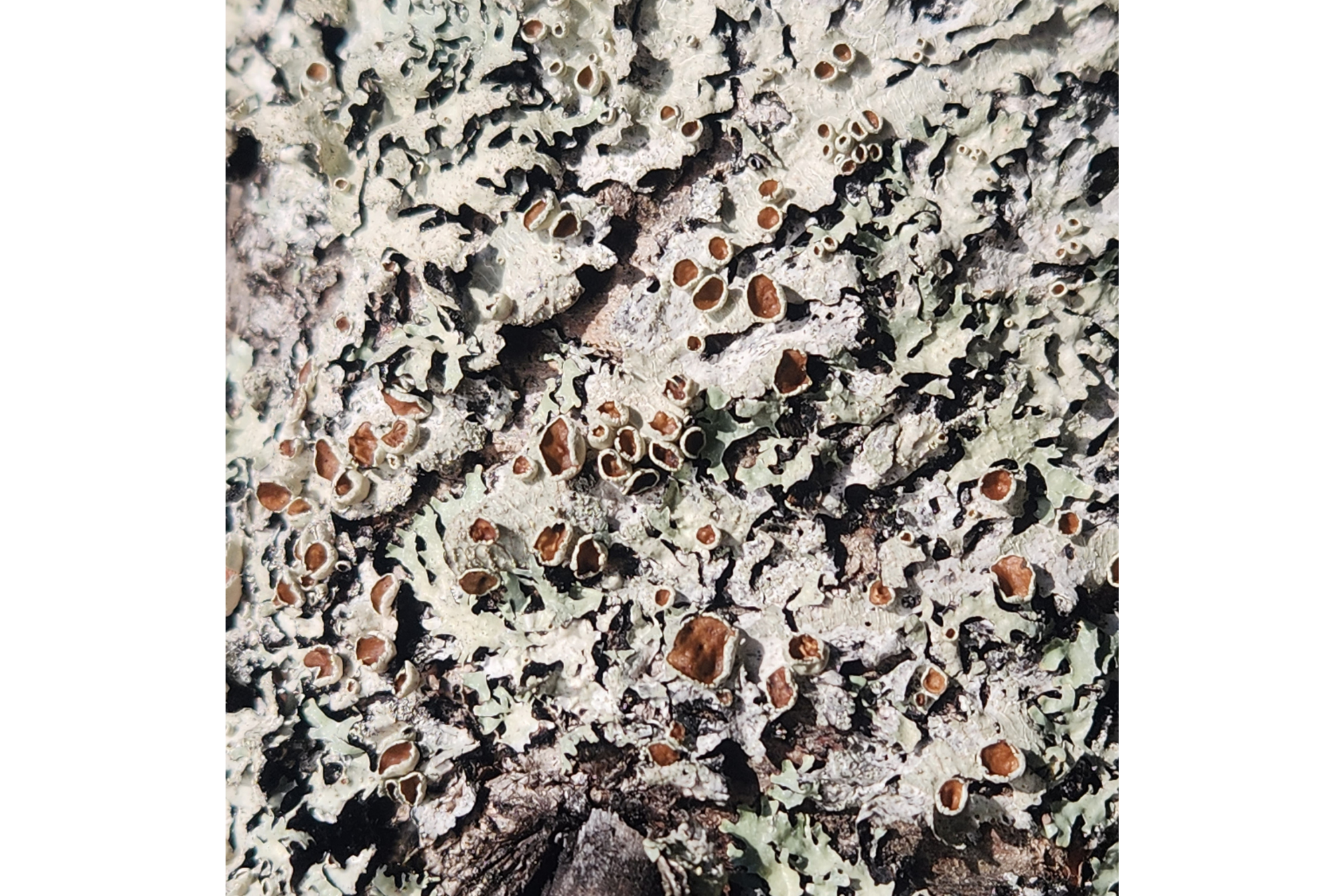
A ruffle lichen, Parmotrema, with spore-producing cups. Photo by Justin Cifello.
Scientists have only recently been able to appreciate these complexities and lichen’s role in the environment. Though small, lichen are numerous. By greatly increasing the surface area of whatever substrate they grow on, they create micro-habitats that support the tiny creatures that feed the larger ecosystem. As nitrogen fixers, lichen supply the forest with this vital element. Reliant as they are on the atmosphere, they are uniquely vulnerable to pollution. Lichens are indicators of good air quality and have even helped locate emission sources. [2]
A combination of aging forests and successful anti-smog legislation have helped lichens reclaim their space in the canopy. In humid areas, some trees can be festooned with them. This resurgence has led some to fear that lichens are a new forest pest, since they were not always so abundant. They are often seen on dead and dying trees, but the relation isn’t causal; the lichens are responding to increased light as their host dies from other causes. The lichens themselves are harmless. [3]
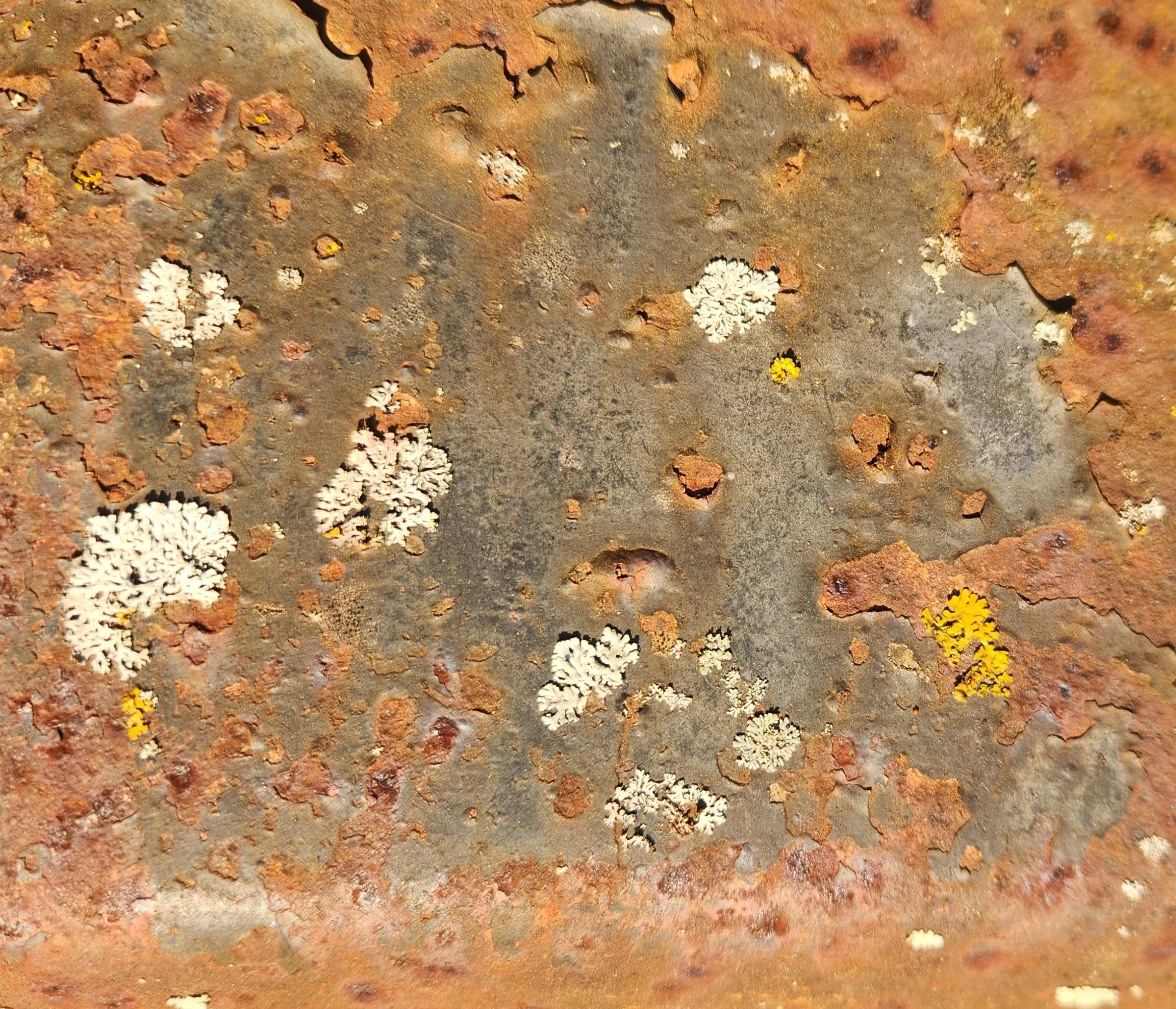
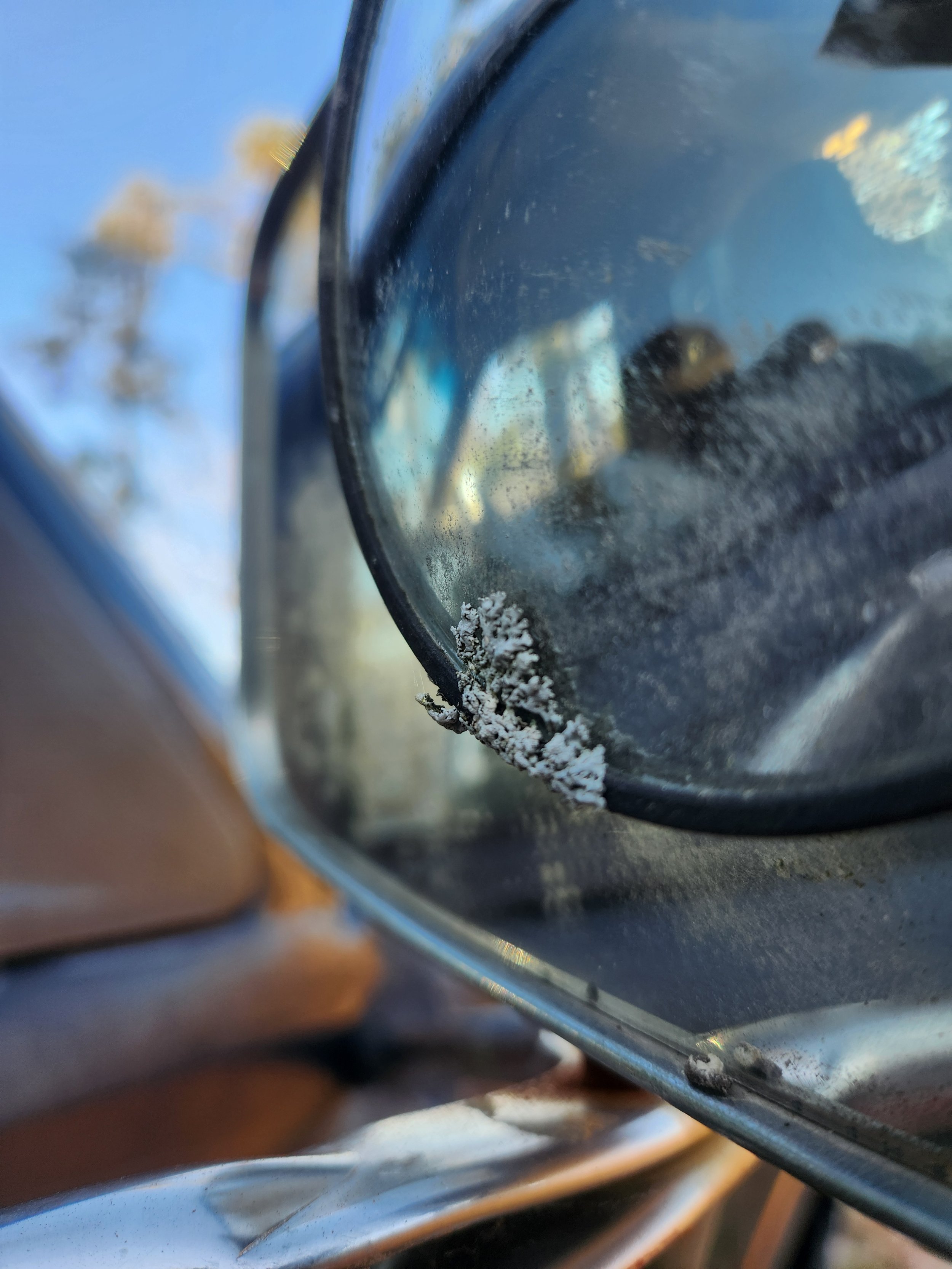
A variety of lichens colonizing the rusty surface of an old dump truck. Photo by Justin Cifello.
Recent analysis suggests that lichens began to appear at least 400 million years ago, after the earliest terrestrial plants. Lichens and mosses are credited with forming the first soils on earth by eroding rock while trapping minerals and water. Lichens continue to thrive in harsh places today, from the intertidal zone and the arctic to desert sands and car doors. Lichen even survived a year and a half outside of the International Space Station. [4][5]
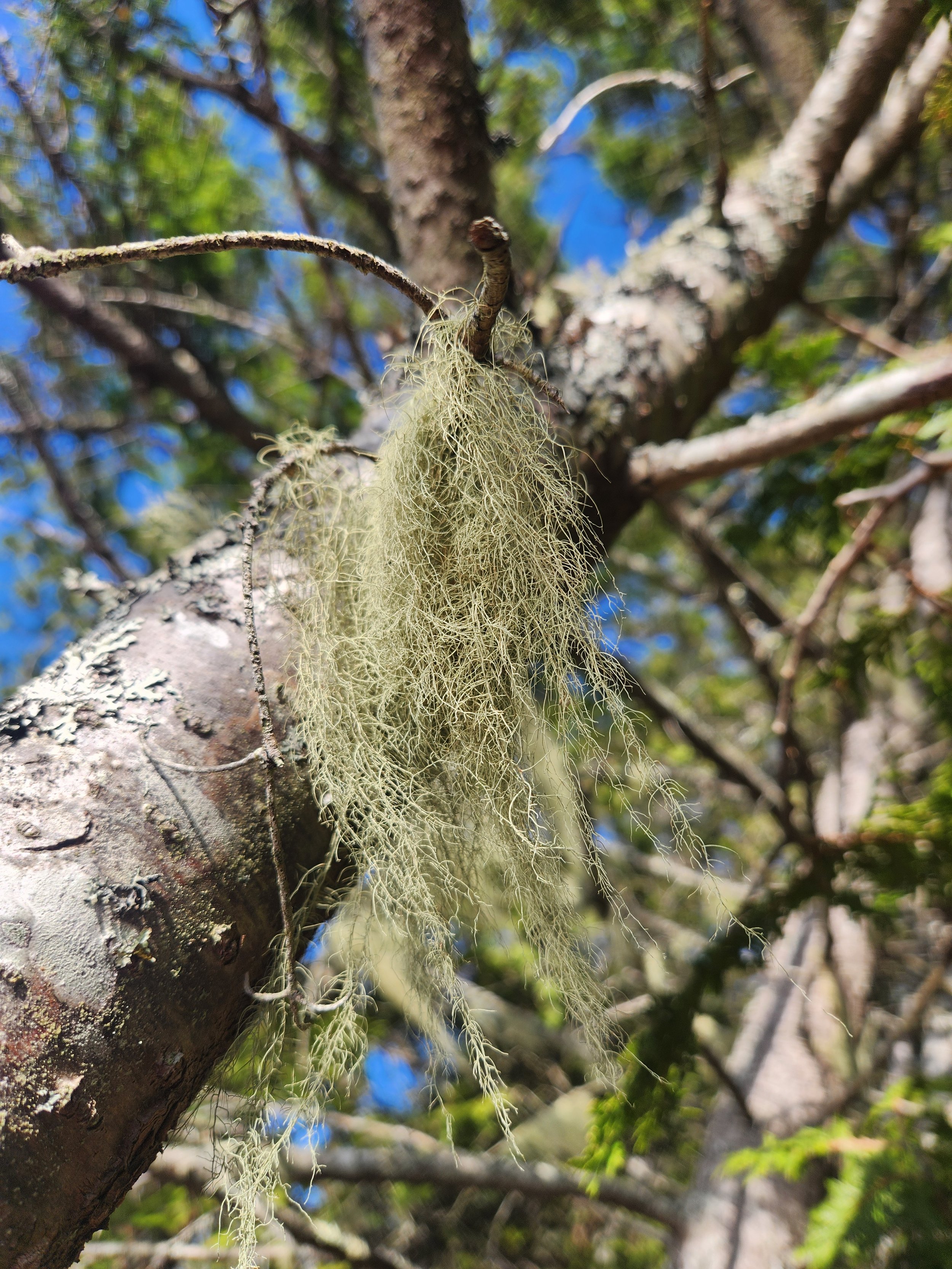
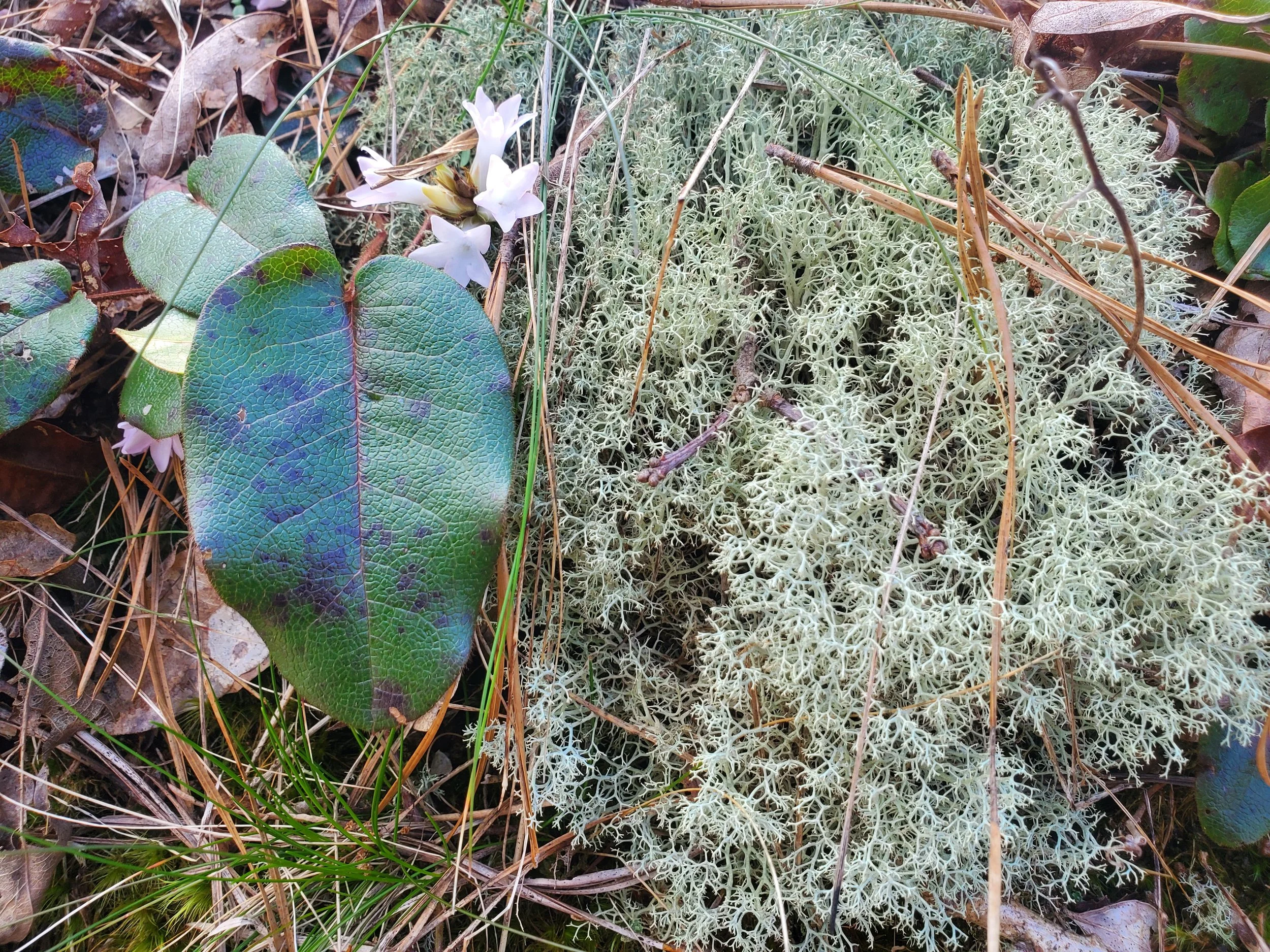
Found in every environment, in every season, lichens are a constant companion on our outings. Hundreds of species live in New England, in a dazzling array of forms and colors, from thin films and dust to dangling chains, several feet long. We can see their complicated relationships by observing how some only grow on certain species or materials. With a magnifying class, you can better appreciate their fractal intricacy. They remind us that nothing in nature is simple; we are surrounded by resilient beauty and complexity, if only we look closely. [6]
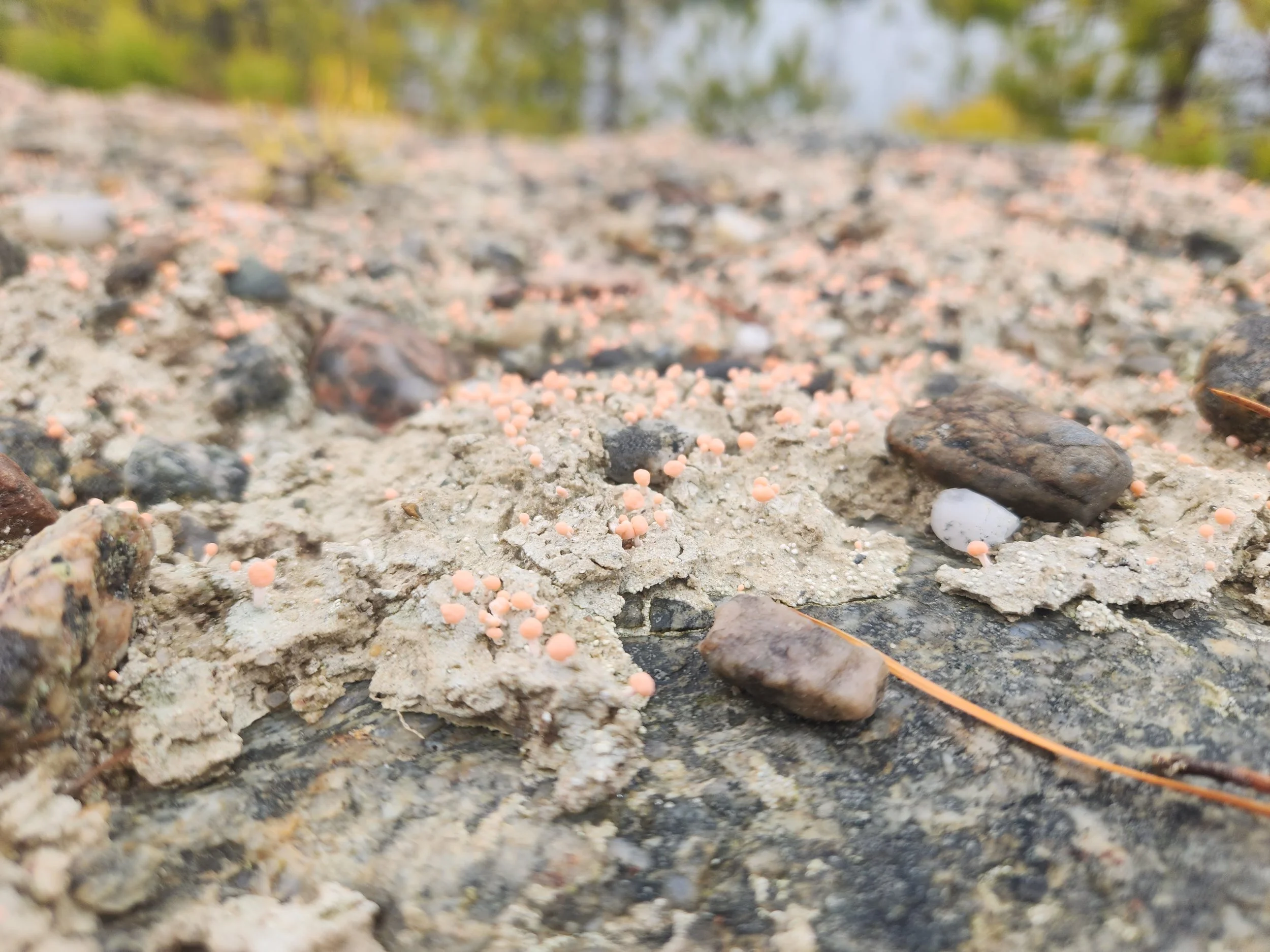
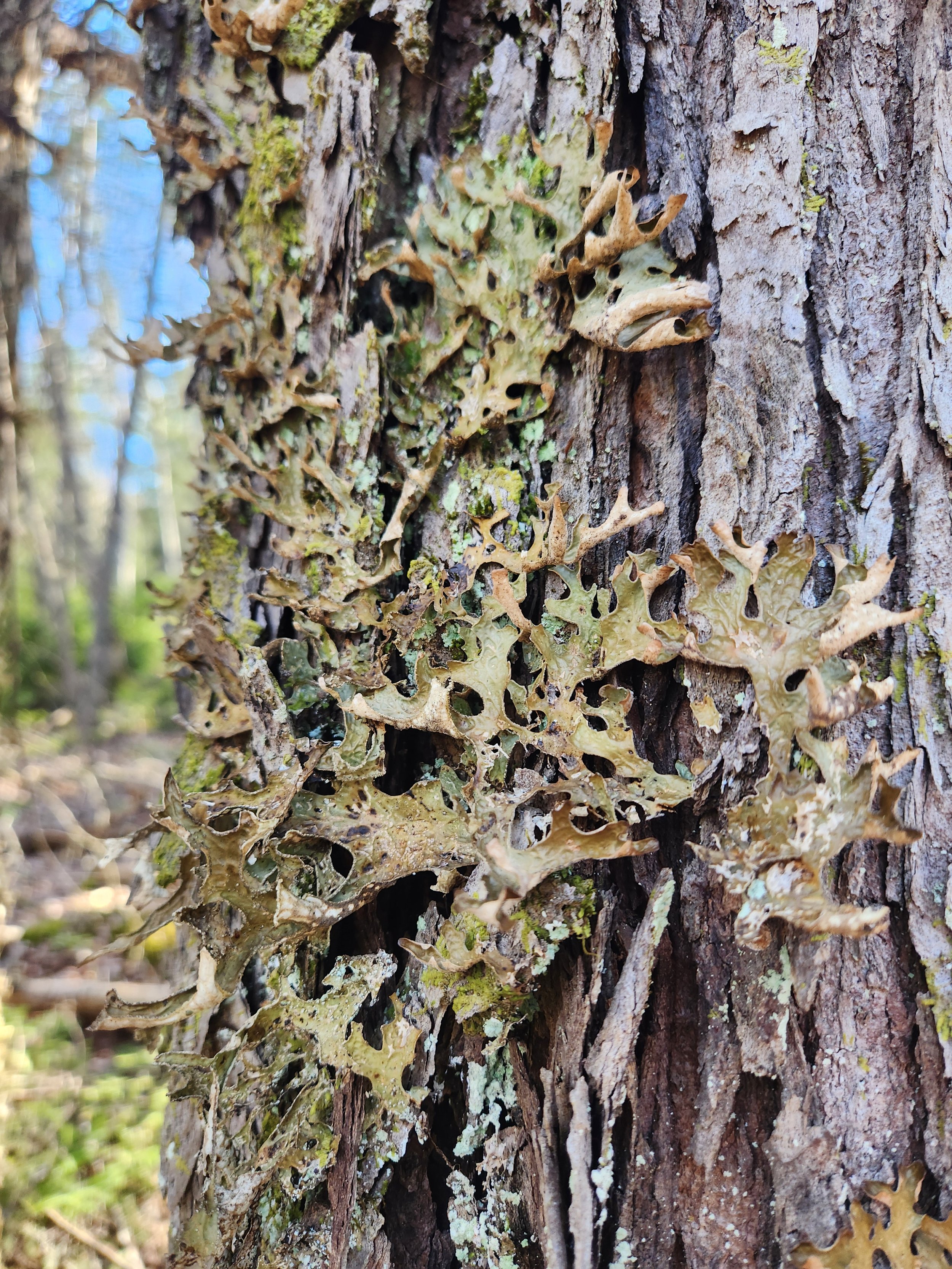
Click on the photos below to learn more about these diverse lichens. All photos by Justin Cifello.
[1] Symbiosis: https://www.purdue.edu/newsroom/archive/releases/2016/Q3/yeast-emerges-as-hidden-third-partner-in-lichen-symbiosis.html
[2] Emissions Monitoring: https://gis.nacse.org/lichenair/index.php
[3] Tree Health: https://extension.unh.edu/blog/2019/04/should-i-be-worried-about-lichens-growing-bark-my-apple-trees
[4] Lichen Origins: https://www.science.org/doi/10.1126/sciadv.adw7879
[5] Lichens in Space: https://futurism.com/fungi-lichens-just-survived-18-months-outside-iss-means-might-able-survive-mars
[6] Lichens of New England: https://massnature.com/lichens
The Nature of Farming
How eco-conscious farms balance food production and environmental stewardship
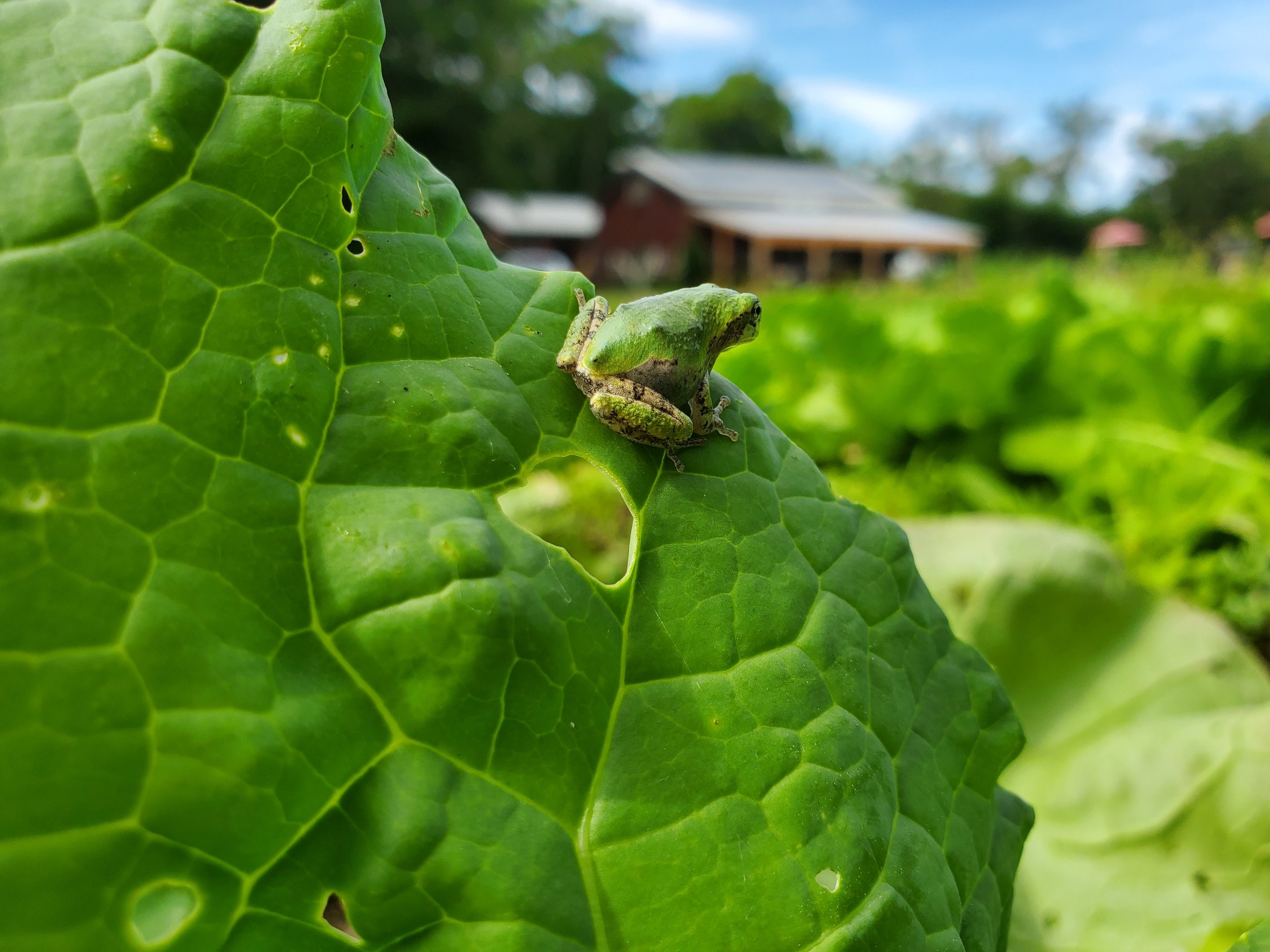
Eastern gray treefrog on sen-po-sai, an Asian green.
By Justin Cifello
Agriculture itself is not a distinctly human invention. Ants herd aphids and cultivate fungi. Beavers turn forests into wetlands full of their favorite plants. The line between artificial and natural is a blurry one. It is a philosophical conundrum I won’t be solving here, but which has given me much to ponder in my years as a both a farmer and naturalist.
This will be my 18th year of farming at Bay End Farm in Buzzards Bay, which abuts Wildlands Trust's Old Field Pond Preserve. We are an organic farm, but we still need to be aware of our impact on the local ecology. Even organic fertilizers run the risk of downstream effects like eutrophication, so they must be deployed carefully. More is not always better; overfeeding a crop can make it vulnerable to pests, and over-application of one element can prevent the plant from uptaking another. Yearly soil tests help us tailor the minimal blend of nutrients that will meet a given crop’s needs. The fertilizers themselves are largely agricultural byproducts, which release their nutrients slowly. Some are locally sourced, like fish emulsion from New Bedford, spent grain from breweries, and even seaweed from beach associations. [1]
We want the fertility we apply to stay in the soil. Bare earth is vulnerable to weathering, so we blanket empty fields in cover crops. These plants are never harvested; their sole job is to hold on to nutrients. By planting a mix of cover crops, a more complex network of roots can form, better shielding the soil against winter erosion. They give fungi and other microbes a place to live, keeping the soil community healthy. Cover crops also help prevent weeds from germinating. [2]
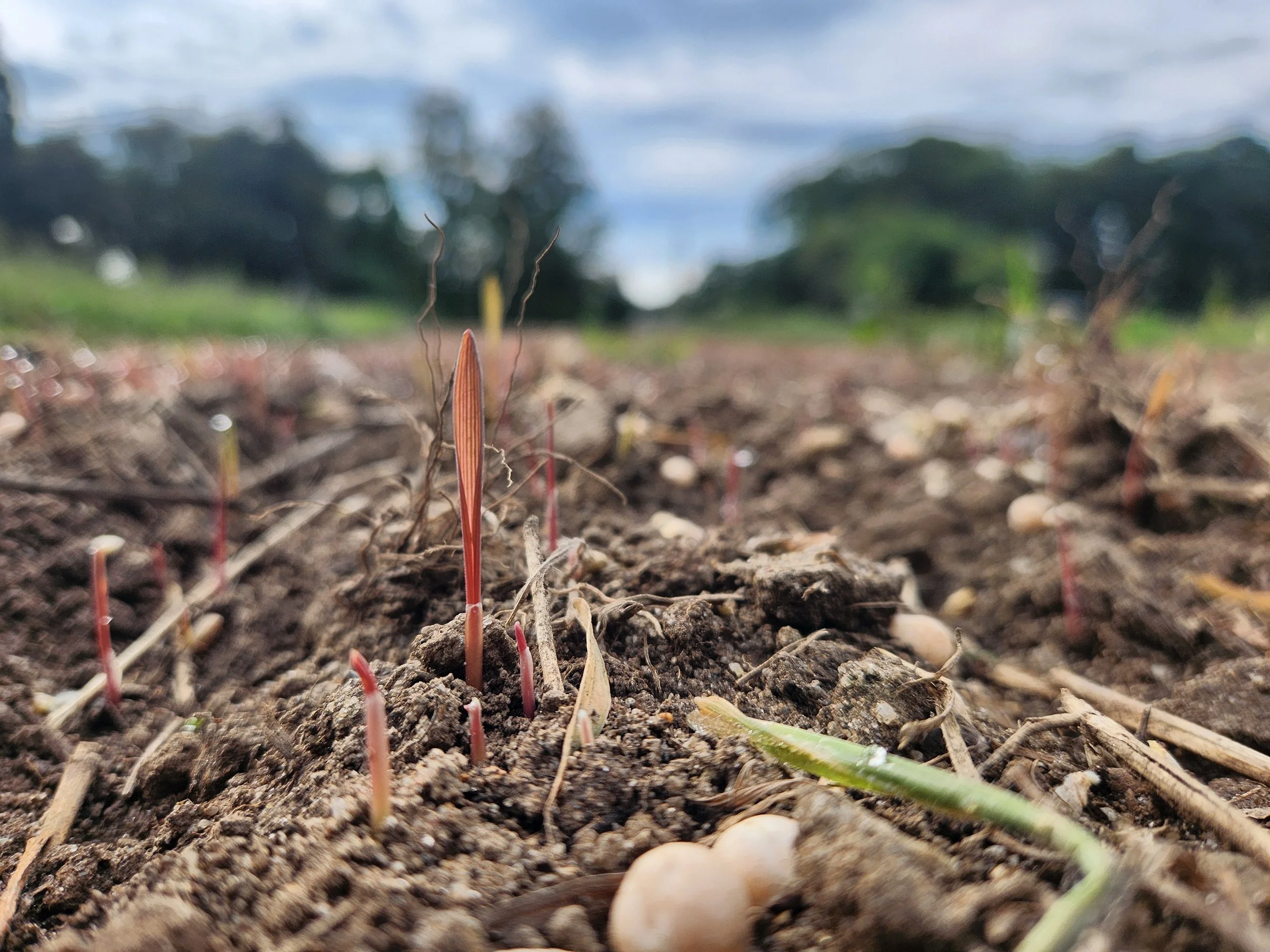
Winter rye germinates alongside field peas, both used as cover crops to protect the soil.
Soil depletion is also mitigated through crop rotation. By varying the crops we plant in each plot, we allow soil to maintain a balance of nutrients over time. The rotation includes leaving a field fallow for a season, so it can recover fertility and provide wildlife habitat. Crop rotation also prevents pests and diseases from establishing, as most are specialized to one family of vegetables. We grow different families of crops, as well as different varieties within each family. Diversity helps us not put all our eggs in one basket.
Despite our best preventative efforts, there will be pests. The pesticides available to organic farms are those that have been proven to break down quickly into safer compounds. Applied with a backpack sprayer, pesticides can be targeted carefully. We intentionally avoid applying pesticides during active times for pollinators, as well as windy or rainy days when spray may drift or run off. There are certainly more effective pest-eliminating products out there, but since we didn’t put all our eggs in one basket, we can accept some losses. [3]
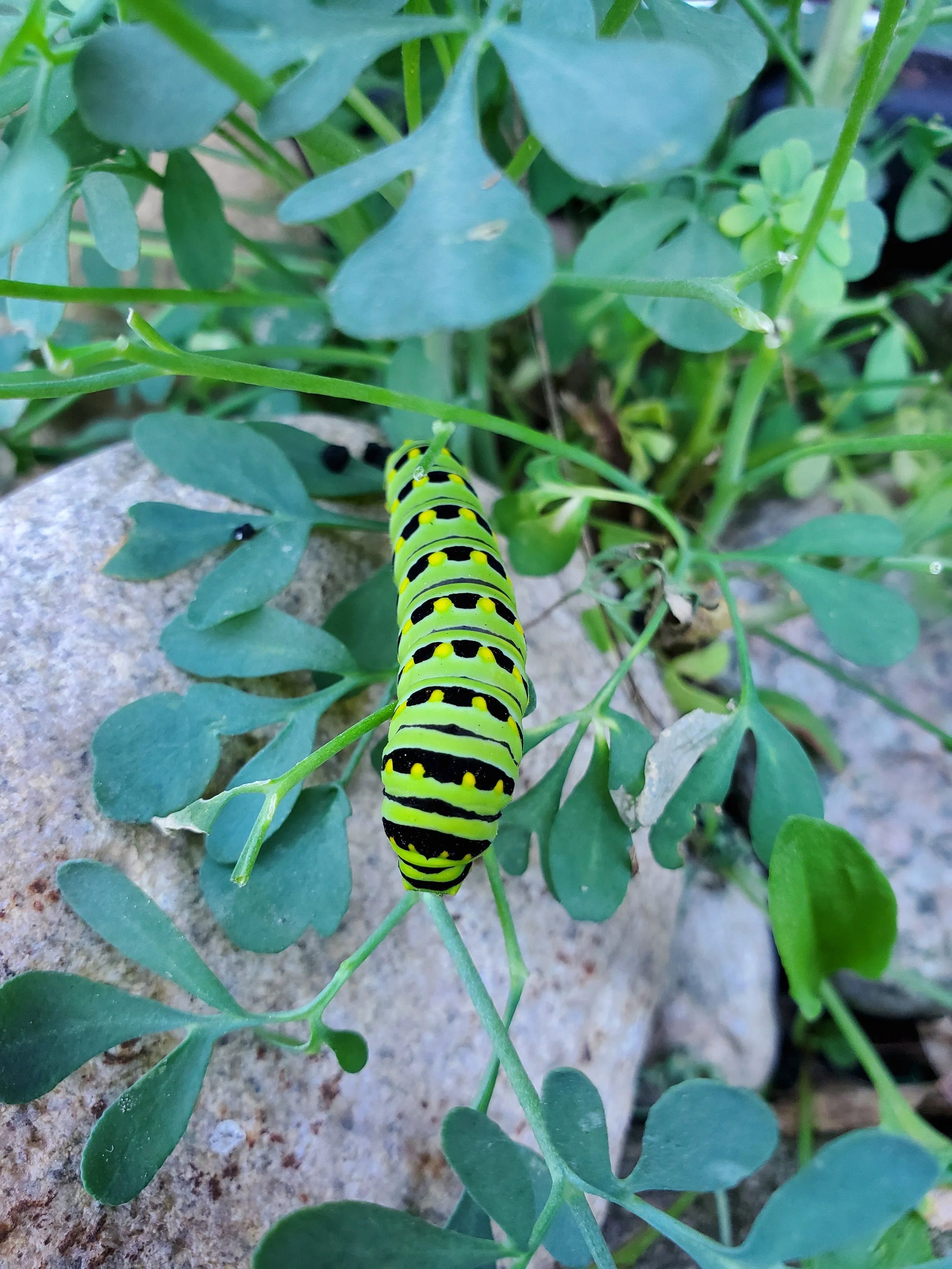
Swallowtail caterpillar on rue. Though they largely eat members of the carrot family, they rarely eat enough to be a problem. We don't eat the carrot greens, anyway.
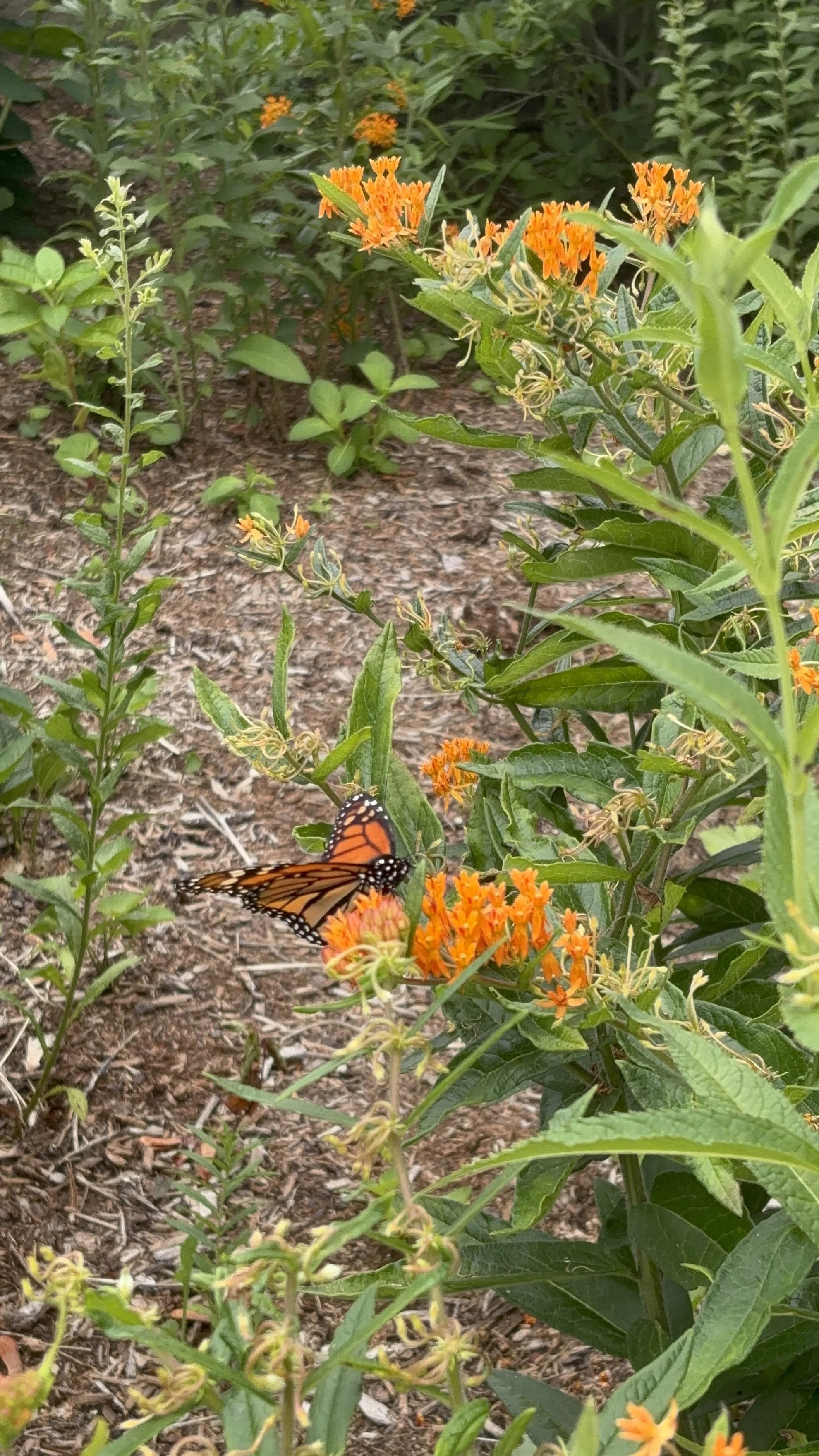
Many farms maintain woodlots and fields that are never planted. As vital as forests are, grasslands are important, too. Abandoned farmland has largely regrown into forests or been developed, causing a decline in open habitat. These areas host a number of species, particularly ground-nesting birds. With full sunlight, they also support a suite of wildflowers, which in turn feed specialized insects and pollinators. The monarch butterfly is perhaps the most famous of these. While the adult can be seen feeding from any garden flower, the caterpillars can only survive on milkweed, which grows only in grassland habitats. [4]
Biodiversity is, of course, worth protecting for its own sake, but wildlife does a lot for us, too. Bumblebees, with their vibrating clumsiness, are fantastic tomato pollinators. Ladybugs and their otherworldly larvae are voracious aphid eaters. Highly specialized braconid wasps seek out tomato hornworms to feed their young. Wildlife encounters are also deeply fulfilling, from the mundane, daily sight of a handsome toad to the rare glimpse of a fisher. The bright orange of a spring peeper in the leafy greens is, to me, like a canary in the coalmine. I take comfort in seeing these creatures thrive—hopefully a sign that we have been good neighbors.
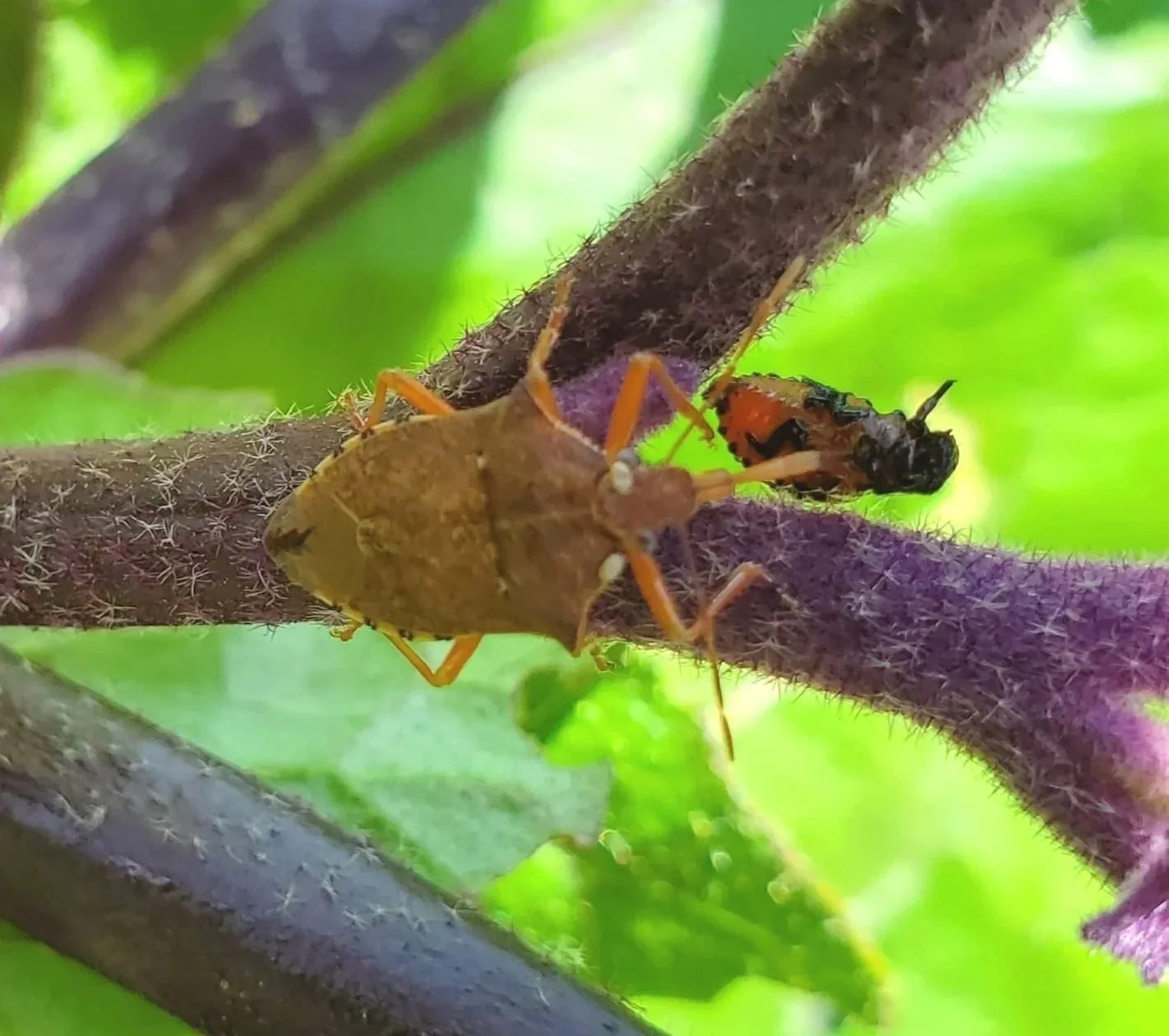
A soldier bug with its quarry, a potato beetle larva. We appreciate the assistance with one of our worst pests.
Further Reading:
1. Eutrophication: oceanservice.noaa.gov/facts/eutrophication.html
2. Cover Crops: sare.org/resources/cover-crops/
3. Organic Pesticides and Certification: npic.orst.edu/ingred/organic.html
4. Grassland Conservation: massaudubon.org/our-work/birds-wildlife/bird-conservation-research/grassland-birds