What’s New at Wildlands
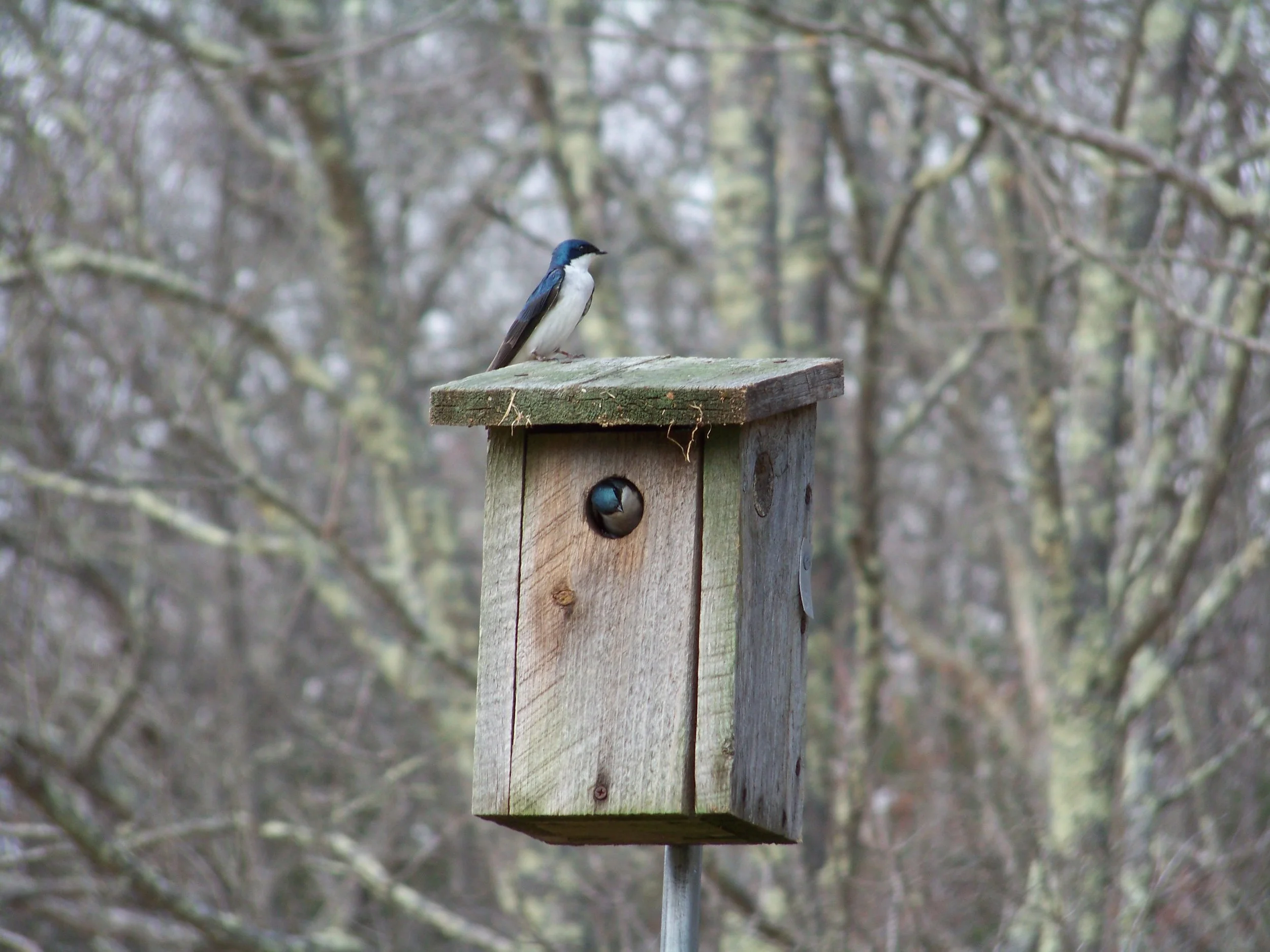
Adopt-A-Birdhouse: Using Citizen Science to Protect Local Bird Species
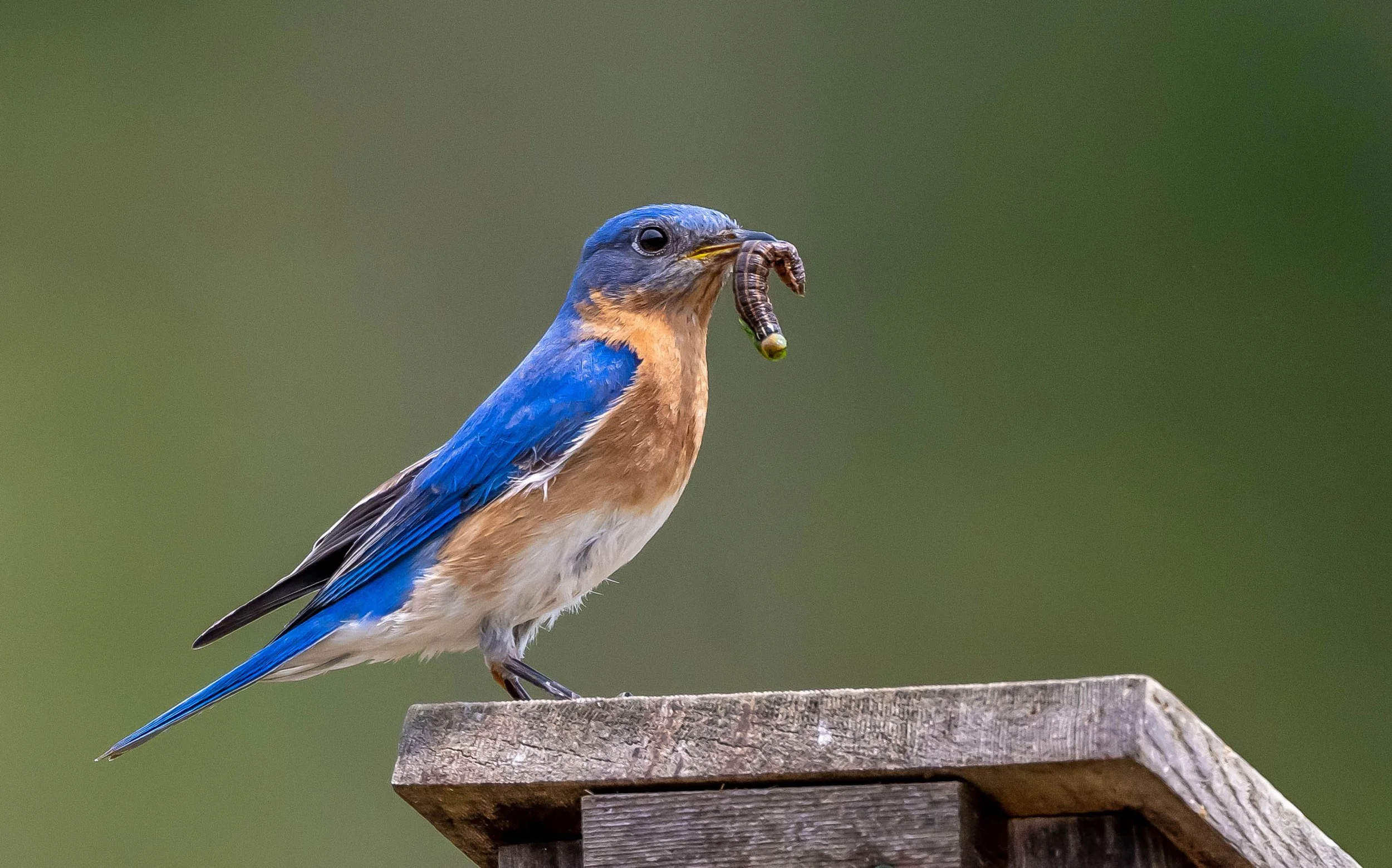
An Eastern Bluebird brings a meal back to its nesting box at Halfway Pond Conservation Area in Plymouth. Photo by Ken Grille.
By Rebecca Cushing, Stewardship & Volunteer Coordinator
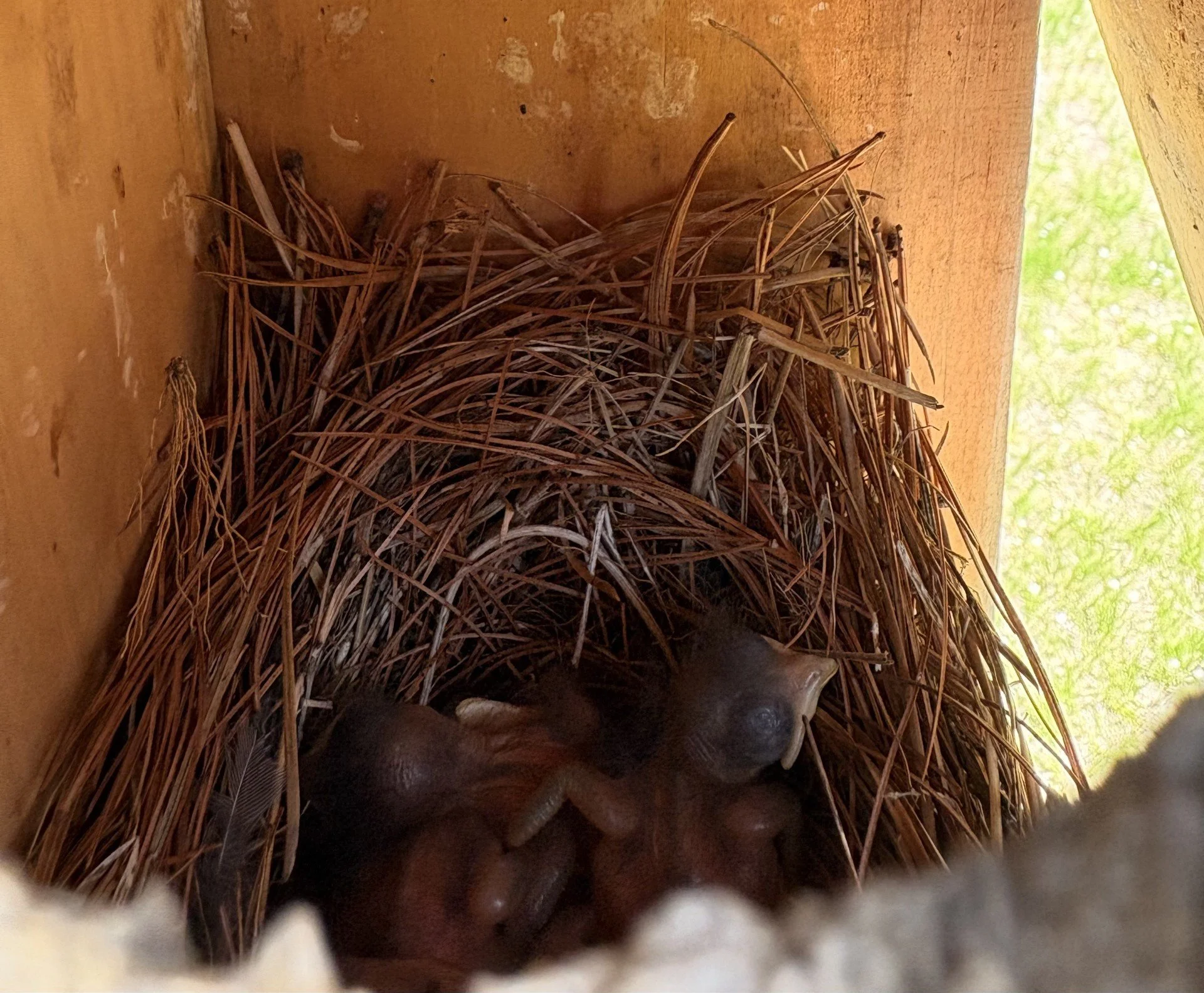
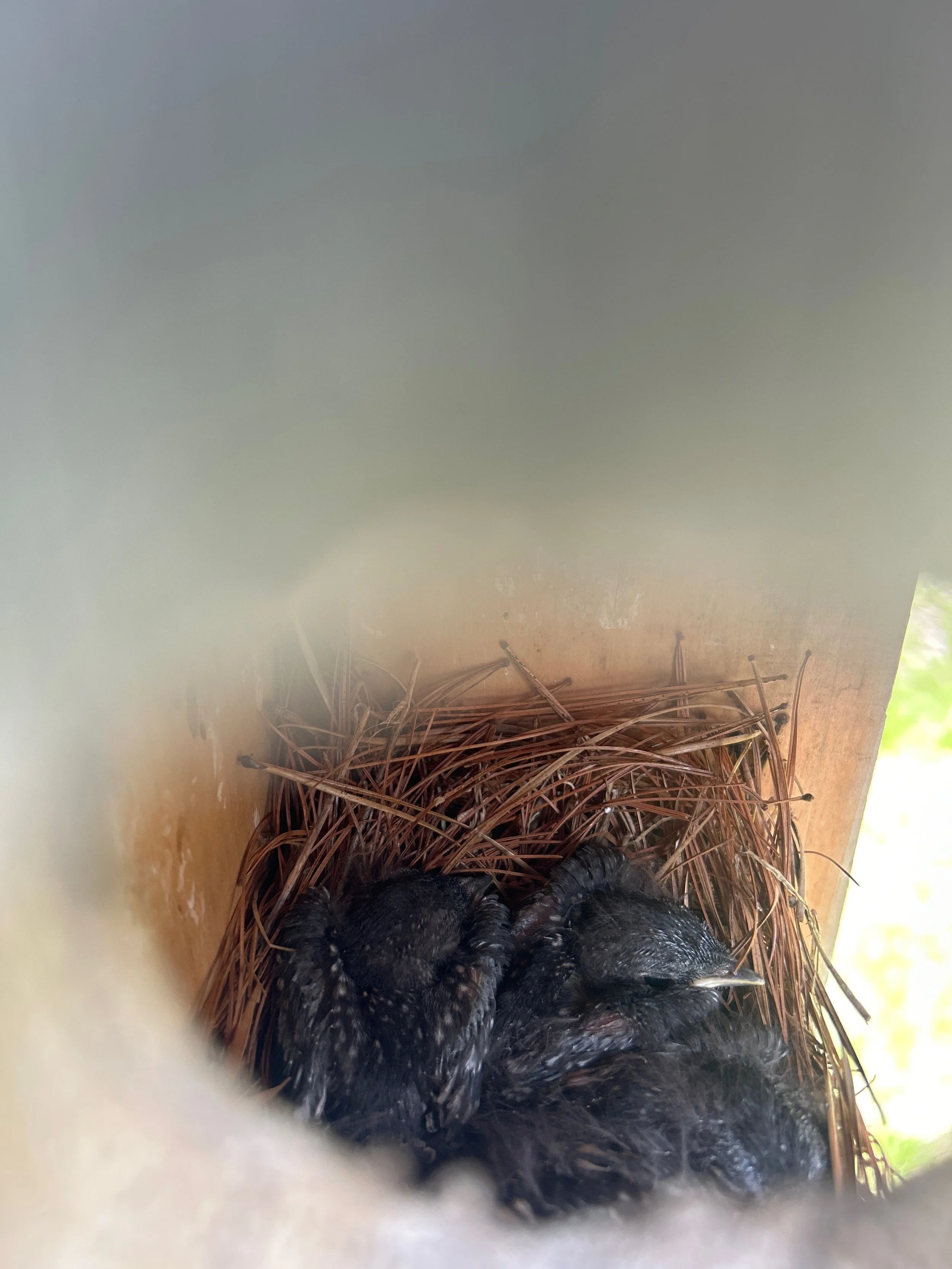
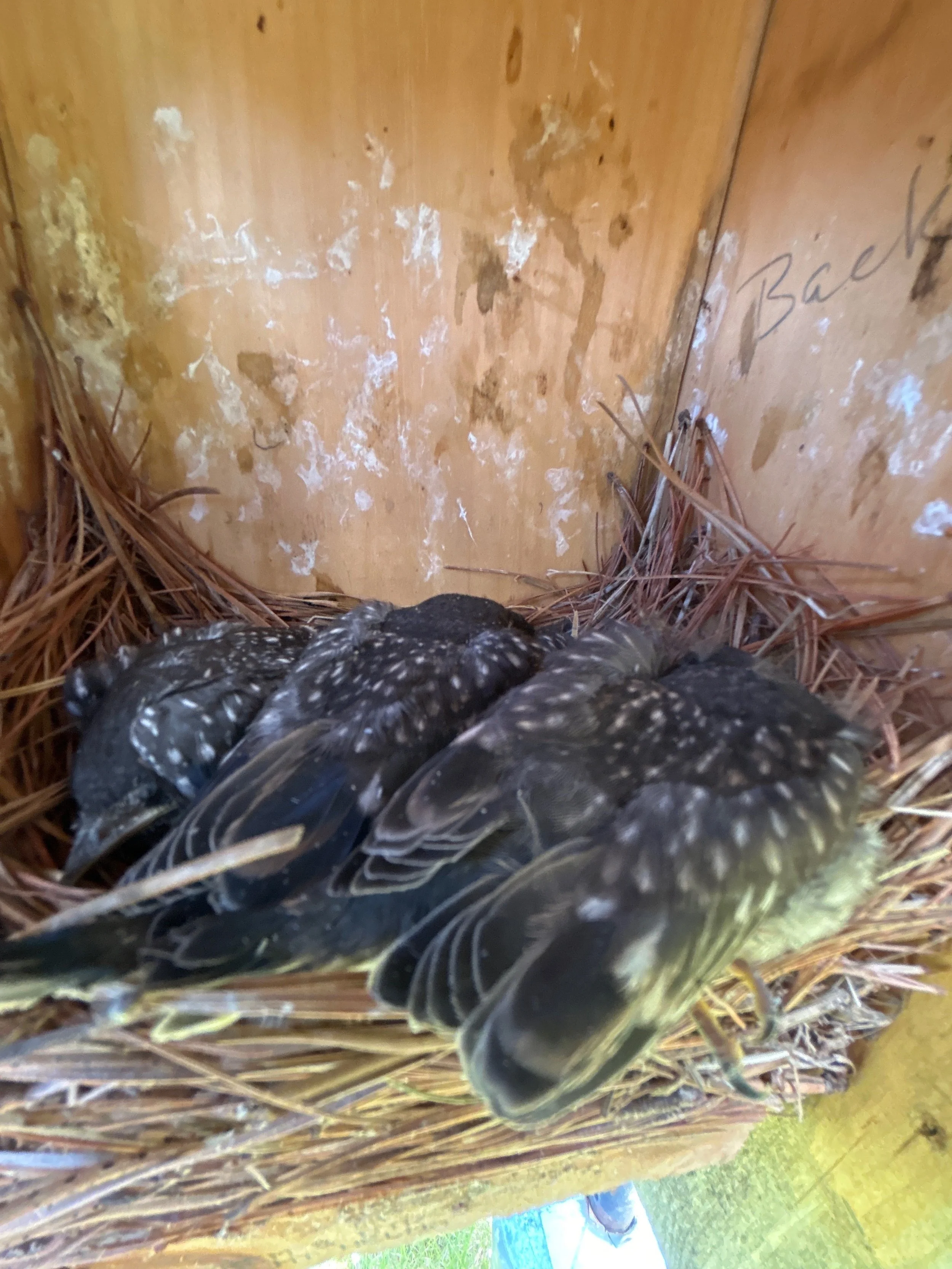
Wildlands Trust works hard to protect and maintain meadow habitats where native birds, pollinators, and other wildlife thrive. Across several preserves with meadows, including Davis-Douglas Farm, Willow Brook Farm, Sylvester Field Conservation Area, Phillips Farm Preserve, Eel River Preserve, and Cushman Preserve, we have placed nesting boxes designed for Eastern Bluebirds and Tree Swallows. A small group of dedicated volunteers have monitored, cleaned, and maintained some of these boxes for years—but until this year, we have lacked a consistent way of collecting data and managing all of the boxes to best support our bird populations.
In March of 2026, our Stewardship & Volunteer Coordinator, Rebecca Cushing, worked with staff and volunteers to create a structured nesting box monitoring program. The Adopt-A-Birdhouse program will guide us in better management of our nest boxes, including weekly monitoring to collect and report meaningful ecological data and engage our volunteers in citizen science. During this nesting season from March through August, volunteers visited nest boxes and used NestWatch, an online database created by the Cornell Lab of Ornithology. NestWatch is a global citizen science effort, and data from the project has been used by scientists for long-term monitoring of nesting birds and can be used to document the effects of climate change, noise and light pollution, and other factors affecting breeding birds.
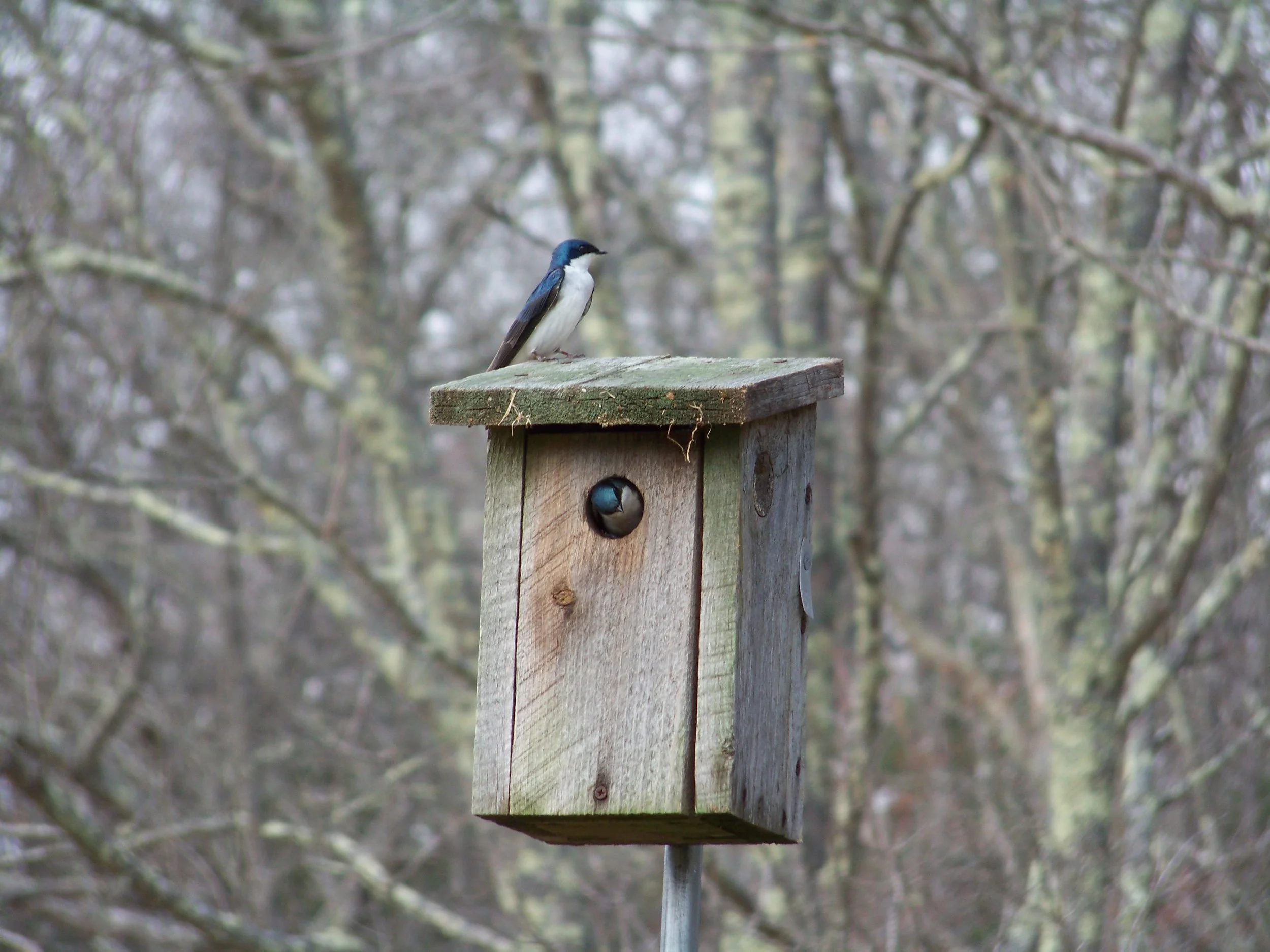
A Tree Swallow pair settles into a Wildlands nesting box
This year, our volunteers monitored 46 nest boxes across 6 preserves. These trained volunteers made an average of 15 visits to each box throughout the season, carefully performing nest checks. It was a rewarding season—with at least 185 eggs laid, 109 young observed, and at least 66 young observed having fledged their nests. We will continue to grow this program in 2027, furthering our work in our commitment to protect and support the wildlife we love.
If you are interested in joining the Adopt-A-Birdhouse program, or to discover other ways you can volunteer with Wildlands Trust, reach out at volunteer@wildlandstrust.org.
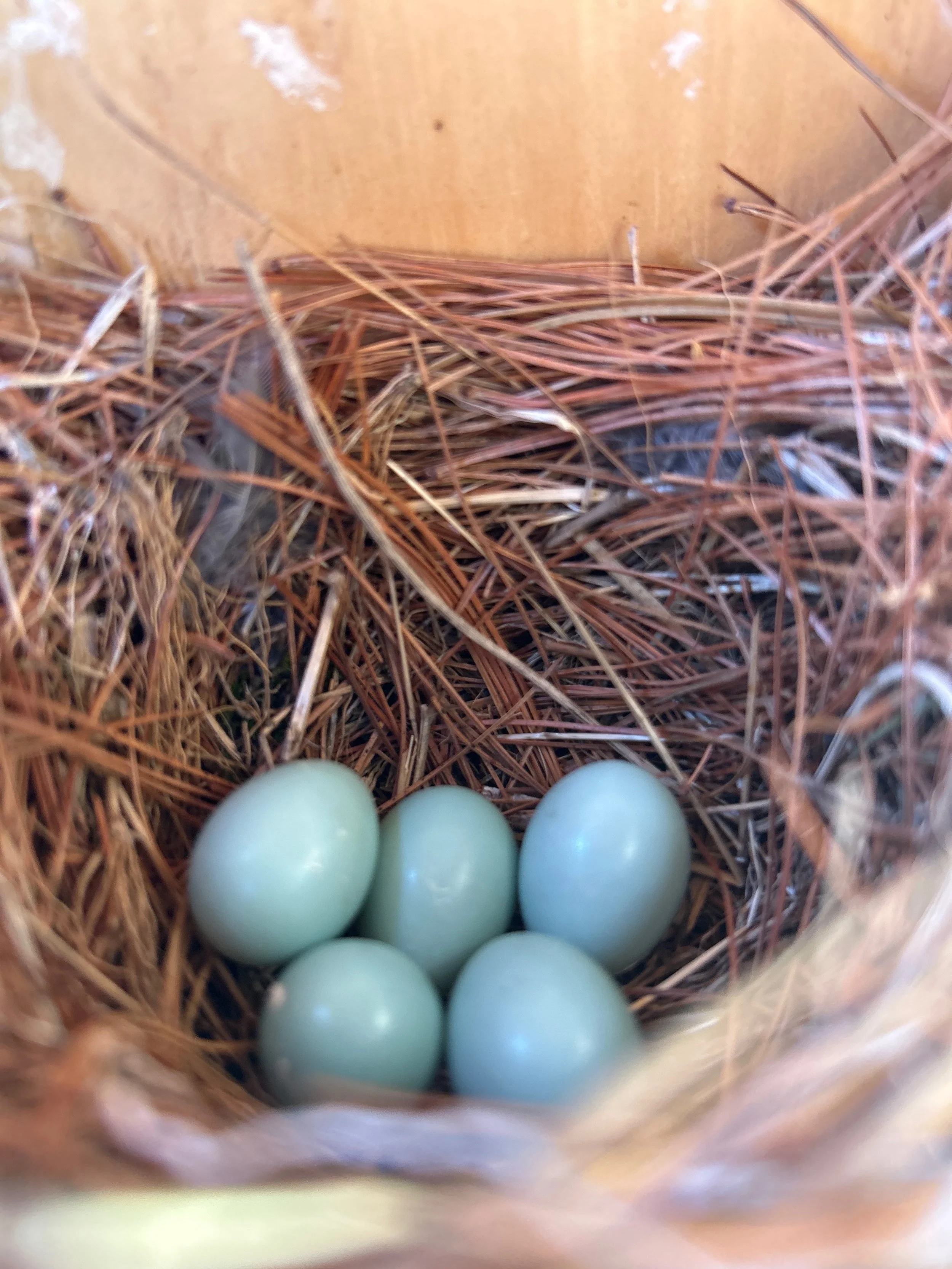

Reflections from a Teacher: A Springtime Externship
This spring, Wildlands Trust hosted Julia Whalen, a science teacher at Carver Middle High School, for an externship. We asked Julia to reflect on her experience, and here’s what she had to say.
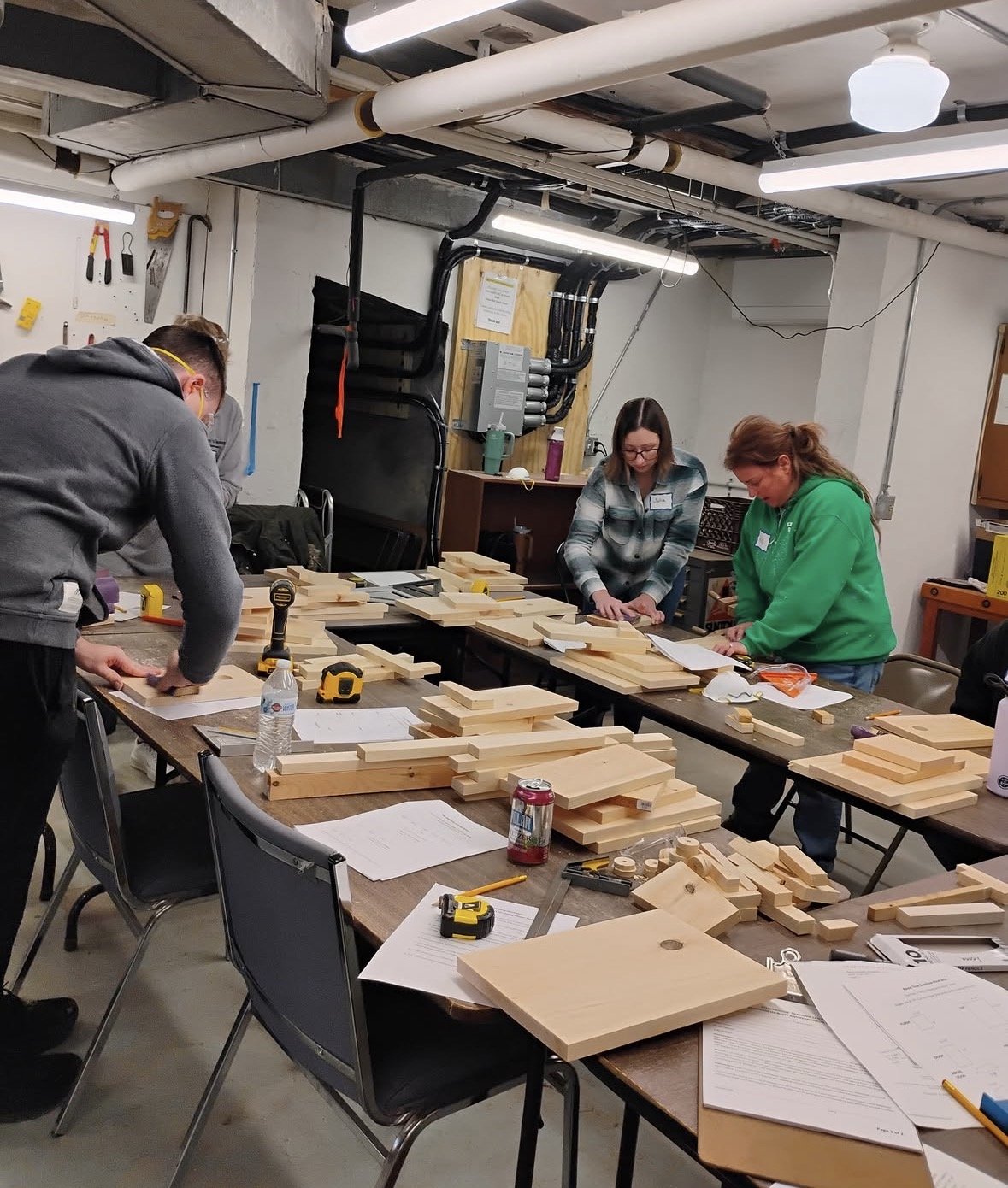
Julia participated in a birdhouse building workshop at the Stewardship Training Center in March.
Despite being someone who has lived on the South Shore all of my life and visited several Wildlands Trust properties, I had no idea how much Wildlands Trust does to preserve local ecosystems, engage with the community, and provide people with free access to explore nature. Through a recent teacher “externship” (similar to an internship, but more observational and for a shorter amount of time), I was able to learn more about Wildlands Trust and bring back meaningful experiences to my classroom.
I recently finished my 6th year as a science teacher in Carver. Despite being a smaller district compared to neighboring towns, Carver Middle High School does a lot to provide opportunities for its students. One of the ways we achieve that is through the Carver Pathways Program. I am one of the teachers involved with the Environmental & Agricultural Sciences Pathway, which is designated as an Innovation Career Pathway by the Massachusetts Department of Elementary and Secondary Education. The focus of these programs is to provide students with relevant skills and coursework pertaining to a high-demand industry, which will hopefully lead to them pursuing a career or college degree in that field.
This year, our school received a grant for Innovation Career Pathway teachers to complete on-site externships with local business partners to bridge the gap between education and industry and to establish future internship opportunities for seniors in our Pathway.
Starting in March, I attended my first externship activity: a birdhouse building workshop with Brockton teachers, hosted by Wildlands Trust and Manomet Conservation Sciences. That same week, I attended a Winter Trees Identification Hike held at Tucker Preserve in Pembroke. Both of these experiences were a great way for me to get a glimpse of some of the programs that Wildlands Trust has to offer.
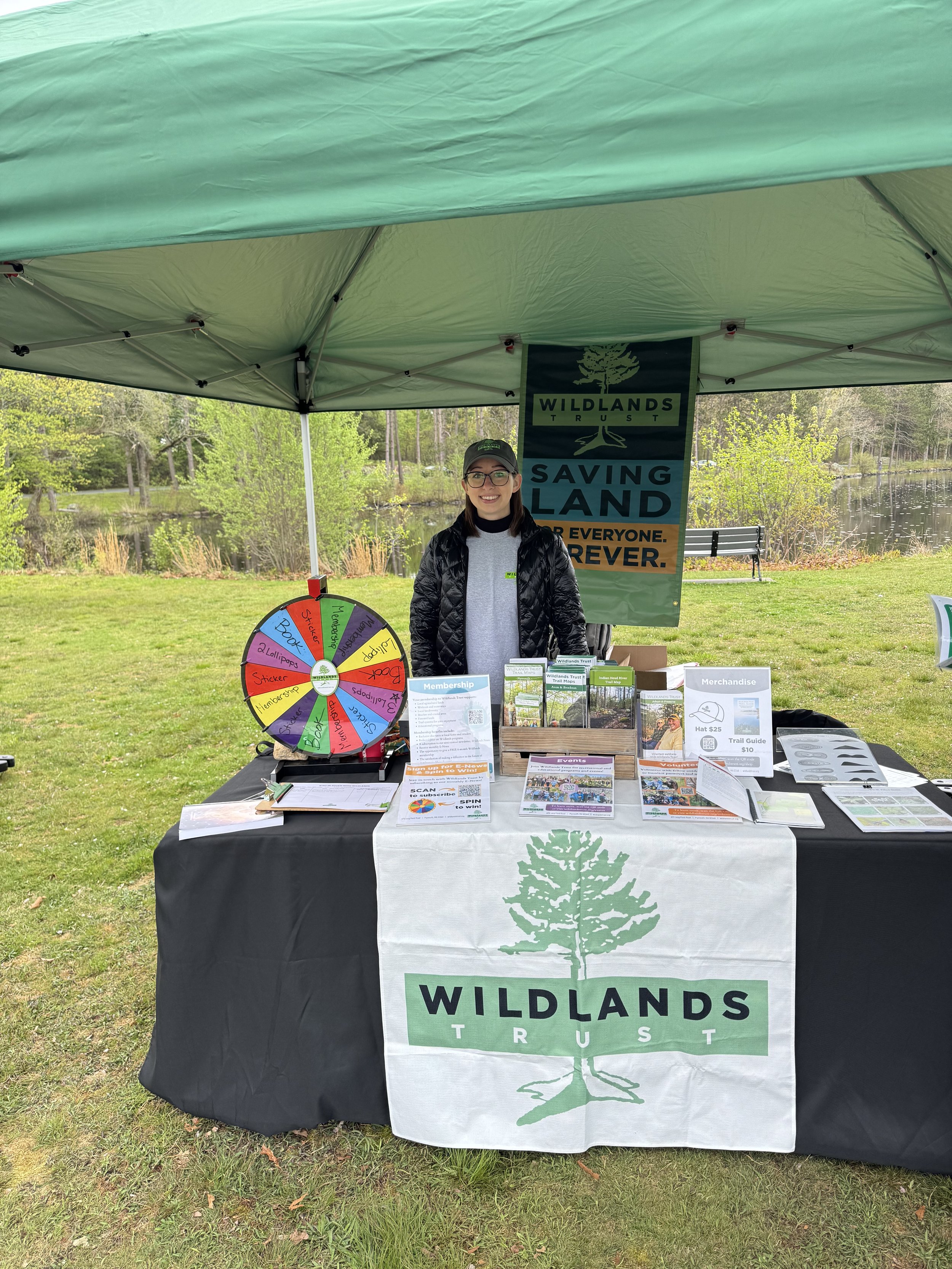
Julia represented Wildlands Trust at Give a Hoot About the Park at D.W. Field Park in May.
In early April, I completed both the Hike Leader and Ambassador trainings so that I could begin engaging with the community. Throughout the spring, I helped run the Wildlands Trust outreach table as an ambassador at the Plymouth Herring Run Festival, Give a Hoot About the Park at D.W. Field Park in Brockton, and the West Bridgewater River Walk. As an educator, these experiences were especially exciting to me because I was teaching people of all ages about the mission of Wildlands Trust, as well as the ways that folks can get outside or get involved. These events allowed me to network within Wildlands Trust, but also with other organizations like Mass Audubon.
In late May, I completed my Hike Leader Certification by leading my own hike at the Tucker Preserve in Pembroke. It was a beautiful day to hike the approximately 4-mile trail along the Indian Head River. Our school has a system of trails in the woods nearby, so I’ve found my hike leader training with Wildlands Trust to be valuable when it comes to taking my students outdoors. I feel better equipped to lead my students on hikes to collect data out in the forest.
The final aspect of my externship involved staff interviews that I conducted over the course of my time at Wildlands Trust. I was able to meet with the following departments: Land Protection, Stewardship, Development & Communications, GIS, and Senior Leadership. In each of these interviews, I gained insights on what these staff members do, how they got to where they are today, what skills they find valuable in potential student interns, and what advice they have for high school students looking to go into the environmental field. I will be using everything I’ve learned to help guide instruction in my Principles of Ecology class this fall. Through my externship, I’ve even come up with some projects I’d like to do in that class: certifying both of the vernal pools we have on our school grounds, marking the trails we have behind the school, and creating a map of the trail system.
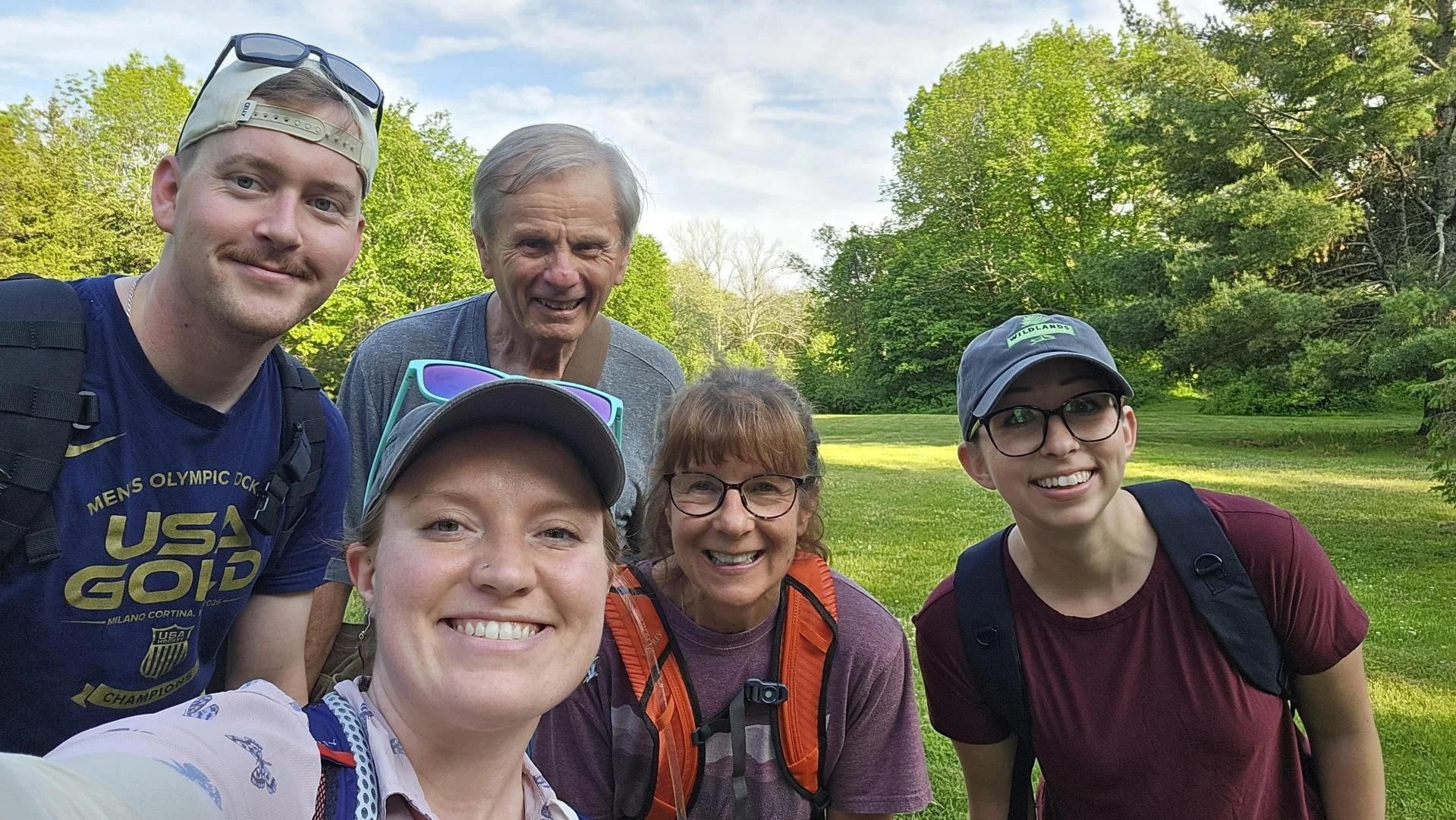
Julia completed her Hike Leader Certification at Tucker Preserve in Pembroke in May.
Though my time at Wildlands Trust only spanned about 3 months, I had such a great experience, met so many wonderful people, and gained valuable knowledge that I will bring with me back to my classroom. I look forward to continuing a partnership between Carver Middle High School and Wildlands Trust, and hope that we’ll see one of our seniors start an internship there in the next few years. Having completed this experience, I’ve had the chance to see all of the different skills and knowledge that our students could gain from interning at Wildlands Trust. It’s a fantastic local organization filled with people who truly care about making the world a better place through stewardship, community engagement, and education.
New GIS App Streamlines Adopt-a-Preserve Reporting
Plus: A Post-Snowstorm Trail Update
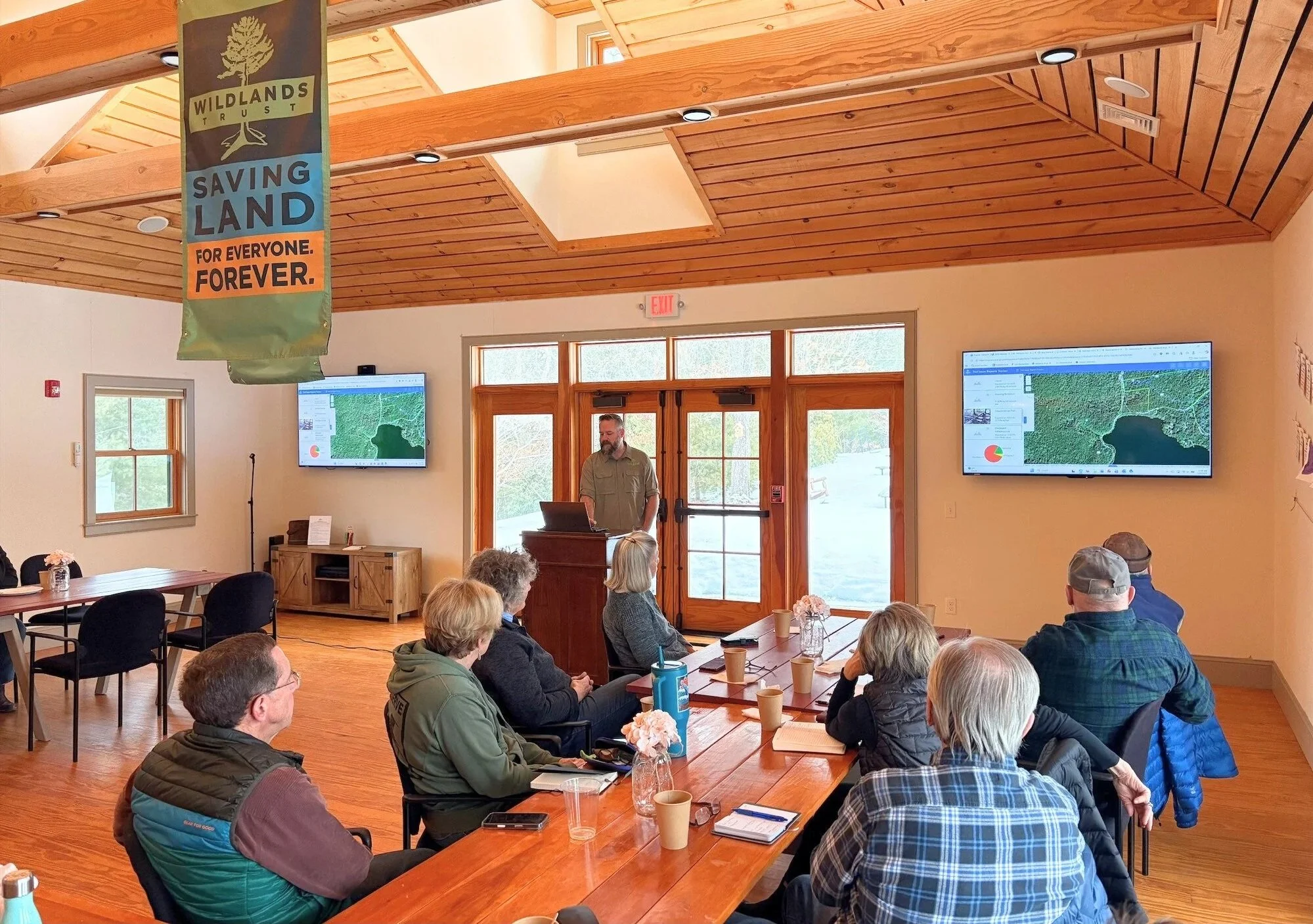
GIS Manager Jason Risberg demonstrates QuickCapture during the Volunteer Brunch & Learn on February 20.
Above all, Wildlands volunteers are driven by the promise of impact. In a survey last year, 91 percent of them identified the “satisfaction of giving back” as a primary motivation for their involvement. (Explore our full analysis in the Spring 2025 issue of Wildlands News.)
Thanks to a new trail monitoring tool, Adopt-a-Preserve volunteers can now give back more efficiently than ever before, amplifying their impact on the lands they love.
Wildlands’ Adopt-a-Preserve (AAP) program is one of many ways that volunteers make our work possible. By visiting their ‘adopted’ preserve once a month and reporting any issues (such as fallen trees, litter, and invasive plants) to our staff, AAP volunteers help us detect, prioritize, and resolve stewardship needs on lands across our service region.
Until now, AAP volunteers submitted their reports through an online form after their site visits. In addition to costing volunteers extra time, this approach cost our stewardship team extra legwork—literally and figuratively—to turn AAP reports into actionable insight. They would first have to manually transfer the reports into Wildlands’ digital mapping software. Then, since volunteers’ descriptions and photos of issues on the trails were not georeferenced (i.e., linked to an exact point on a map), our stewards would often find themselves wandering a preserve in search of the issue they had come to resolve.
Enter ArcGIS QuickCapture, a mobile app that allows volunteer trail monitors to digitally map their observations from the field. Wildlands demonstrated the new tool during a Volunteer Brunch & Learn on February 20 and a recorded Zoom presentation on March 4.
The upgrade was made possible by the addition of GIS Manager Jason Risberg to Wildlands’ staff. With increasing technological capacity, Wildlands can streamline its stewardship processes, for the benefit of the staff and volunteers who care for our trails—and therefore all who enjoy them, too.
“We always want our volunteers to know that their efforts have a meaningful impact on our work,” said Stewardship & Volunteer Coordinator Rebecca Cushing. “By inviting them to participate more directly in our GIS-powered processes, I hope that volunteers feel more connected and empowered by the crucial work they do for us.”
Fully implementing QuickCapture will take more education and time. The original AAP reporting form will remain active in the meantime.
If you are a current AAP volunteer with questions about QuickCapture or a prospective volunteer looking to get involved, we want to hear from you! Please contact Stewardship & Volunteer Coordinator Rebecca Cushing at rcushing@wildlandstrust.org or 774-343-5121 x 106.
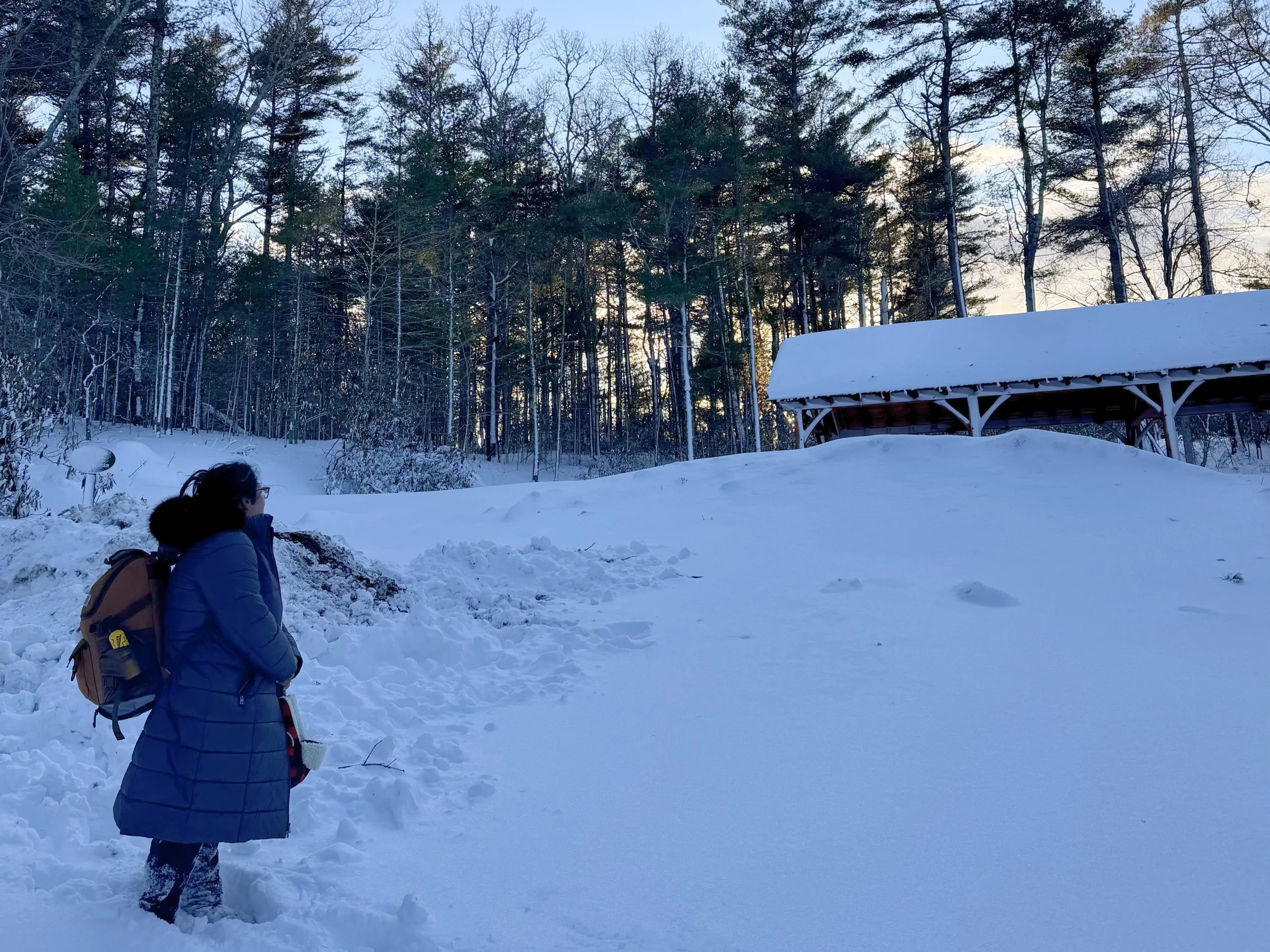
Trail Update
Wildlands’ stewardship staff and volunteers are working hard to restore access to our preserves after last month’s historic snowstorm. Despite the recent warm-up, trail conditions remain inconsistent—and potentially dangerous. Please exercise caution on Wildlands trails and report safety concerns to trails@wildlandstrust.org. (Or better yet, lend your eyes and ears to the lands you love as a Wildlands Adopt-a-Preserve volunteer!)
Local Lens: Q&A with Wildlife Photographer Peter Yekhtikian
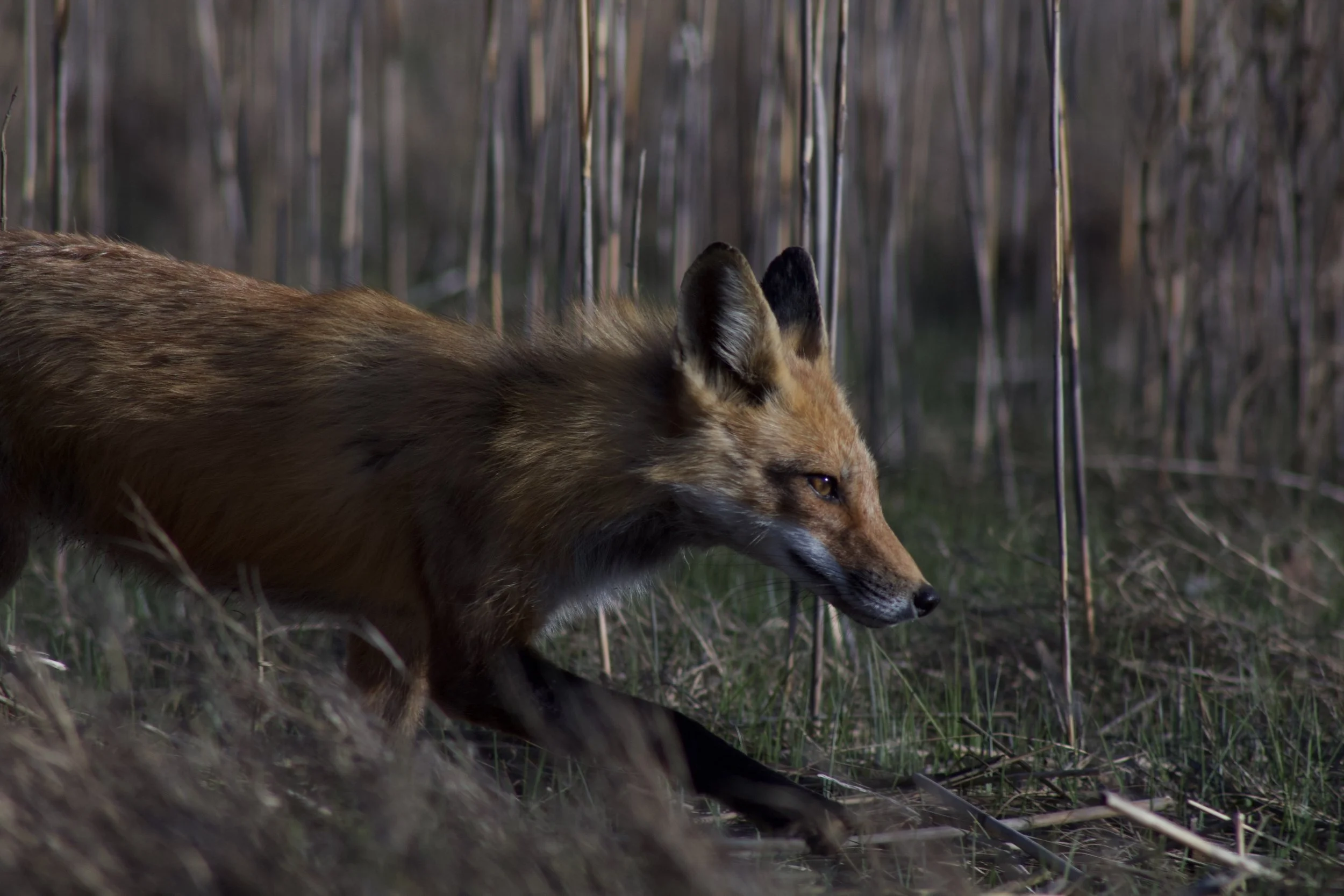
Red fox at The Nook Preserve in Kingston. Photo by Peter Yekhtikian.
By Thomas Patti, Communications Coordinator
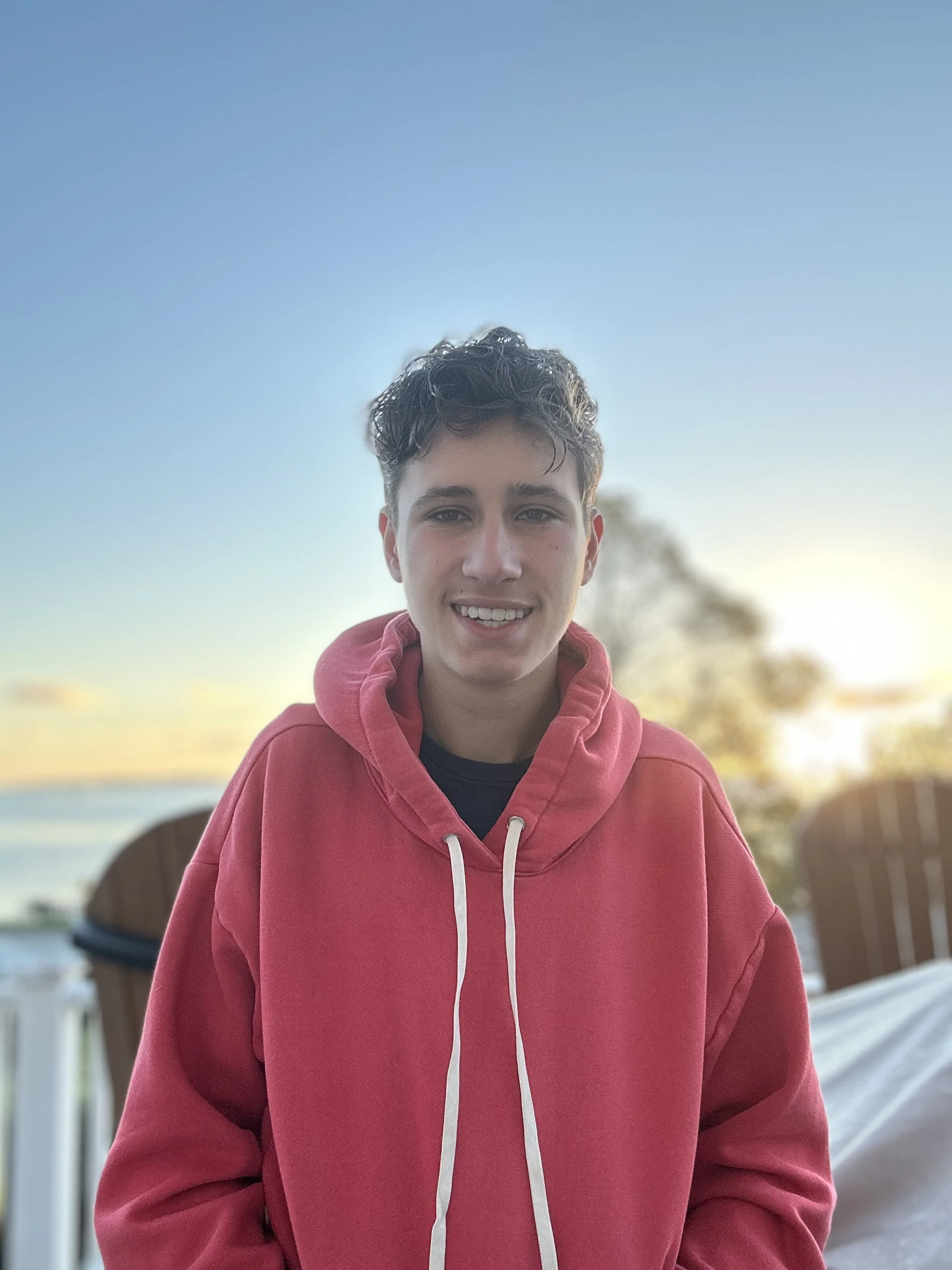
Peter Yekhtikian.
Many pursue wildlife photography as a retirement hobby. For Peter Yekhtikian of Kingston, it’s anything but. For starters, Peter is 16 years old, a junior at Rising Tide Charter Public School. Wildlife photography is also more than a hobby for Peter. Already, he has leveraged his keen observation skills and prodigious naturalist knowledge to spotlight and protect his local natural areas—including The Nook Preserve in Kingston, where he volunteers as a Wildlands Trust Adopt-a-Preserve trail monitor. I spoke with Peter about what spurred this passion and why everyone should spend more time on their neighborhood trails.
This conversation has been edited for length and clarity.
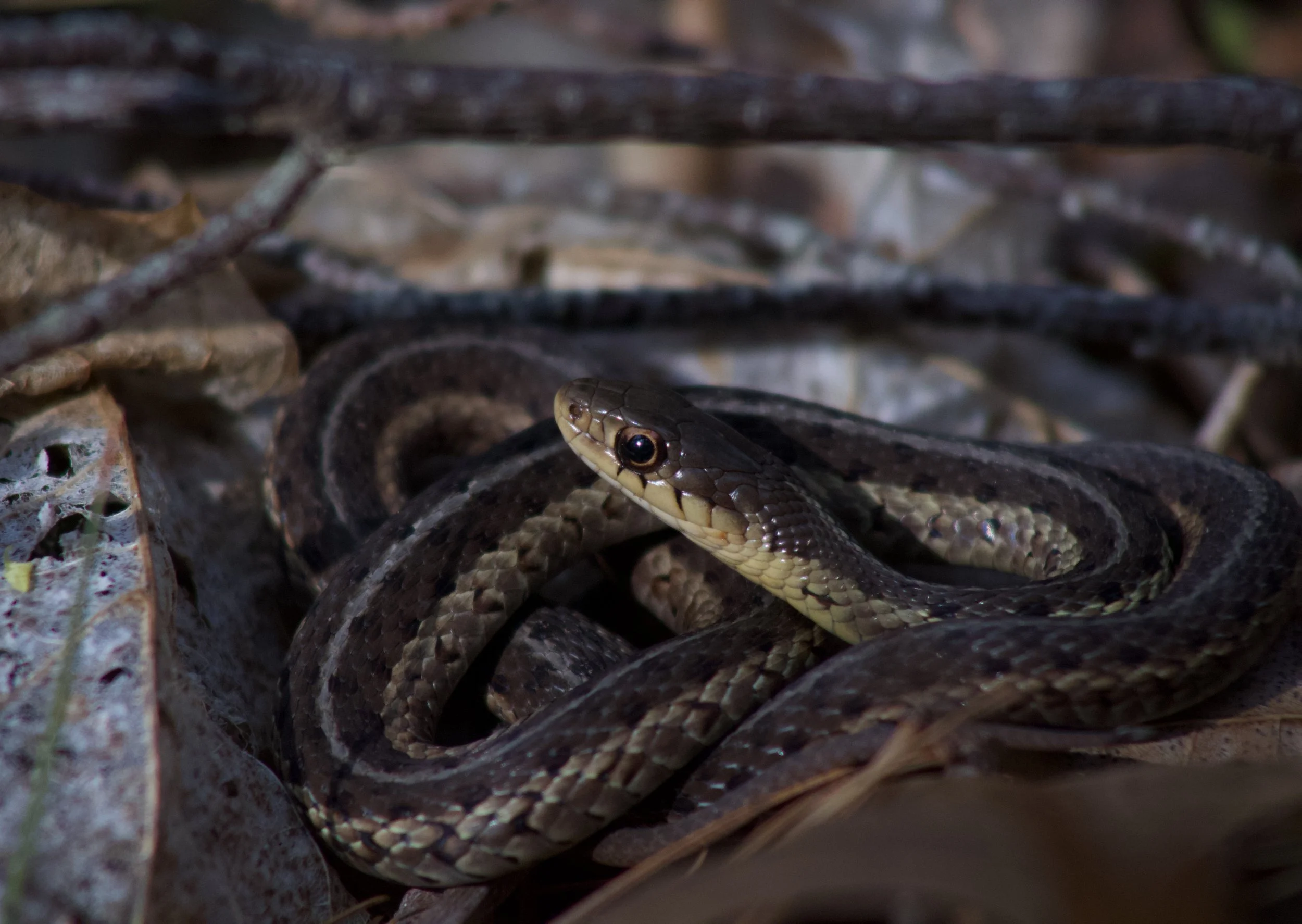
Eastern garter snake at The Nook Preserve in Kingston.
Thomas Patti: How did you get into wildlife observation and photography?
Peter Yekhtikian: I got into wildlife when I was about six. I loved watching Nat Geo documentaries and reading books about different animals.
When I was in fifth grade, we were watching the Bruins and heard screaming outside. We ended up figuring out where it was coming from and finding a fisher cat. It was crazy to see that in our neighborhood. That struck my interest in local wildlife.
Then, I got a camera for my birthday. One day, we had a Ring-necked Pheasant in our yard, and our little dog was chasing it. I was like, ‘Oh, this is really funny and cool. What if I try photography?’ And I just started taking photos of anything flying overhead.
From there, I got into using eBird so I could document some of the stuff I was seeing. I'd go out into our woods and take photos of anything I could find, and then I'd try to identify it and put it on [community science platforms] iNaturalist and eBird. It’s kind of like a game: how many species can I see today?
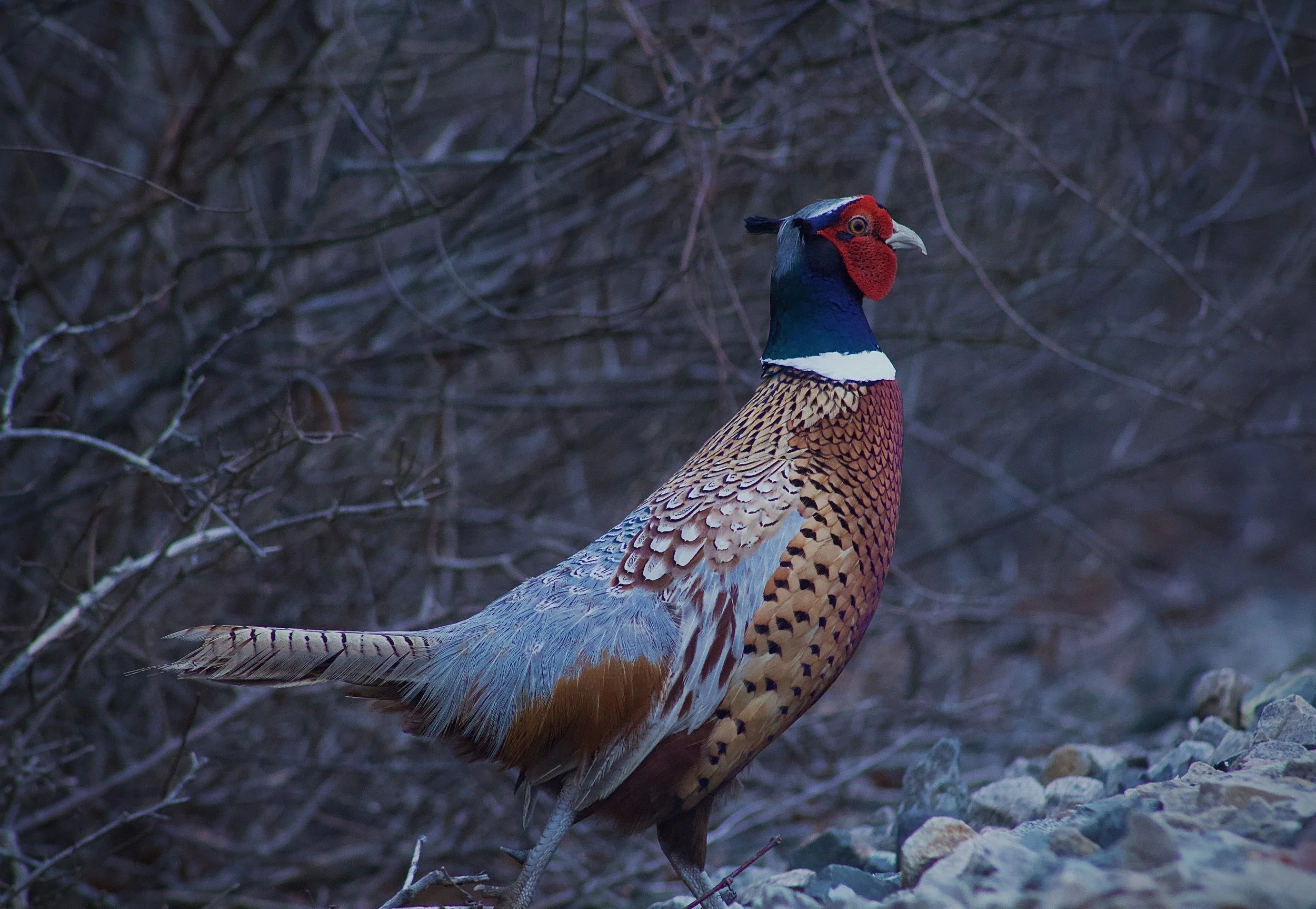
Ring-necked Pheasant in Rocky Nook, Kingston. Photo by Peter Yekhtikian.
You seem content documenting wildlife in your own backyard—often literally. Why is that?
Kingston is just as important as anywhere else. Because of all the habitats here—freshwater and saltwater marsh, the open bay, forest, wetlands, fields—we get species that other places don’t. I think my record was 73 species observed in one day. That was awesome.
I feel like Kingston is underrepresented in terms of wildlife data. If I can show people how much stuff we have here, it may inspire them to explore local preserves that aren’t appreciated enough. I’ve met people at The Nook who said they had never known about the preserve until they saw an eBird checklist I submitted. It feels really nice to know that what I’m doing is inspiring people to go to these places.
This summer, I interned with the Kingston Conservation Commission as a wildlife monitor. One day, I was checking the marsh in Rocky Nook, and I saw something fly out of the marsh. It was a sparrow, but it didn't fly like a Song Sparrow. It looked totally off. I was like, ‘Huh, what could this be?’ I ended up getting a photo, and I noticed a yellow streak on the eye. I was like, ‘Oh, wow. This is a Saltmarsh Sparrow.’ Mass Audubon’s most recent survey noted that Saltmarsh Sparrows had increased in population everywhere in Massachusetts except the South Shore, where there was no breeding activity at all. So, it was cool to see that they were breeding in our marshes. I don’t think anyone had ever checked, because no one really goes out there.
The Town of Kingston wanted to get a grant for adding more salt marsh hay into the marsh to attract Saltmarsh Sparrows. Now that we have evidence that they’re already breeding here, it’s going to be a lot easier to get that grant.
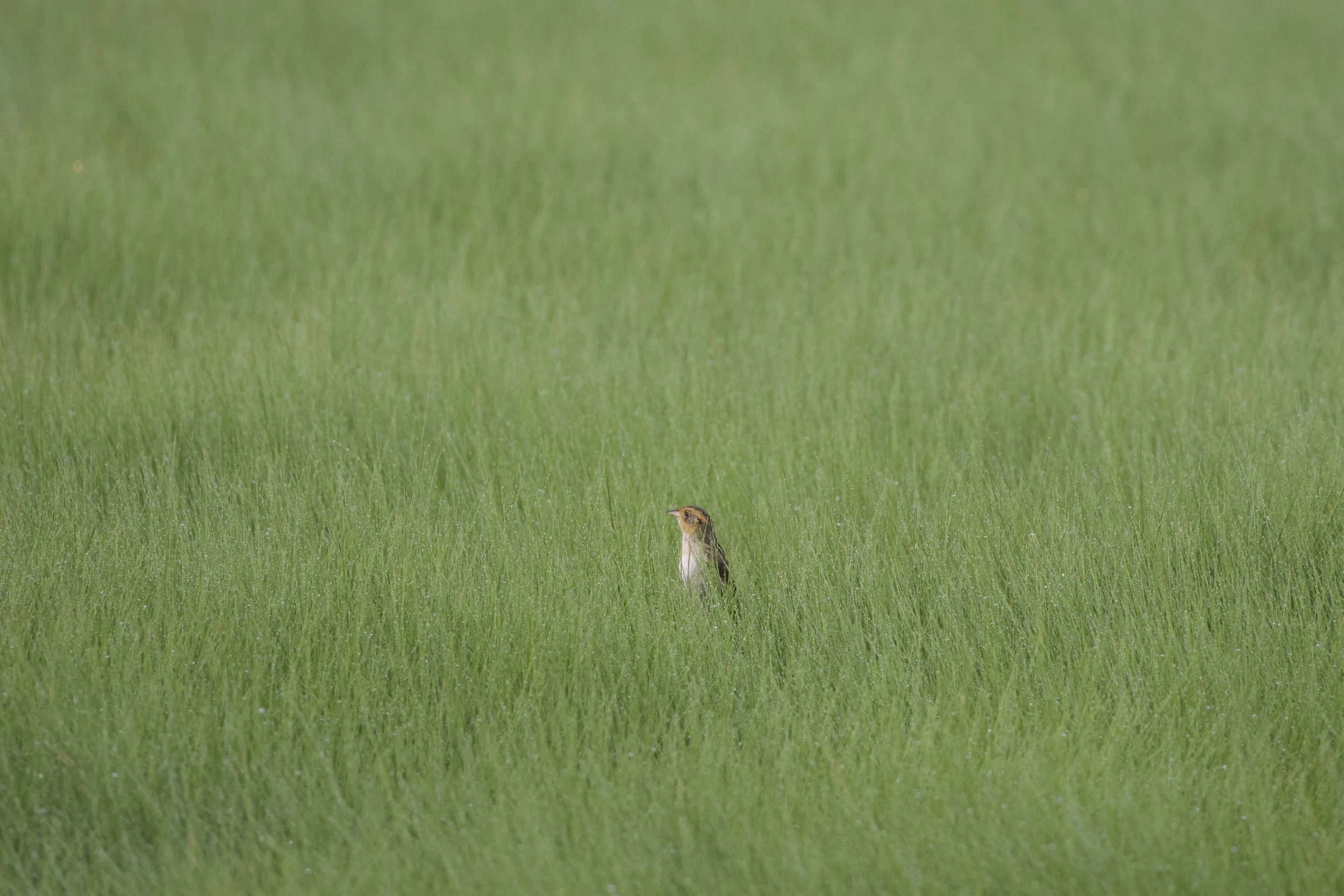
Saltmarsh Sparrow in Rocky Nook, Kingston. Photo by Peter Yekhtikian.
That is a great example of why communities should know and care about their local environment. What story do you hope to tell with your photos and videos?
The message is just to get outside and explore. Everyone should at least try to go into the woods. Just observe what’s around you. Everything is so fast-paced nowadays. Sometimes it’s nice to just slow down and get somewhere peaceful, where you’re not always on your phone, scrolling on TikTok or something.
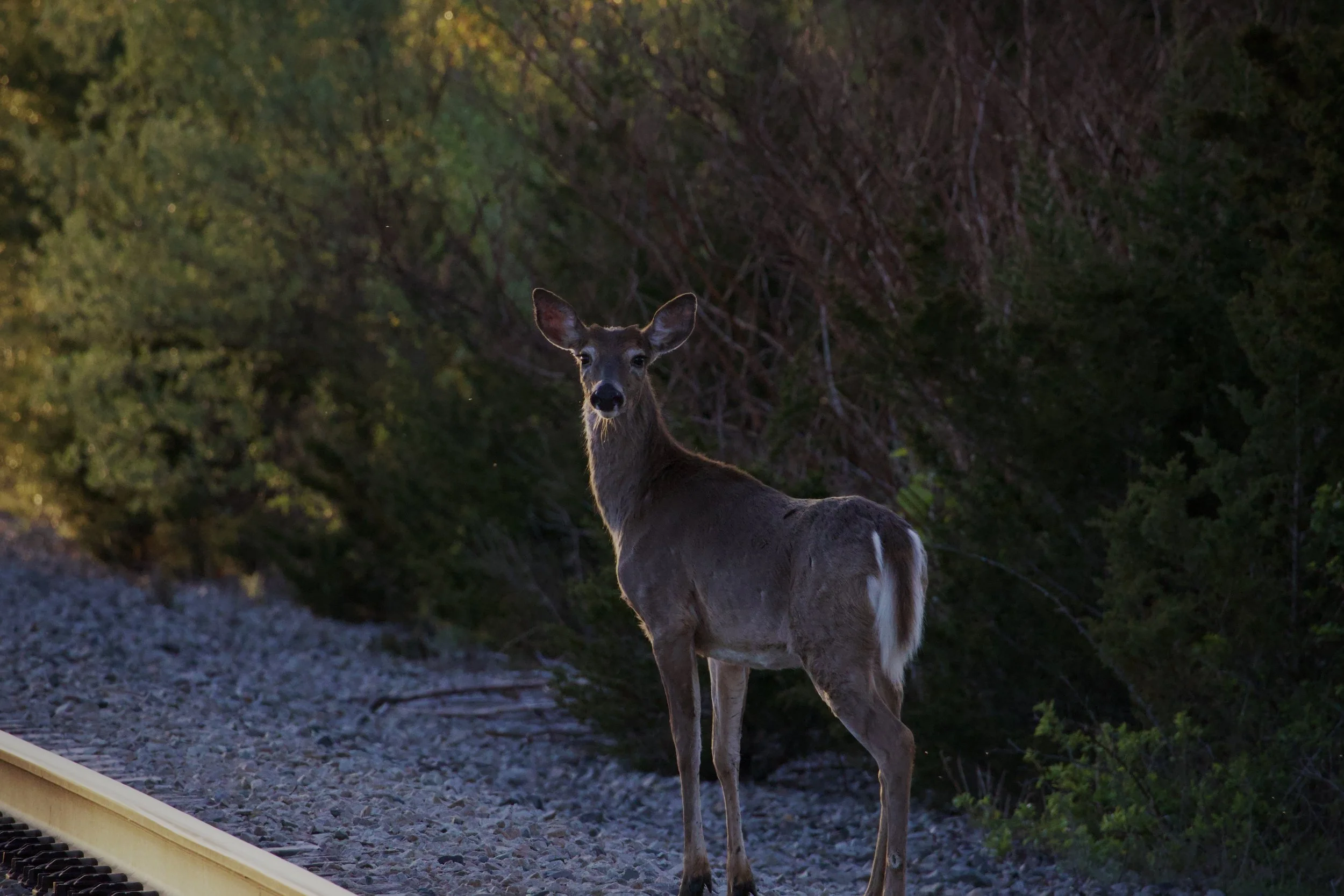
White-tailed deer in Rocky Nook, Kingston. Photo by Peter Yekhtikian.
You also serve as an Adopt-a-Preserve trail monitor. Why do you volunteer with Wildlands?
My dad is a member of Wildlands Trust. Last year, he got an email from Wildlands asking for volunteers at certain preserves, and one of them was The Nook. And it just kind of struck me that I already go there so much. Why not help out more officially with the organization?
I also went to Wildlands’ birdhouse building workshop at the Stewardship Training Center last spring. I really enjoyed it. Afterwards, my Uncle Ken and I wanted to build more birdhouses for Kingston. So, we met with the Town of Kingston’s Conservation Agent, Matt Penella, to decide where we should put them. That meeting led to my summer internship with the Town. So, Wildlands Trust is very connected to my conservation story.
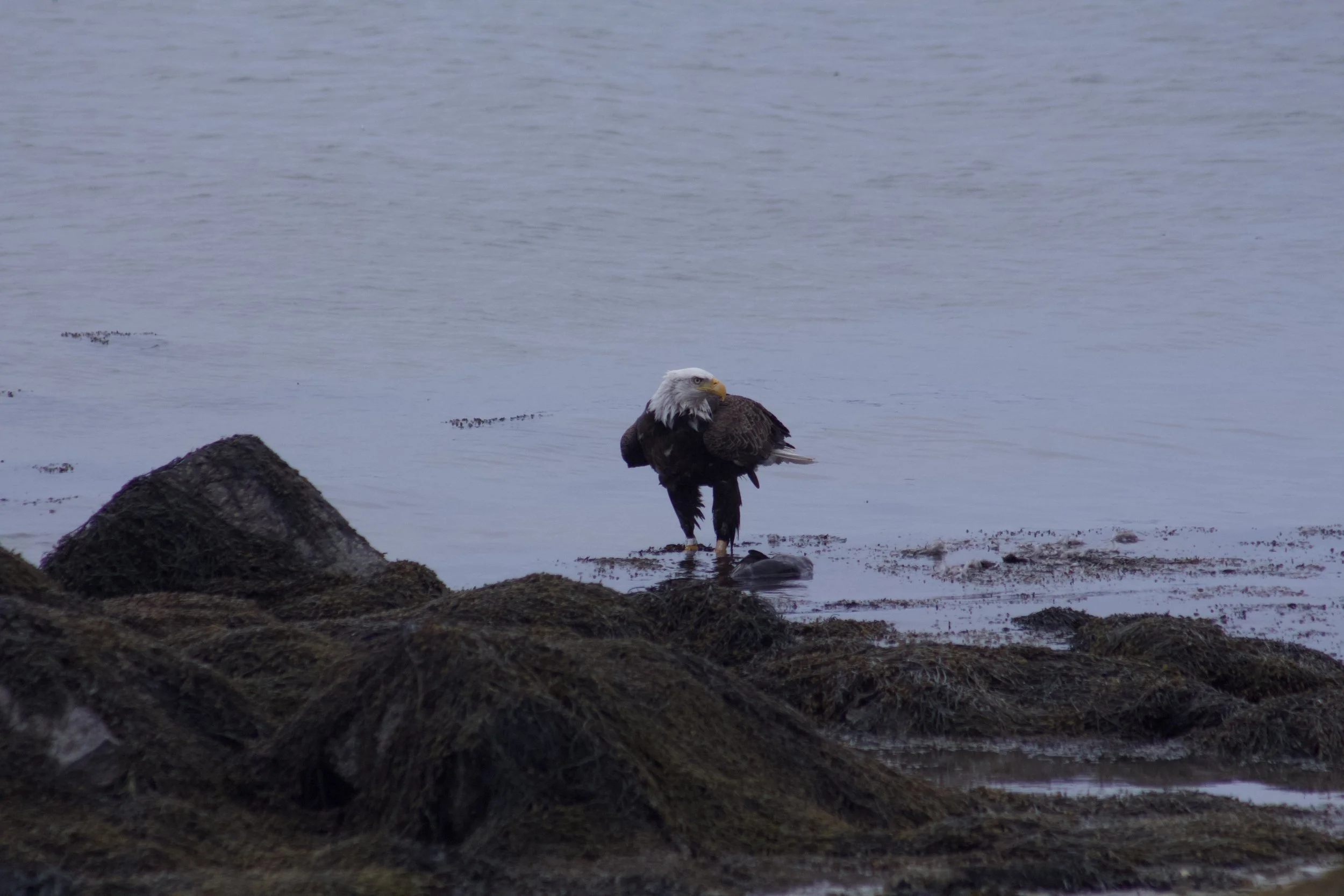
Bald Eagle in Rocky Nook, Kingston. Photo by Peter Yekhtikian.
Any other memorable wildlife experiences?
Last year, I was walking in the marshes, and I saw something that caught my eye. It was a fox running around the marshes. He was pretty far away, but then he kept getting closer and closer. I think he got within three feet of me, which was really, really, really cool to see. And he was almost playful with me. He was rolling around near me. It was just this wild animal, right next to me.
What’s next for you? Do you see a future in the conservation field?
I definitely want to do something revolving around conservation—either preserving nature or helping people work with it. I’m interested in going to college for environmental engineering.
In addition to photography, Peter captures video footage of Kingston wildlife using motion-activated trail cameras. Watch the video below for a compilation of Peter’s breathtaking work. View more on Peter’s YouTube channel, “Rocky Nook Trail Cameras.”

A VolunTuesday to Remember at Clark’s Island

By Marilynn Atterbury, Wildlands Trust board member & Key Volunteer
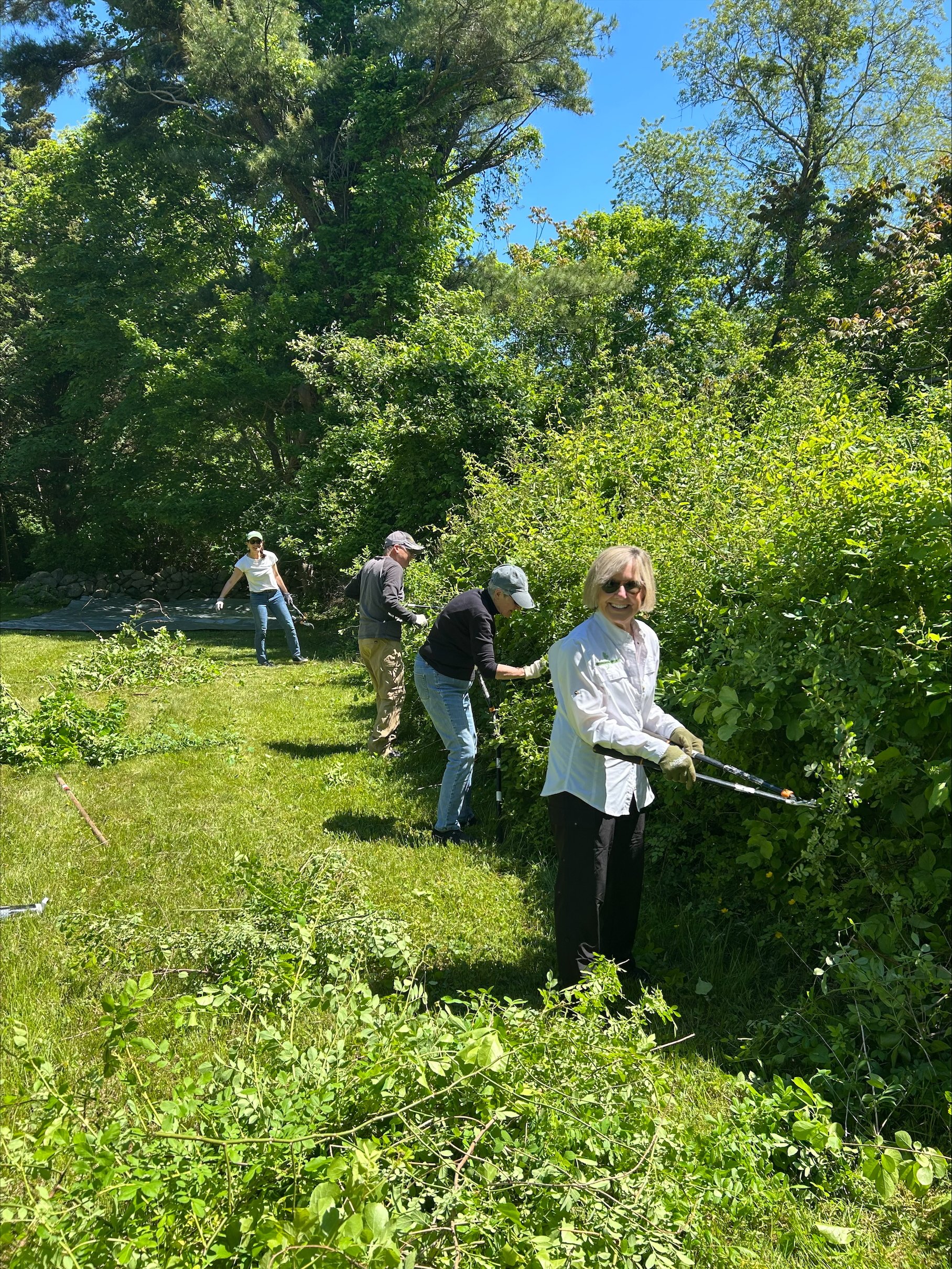
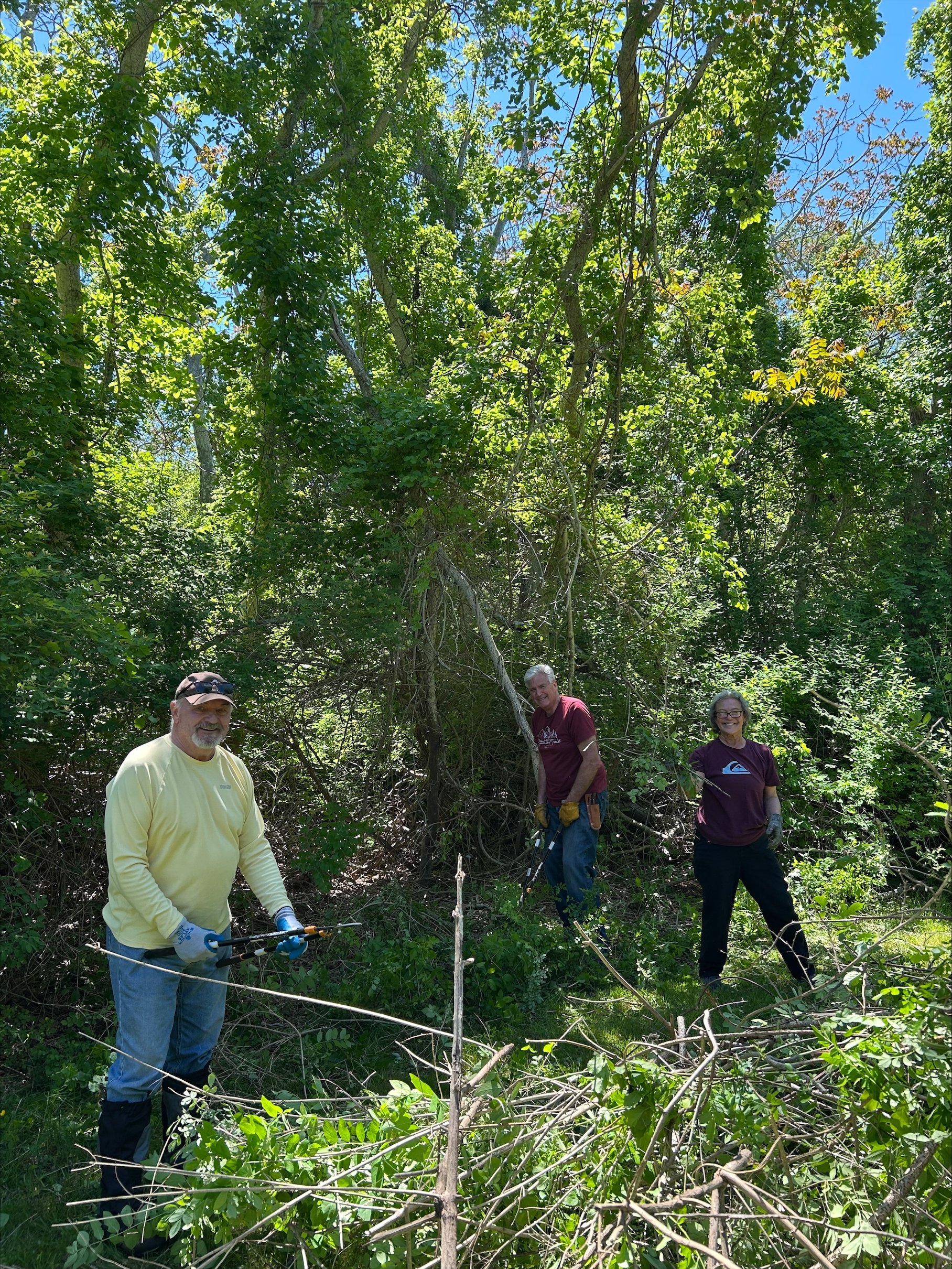
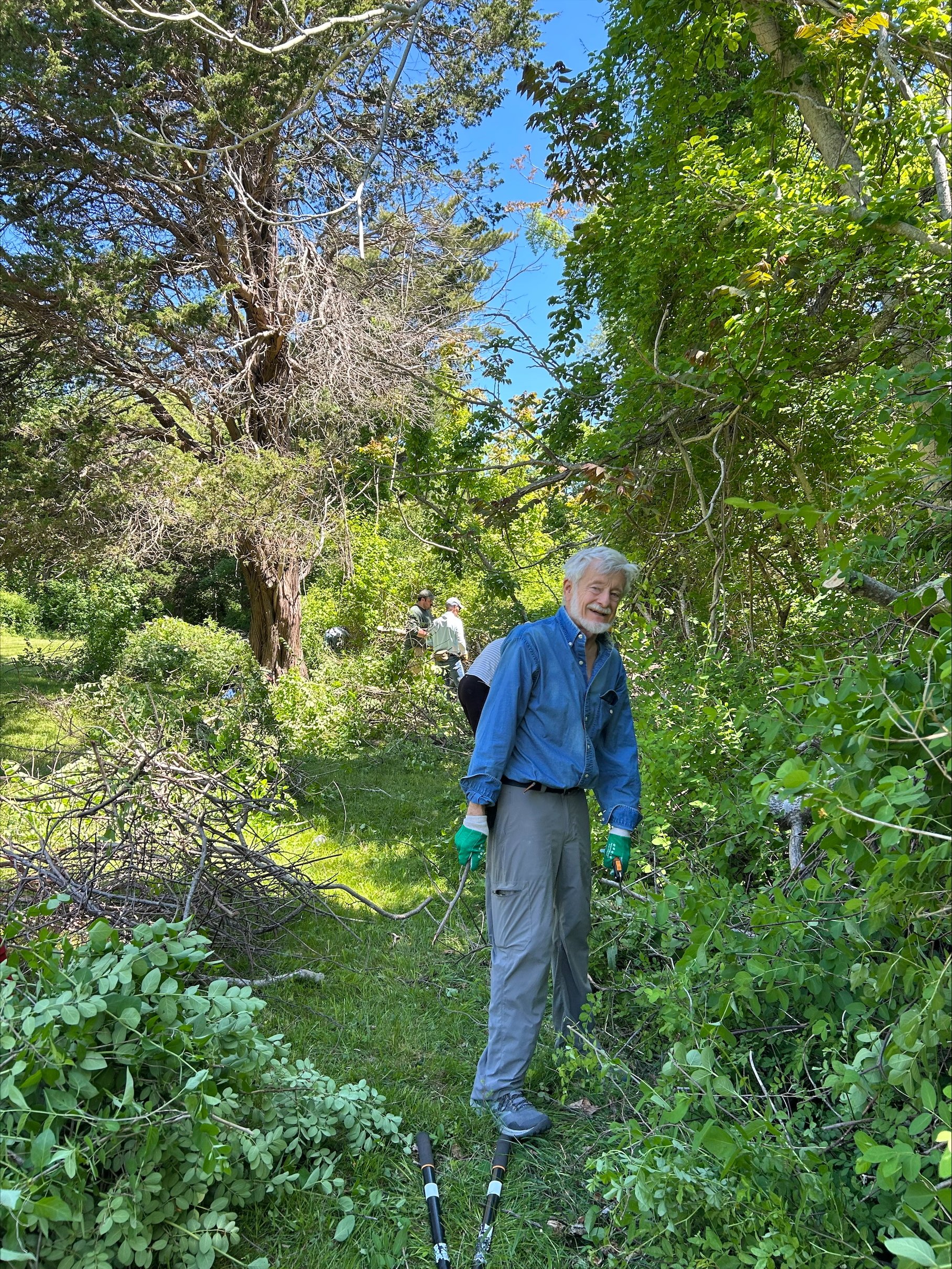
As a Wildlands Trust volunteer for over 11 years, I have seen many Wildlands preserves, many times over. So, you can imagine my excitement when I found out that on a special VolunTuesday in May, we would be venturing to a brand-new location, one that our fleet of pickup trucks couldn’t reach. On May 27, about 20 Wildlands staff and volunteers voyaged across Duxbury Bay to help the Duxbury Rural & Historical Society (DRHS) maintain its beautiful property on Clark’s Island.
Picture this: a beautiful Grady-White Boat with 300-horsepower twin engines flying across Duxbury Bay on a perfect May morning. The VolunTuesday crew was beyond excited for our adventure.

After wading through knee-deep water with chainsaws, loppers, and lunch in our arms, we proceeded to our mission for the day: removing invasive plant species from the meadow around Pulpit Rock, or what some consider the true Plymouth Rock!
DRHS owns 17 acres of land on Clark’s Island, which today is part of Plymouth. (Wildlands helps care for DRHS properties through our Community Stewardship Program.) In 1620, Mayflower passengers, led by first mate John Clark, made landfall on the island before they reached the Plymouth mainland. There, they found an enormous boulder and held their first worship service ashore.

The VolunTuesday crew at Pulpit Rock on Clark’s Island.
It’s important to acknowledge the darker side of history on Clark’s Island. During King Philip’s War (1675-1676), Plymouth Colony used the island as an internment camp to detain over 1,000 Indigenous people, many of whom starved to death. You can read a more detailed account of Clark’s Island history, along with a land acknowledgment, on the DRHS website.
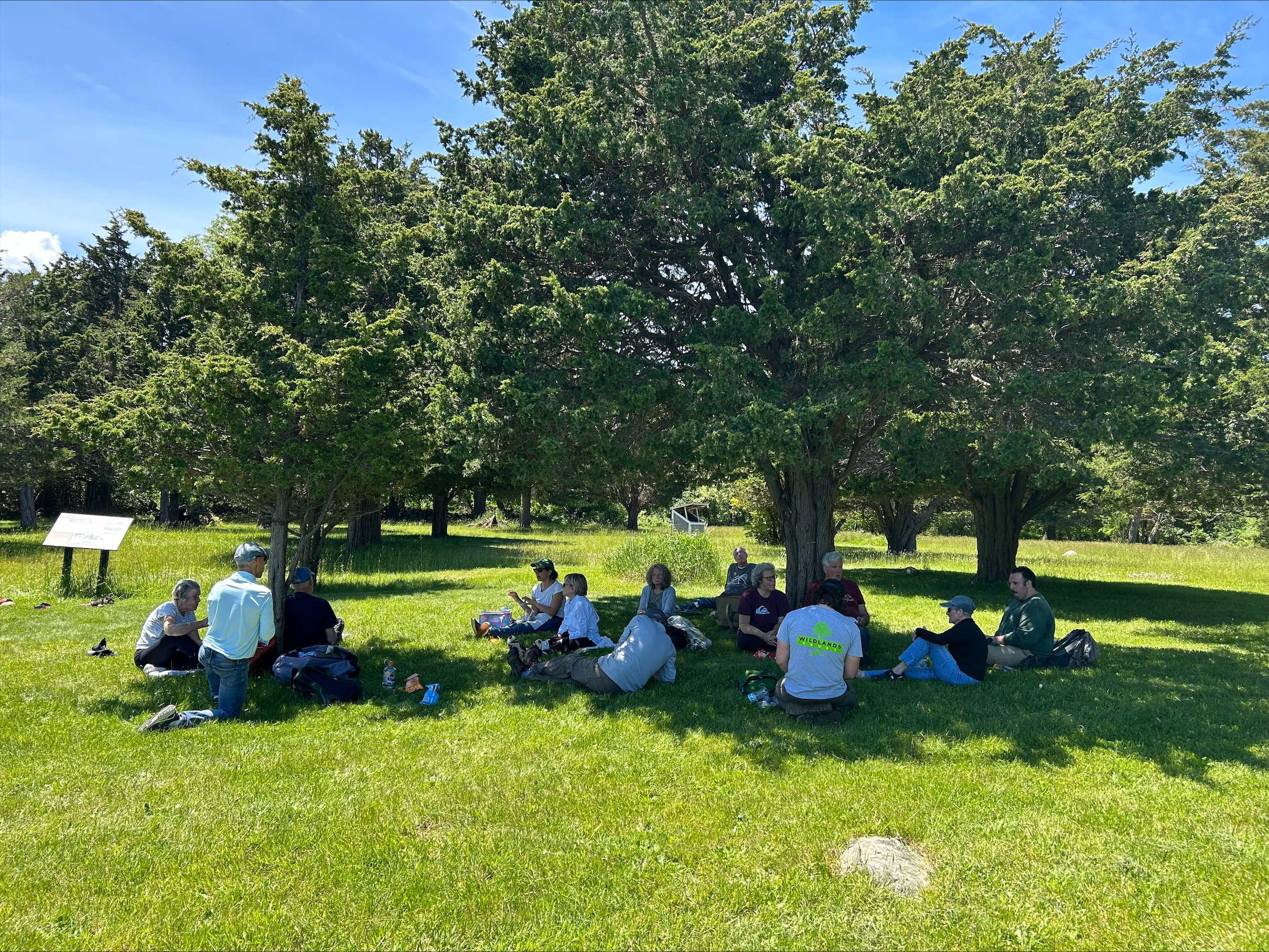
Back to the present. It was a long, arduous VolunTuesday, interrupted only by a fantastic lunch on the lawn facing the Bay. We accomplished so much and learned so much about the history of Clark’s Island. Spirits were high as we motored back home. Everyone agreed it was one of the finest volunteer programs we had ever participated in.
***
Want to explore new places, join a fun-loving community, and give back to local nature? Explore upcoming VolunTuesday projects here!