


What’s New at Wildlands
Giving Up the Sun: Parasitic and Mycoheterotrophic Plants
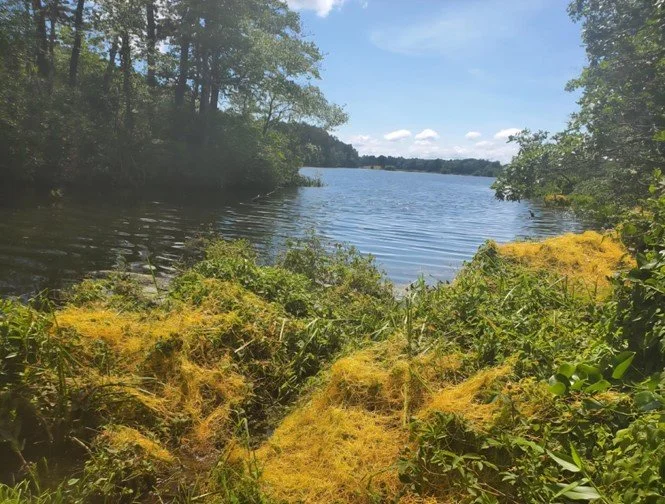
Dodder, Cuscuta sp., sprawling across a pond shore. Its entirely yellow growth and lack of leaves are hallmarks of holoparasites
By Justin Cifello
“Plants are green and get energy from the sun.” Elementary school truisms like this stick with us, but reality is far more complicated. Nature, in its profligate experimentation, produces exceptions to almost every category with which we try to describe it. It is true that most plants are autotrophs, collecting energy directly from the sun, while heterotrophic animals and fungi get their energy second-hand from plants or bacteria. However, there are always outliers. Carnivorous plants, famously, supplement their diets by catching and eating animals. As strange as these plants are, they still have green leaves and their metabolism is still solar- powered through photosynthesis. There is another group of plants that use an even more unconventional strategy: parasitic plants. Parasitism, reasonably, makes us uncomfortable. It seems like an ignoble, sneaky form of sustenance, more akin to disease than the hunting prowess of a bald eagle, but it is an incredibly complex form of predation.
Interdependency between species is known as symbiosis, and it comes in three main forms. The term is popularly—but incorrectly—understood to mean a relationship that benefits both parties, such as the relationship between flowers and bees. However, that is just one form of symbiosis, known as mutualism. Commensal symbiosis benefits only one party without harming the other; while parasitic relationships benefit one species to the detriment of the host. There is some gray area between these three groups, and the boundaries are limited by our understanding. It may well be that relationships believed to be parasitic do confer a benefit on the host that we just don’t know about yet. [1-Symbiosis]
An astounding amount of animals—over 40%—are parasitic; the strategy is thought to have independently evolved over 200 times. Since plants are generally incapable of rapid movement and have limited sensory input, it makes sense that they would have a harder time finding and catching a host. Besides, the sun is readily available. Despite this, about 4,500 species of plants are known to be parasitic. While this sounds like a lot, it only equates to 1% of all plants. [2-Parasites]
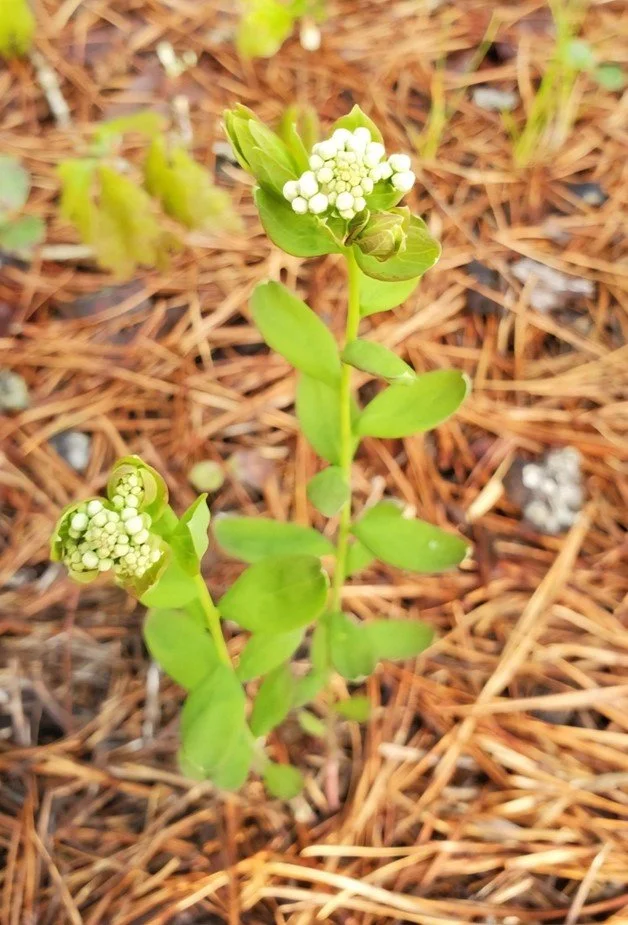
Luckily for us, parasitic plants do not target animals— with the exception of some marine algae that parasitize crustaceans. Algae isn’t really even a plant, so we’ll leave them be for today. Parasitic plants target slower hosts: other plants, and occasionally, fungi. Plants that derive all of their sustenance from other plants are called holoparasites; these plants do not photosynthesize at all, have no leaves, and come in a variety of non-green colors. Hemiparasites, by contrast, don’t fully commit to the lifestyle. They derive partial sustenance from their hosts and may have green, photosynthetic leaves, or roots drawing water and/or nutrients from the soil. Often, these look like your average plant.
Though plant parasitism independently evolved numerous times and occurs across 20 different families, they all invented the same organ: the haustoria. These structures, believed to be modified roots, splice into the host’s vascular system, fusing the two plants together. This is similar to grafting, where farmers will, for example, fuse one variety of apple to another. This isn’t an uncommon practice; most tree fruit is grafted and is generally limited to within a species or genus. Parasitic plants fuse themselves to all manners of plants and fungi, far beyond humanity’s current technology. By producing a variety of compounds, these plants evade their host’s defenses. Some even hack into the host plant’s genome, and steal parts of it for themselves through horizontal gene transfer, which is exceedingly rare in multicellular organisms. Some species of dodder have genetic material from over 100 other plant species embedded in their genome, like a thief copying house keys. [3-Gene Hacking]
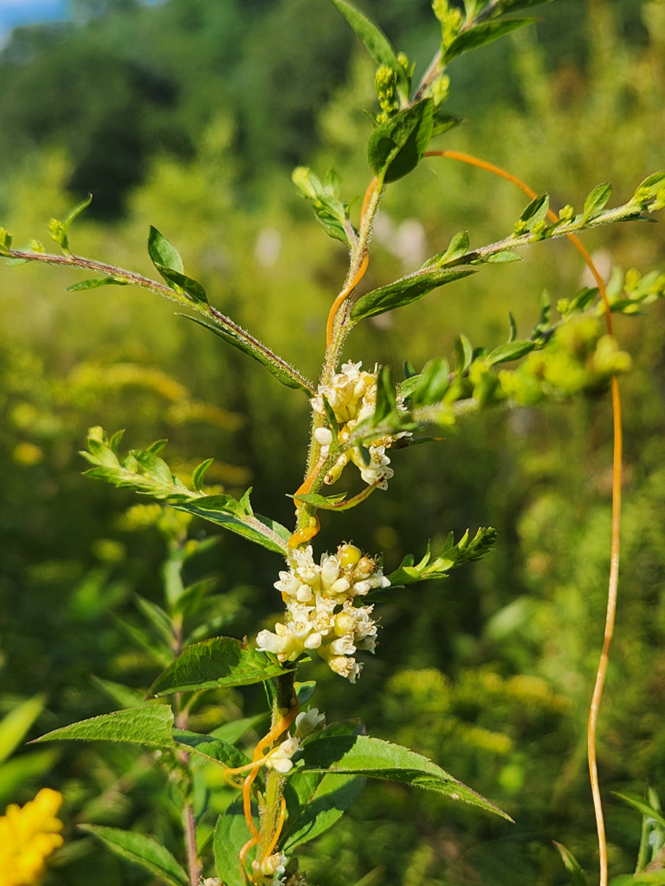
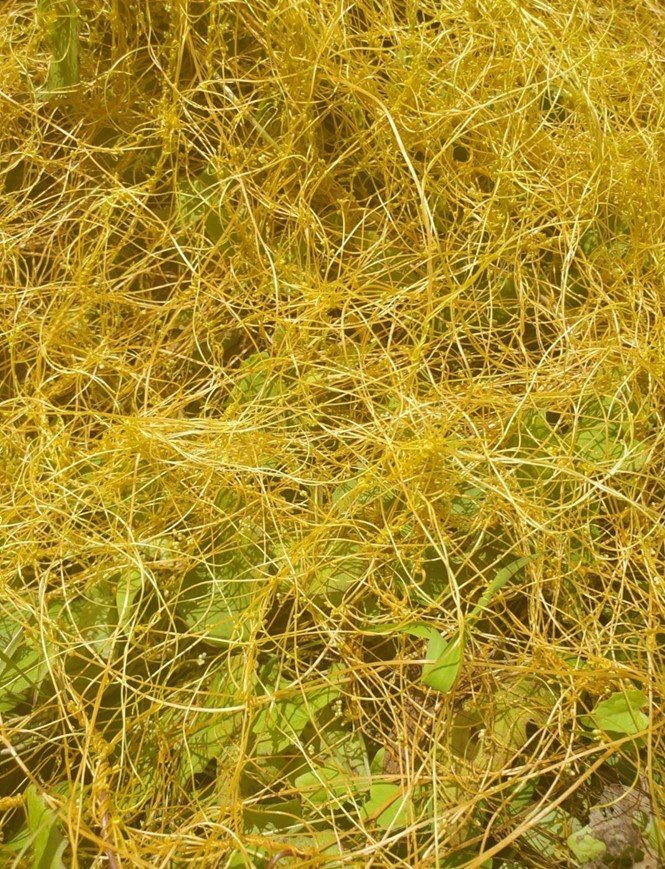
Though rare from a numbers perspective, these plants aren’t too hard to find. Dodder, for example, can be found in many wetlands. This member of the morning glory family is fully parasitic, and has lost all leaves and chlorophyll; it looks a bit like yellow silly-string. Dodder lacks the hormones that trigger flowering, and steals that ability; look for its small flowers attached to the stems of its host plants. There are many species of dodder, and most are generalists, targeting numerous host species.
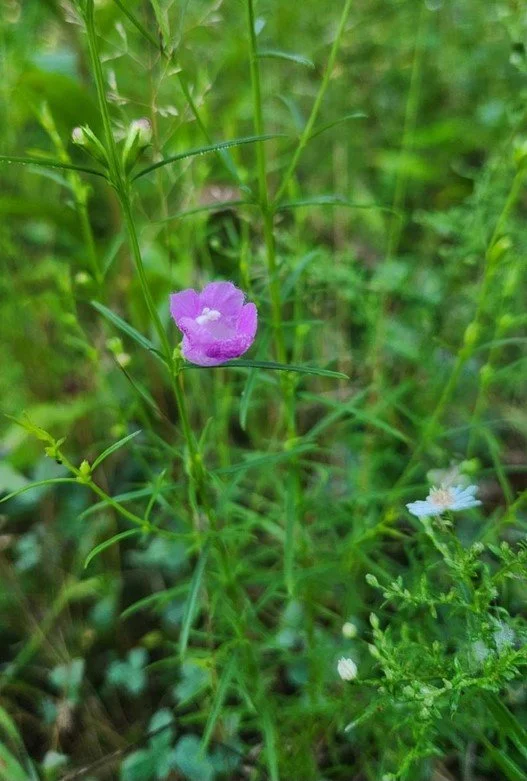
False Foxgloves, Agalinis spp., can be found in fresh and saltwater wetlands, where it is hemiparasitic on a variety of hosts.
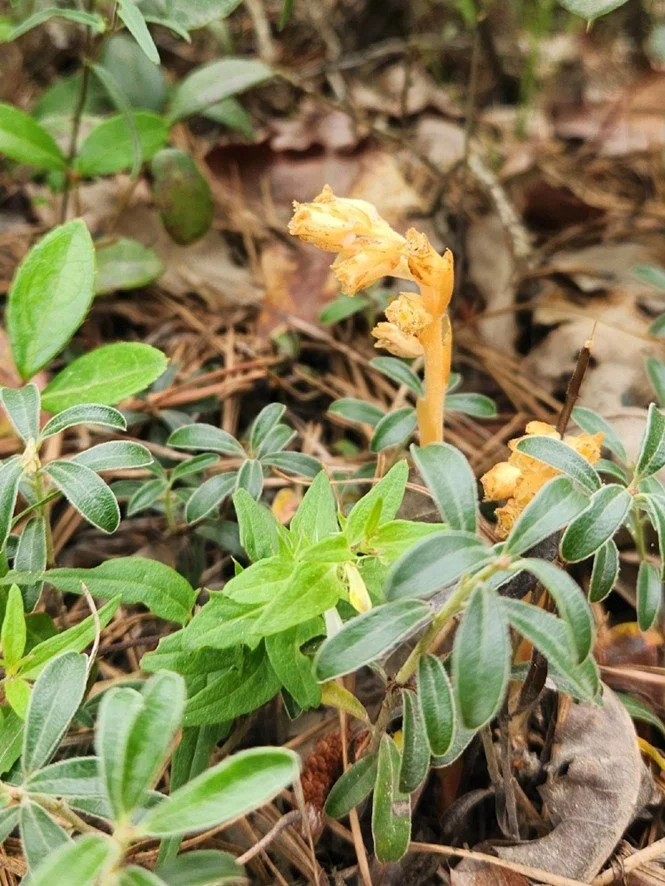
Our other local holoparasites are more specific. Beechdrops only grow on their namesake beech. These striking red and yellow plants can be found in most beech forests. Unlike dodder, they are not thought to harm their much larger hosts. Our other two native holoparasites are less common.; I have yet to encounter bearcorn or one-flowered cancer root, though they are documented in our area. We are just south from dwarf mistletoe’s range, but keep an eye out for it on conifers on trips north. This holoparasite grows in the canopy, and has explosive seedpods that can launch its seeds at speeds up to 60 mph. [4-Mistletoe]
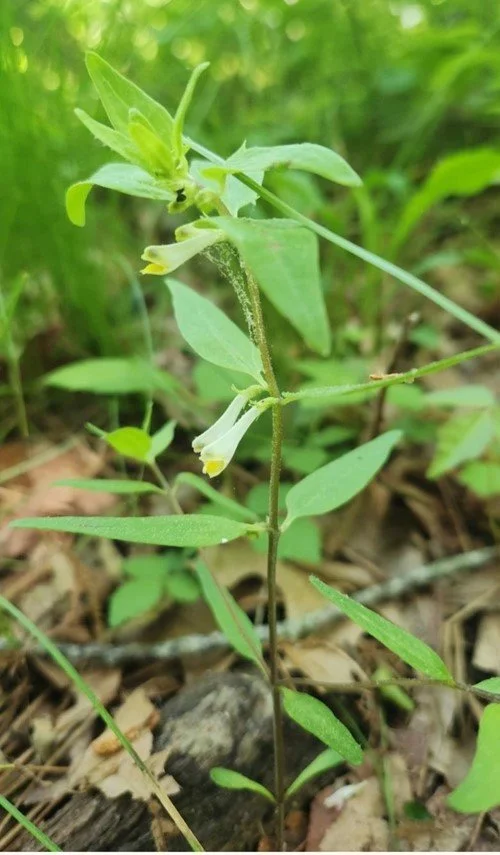
Hemiparasites aren’t uncommon, but are harder to notice, since they still have green leaves and appear as normal plants. These include toadflax, false foxglove, cow-wheat, and wood betony. These can be found in a variety of habitats utilizing a variety of hosts. One, the American chaffseed, is incredibly rare, with only one known population in Massachusetts, located in Barnstable. Some hemiparasites are only facultative parasites, meaning they are capable of living fully on their own. [5-Native Species]
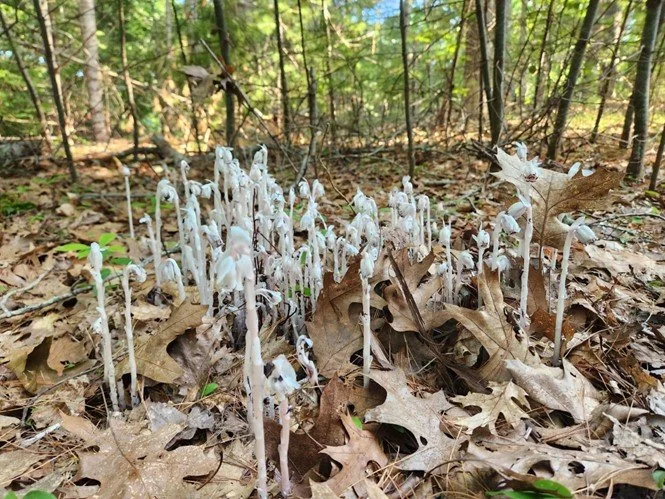
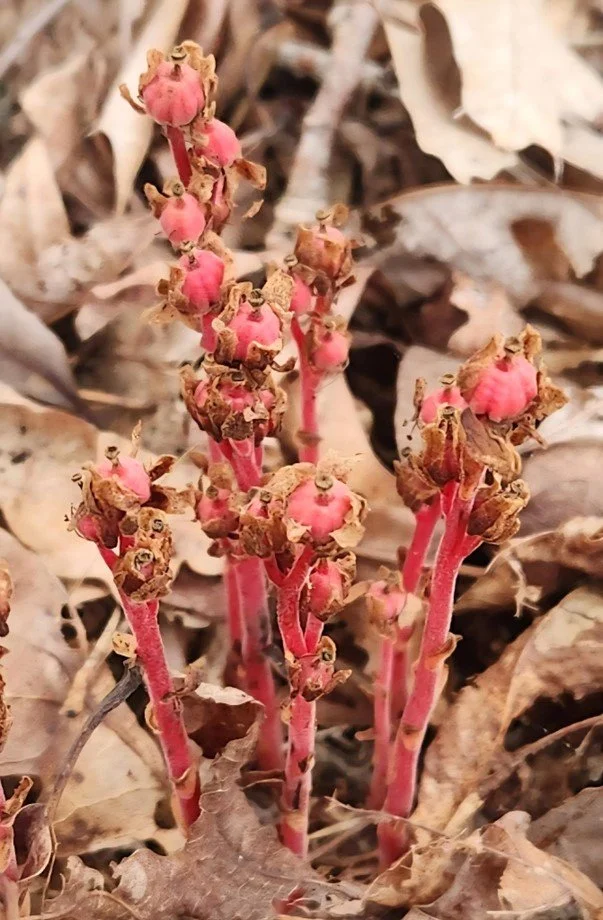
Plants that are parasitic upon fungi are called myco-heterotrophs, which can look quite like mushrooms themselves. The most well-known of these are ghost-pipes, whose white flowers can be found blooming in deep shade. Pinesaps, with red and yellow stems, are less common. A great many plants have relationships with soil fungi, and some, like lady-slipper orchids, are fairly dependent on them. Most of these relationships are believed to be mutualistic. However, since these occur underground and can involve multiple species, they are poorly understood. It is likely some of these relationships are indeed parasitic. [6-Myco-Heterotrophs]
Some parasitic plants are serious agricultural pests, though they aren’t a major issue in our area. With the exception of some dodder species, all of the plants discussed here are native. Parasites, as squeamish as they may make us, offer a variety of ecosystem services. By offering nectar and pollen and creating unique structures and habitats, they help diversify our forests. Their strange habits create novel channels for nutrient cycling. Even seemingly destructive ones, like the dodders, create openings in dense vegetation, giving other species room to grow. By connecting various host plants, some parasites serve as “signal highways,” allowing hosts to communicate with one another and better respond to environmental stress. The sophisticated mechanisms found in these plants can also help our understanding of genetics and chemistry. For us as hikers and land stewards, they offer yet another glimpse into nature’s endless complexity. One never knows what drama is unfolding in the small plants in the leaf-litter, or that mess of silly-string tangled in a bog. [7-Signal highways] [8-Ecosystem Services]
Further Reading:
[1]Symbiosis- https://stri.si.edu/story/its-complicated
[2] Parasites- https://www.smithsonianmag.com/science-nature/parasites-are-everywhere-so-why-do-so-few-researchers-study-them-180984753/
[3] Gene Hacking- https://www.psu.edu/news/research/story/parasitic-plants-use-stolen-genes-make-them-better-parasites
[4] Mistletoe- https://ucanr.edu/blog/forest-research-and-outreach/article/mysterious-mistletoe
[5] Native Parasitic Plants (search individual species for images and descriptions- https://gobotany.nativeplanttrust.org/search/?q=parasitic
[6] Myco-Heterotrophs- https://www.indefenseofplants.com/blog/tag/Mycoheterotrophic
[7] Signal Highways- https://academic.oup.com/plphys/article/196/2/716/7695732
[8] Ecosystem Services- https://www.currentconservation.org/parasites-unloved-unseen-essential/