


What’s New at Wildlands
Listening to the Landscape: BSU Students Discover the Sounds of Great River Preserve
By Maria T. Armour, M.S., Staff Associate and Instructor at Bridgewater State University
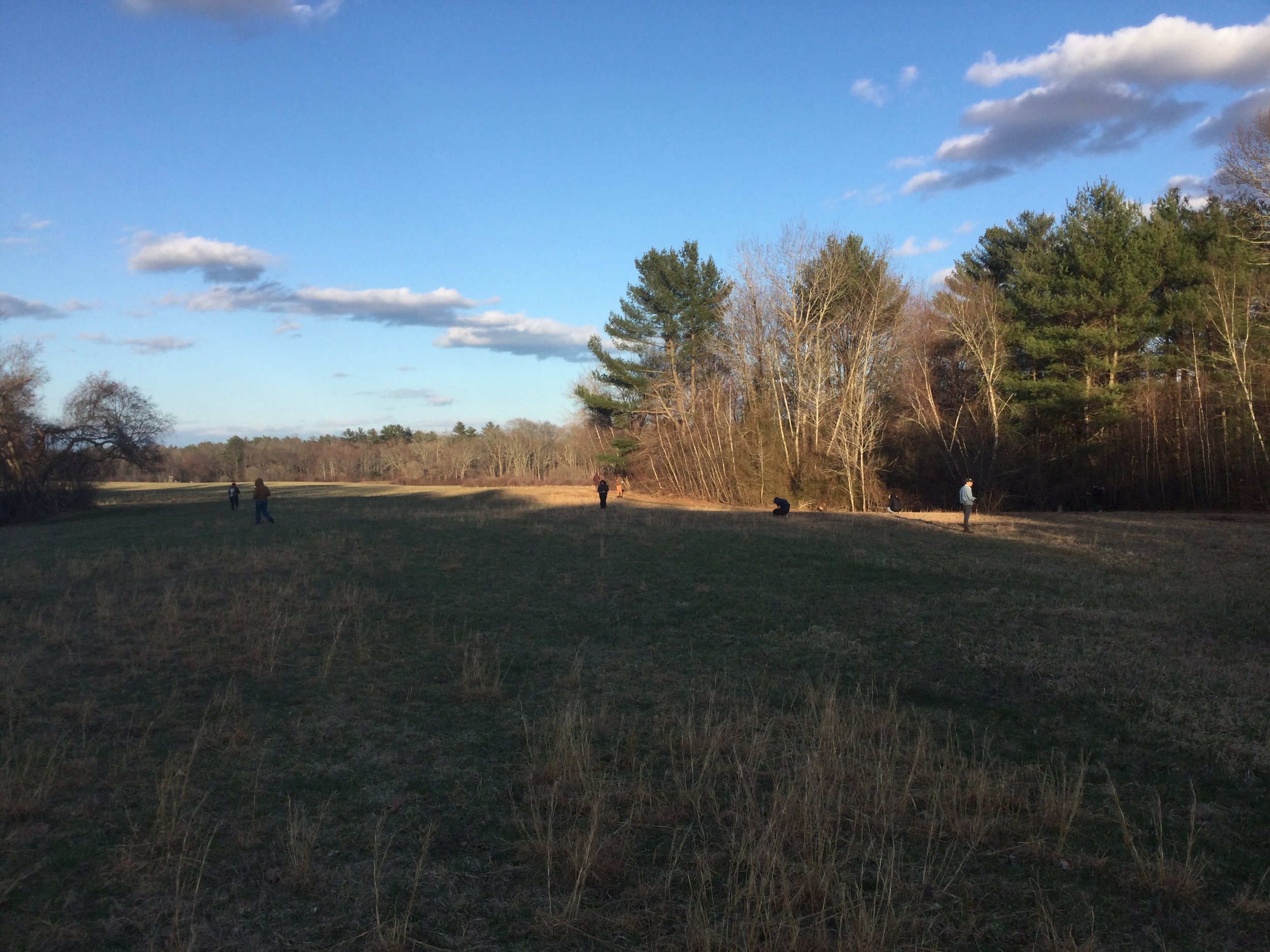
Bridgewater State University Soundscape Ecology students conducting their observations at Great River Preserve.
This past April, students from Bridgewater State University's Soundscape Ecology course traded in the classroom for the trails of Wildlands Trust’s Great River Preserve. At Great River Preserve, they explored the landscape through one of our most overlooked senses: hearing. With its diverse habitats of open fields, woodlands, and river frontage, the preserve provided an ideal outdoor laboratory for undergraduate and graduate biology students to investigate how wildlife- and human-made sounds can reveal the health and diversity of an ecosystem.
The BSU students visit to the preserve combined both passive and active monitoring. They deployed passive ultrasonic bat recorders for a week to document bat activity at the preserve, while also participating in an evening soundscape activity designed to sharpen their own listening and identifying skills. During this active activity, students were asked to sit quietly in the field with their eyes closed. Students first focused on simply noticing the sounds around them before creating a mental map where those sounds originated. They then used the Merlin Sound ID app to identify birds by their songs. For many students, the hardest part of the exercise wasn't identifying birds, it was putting their phones away long enough to truly listen! The activity was a powerful reminder that careful scientific observation begins by slowing down and paying attention to the world around you.
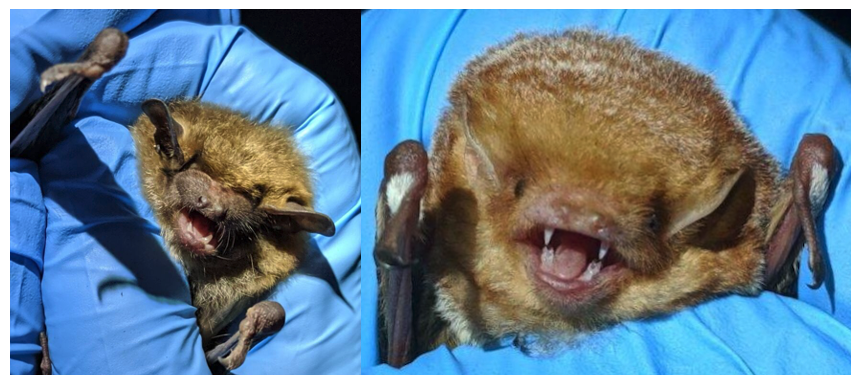
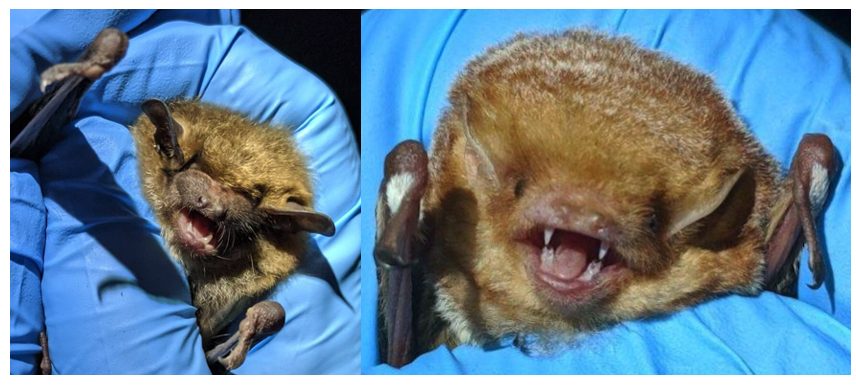
Big brown bat (left) and eastern red bat (right), two bat species documented at Great River Preserve. Photo by M. Caitlin Fisher-Reid.
The passive week-long bat survey also helped students grasp the value in acoustic studies. Massachusetts is home to nine bat species, and despite sampling during early spring, when bat activity is still relatively low, students detected five species using ultrasonic recorders: big brown bats, eastern red bats, hoary bats, silver-haired bats, and little brown bats. Activity was highest along the forest edge and river corridor, while the middle of the open field recorded no bat activity; a pattern that reflects where bats typically forage for insects. Big brown bats were the most detected species, while little brown bats remained comparatively scarce, likely reflecting the ongoing impacts of White-nose Syndrome on many of our native bat populations.
Beyond collecting valuable ecological data, this experience allowed students to practice every step of the scientific process - from developing research questions and testing hypotheses to collecting and analyzing real field data. Just as importantly, time spent immersed in the sounds of Great River Preserve fostered a deeper appreciation for the remarkable wildlife and protected landscapes that Wildlands Trust works to conserve. By listening closely, students discovered the story this habitat has to tell.
***
Want to learn more about the wonderful world of bats with Maria Armour? Register for our FREE Bat Walk at Great River on September 3! Maria will begin the event by sharing her knowledge of and passion for bats. Then, as dusk settles, she will guide visitors on a walk through parts of Wildlands Trust’s Great River Preserve in search of these magnificent flying mammals.